Culture

Culture

The good, the bad and the ugly in books, exhibitions, cinema, TV, dance, music, podcasts and theatre.

If you are of a certain age, you’ll really enjoy Tina Fey’s The Four Seasons

Television

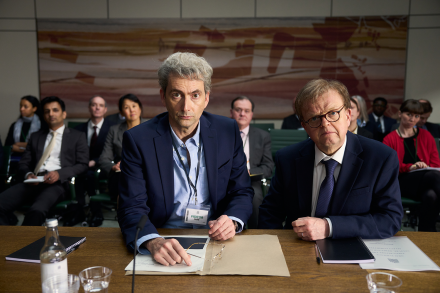
The Four Seasons is one of those shows you notice in the ‘Top TV Programmes on Netflix’ section, see it’s some kind of glossy romantic comedy starring American actors you’ve vaguely heard of, and skip past quickly in search of something with zombies or subtitles. This would be a mistake though because, at least if you are of a certain age, you’re really going to enjoy it. I think the litmus test is whether you’re old enough to remember the 1981 Alan Alda film on which it is based, which I do, just about, vaguely. It’s that kind of movie where a bunch of old friends who have been holidaying together regularly since university – does anyone actually do this? – are discombobulated by and rebond over a traumatic event.

We’ve underestimated Francis Rossi

Pop

I have a friend who insists that had Status Quo hailed from Düsseldorf rather than Catford, they would nowadays be as critically revered as Can, Faust, Neu! and those other hallowed Teutonic pioneers of unyielding rhythm from the 1970s. Maybe so. Very probably not. Canned Heat and ZZ Top seem more reachable comparisons. But it’s true that ‘the Quo’ have been underestimated and unjustly derided throughout their six-decade career, not least by themselves. The band has happily perpetuated their position as rock and roll neanderthals: a 2007 album is titled In Search Of The Fourth Chord. There was always a little more to it than that. Personally, I have always divined a terrible sadness at the heart of their music.

Architecture has hit a nadir at the Venice Biennale

Exhibitions

Much of Venice’s Giardini this year was as boarded up as a British high street. The Israeli pavilion was empty, apparently awaiting refurbishment. (At the 2024 art biennale, the curators had closed it in the face of pro-Palestinian protests, prompting the latter to demand it should be opened, presumably so they could protest its closure.) The Russian pavilion has been shut, by order of the Biennale, because of the Ukraine war. The Venezuelan pavilion was closed (‘Go look at nature instead,’ said the workman when I approached it.) The Czechoslovakian was shut, the turns taken by the two independent nations faltering during Covid.

A spate of re-releases suggests that Wolfgang Sawallisch was no B-lister

The Listener

Grade: A It’s clearance-sale time for the great classical labels of the 20th century. As streaming platforms drain the remaining value out of once-prestigious recorded catalogues, even B-listers are being pulled up from the vaults and remastered for one last re-release. Eleven-disc Rafael Frühbeck de Burgos edition? Walter Weller’s complete Decca recordings? Now’s your chance: everything must go! The Bavarian conductor Wolfgang Sawallisch, who died in 2013, was never exactly B-list. His name always commanded respect. But in the golden age of LP collecting he was regarded as a safe pair of hands rather than a blue-chip name. Listening to a mini spate of Sawallisch re-releases suggests that we underrated him.

The odd couple: Austen and Turner at 250

Arts feature

History is full of odd couples: famous but unrelated people who happen to have been born in the same year. 1809: Charles Darwin and Abraham Lincoln. 1926: Queen Elizabeth II and Marilyn Monroe. Yet few historical pairings are as unlikely as the novelist Jane Austen and the painter J.M.W. Turner, born within a few months of each other in 1775. Usually the only time these two cultural icons encounter one another is in our purses or wallets: Turner depicted as a dashing young Romantic on the £20 note, Austen looking demure and doe-eyed (a heavily airbrushed version of the portrait originally sketched by her sister Cassandra) on the £10 note. Otherwise they might appear to have little in common.

Tantalisingly ambiguous – or just plain baffling: Hallow Road reviewed

Cinema

An 80-minute film which for almost all of the time features two people in a car mightn’t sound particularly ambitious. In fact, though, Hallow Road is bursting with so many ideas and genres that by the end they risk blowing it apart completely. At first, it looks as if we’re in for a mix of family drama, psychological thriller and anxiety dream – which indeed we are, but only for starters. After some characteristically disorientating (it turns out) shots of an apparent crime scene – an abandoned meal, glass strewn across the floor – Maddy Finch (Rosamund Pike) receives a 2 a.m. phone call from her distraught daughter Alice (the voice of Megan McDonnell). Following a row over dinner, Alice has driven off in her dad’s car.

Our half-time scorecard on the Royal Opera’s Ring cycle

Opera

With Die Walküre, the central themes of Barrie Kosky’s Ring cycle for the Royal Opera are starting to emerge, and one of them seems to be wood. Not trees, so much; at least not as a symbol of life. After the rapid assembly of a world from theatrical nothingness (a bare stage), Hunding’s forest hall is simply a wall of blackened planks, with no World Ash Tree in sight. Then you notice the protruding hilt of the sword Nothung: no, that is the World Ash Tree, and Hunding has recycled it into building material. We knew he was a wrong ’un, but really: this is Sycamore Gap-level wickedness. Various ex-trees recur in Rufus Didwiszus’s designs. The huge, maimed log from Das Rheingold reappears during Siegmund and Hunding’s duel, spewing blood as the betrayed hero falls and dies.

Decent redesign, ravishing rehang: the new-look National Gallery reviewed

Exhibitions

A little under a year ago, it emerged that builders working on the redevelopment of the National Gallery’s Sainsbury Wing had discovered an unusual time capsule embedded in a pillar they had been instructed to knock down. It contained a letter signed by Sir John Sainsbury, who, along with his brothers, had thrown the museum a £50 million lifeline to realise the extension in 1990; and clearly, he wasn’t happy with the way his money was being spent. He expressed this with no small amount of elegance: ‘If you have found this note,’ his missive read, ‘you must be engaged in demolishing one of the false columns that have been placed in the foyer of the Sainsbury Wing of the National Gallery.

I think I’ve found the new Van Morrison

Pop

Young male singers won the right to be sensitive in 1963, when The Freewheelin’ Bob Dylan was released. And in the 63 years since, being young and vulnerable and questing has been one of the great default settings. I’d say you can’t go far wrong singing sadly about your feelings, but of course you can, as the great mountain of discarded troubadours proves. Yet the size of that rejects mountain also tells us how alluring the prospect of baring one’s feelings to strangers can be. Zach Condon, who works as Beirut, and Dove Ellis are at different points on the sensitive young man spectrum. Condon is 39 for a start, so the young bit doesn’t even hold true.

Two hours of yakking about Israel: Giant, at the Harold Pinter Theatre, reviewed

Theatre

Two hours of yakking about Israel. That’s all you get from Giant at the Harold Pinter Theatre. Endless wittering laced with venomous bigotry. The year is 1983 and the celebrated kiddie author, Roald Dahl, has kicked up a massive stink by denouncing Israel for attacking Lebanon in late 1982. His latest scribble, The Witches, is about to be published in America but a handful of bookshops are threatening to boycott his work. Tom and Jessie, two executives from Dahl’s publishing firm, visit him at home and beg him to withdraw his anti-Semitic rant. Dahl refuses because he loathes the Jews, hates Israel and endorses all the usual myths about Jewish control of politics and finance.

Budget Ballets Russes: BRB2’s Diaghilev and the Birth of Modern Ballet reviewed

Dance

Although I doff my hat to Carlos Acosta’s BRB2, Birmingham Royal Ballet’s junior troupe, for a reminder of what is owed to the Ballets Russes – nothing less than the creation of a new art form – the programme it’s presenting in Diaghilev and the Birth of Modern Ballet is neither well balanced nor coherent. Between some highlights of the most familiar Fokine repertory, an extract from Nijinska’s Les Biches has oddly been inserted, and there was nothing here to suggest the fact that Massine was by far the most dominant choreographer of the Ballets Russes’s interwar era and someone indeed who had personally worked with BRB in its previous incarnation.

Art deco gave veneer and frivolity a bad name

Arts feature

The jazz style was the blowsy filling between the noxious crusts of two world wars. More than 30 years passed between its flourishing and its remonikered second coming as art deco, no longer gaudy ephemera, now a legitimate addition to the inventory of fashions. The coinage was initially ascribed to the antique dealer John Jesse. It is, more probably, Bevis Hillier’s. He was a scholar of the style, then organiser of its first retrospective, far ahead of the game, in Minneapolis-St Paul in 1971.

What did Leni Riefenstahl know?

Cinema

Leni Riefenstahl: what are we to make of her? What did she know? Often described as ‘Hitler’s favourite filmmaker’, she always claimed that she knew nothing of any atrocities. She was a naive artist, not a collaborator in a murderous regime. This documentary wants to get to the truth. But even if you’ve already made your own mind up – I had! – it’s still a mesmerising portrait of the kind of person who cannot give up on the lies they’ve told themselves. Riefenstahl died in 2003 at the age of 101. A striking, Garbo-esque beauty in her youth she looked like a haunted Fanny Craddock by the end.

The powerfully disorienting world of Mark Eitzel 

Pop

There’s a lot to be said for an artist making an audience feel uncomfortable. Richard Thompson used to say that he considered it sound practice to keep punters ill at ease and on their toes. Mark Eitzel would probably agree, although it’s never been entirely clear whether the nervous exhaustion he induces among his fans is deliberate or unintended. Mercurial is one way of describing his on-stage aura. Volatile and unpredictable others. The first time I saw Eitzel perform, in 1993, he was still the singer in the great San Francisco group, American Music Club. That night, he drank a pint of whisky and returned for the encore with a slice of processed ham stuck to his forehead.

The repetitiveness made me cry with boredom: Mark Pritchard and Thom Yorke’s Tall Tales reviewed

The Listener

Grade: B+ You are in the wrong hands here for what is a homage to this duo’s favourite electronic music. The only Radiohead album I like is the guitar-driven Pablo Honey (and I wasn’t terribly mad on that to be honest.) My inclination is to mark down the genre itself, for its wafting and beeping and farting portentousness, all the way back to Stockhausen. But I suppose one has to put such prejudices aside. What we have is Yorke’s anguished, puppy-dog falsetto, occasionally tenor and on one song contralto, with Pritchard’s sweeping aural soundscapes and clever but often annoying rhythms. At times the repetitiveness made me cry with boredom, but I do understand that repetitiveness is part of the shtick.

Inspired: Scottish Opera’s Merry Widow reviewed

Opera

The Merry Widow was born in Vienna but she made her fortune in the West End and on Broadway. The original 1905 Viennese production was a shoestring affair. It was the English-language revivals in London and New York that made the Widow a global smash, and that happened only after extensive rewriting, done with Lehar’s wholehearted endorsement. Hanna Glawari (deemed unpronounceable) was renamed Sonia Sadoya, Zeta became Baron Popoff and the comedian George Graves inserted a humorous monologue about a chicken called Hetty. You probably had to be there. Anyway, the point is that operetta is protean. Rewrites, updates and changes of setting are not only forgivable; they’re intrinsic to the genre.

Confection of sex, bad history and nonsense: Apple TV+’s Carême reviewed

Television

Antonin Carême was known as the ‘chef of kings and the king of chefs’. His patrons and employers included Talleyrand, Napoleon, the Prince Regent, Tsar Alexander and the then richest man in France, James Rothschild. He popularised the tall ‘toque’ hat worn by chefs; he either invented or perfected culinary classics including the vol-au-vent, the profiterole and the mille-feuille, as well as sauces including velouté and béchamel. All this he managed to achieve despite having come from a desperately poor background, raised in a shack in revolutionary France and sent off as a young lad to help make ends meet as a kitchen boy and later as apprentice to Paris’s best patissier. A fascinating rags to riches story, you might think.

Delightful nostalgia for political wonks: The Gang of Three, at the King’s Head Theatre, reviewed

Theatre

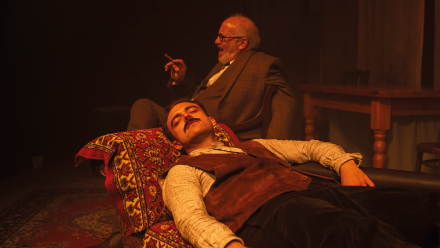
The Gang of Three gets into the nitty-gritty of Labour politics in the 1970s. It opens with the resignation of Roy Jenkins as deputy leader in 1972 in a desperate attempt to quell the party’s growing hostility to the Common Market. He holds a council of war with Anthony Crosland, his old Oxford chum, and they discuss their next moves while awaiting the arrival of Denis Healey whom they both heartily detest. The writers, Robert Khan and Tom Salinsky, capture the characters beautifully. Crosland considers himself more gifted and mature than Jenkins but he hasn’t yet made his mark by holding one of the great offices of state. He boasts about his record during the 1960s when he destroyed the grammar school system and cancelled the Channel tunnel. Both achievements make him deeply proud.

How tech ruined theatre

Theatre

Poor John Dennis. In 1709, the playwright devised a novel technology to simulate thunder to accompany his drama Appius and Virginia. The play flopped and was promptly booted out of the theatre. To add salt to the wound, Dennis’s thunder-generating technique was stolen and inserted into a staging of Macbeth. He accused the producers of ‘stealing his thunder’, birthing the phrase that has long outlived his work. Stage technology has come a long way since. Directors have a toy box of high-tech smoke and mirrors at their disposal. Perhaps it’s more of a Pandora’s box. Live on-stage cameras are particularly in vogue. Watch them crawling all over Jamie Lloyd’s monotone Romeo and Juliet and Ivo van Hove’s ill-fated Opening Night. They’re even parodied in Inside No.

Why were the Scots so much better at painting than the English?

This exhibition is awash with luscious brushstrokes, but then that’s to be expected: it’s full of Scottish painting. Before the barren era of conceptual art, which most hope is over, people often observed that the Scots could paint while the English could draw. Why is a bit of mystery, but it was true right through the 18th and 19th centuries and well into the 20th. The Dovecot Studios exhibition opens with John Duncan Fergusson’s portrait of his lover and first muse, Jean Maconochie, painted about 1902. It’s a fabulous eyeful of brush marks.

Igor Levit’s 12-hour performance of Satie’s Vexations was far too short

So, in the end, it was long but not that long. Twelve hours, compared to the 20 hours-plus many of us had been anticipating. The fastest on record? Very possibly. Igor Levit had started Satie’s Vexations just after 10am on Thursday 24 April, and completed repeat number 840 of this niggly little bastard of a phrase around 10.30pm, preventing any kind of mass sleepover at the Queen Elizabeth Hall. No screens were required in the end either – screens that the Guardian had reported were scheduled to appear around the pianist to hide his modesty when the toilet beckoned. (The logistics of this seemed ambitious.) Instead whenever Levit decided it was time for a loo break he simply walked off stage.

Igor Levit performing Satie's Vexations. Image: Pete Woodhead

Why is the National Portrait Gallery’s collection so poor?

Arts feature

The recent announcement that the National Portrait Gallery has purchased two works by Sonia Boyce and Hew Locke for its collection came as something of a shock. The surprise? The art was actually good. Boyce’s quarterised collage ‘From Someone Else’s Fear Fantasy (A Case Of Mistaken Identity? Well This Is No Bed Of Roses) To Metamorphosis’ (1987), reminiscent of an enlarged and doodled upon set of passport photographs is a complex work of art made better the more attention you give it; Locke’s maximalist approach with the bust ‘Souvenir 17 (Albert Edward, Prince of Wales)’ (2024) may not be to everyone’s taste, but his sculpture is full of humour and pathos.

Prepare to feel nauseous at this School Dinners exhibition

Exhibitions

If your stomach turns when you walk past a Japanese restaurant with moulded plastic replicas of sushi on display, prepare to feel even more nauseous in the School Dinners exhibition at the Food Museum in Stowmarket, Suffolk. Here, moulded in that same plastic, in (if anything) even more garish colours, you’ll see a sample two-course school dinner from each decade from the 1940s to the 2020s. If orange PVC cod’s roe looks a bit disgusting, a heap of pale, lumpy, plastic 1970s mashed potato with over-boiled carrots is even worse. The sample plate from the 1940s contains chunks of dark brown liver polluting the inside of a jacket potato. (I’m not sure dinner ladies would have put liver inside a jacket potato in the 1940s.

Imagine Dua Lipa releasing an album of Victorian parlour ballads

More from Arts

Grade: B+ This is unexpected. A bright young cellist – one of the brightest, in fact – makes his recorded debut with a collection of opera fantasies. In the 19th century, touring virtuosos routinely ransacked hit operas for melodies, then decked them out with every conceivable bit of flummery, dazzlement and top-end-tinsel, the better to excite their fans. They were wildly popular. The young Wagner spent a miserable few months in Paris compiling opera fantasies for cash in hand. The process basically radicalised him. Nowadays, there’s no less fashionable genre, and for the excellent 26-year-old American cellist Zlatomir Fung to record a whole disc of the silly things – well, it’s as if Dua Lipa had suddenly released an album of Victorian parlour ballads.

How come the only Palestinians Louis Theroux met were non-violent sweeties?

Television

Louis Theroux: The Settlers was never likely to be a programme with much of a narrative arc – and so it proved. In the first 30 seconds, Louis put it to a Jewish householder on the West Bank that his house was ‘quite deep in what are called the Palestinian Territories’. ‘You call it the Palestinian Territories,’ the man replied. ‘I call it the heart of Judea.’ And that, on the whole, was that. Louis travelled from one Jewish settlement to another, doing his best to challenge the inhabitants with his faux-naif questions and impressive range of quizzical expressions. And yet, of course, none of them budged an inch.

Confusing but highly watchable: Slade in Flame reviewed

Cinema

Slade in Flame was glam-rock band Slade’s first foray into film – and also their last. It was a flop on its release in 1975 and that would have been that, end of story, gone and forgotten, except it has been rediscovered in recent years, with critic Mark Kermode even hailing it as ‘the Citizen Kane of British pop movies’. That, I think, may be something of an overstatement but it’s still a highly watchable 90 minutes, does offer some banging tunes, and Noddy Holder, who plays the lead, does not embarrass himself on the acting front. (The other band members play lesser roles, perhaps mercifully.)  Newly remastered by the BFI for its 50th anniversary, the film is currently out in cinemas and will be available on Blu-Ray/DVD from 19 May.