Culture

Culture

The good, the bad and the ugly in books, exhibitions, cinema, TV, dance, music, podcasts and theatre.

The greatest decade for British painting since Turner and Constable? The 1970s

Exhibitions

Slowly the canvas was unfurled across the concrete floor of a warehouse on an industrial estate in Suffolk. On and on it went, a flurry of paint marks and brush strokes, yellow, green and occasionally blue, like a cornfield at harvest time. By the time we got to the end some seven metres of it lay stretched out at our feet. It was the first time anyone had seen this unknown magnum opus by Gillian Ayres since it was rolled up in 1974 – and it looked sensational. Recently I’ve been reflecting on the 1970s for a couple of reasons. One is that I’m working on a book about art in London at that time, the other is that I’ve been helping to organise an exhibition of Ayres’s work from that era at the Heong Gallery, Downing College, Cambridge. Of course, as L.P.

Scooby-Doo has better plots: Almeida’s A Moon for the Misbegotten reviewed

Theatre

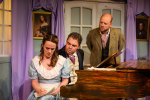
A Moon for the Misbegotten is a dream-like tragedy by Eugene O’Neill set on a barren farm in Connecticut. Phil Hogan and his daughter Josie have worked the rocky soil for 20 years and they’ve come up with a joke. ‘If cows could eat stones this would be a grand dairy farm.’ Phil is a coarse, shifty bully who starts the play by assaulting his neighbour and threatening to murder him. For some reason this crime goes unpunished and the incident isn’t mentioned again. Very odd. The elements of this lop-sided story are clumsily arranged by O’Neill. His cold, narcissistic characters don’t make much sense and the subplot concerning a property deal is so complicated that it doesn’t affect the narrative one way or another.

Depressingly corny: Quadrophenia, a Mod Ballet, reviewed

Dance

It’s all very well for people like me to sneer at dance makers for drawing on classic rock as a quick way of pulling in the punters, but the trick clearly does the business. Sadler’s Wells was pretty well full on the night I saw Pete Townshend’s Quadrophenia, a concept album that has endured several iterations and rewrites since the recording was first released on vinyl by the Who in 1973. An audience of all shapes and ages seemed to be having a good time, but although there’s nothing disgraceful about the show that director Rob Ashford has overseen, it seemed to me depressingly corny and laboured – a bumpy ride hitched to a creaky old bandwagon.

The Simpsons may be genius – but it’s also evil

Television

Marge Simpson is dead. But does anyone care? I’ve written loads of pieces over the years about the genius of The Simpsons – how extraordinarily prescient it is (most famously when, in 2000, it predicted a Trump presidency), how delightful the subplots are, how it works on so many levels – but I’m now beginning to suspect that all along it was a honeytrap designed to seduce you and your children into screen zombiedom. Obviously I don’t want to push the ‘TV is bad for you’ argument too hard because I might be out of a job.

Brave and beautiful: Longborough’s Pelléas et Mélisande reviewed

Opera

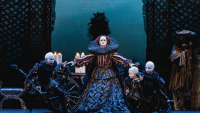
King Arkel, in Debussy’s Pelléas et Mélisande, is almost blind, and he rules over a kingdom of darkness. Debussy’s score is so luminous that it’s easy to forget just how dark it supposedly is, this mythical realm of Allemonde – even despite the libretto’s references to gloomy caves, shadowy castles and forests that block out the sunlight. Many productions take their visual cues from the music rather than the words, providing endless opportunity for shimmering effects and the subtle play of light and shade. Jenny Ogilvie’s staging for Longborough Festival Opera doesn’t just embrace the darkness; it goes all in. Shadows texture the huge, brutalist wall of Arkel’s castle and occasionally – briefly – it’s pierced by shafts of sunlight.

The French sculptors building the new Statue of Liberty

Arts feature

At a miserable-looking rally for the centre-left Place Publique in mid-March, its co-president, MEP Raphaël Glucksmann, made international headlines calling for the Trump administration to return the Statue of Liberty, gifted by the French in 1886 to commemorate the Declaration of Independence: ‘It was our gift to you. But apparently you despise her. So she will be happy here with us.’ The predictably sensationalist headlines dissipated in a flurry of Republican outrage against ‘the low-level French politician’ as quickly as they had arrived. But Glucksmann’s demand – sincere or not – caught the attention of a group of sculptors who, in their words, have ‘taken up the dream of civilisation’ to produce monumental civic sculpture.

Alfred Brendel was peerless – but he wasn’t universally loved

Classical

In middle age Alfred Brendel looked disconcertingly like Eric Morecambe – but, unlike the comedian in his legendary encounter with André Previn, he played all the right notes in the right order. OK, so perhaps I’m selling the maestro a bit short: I do think Brendel, who died on 17 June at the age of 94, was a peerless interpreter of the Austro-German repertoire, and for a time in the 1970s had a better claim than any other pianist to ‘own’ the Beethoven and late Schubert piano sonatas. But some of the media tributes have been embarrassingly uncritical, implying that Brendel was universally loved. He wasn’t, and he didn’t want to be.

Who’s afraid of Virginia Woolf? The BBC, it seems

Radio

‘What a lark!’ I thought to myself as I rose on a hot June morning to listen to a documentary on Mrs Dalloway. A century has passed since Clarissa bought flowers for her midsummer party, and Radio 4 has commissioned a three-parter, with actress Fiona Shaw presenting. ‘What a plunge!’ The first programme had been playing for all of two minutes before my hopes began to wilt like a delphinium. ‘Her face adorns tote bags and internet memes,’ says Shaw of Woolf in the preamble, which sounds as though it has been lifted directly from the series pitch to the BBC. ‘I’ll be asking what… Virginia Woolf has to say to us today.

The Ministry of Lesbian Affairs is as sweet and comforting as a knickerbocker glory

Theatre

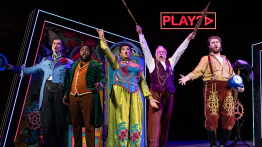
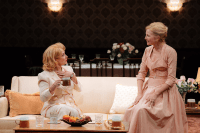
The Ministry of Lesbian Affairs is a comedy that feels as sweet and comforting as a knickerbocker glory. The show is set in a leaky scout hut where a bunch of lesbians meet to perform choral music. The conductor, Connie, has the bluff, good-natured energy of an RAF squadron leader. ‘Snippety-snap,’ she calls as she encourages the ‘ladies’ to warm up. Correct pronoun usage doesn’t interest her. Nor does non-binary language. She’s an OWL (older wiser lesbian) and she runs the choir like a drop-in centre for strays, fugitives and sexual rejects in need of a substitute family. The newest arrival, Dina, is a Qatari princess who lives in a luxury apartment with her controlling brute of a husband.

The architects redesigning death

Exhibitions

Unesco doesn’t hand out world-heritage status to absences, but if it did, there would be memorials all over the western world to our genius in erasing death from our consciousness. We have airbrushed the deceased from our lives with a ruthless efficiency, banishing them to suburban cemeteries where they can spend eternity unvisited. Burials and cremations are today spiritless, functional affairs, death rituals perfunctory, public grieving rare, graves unworthily negligible or unspeakably vulgar, our wakes pretexts to get drunk and obliterate the memory of what just happened. I exaggerate, but not much. The Maltese architect Anthony Bonnici wants to change all that.

None of Mitfords sounds posh enough: Outrageous reviewed

Television

There aren’t many dramas featuring the rise of the Nazis that could be described as jaunty, but Outrageous is one. Oddly, this seems to be the first ever TV drama about the Mitford sisters – and, faced with the choice between playing it for laughs, going for a big historical soap opera or exploring the increasingly dark politics of the 1930s, the show’s writer Sarah Williams has, perhaps wisely, opted for all three. At times, admittedly, the clash of tones can be jarring, but generally in a way that feels like an authentic reflection of a story that remains irreducibly weird. The show also strikes a neat balance between acknowledging the Mitfords’ charm and never entirely succumbing to it.

The vicious genius of Adam Curtis

Television

In an interview back in 2021, Adam Curtis explained that most political journalists couldn’t understand his films because they aren’t interested in music. Having known a fair few political journalists, I can say with some certainty that he was right. Most politically motivated types are – not to be unkind, but it’s true – total losers. This cuts across left and right, all ideologies and tendencies, from Toryism to anarchism to Islamism and back: whatever you believe, if you believe it too strongly you were probably a weirdo at school. The other kids went out clubbing; you stayed at home, drawing pictures of Lenin or von Mises on your satchel. The other kids were in bands, you were in a reading group.

Dua Lipa sparkles at Wembley – but her new album is pedestrian

Pop

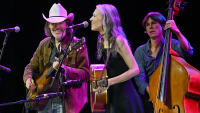
If, as is said, there are only seven basic narratives in human storytelling, then there should be an addendum. In rock and pop there is only one: the dizzying rise, the imperial period, the fall from grace (either commercial or ethical, sometimes both), and the noble return (historically prefigured with a glossy music mag cover proclaiming: ‘Booze! Fights! Madness! How Rubbish Band went to hell – and came back’). All three were on view in London this past fortnight. Waxahatchee was the one on the way up: this was, Katie Crutchfield announced proudly from the stage, the ensemble’s biggest-ever show. Dua Lipa was the one entering her imperial phase – her first Wembley headline, with a production to match.

The politics of horror

Arts feature

Everyone forgets the actual opening scene of 28 Days Later, even though it’s deeply relatable, in that it features a helpless chimp strapped to a table and forced to watch doomreels of ultraviolence until it loses its little monkey mind and eats David Schneider. But it’s eclipsed by the famous sequence that follows where Cillian Murphy wakes in a hospital bed to find that he has slept through a deadly pandemic and the ensuing collapse of civilisation. As Murphy drags his not-yet-world-famous cheekbones through an eerily abandoned metropolis, we see Piccadilly plastered with the names and faces of the missing and the dead. Audiences in 2002 were reminded of the recent World Trade Centre attacks, which happened in the middle of filming.

The cheering fantasies of Oliver Messel

Exhibitions

Through the grey downbeat years of postwar austerity, we nursed cheering fantasies of a life more lavishly colourful and hedonistic. Oliver Messel fed them: born into Edwardian privilege, the epitome of well-connected metropolitan sophistication, he doubled up as interior decorator and stage designer, creating in both roles a unique style of rococo elegance and light-touch whimsy that sweetened and consoled – ‘a gossamer world of gilded enchantment’ as Roy Strong soupily put it. ‘Marie Antoinette would have felt at home in any of his settings.’ Like his rival Cecil Beaton, Oliver Messel sums up an era Posterity has not been kind to Messel.

London’s best contemporary art show is in Penge

Exhibitions

If you’ve been reading the more excitable pages of the arts press lately, you might be aware that the London gallery scene is having one of its periodic ‘moments’. A fair few spaces, mostly concentrated around Fitzrovia, have sprouted up since the pandemic, notable for their bacchanalian openings and tantalisingly gnomic Instagram posts. Their online presence is at best spectral: the most hyped of the bunch, a Smithfield gallery called Ginny on Frederick, has a holding page in place of a website. Still, I like a scene, and London Gallery Weekend, an annual June event, presented a good opportunity to investigate. Niso gallery, on New Cavendish Street, has put on a seductive showing of the Argentinian conceptualist Martina Quesada (open until 28 June).

If you think all orchestras sound alike, listen to this recording

The Listener

Grade: B+ These are gloomy days, so here’s a burst of melody and colour to cheer you up. Back in the LP era it wasn’t unusual for classical recordings to be put together like a concert that you might actually want to hear: a sequence of works by different but complementary composers, offering the possibility of a happy discovery. Come for the Strauss, stay for the Reznicek – that sort of thing. This lively new disc from the Borusan Istanbul Philharmonic adopts the same principle. The unifying theme is early-20th-century eastern European nationalism – the folksong-collecting variety, not the Archduke-assassinating kind. But it’s the opposite of monotonous.

Astonishing ‘lost tapes’ from a piano great

Classical

These days the heart sinks when Deutsche Grammophon announces its new releases. I still shudder at the memory of Lang Lang’s 2024 French album, in which he drooled over Ravel’s Pavane pour une infante défunte; when I reviewed it I suggested that if the poor girl wasn’t dead when he started, then she certainly was by the time he’d finished. Now she’s been killed again, this time by the guitarist Robin Scherpen, whose Ravel Reimagined offers us ‘a peaceful and serene soundscape’. Then there’s Rêverie from Nemo Filou, a trio whose cocktail-lounge noodling allows ‘the listener to drift off into bliss’, and Sleep Circle, a ‘re-recorded version of the 2012 project Sleep’ by DG’s in-house snoozemeister Max Richter.

Style, wit and pace: Netflix’s Dept. Q reviewed

Television

Can you imagine how dull a TV detective series set in a realistic Scottish police station would be? Inspector Salma Rasheed would have her work cut out that’s for sure: the wicked gamekeeper on the grisly toff’s estate who murdered a hen harrier and then blamed its decapitation on an innocent wind turbine; the haggis butcher who misgendered his vegetarian assistant; the Englishman who made a joke on Twitter about a Scotsman going to the chippy and ordering a deep-fried can of Coke… It would get lots of awards, obviously, but I doubt it would do that well in the ratings. As with Slow Horses, this is about enjoying the company of loveable misfits But you needn’t worry about Dept. Q (Netflix).

The artistic benefits of not being publicly subsidised

Dance

Paralysed rather than empowered by the heavy hand of Big Brother Arts Council, the major subsidised dance companies are running scared and gripped by dismally risk-averse and short-termist attitudes. Free from the deadening metrics of diversity quotas and targeted outcomes, smaller more independent enterprises – London City Ballet and New English Ballet Theatre among them – can be lighter on their feet: they have inherited something of the pioneering spirit of Marie Rambert and Ninette de Valois a century ago and they deserve support. Another such is Ballet Nights – a series of one-off galas masterminded by Jamiel Devernay-Laurence, who doubles up as an embarrassingly brash compère, introducing each performer as though they were contestants at a rodeo. I wish he wouldn’t.

Superb: Stereophonic, at Duke of York’s Theatre, reviewed

Theatre

Stereophonic is a slow-burning drama set in an American recording studio in 1976. A collection of hugely successful musicians, loosely based on Fleetwood Mac, are working on a new album which they hope will match the success of their previous number one smash. This is an absolute treat for anyone who appreciates subtle, oblique and quietly daring theatre The studio could almost be an orphanage because the characters keep squabbling and bickering like siblings in need of a parent. The self-appointed leader is Peter (Jack Riddiford) who dresses in classic hippy mode with a kaleidoscopic shirt and a droopy moustache. But he rules the studio with a rod of iron.

Magnificently bloodthirsty: 28 Years Later reviewed

Cinema

First it was 28 Days Later (directed by Danny Boyle, 2002), then 28 Weeks Later  (Juan Carlos Fresnadillo, 2007) and now Boyle is back at the helm with 28 Years Later, which is, as I understand it, the first in a new trilogy. This post-apocalyptic horror franchise could go on for ever. As the last film was generally (and rightly) regarded as a desultory cash grab, there is much riding on this one. The verdict? It’s entertaining but not outstanding. The biggest surprise is its tonal swerve into sentimentality. Jodie Comer and Ralph Fiennes, however, bring character and heft and, just to put your minds at rest, yes, it’s as magnificently bloodthirsty as ever.

The Renaissance master who rescued polyphonic music

Arts feature

Last month I watched conductor Harry Christophers blow through what sounded like an arthritic harmonica but in fact was a pure-toned pitch pipe, which handed the singers of his vocal group the Sixteen their starting notes. Then the Kyrie from Giovanni Pierluigi da Palestrina’s Missa Regina coeli unfolded inside the resonant splendour of St James’s Church in Mayfair and, 500 years after his birth, I grasped why Palestrina, maestro di cappella of St Peter’s Basilica in Rome from 1551-5, still has the capacity to surprise. Christophers and the Sixteen are celebrating this greatest of the late Renaissance composers in his anniversary year with three concerts promoted by the Wigmore Hall but held at St James’s: this music lives or dies by the acoustic in which it is heard.

How do you exhibit living deities?

Exhibitions

The most-watched TV programme in human history isn’t the Moon landings, and it isn’t M*A*S*H; chances are it’s Ramayan, a magnificently cheesy 1980s adaptation of India’s national epic. The show has a status in India that’s hard to overstate. Something like 80 per cent of the entire population watched its original run; in rural areas entire villages would crowd around a single television hooked up to a car battery. When the show ended, omitting the ‘Uttara Kanda’, the fairly controversial last book of the original poem, street sweepers across the country went on strike, demanding the government fund more episodes. The government caved. But while every country has its pieces of cult media, in India the cult is literal. Some viewers would take a ritual bath before tuning in.

Darkly comic samurai spaghetti western: Tornado reviewed

Cinema

Tornado is a samurai spaghetti western starring Tim Roth, Jack Lowden and Takehiro Hira (among others). Samurai spaghetti westerns aren’t anything new. In fact, we wouldn’t have spaghetti westerns if it weren’t for the samurai genre – Sergio Leone’s Fistful of Dollars (1964) was, as Clint Eastwood conceded, an ‘obvious rip-off’* of Akira Kurosawa’s Yojimbo (1961) – yet this may be the first one set in 1790 and filmed in Scotland. It may also be the first one to feature thick woollens and tweed. That makes it sound twee which it isn’t. It’s a super-bloody revenge story filmed in just 25 days with a running time of 90 minutes. We love a 90-minute film, so I feel bad saying this, but it does feel as if it needed more time to cook.

The charm of Robbie Williams

Pop

What could it possibly feel like to be a sportsperson who gets the yips? To wake up one morning and be unable to replicate the technical skills that define you. To suddenly find the thing you do well absolutely impossible. Golfers who lose their swing, cricketers whose bowling deserts them, snooker players who can’t sink a pot. Stage fright – something both Robbie Williams and Cat Power have suffered from – is much the same. Williams took seven years off touring last decade because of it, which must have been devastating for someone whose need for validation is so intense that he has made it his brand.