Books and Arts opener – 24 November 2016

The good, the bad and the ugly in books, exhibitions, cinema, TV, dance, music, podcasts and theatre.
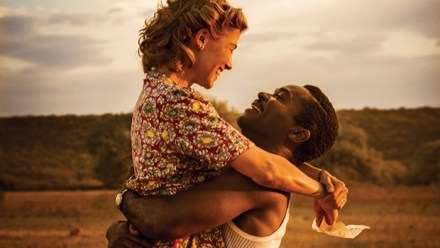
A United Kingdom is based on the greatest love story you probably didn’t have a clue about. I know I didn’t. It’s based on the true story of Seretse Khama, heir to the African kingdom of Bechuanaland (now Botswana), and Ruth Williams, a typist, who fell in love in 1940s London and married despite everyone and everything trying to separate them, including a vicious colonial British government. But this, sadly, is not the greatest film about the greatest love story you didn’t have a clue about. It’s OK. It does the job. It’s serviceable. It won’t be the biggest disappointment in your life. The story’s too good for it to get away completely.
Apart from the next Game of Thrones, there’s nothing I’ve been looking forward to quite as much as The Grand Tour (Amazon Prime). I like Clarkson, Hammond and May, I like banter, I like political incorrectness, I like exotic scenery, I like cars, I like puerile jokes and I liked Top Gear. Take the same ingredients but with a £4.5-million-per-show budget — more than four times what they had with the BBC — and you’d have to ask yourself: ‘What could possibly stop this from being the greatest TV show ever?’ Well, I hate to be a party pooper but it’s definitely not there yet. We had some friends staying for the weekend and we all sat down eagerly after supper, fully expecting to be wowed.

The last ten minutes of any Don Giovanni tell you more about a director than the previous two hours. Mozart’s elastic ‘dramma giocoso’ can take a lot of pulling about, can be stretched taut into tragedy or squeezed into the tight confines of a farce, but whatever option (or combination of options) you choose, those final moments are the test of success — the point at which the dramatic threads either sag, snap or hold firm. Oliver Mears’s production — first seen at the Bergen National Opera and now at NI Opera in Belfast — lets them fall limp. Seemingly unsure which choice to make, he makes no choice at all, leaving us with an ending that isn’t so much elusive as it is evasive.
When did you last experience a boring Sunday afternoon? If you’re over 16, probably not since you were last 16 and stuck at home, raindrops sliding down the window pane, nothing on TV until five o’clock, nowhere to go because everywhere is shut. But boredom, says Phill Jupitus, has become an endangered emotion. Now that we have smartphones, at a gentle swipe, the touch of a button, we have access to any amount of diversion, 24 hours a day. We need never find ourselves with nothing to do, nothing to read that takes our fancy, no one to talk to. He’s not happy about this.

Who could resist School of Rock? For me it was a chance to see a heavy-metal musical written by the best-known headbanger in the House of Lords, Julian Fellowes. The movie features Jack Black as a failed rock guitarist who bluffs his way into a private school and turns a class of robotic snoots into a prize-winning band. It’s one of the most joyous stories ever filmed. This version, faithfully scripted by his lordship, rises to the same level and delivers a night of sheer rapture. The thing is like a drug. Every performance sends skyrockets of happiness zinging up and down your spine. David Flynn has an echo of Jack Black about him but he brings added stores of charm and humour to Dewey. Preeya Kalidas is wonderfully nasty as Ned’s hideous girlfriend, Patty.
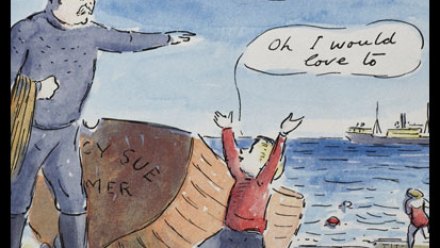
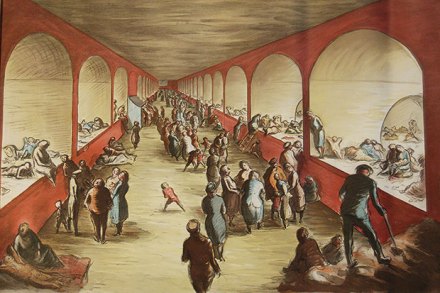
It’s funny, isn’t it, how a dust jacket on a book can draw you to it from the other end of a room — always supposing the illustration is by Edward Ardizzone. In fact, is there anything more suggestive of delight than a book illustrated by him? It’s the Midas touch even for unprepossessing authors. The exhibition of his work at the House of Illustration finishes off with a wall lined with them: The Little Grey Men, Jim at the Corner, Italian Peepshow, Johnny’s Bad Day, Eleanor Farjeon’s Book... you’ll recognise lots.
With the money from her accident she bought herself a mobile home. That is not your average opening line. Most pop songs don’t get all in your face from the get-go, certainly not with a masterpiece of compact, single-sentence story telling such as this. Billy Bragg dispenses with the pleasantries in favour of a narrative gauntlet. He throws down the most heavily loaded of lyrics. It is a complete and self-contained twelve word story, but it begs so many questions about possible pasts and possible futures and possible protagonists. You could rewind from here, or fast forward. You could pull out or zoom in. You want to do all of these things.
It took a while for Brigid and I to get to know each other, not to mention like each other. But then it was total lifelong devotion. At first, when I started out at Interview, in 1970, Brigid would give me The Glare, which was the negative equivalent of Nancy Reagan’s The Gaze. One or two seconds of that killing look were enough to put across Brigid’s message: stay away. But a few years later, she gave up speed, moved to a proper apartment on East 22nd Street, and took a steady job as receptionist and transcriber of Andy Warhol’s tapes at the new Factory at 860 Broadway. That was when we bonded.

‘What is man, that thou art mindful of him?’ asks the Psalmist. It’s a good question. God Himself doesn’t give a very satisfactory answer. In one breath he insists that humans are a little lower than the angels, made in His own image, but also (in a formulation as bleak and more terse than any modern reductionist’s) that they are made of dust, and to dust they will return. Darwin tells us a similar story. We don’t have to flip back too many pages in our family albums, he says, before we see furry, feathered and scaly faces. But then he draws an exuberantly branching tree of life, rooted in stardust, and tells us that we’re perched on the topmost bough. It’s not surprising that we’re confused.

Barbed wire, concrete, razor blades, passports, Bakelite and the sewage system are all crucial to the way we live now yet what do most of us know about who, when, how they were invented? In an ambitious new series for the World Service, 50 Things That Made the Modern Economy, Tim Harford intends to put us straight, taking one thing each week over the next year and in just nine, tight, well-ordered minutes giving us its potted history. This weekend, for instance, Harford introduced us to the Haber-Bosch process, which he argues is ‘the most significant invention of the 20th century’, allowing the world’s population to grow exponentially from four billion people in the 1910s when it was first introduced to seven and a half billion now.

If I tell you that on Monday there was an hour-long documentary about the history of stamp-collecting, then you probably don’t need this column’s usual bit in brackets saying which channel it was on. Indeed, at times Timeshift: Penny Blacks and Twopenny Blues seemed determined to be the most BBC4-like programme in the history of BBC4: cheerfully niche, heroically indifferent to all notions of cool and so old-school in its production style that any mention of France was introduced with a blast of accordion music. Above all — and unlike so many other documentaries elsewhere — it was wholly confident that its viewers would be interested in interesting things without having to be shrilly reminded every few minutes of how interesting they are.
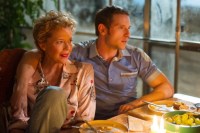
Indignation is an adaptation of Philip Roth’s 2008 novel and amazingly, for an adaptation of a Philip Roth novel — see the recent dog’s dinner that was American Pastoral, for example — it may even be worth two hours of your time. (Depending on what you would otherwise be doing with that time; I wouldn’t wish for you to cancel that hip operation or similar.) It stars Logan Lerman as Marcus Messner, a 19-year-old Jewish boy from Newark who, in 1951, escapes the Korean war and the over-anxious clutches of his parents by winning a scholarship to a college in Ohio. Marcus, at the outset, is a good Jewish boy — an exemplary Jewish boy. Marcus is the Jewish boy you would want if you happened to be in the market for a Jewish boy.

One of David Bowie’s last works, Lazarus, is a musical based on Walter Tevis’s novel The Man Who Fell to Earth. Enda Walsh has written the script. The lead character, Newton, is a derelict celebrity addicted to gin who occupies a big brown apartment full of bickering attendants. It’s unclear who or what Newton is. Human or alien? Something in between? His ontological status is a further puzzle. He may be alive, dead, half-dead, non-dead, half-undead or semi-not-quite-half-unalive. This is a problem, dramatically. A character who exists outside the mortal realm can’t make choices or perform actions that affect himself and others. He’s not a personality, therefore, just a puzzle wearing some clothes. Beige clothes in this case.

I wonder why ENO has invested in a new production of Berg’s Lulu, when the previous one, which we first saw in 2002 and then in 2005, was so brilliant as to be virtually definitive. (Of course, that last word is anathema to operatic ‘creative’ teams, for obvious reasons.) Not that this new one, directed by William Kentridge, isn’t good too, though it is excessively busy, compounding the hyperactivity of the score and action. It doesn’t do anything to clarify matters, though almost all the questions one is left asking are ones that the composer-librettist has set.

Whenever the words ‘stucco house’ appear in the newspapers, you can be certain the occupiers have been up to no good. The Russian kleptocrat in his stucco palace in Mayfair. The shamefaced prime minister seeking refuge in the stucco mansion of a party-donor chum. The disgraced wife-throttler with a stucco terrace in Eaton Square. In each case, it is miscreant stucco, offshore-trust stucco, stucco hiding corruption and foul play behind whiter-than-white, butter-wouldn’t-melt façades.
Vincent van Gogh spent a remarkably short span of time in the southern French town of Arles. The interval between him stepping off the train from Paris on 20 February 1888 and his departure for the asylum at Saint-Rémy on 8 May the following year was a scant 14-and-a-half months. For some of this time the painter was hospitalised and seriously ill, yet in this brief period he produced not just one, but several of the greatest pictures in the history of art. It might be thought that there was nothing more to discover about Vincent in Arles, a subject that has been so discussed, investigated, dramatised and filmed over the years. But this year a flurry of fresh information has appeared.
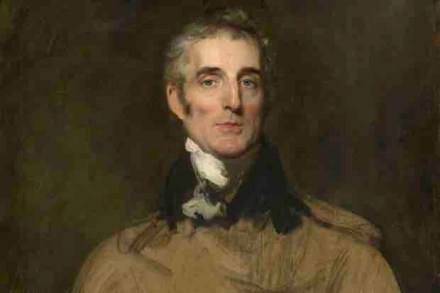
For some inexplicable reason the National Portrait Gallery, of which I am a trustee, doesn’t have a significant portrait of the Duke of Wellington. There’s one rather stiff picture in oil by Robert Home from when he was a young soldier in India and a few watercolours of him in retirement, but weirdly none at all of the vigorous statesman and victor of Waterloo at the height of his prestige and powers. This is astounding considering that — apart from the Duke of Marlborough — Wellington was by far the greatest soldier Britain has ever produced, and moreover one who went on to become prime minister.
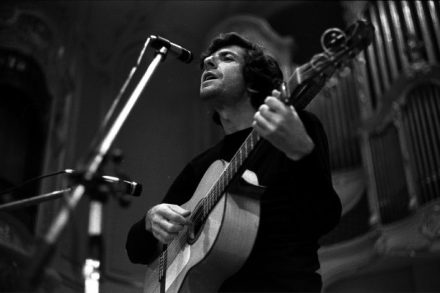
For millions of people around the world the shock of the US election results will be enormously magnified by news of the death of Leonard Cohen, 82, a singer poet icon who had long sung about his own impending death. Thin and frail he died in Los Angeles in the early morning hours of November 8 -- the day of the US elections -- according to sources close to the family. A Canadian by birth he had long said that he wanted to be buried in his hometown of Montreal in the family graveyard lying alongside his Jewish forefathers, before any public announcement of his death was made. The formal announcement of his death has only spoken about a public memorial service to be held in the future in Los Angeles and there is no mention of where or when he was buried.
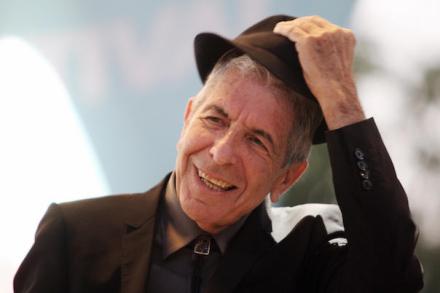
Everyone has a special place in their heart for the late Leonard Cohen – from his 80-something contemporaries to middle-aged musos to teenage girls. The last – quite unusual for an artiste of Cohen's generation, especially one so apparently glum, uncommercial and downbeat – is largely thanks to his composition 'Hallelujah', which was what Alexandra Burke sang to win the X-Factor final in 2008. It was memorably covered for Generation X by the doomed Jeff Buckley in an angelic rendition on his 1994 album Grace. Oh and also it appears in a very sad moving scene in Shrek. And it's not even Cohen's best song. Cohen himself thought little of it when it trickled out on his 1984 album, Various Positions.
Forty years ago this month a film appeared, so prescient I wonder if its author, Paddy Chayefsky, saw the 2016 American presidential election campaign in a crystal ball. It was called Network and it foretold the rise of Donald Trump. The plot is King Lear appears on Newsnight: a newsman run mad. The protagonist is Howard Beale (Peter Finch), an anchorman at a failing network. The year is 1976, and America is embattled with inflation, depression and the end of the Vietnam war. It is not a time for American heroes, to paraphrase Chayefsky’s acolyte Aaron Sorkin writing in The West Wing. Beale’s ratings are low. He is fired. He announces that he will kill himself, live on air. ‘I just run out of bullshit,’ he says.

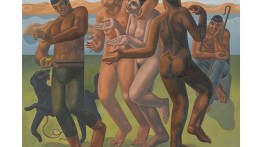
The catalogue to Pallant House Gallery’s latest exhibition features a favourite anecdote. It is 1924 and a competition is being held to find the woman with the most pleasing vital statistics. As a paradigm, the judges choose the Venus de Milo. Thousands of women queue up to find out whether their measurements — not only bust, waist and hips, but thighs, calves, neck, wrists even —approximate closely enough to those of the ancient sculpture to earn them the prize of £5. No one thinks to mention that the Venus is missing both arms. Classical myth was all the rage after the first world war. When the world felt like chaos, it was only logical to go back to the beginning.
Years ago, when I met a famous concert pianist, I was surprised when he greeted me in a northern accent. A soft one, mind you, but completely intact. I’d assumed that, by the time a conductor or soloist reached a certain level of fame, the northern vowels would have been erased by Received Pronunciation or some painful mid-Atlantic hybrid. I was such a little snob in those days, affecting a languid drawl that had my old schoolfriends in Reading rolling their eyes. But my social climbing had at least given me a good ear for other people’s doctored accents. London was crawling with northern choirmasters and music critics whose self-taught ‘posh’ accents were about as convincing as home-tinted hair (which, incidentally, some of them also sported).
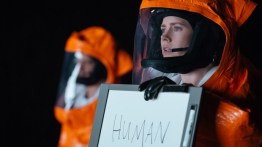
Arrival is a big budget sci-fi film with a smaller, more pensive, cleverer film trying to get out, which has to be an improvement on a dumb film with an even dumber film trying to get out, as in the manner of Interstellar, say. So we have that to be thankful for, at least. The film stars Amy Adams, who appears to be everywhere these days. (Check your sock drawer and under the bed; you never know.) She plays Dr Louise Banks, a university linguist who lives in a beautiful, modernist lakeside house, as any academic in any American film always does. (Do such houses come with tenure?) As we see right at the start, she is mourning the death of her daughter.
When Mozart was commissioned to write an opera for the coronation of Emperor Leopold II, he produced La clemenza di Tito: a hymn to the benevolence of a Roman despot. When Matt Rogers and Sally O’Reilly were commissioned by the Inner Temple, they came up with an opera in which the protagonist is a law student who tries to obstruct the emergency services. The Fire of London is spreading, you say. And the only way to save life and property is by creating firebreaks? Sorry, I think you’ll find that, under Section 15 (4) of the Irresponsible Pettifogging Jobsworth Act 1661, you can’t do that. Truly, an operatic hero for our time.
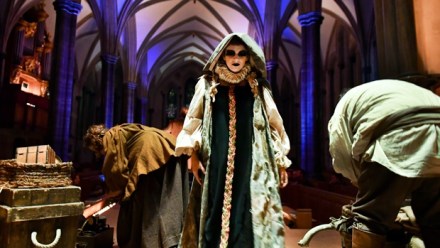

There was something unexpectedly moving about hearing not just one but several renditions of the somewhat naive and rose-tinted but always heartfelt ‘The Star-Spangled Banner’ when I switched on the radio after several days’ absence. America has been so much in our thoughts these past few weeks, but a distasteful, shameful version of itself. It was just so refreshing to hear something different, something meaningful, yet still so American, like a glass of ice-cold water after a long walk in the heat.
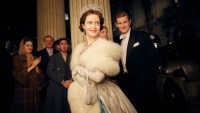
Nairobi. February 1952. Laughing children brandishing sticks are driving an indignant bustle of ostriches up a rudimentary 1950s-Africa semi-bush runway towards the camera, when — WHOOSH! — right over their heads skims the exact BOAC aircraft in which the actual soon-to-be Queen Elizabeth flew to Kenya, as painstakingly rebuilt by the world’s top aircraft restorers at a cost of only $27 million... Actually, I made up the last detail. But if you want to know why the drama departments at the BBC, Channel 4 and ITV are quaking in their boots just watch a couple of episodes of Netflix’s sumptuous, leisurely and immaculate recreation of the Queen’s early years on the throne. It’s like the moment when America entered the war: ‘Such materiel!
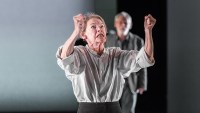
Dynastic affairs and international relations were once a seamless continuum. Royal weddings accompanied peace treaties. An heirless realm was vulnerable to invasion. Botched successions led to war. This is the political context of King Lear but Deborah Warner sets the play in modern times, which muddles everything. Britain in the Dark Ages is represented by a scout hut or a therapy suite. Plain walls, bleached flooring, a semi-circle of blue plastic chairs. Enter the king’s court led by a crownless Glenda Jackson (Lear), sporting a black ensemble topped by a chic scarlet cardigan. Is this a brutal tyrant on the brink of a psychotic meltdown? Nope. It looks like Granny wearing ‘something special’ for her 80th at the care home.