Culture

Culture

The good, the bad and the ugly in books, exhibitions, cinema, TV, dance, music, podcasts and theatre.

Kids Company faces the music

Features

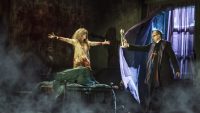
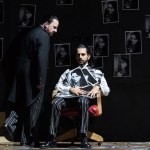
It was surreal to sit in the Donmar Warehouse and watch Committee, a musical based on the investigation into the charity Kids Company. The first oddity was that anyone ever thought to write a musical based on the transcript of a Public Administration and Constitutional Affairs Committee. The second, that this production wouldn’t have existed if The Spectator hadn’t published an article (by me) raising questions about Kids Company’s appallingly managed finances and the behaviour of its chief executive, Camila Batmanghelidjh. It’s strange that Camila has come to this. In February 2015, it was considered sacrilege to utter a word against her.

A genuine oddity

Music

The most compelling pop singers in music right now — at least in the branch where pop singers still play guitars — were on stage last week. The 1975, fronted by Matty Healy, finished the tour in support of their second album, a US and UK number one, with a headline show at the Latitude festival, the chosen spot for recreational drug-taking by kids who have just finished their GCSEs. Ezra Furman played his most prestigious London show yet, appearing at the Barbican as part of the 20th anniversary celebrations of his label, Bella Union. Healy and Furman are very different — the one a genuine popstar, the other off in the margins — but also defined by their similarities.

The joy of the Proms

Radio

Summer nights, hot and humid, mean just one thing — it’s Proms season again. Sore feet, sweaty armpits, queuing outside the ladies loos, home on the Underground with a head and heart buzzing with Bruckner or Bacharach, Handel or Honegger. Just as special is the nightly feast on Radio 3 — a live concert, guaranteed every evening, and on top of that specially commissioned talks and literary events to get us thinking. On Sunday afternoon, in between the Mozart and Schumann performed by Bernard Haitink and the Chamber Orchestra of Europe (COE) at the Royal Albert Hall, Sarah Walker took us inside the working life of an orchestra. What does it take to create the particular sound of an ensemble of individual players? How important is the conductor?

Out of sorts at the RSC

Theatre

The RSC’s summer blockbuster is about Queen Anne. It’s called Queen Anne. It opens at the Inns of Court where drunken wags are satirising the royals with a naughty sketch about boobs and beer guts. Everyone on stage pretended this was hilarious. A few audience members did too, out of politeness. The principal characters arrive with their dramatic goals on display. Queen Anne wants to rule wisely. Her general, Marlborough, wants to conquer widely. His wife, Sarah, wants to help her monarch to rule wisely and her husband to conquer widely. And Sarah’s scheming cousin, Abigail, wants to befriend the Queen so that she can marry a steady salary. These characters are neither very admirable nor very wicked and their objectives don’t cohere into a single narrative.

New kid on the block

Opera

The new Grange Park Opera at Horsley is amazing, as everyone who visits it must agree. In less than a year a pretty large, comfortable theatre, with excellent acoustics and a large stage, has been erected from nothing, and among the first productions is one of Die Walküre, a demanding work in all respects, and one which, when it is largely successful, as the performance I went to was, provides an exalting and moving experience such as few works can. You probably need to be as difficult and abrasive a personality as Wasfi Kani to bring it off, but there is no doubting that she has. The ‘creative team’ has as its most important members Stephen Barlow conducting, despite his concurrent work at Buxton; Stephen Medcalf directing, and Jamie Vartan designing the sets.

Visual, visceral, confusing

Cinema

Christopher Nolan’s Dunkirk has already been described as ‘a masterpiece’ and ‘a glorious, breathtakingly vivid triumph’, but we need to be cautious. Look at all the fuss about Baby Driver and what an average film that turned out to be. This certainly isn’t your regular war film — no one, for example, says ‘it’s quiet’ and is then told: ‘yes, too damned quiet…’ — but in wanting to deliver a visceral, visual experience, without the hindrance of exposition or back stories, the narrative is often confusing and doesn’t add up to much emotionally.

Dethroned by feminism

Television

I’m a bit worried about Game of Thrones (Sky Atlantic). Not seriously worried: there’s too much money invested, too much narrative hinterland accrued, too much fan-loyalty not to frustrate, too engaging a cast, too brilliant an original conception for the makers to cock it up too badly. Nevertheless, there were a couple of things that troubled me about the first episode of season seven. One: Ed Sheeran. He’s not the first pop star to make a cameo appearance in Thrones — that honour fell a while back to purveyors of epic, weirdy-warbly, Icelandic whale-music-rock, Sigur Ros — but he’s definitely the most obtrusive.

Game of Thrones returns with more of a whimper than a bang

Like an ex-politician with a hot take on Brexit, Game of Thrones is back. The first episode of this seventh, and penultimate, series – ‘Dragonstone’ – saw the entire ensemble of familiar faces return, as the finely poised situation in the show was laid out for all to see. The first six seasons charted the War of the Five Kings, but now, with the Targaryen heir returned to Westeros, and the White Walkers almost at The Wall, we are heading towards the War of the Two Wars – and ‘Dragonstone’ is the start of an inexorable motion towards the show’s final showdown. But by Game of Thrones’s own rollicking standards, ‘Dragonstone’ moves at a rather glacial pace.

Who cares that the new Doctor is female?

Jodie Whittaker: what an inspired choice for the new Doctor. Not only is she a very fine actress, whether she’s playing stricken with grief, as she did in Broadchurch, or a comedically exasperated trainee nurse stressed out by aliens and chavs in the wonderful little film Attack the Block. She also exudes that quality every good Doctor needs: the everyman touch. Or everyperson touch. The sense that while this creature might be a Time Lord with two hearts and a police-box time machine, he — now she — is nonetheless like us. Special but connectable. Otherworldly but worldly. Whittaker can do that. I think she’ll be brilliant. But my joy at seeing an actress I admire land a coveted role has been dampened by the crazy reaction to the news.

Let there be light | 13 July 2017

Arts feature

If you’ve never heard the John Wilson Orchestra, it’s time to experience pure happiness. Buy their 2016 live album Gershwin in Hollywood — seriously, just do it. Play the first track: a medley arranged by Ray Heindorf for Warner Brothers’ 1945 Gershwin biopic Rhapsody in Blue. One by one the great melodies glide past and you’ll already know them, of course: ‘Swanee’, ‘Embraceable You’, ‘I Got Rhythm’. There’s something different, though, about the way they sound here. The brass swaggers; the strings melt and swoon. It’s a sound that most of us have only ever heard through the crackle of a vintage-movie soundtrack, or on a Capitol-era Sinatra LP. But this is fresh — in fact, it gleams.

Wine Club 15 July

Wine Club

Marlborough, New Zealand, is one of the wine world’s sweet spots. One of the sweetest spots in fact, famed in particular for its spectacular, world-beating Sauvignon Blancs. But there’s much more to this beautiful region than just Savvy Blanc, and in the right hands other varieties thrive here too, positively beaming with delight in the Kiwi climate and conditions. Wheeler & Fromm are most certainly a pair — or, rather, two pairs — of such hands. A joint venture between Johnny Wheeler, chairman of Mr. Wheeler (formerly MD of Lay & Wheeler), and Swiss winemaker Georg Fromm, Wheeler & Fromm are famed for the extremely high quality and the sheer sophistication of their wines.

A tale of two artists

More from Arts

Wherever one looked in the arts scene of the 1940s and ’50s, one was likely to encounter the tragicomic figure of John Minton. Whether he was dancing to the trad jazz of his pupil Humphrey Lyttelton — who recalled his style on the floor as ‘formidable and dangerous’ — or drinking at the Colony Room where Francis Bacon once poured champagne over his head, the painter and illustrator was ubiquitous. Even if he never produced a great picture, Minton deserves the exhibition at Pallant House, Chichester, marking the centenary of his birth, and the fine accompanying book by Frances Spalding and Simon Martin. In its way, failure can be as interesting as success, as well as more poignant.

Risk assessment

Opera

Someone at the Buxton International Festival had a wry smile on their face when programming this year’s trio of operas. To sandwich together Verdi’s Macbeth and Mozart’s Lucio Silla — charged tales of political tyranny, both — with Benjamin Britten’s Albert Herring is a juxtaposition as canny as it is risky. Dictatorship takes many forms, it says, and whether your choices are prescribed, your desires proscribed, by a Roman dictator or by the tweed-bosomed ‘self-appointed chief constable’ of a small Suffolk village makes little difference.

Candid camera?

Television

Channel 4’s Catching a Killer offered the rare TV spectacle these days of a middle-aged white male copper leading a murder inquiry. Then again, it was a documentary rather than a drama. In its resolutely sober way, it also proved a riveting one, if at times piercingly sad. The programme followed the Thames Valley police as they investigated the killing of Adrian Greenwood in April 2016. The fact that Greenwood was an Oxford historian and book-dealer, and that the motive was the theft of a first edition of The Wind in the Willows, led one detective to suggest early on that ‘It’s like an episode of Morse.’ In the event, it proved a lot more straightforward, and a lot grimmer, than that.

The good Palestinian

Theatre

Shubbak, meaning ‘window’ in Arabic, is a biennial festival taking place in various venues across London. The brochure reads like an A to Z of human misery. All the tired phrases from the Middle East’s history lurch up and poke the onlooker in the eye: ‘revolution’, ‘dystopia’, ‘cries of pain’, ‘ruins’, ‘waking nightmare’. The agony is leavened with slivers of earnest pretention. Corbeaux is a ballet designed for Marrakesh railway station by dancers who ‘take possession of public spaces’. Ten women with hankies over their hairdos move in ‘geometric alchemical arrangements’ making ‘piercing sounds and extraordinary cries’.

Yes sir, we can boogie

More from Arts

It’s dance — but not as you know it. A giddy mass of flying limbs, sashaying hips and pouty faces. Hands now stretched up high and fluttering as in flamenco, now on the ground buttressing cantilevered bodies and holding on to legs that seem to want to escape their owners. ‘I saw things I never saw before,’ David Byrne said after viewing a voguing battle in 1989. Don’t be fooled by the playfulness of the camp. Voguing is an art, a sport, a way of life — a combative display of agility that grew out of the American drag ball. Its first blaze of mainstream glory was in the 1980s, when the scene hypnotised fashion and pop and catapulted voguing to becoming the flamboyant subcultural export it is today.

Stitches in time

Radio

When Martha Ann Ricks was 76 she travelled from her home in Liberia to London to meet Queen Victoria. The daughter of a slave, who had purchased freedom for his family from his American owner and taken them to west Africa, she wanted to honour the Queen whom she believed had played a pivotal role in abolishing slavery. ‘She stoops,’ Ricks told a reporter from the Pall Mall Gazette of that meeting in a corridor at Windsor Castle on 16 July 1892, ‘and I don’t stoop though I’m older than her… But she has had troubles, great troubles. No wonder her shoulders are bent.’ Ricks considered herself fortunate that aged 13 she had been taken from the Tennessee plantation where she had been born and had thereafter lived as a free person.

Jay-Z: 4.44

More from Arts

Grade: B – All criticism is pointless, I suppose, given the sheer magnitude of the Shawn Corey Carter machine — his billions of dollars, his millions of sales, his ubiquity. This is the rapper even whitey can git down to, big pal of the Obamas, bad-ass Bedford-Stuyvesant gangsta made good. But even when Jay-Z and the genre have been comprehensively subsumed by the mainstream, there is still stuff about it that grates. Not the familiar homophobia or the championing of criminality. Not even the misogyny — hell, if it’s misogyny you’re after, check out The Eagles. Crackers do misogyny just as vigorously. It’s the relentless, self-obsessed, cock-clutching braggadocio — and, when it’s not braggadocio, whining.

Grain of truth

Arts feature

We routinely feel emotional about materials — often subliminally. Which is why new substances and techniques for manufacturing have provoked vivid writing, particularly during the design-reform debates of the 19th century. Think of John Ruskin on the evils of cut as opposed to blown glass or his views on wrought iron as opposed to cast iron — the latter emblematic in his view of a ‘sophisticated, unkind, uncomfortable, unprincipled society’. For the designer Gottfried Semper man’s very inventiveness was a loss. We were losing our understanding of discrete materials. Then there was, and is, our perfectly justified anxieties about the plastics family, beautifully chronicled in Jeffrey Meikle’s American Plastic: A Cultural History.

Repo women

Exhibitions

Aren’t you getting a little sick of the white cube? I am. I realised how sick last week after blundering around White Cube Bermondsey, where the walls are so pristine no label is allowed to sully them, struggling to work out what I was looking at. I was reduced to photographing the works in order and tracing my itinerary in ink on the ground plan — shoot first, ask questions later — and even then I had to keep getting the attendants to tell me where exactly on the plan I was. One of them admired my wiggly drawing. Well, it was a surrealist exhibition. Dreamers Awake sets out to repossess surrealism for women.

In praise of braindead filth

Television

Melvyn Bragg on TV: The Box That Changed The World (BBC2, Saturday) was just what you would have expected of a critical appreciation of 75 years of TV, filmed at Bafta and presented by one of the BBC’s pre-eminent house luvvies. As an antidote I had to switch over to ITV2 to watch Love Island. Yes, I hate Love Island too — every episode leaves me feeling soiled. It’s a mating game show, in which couples compete to shag one another in Majorca for a £50,000 prize, and, with ratings of around 1.7 million, it’s probably the most talked about programme on TV, which fashionable people are pretending to enjoy to show how down they are with popular culture.

Animal crackers | 6 July 2017

Theatre

The Vaults at Waterloo are gallantly trying to pose as the party spot for hipsters in the world’s coolest city. Brickwork alone may frustrate this goal. The venue is half-buried in a warren of arches beneath the western approaches to the terminus. The foyer is scruffy, poorly lit, and its dank air is scented with mildewed plaster and decaying concrete. It stinks, to be blunt, of tuberculosis. The auditorium features balding velvet pews salvaged from a condemned Odeon. Each seat receives its burden with a groan of reluctance. Every few minutes a train passing overhead rattles out a tom-tom beat. This is the unpromising location for King Kong (A Comedy), which turns the 1933 horror flick into a satirical cartoon.

Beth Ditto: Fake Sugar

More from Arts

Boy is she fat, and getting fatter. I realise this is something we’re not meant to mention when talking about Beth — but it’s kinda the elephant in the room. Literally. And I worry about the lass. These days she makes Mama Cass look like Edie Sedgwick. Of course, we should accept her as she is — a lesbian-identifying, very hefty babe from good ol’ down-home Ar-kin-saw. Her difference, then, is part of the schtick, breaking the mould, etc. — and that’s just fine and (Jim) dandy, providing something palpably ‘different’ actually emanates from the stuff she does. That the proud revelling in difference is not merely a cosmetic exercise designed to shift units. And while perhaps once she could claim this, not any more.

Dressed to thrill

Opera

Mitridate, re di Ponto was Mozart’s fifth opera, written and first produced when he was 14 years old. Absolutely amazing. Now we’ve got that out of the way, what about the work? Is it worth reviving, and if so how? The Royal Opera evidently thinks so, since it is reviving for the second time Graham Vick’s production from 1991.