Culture

Culture

The good, the bad and the ugly in books, exhibitions, cinema, TV, dance, music, podcasts and theatre.

Classified information

Radio

Now here’s a series that would make a brilliant podcast but is also classic Radio 4 — they don’t have to be mutually exclusive. In fact, why can’t podcasts be more like Radio 4? Programmes where the presenter’s role is to draw out the knowledge of experts, and the pace is measured, allowing the fascination of what’s being revealed to make an impact before leaping on, and where there’s no background music except when it adds to the timbre, the meaning, the purpose. Each episode of Classified Britain (produced by John Forsyth) is only 15 minutes long, so not too demanding of one’s time, and yet a lot of information is packed into that slot without it seeming too hectic or over-enthusiastic.

Belly: Dove

More from Arts

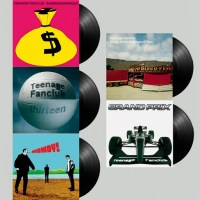
Grade: B+ One of my favourite songs from the 1990s was about a Chinese adulteress forced to walk around town with a decomposing dead dog on her back. ‘Slow Dog’, from Belly’s debut album Star, was mental and frenetic and possessed the kind of berserk and glorious chorus most bands would kill for. The rest of the album wasn’t bad either — the sincerely odd ‘Gepetto’ and the lowering, nagging almost-hit ‘Feed The Tree’ the best of a very good bunch. How would you define Tanya Donelly’s oeuvre, other than as delightfully idiosyncratic? Alt-rock, obvs. Maybe neo-psychedelic post-grunge shoegazey power pop. Either way, it was too good to last.

Rod Liddle at the London Palladium. Final tickets on sale now…

On Tuesday next week, The Spectator is laying on what is perhaps our biggest-ever event: Rod Liddle in the London Palladium. We booked a 2,300-capacity venue and have been holding 60 tickets back for the last few days. They’re on sale now, and they’re the last ones left. This will be one of these events where we’ll get phone calls at the last minute, asking if we can magic tickets out of the ether for very important guests. We can’t: there are just a few dozen left. It should be quite something: I’m not sure any other journalist could sell out the Palladium on their own. We didn’t think we’d sell out a venue as massive as the Palladium, and it looks like we will soon. A sign, surely, of what’s going right in the world.

Is Piers Morgan the only Catholic offended by the Met Gala?

It will come as no surprise that something in the news has Piers Morgan deeply troubled. For the past two days, Morgan has been incandescent over the Met Gala and its dress code. In a column for MailOnline he claims that, as a Catholic, he has become a victim of cultural appropriation due to fancy dress outfits worn to a party by celebrities. The Gala, a fixture of the New York social season at the Metropolitan Museum of Art, is well known for the theme it sets, and this year it was ‘Heavenly Bodies’ - inspired by the Roman Catholic Church. The Gala was held to launch an exhibition of the same name. Dozens of items of religious clothing have been allowed out of the Vatican Archives to be seen by the public for the first time.

Catholic fashion is in vogue – but spare us the rosary beads!

Which was your favourite outfit then, for the Met Gala on the theme of Heavenly Bodies – Catholicism and Fashion – the images of which are everywhere right now? Madonna was true to form with a heavy black mantilla, channelling a Sicilian widow, and Anna Wintour’s dress was, apparently, Cardinal Chanel – though if I may be pedantic, a Cardinal’s colour is scarlet, not white (that’s for the Pope). But Elon Musk, the Tesla man, was pretty good with a kind of reverse clerical suit…white, with a black dogcollar. Frankly, an awful lot of people missed the point of the thing, the theme being Sunday best, loosely interpreted as going to church crossed with fancy dress, crossed with the highest clerical camp.

Restoration man | 3 May 2018

Arts feature

As the curtain opens on the second act of Don Pasquale, I hear a rustle of discomfort. Donizetti’s opera has not been seen at La Scala since 1994. Its restoration, on the orders of a new music director, sets off a critical flutter and Davide Livermore’s new production, set in the Cinecittà film studio during the 1950s dolce vita, seems designed to tweak the Roman nose of national vanity. Italy is supposed to be a serious country these days, burying buffoonery and hedonism among the Coliseum ruins. Even Silvio Berlusconi is seen as an archaeological relic, not to be disturbed. So Riccardo Chailly’s embrace of opera buffa in his first full season as music director provokes the kind of disquiet that we might feel if Covent Garden reinstated Gilbert and Sullivan.

Women and children first

Exhibitions

A lady licking an envelope. An intimate thing. It might be only the bill from the coal-man she’s paying, but it has the feel of something else: an assignation, a confession, an apology, a breaking-off. Would this woman in her deep-blue day dress and jacket be so unguarded if the artist had been a man? Mary Cassatt (1844–1926) was a femme sérieuse who painted women of quick wits and tender instincts. No grubby models, no ballet rats, no laundresses, no absinthe. Her sitters, you feel, would write a thank-you note, send flowers, recommend a dressmaker. Mary Cassatt: An American Impressionist in Paris, at the Musée Jacquemart-André, is the first French exhibition to be dedicated to the Pittsburgh-born painter since her death.

Artistic Munchausen’s

Theatre

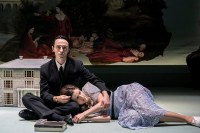
Ella Hickson’s last play at the Almeida was a sketch show about oil. Her new effort uses the same episodic format ornamented with ‘meta-textual experimentation’ (i.e. plotless confusion). The central character is a brilliant young female writer who finds that all male theatre directors are boorish cynical greedy philistine racist sex pests. In Sketch One she meets a smarmy monster twice her age who tries to seduce her with the offer of a script commission. Sketch Two is a commentary on Sketch One, which turns out to have been a play within a play. Sketch Three shows the writer cohabiting with a loser who ‘sells football boots’. The loser has just bought a new sofa (with her money) and he baptises it with an enforced bout of loveless copulation.

Partners in crime

Television

It’s not every day that a television screenwriter is threatened with a trial for sedition, but G.F. Newman was after his series Law & Order aired on BBC2 in 1978. ‘The political fallout was enormous and there was a move to try and get me prosecuted by Sir Eldon Griffiths and a gang of MPs, but it didn’t go anywhere,’ Newman remembers. ‘It would have been a wonderful case had it done so.’ Law & Order rocked the boat by doing the unthinkable, so much so that BBC director-general Sir Ian Trethowan was hauled over the coals by the Home Office minister John Harris (later Lord Harris).

Recipe for success | 3 May 2018

Television

From time to time, a TV show comes along which is so thrillingly original, so wildly imaginative, that you can’t even begin to think where the makers got the idea. Britain’s Best Home Cook (BBC1, Thursday) isn’t one of them. Nevertheless, it has a serious claim to being the most important new programme of the week — if only to the BBC which, despite the failure of The Big Family Cooking Showdown (whose title I just had to check via Google), clearly hasn’t given up on the possibility of finding a way to replace The Great British Bake Off. But in fact there’s another series that some viewers might feel is lurking in the background here — and that’s W1A.

The power of words | 3 May 2018

Radio

‘For me rhyming was normal,’ said Benjamin Zephaniah, reading from his autobiography on Radio 4. Back in the 1960s, on Saturday afternoons in their house in Hockley, Birmingham, where Zephaniah grew up with his seven siblings, the drinks trolley would come out and the record player be plugged in — Desmond Dekker, Millie Small and Prince Buster — ‘the lyrics of Caribbean life’. The church, too, gave him a love of words and vocal performance, Zephaniah delivering his first gig by reciting a list of the books of the Bible both ways, forwards and in reverse order. The music and the poetry were part of everyday life, ‘it was how we communicated’.

PewDiePie

More from Arts

The most subscribed to channel on YouTube — by far — belongs to a rather strange young Swede named Felix Arvid Ulf Kjellberg, better known as PewDiePie. Kjellberg has over 60 million subscribers, whom he refers to, alas, as the ‘Bro Army’. Most of his videos consist largely of him sniggering, putting on silly voices and making comments about other YouTubers. He is, of course, absolutely brilliant. For older readers, just imagine if Clive James on Television had been scripted by the Monty Python team, with the production values of Spike Milligan’s Q… Outside the PewDiePie cult, he’s more famous for his casual racism. When a clip of him using the N-word appeared last year many thought it should be all over for him.

Acropolis now

Arts feature

‘My Acropolis,’ Auguste Rodin called his house at Meudon. Here, the sculptor made a Parthenon above Paris. Surrounded by statues of ‘mutilated gods’, he cast himself as the Phidias of the age. His collection was part cabinet of curiosities, part charnel house. He bought Nile crocodiles and Peking ginger jars, painted sarcophagi and chipped red-figure vases. Crowded among his 6,000 Greek, Roman, Egyptian, Assyrian, Chinese and Japanese objects were his own plasters, bronzes and clay models: hands by the hundred, legs vast and trunkless, arms beckoning, fidgeting, reaching. Isadora Duncan set up her ‘Dionysian’ dance school nearby to teach Hellenic rhythms.

A whiff of wine and garlic

Exhibitions

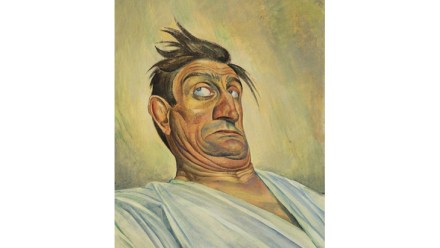
I have occasionally mused that there is plenty of scope for a Tate East Anglia — a pendant on the other side of the country to Tate St Ives. If ever that fantasy came to pass, the collection would include — in addition to Grayson Perry, Edward Bawden, Eric Ravilious, and John Wonnacott, contemporary master of the Thames Estuary — a section on Sir Cedric Lockwood Morris. The more one delves into the history of modern art in Britain — indeed, into art history in general — the more one discovers that many reputations are still free-floating. Morris’s is certainly one of these: there is no consensus as to how good he was as a painter, nor as to how he fits into the wider story.

Will identity politics kill musical theatre?

For months now, since I first read about the plans for the Steven Spielberg/Tony Kushner remake of West Side Story, I’ve been musing on how the heavy hand of political correctness may well crush this most sumptuously subtle of musicals. And now, as an overture, the singer Sierra Boggess, after being judged too pallid for the role of the Puerto Rican heroine Maria (played unforgettably in the 1961 film by the Russian immigrant actress Natalie Wood) has not just given up the role at the imminent BBC Proms after social-media cry-bullying - ‘Step back. This is not your story to tell’ - but has recanted in a positively Orwellian fashion: ‘It is crucial to not perpetuate the miscasting of this show.

Courting disaster

Theatre

‘Hunt the Flop’, the Royal Court’s bizarre quest for dud plays, has found a candidate for this year’s overall prize. Instructions for Correct Assembly by Thomas Eccleshare is a family satire set in the near future. Plot: suburban parents replace their missing son with a computerised cyborg which malfunctions. That’s it. Were this a pitch for a TV sketch show the producer would say, ‘OK, but then what?’ The answer here is virtually nothing. Early on, the cyborg makes embarrassing political statements and expresses support for Brexit. The parents hastily silence him using a hand-held device that returns him to their dead-safe Guardianista outlook.

Missing the point | 26 April 2018

Television

Because I’m a miserable old reactionary determined to see a sinister Guardianista plot in every BBC programme I watch, I sat stony-faced through much of Cunk On Britain (BBC2, Tuesdays). Philomena Cunk (played by Diane Morgan) is a spoof comedy character who used to appear on Charlie Brooker’s Weekly Wipe and has now been given a full series. Though the character is amiable enough — a heroically thick Northern woman in a smart jacket who goes around Britain making stupid observations and asking celebrity historians dumb questions — I can’t quite work out what the point of the joke is. Is it a send-up of dumbed-down Britain? Is it designed to make TV history experts look pompous?

Hot and seedy

Music

Salome is my favourite opera by Richard Strauss, the only one where there is no danger, at any point, of his lapsing into good taste, which there is to some degree in all his other operas, even if only momentarily. With Salome, from the opening quiet clarinet slithering upwards, and the luckless young Syrian Narraboth, later in the work to stab himself to death without anyone noticing, remarking for the first of many times how beautiful the princess Salome is tonight, we know we are in for a mischievous orgy of lust and violence. The work’s chromaticism isn’t used to make particular expressive points but to create and sustain an atmosphere so hot and seedy that we are prepared for anything to happen.

By ’eck, petal, it’s gorgeous

Music

The opening of Mark Simpson’s new Cello Concerto is pure Hollywood. A fanfare in the low brass, an upwards rush and suddenly the screen floods with lush orchestral sound — as confident in its onward sweep as Star Wars or ‘Tara’s Theme’. Waiting, poised, in the middle of it all was the soloist Leonard Elschenbroich, for whom Simpson has said that he wanted to write a concerto that celebrated the cello’s ‘expressive and lyrical force’. He has, too. From the instant Elschenbroich entered, it felt right. The cello soared over a chiming marimba, like in Walton’s Cello Concerto. It lingered over its farewells, like in Elgar’s.

All the world’s a stage | 26 April 2018

Radio

How to stage Shakespeare on air and bring the text to life without the benefit of set, costumes, choreography and all the physical business of a theatrical performance? That’s the question faced by drama directors on radio, and Emma Harding in particular whose adaptation of The Merchant of Venice was broadcast last Sunday on Radio 3. Updated to 2008, just as the financial crash was beginning to impact on individual lives, the play opens with the pulsating beat of a track from the contemporary charts (music and the odd bit of additional dialogue being the only way to indicate setting). For yes, shock horror, in this version of the play Antonio and his merchant banker friends order lattes in a noisy coffee bar.

Kylie Minogue: Golden

More from Arts

Grade: D– Kylie has a place in my heart for having made the second-best single to feature the chorus ‘na na na na na na na na’. The best was Cozy Powell’s ‘Na Na Na’ (all the better for being capitalised), but Kylie’s magnificently vacant synth pop disco lament ‘Can’t Get You Out of My Head’, written by the ubiquitous Cathy Dennis, ran it close. Everything else the pouting Aussie sockpuppet chanteuse has done has been utterly excremental, so credit to the lass for maintaining a certain consistency with her latest album Golden. It has received half-decent reviews in some quarters, but only, I suspect, from people who have either had their frontal lobes removed with a soupspoon or areso jaded they have forgotten up from down.

Timid, ponderous, confused: Gillian Wearing’s statue of Millicent Fawcett is embarrassing

The first thing you notice is the frumpy tweed overcoat. Realistic bobbling. Fussy check. Bit pedantic, bit GCSE. Then the smooth, dull face. Enough wrinkles, modelling, to define age, but not really enough to examine character with any realism. She's hard to read. It's not the face of someone happy to be here. It's more the face of someone enduring small talk. Maybe she's being mansplained to? The unveiling of Gillian Wearing's statue to suffragist Millicent Fawcett in Parliament Square is no doubt a cause for celebration. For if the suffrage movement was about anything it was about the right of iffy female artists to be allowed to make mediocre, stiff bronzes and to receive just as much blind acclaim as iffy male ones.

Call of the wild | 19 April 2018

Arts feature

One of the prettiest pieces in the V&A exhibition Fashioned from Nature is a man’s cream waistcoat, silk and linen, produced in France before the revolution, in the days when men could give women a run for their money in flamboyant dress. It’s embroidered with macaque monkeys of quite extraordinary verisimilitude, with fruit trees sprouting all the way up the buttons. And what we know is that they were derived from the Comte de Buffon’s Histoire Naturelle, générale et particulière, of 1749–88.

Pot heads

Exhibitions

A friend of mine once owned a vase by the potter Hans Coper — until, that is, her teenage son had his friends around for a party. It wasn’t clear who knocked it off the shelf, but it was an expensive accident; a similar Coper pot sold last month at auction for almost £400,000. But then the tricky thing about studio pottery is where to put it — in more senses than one. It isn’t just whether it will be safer on the mantelpiece or in a cupboard. There is also the problem of how to categorise the stuff: is it art or is it craft, and what’s the difference? Such conundrums perplexed me as I walked around Things of Beauty Growing at the Fitzwilliam Museum, Cambridge.