Culture

Culture

The good, the bad and the ugly in books, exhibitions, cinema, TV, dance, music, podcasts and theatre.

Wings of desire | 24 May 2018

More from Arts

The Royal Ballet’s 2016 Frankenstein was a masterclass in how not to make narrative dance and the news that Liam Scarlett had been chosen to spring-clean and ‘reimagine’ Swan Lake had many balletomanes reaching for the smelling salts (it doesn’t take much, to be honest). It was sighs of relief and trebles all round when the new production premièred at Covent Garden last week: proper tutus; gorgeous designs; first-rate dancing. The critical response has been largely positive but not everyone had a five-star evening. The Daily Telegraph gave it a niggardly three stars, finding the designs ‘variable’ and bewailing the absence ofa dramaturg (which has to be some sortof first).

Notes on a scandal | 24 May 2018

Television

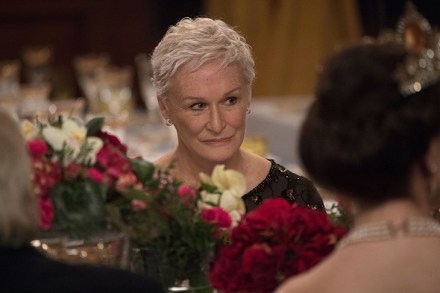
Every time a friend succeeds, I die a little, so you can imagine how sickened I was by the magisterial TV adaptation of John Preston’s A Very English Scandal (BBC1, Sundays). I’ve known Preston for years. It’s himI have to thank for the compendious collection of CDs rotting in my attic, from the ten years or so I spent working under him (he was the arts editor) as the Sunday Telegraph’s rock critic. But though I’ve hugely enjoyed all his quirky, low-key, sardonically amused novels — loosely on the theme of ‘quiet desperation is the English way’ —I never imagined he’d luck out quite so spectacularly as he has with this truly splendid all-star production. Script: Russell T.

Faulty connection | 24 May 2018

Radio

‘Do you ever imagine your audience?’ was a question thrown at James Ward, creator and presenter of The Boring Talks podcast, at a recent seminar on podcasting organised by the BBC. ‘I try not to,’ Ward replied.‘I wouldn’t want to meet them.’ Such antipathy is all part of Ward’s alternative persona. The Boring Talks’s USP is to explore those topics usually considered too dull to explore, let alone talk about for half an hour. It’s become very popular, emerging from the Boring Talks conferences that have been held annually now for eight years. But his comment was very revealing. You can really tell when listening to his show that he doesn’t care about us.

War on waste

Music

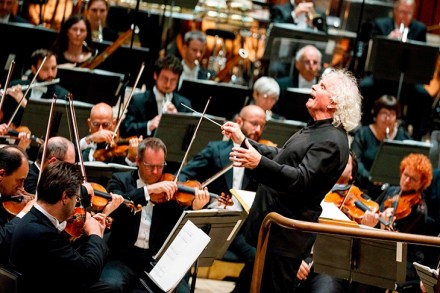
No wonder we have a problem with classical music in this country. The week started in celebration. The stats are in and it turns out that Radio 3’s breakfast show has enjoyed a rise of some 64,000 listeners — a not-to-be-sniffed-at11 per cent increase on last year. Meanwhile Classic FM’s listenership is also up significantly, including a startling 43 per cent rise in under-25s. Champagne (or perhaps something a little less effervescently elitist) all round. Why are all these new people tuning in? Musical diversity, apparently. That and a preference for music over chat, for radio that offers an escape from the emphatic, combative everyday of John Humphrys and his ilk over on Radio 4. Escape. Retreat.

Academic questions

More from Arts

What is the Royal Academy? This question set me thinking as I wandered through the crowds that celebrated the opening of the RA’s new, greatly extended building. After all, there is nothing else quite like this institution anywhere else in the world. It was a terrific party: a mêlée of artists, journalists, politicians and media types such as I have not seen since the inauguration of Tate Modern 18 years ago (with the unexpected addition of DJs and high-volume music). The whole gang was there, and rightly so. This is a significant addition to the amenities of London, including, among other things, two new suites of galleries at 6 Burlington Gardens, behind Burlington House.

Cannes had many strong films but only one deserves the Palme d’Or

The Italian film director Alice Rohrwacher’s rise to the top has never been more obvious than this week at the Cannes Film Festival. Her third feature film, Happy as Lazzaro, which she wrote and directed, stunned the critics gathered in Cannes for what has been a very strong 71st edition. A distinctive and yet quiet talent since her first film Corpo Celeste was selected at Cannes’ Directors Fortnight in 2011, followed three years later by her second film The Wonders, Alice Rohwacher has reached, at just 36, a maturity and force that echoes both Pier Paolo Pasolini and Ermanno Olmi. Conceived as a diptych, Happy as Lazzaro is a poetic fable which starts in an enchanted and timeless Roman countryside and finishes in the asphalt jungle of industrial Turin.

Lars von Trier’s latest film rightly resists the idea that art must be morally correct and inoffensive

Danish director Lars von Trier is back at Cannes Film Festival, proclaiming that 'it’s all good – we had a little misunderstanding for seven years' and worrying that his new serial killer movie, The House that Jack Built, isn’t divisive enough. In fact, the reception of the film has indeed revealed an divide in the mentality of contemporary culture. More than a hundred members of the audience walked out in protest at the film’s première and a similar number did the same from the press screening this week. Nonetheless, Von Trier received a lengthy standing ovation on his arrival to the première, and those who stayed till the end acknowledged the film with demonstratively insistent applause.

The greenhouse effect

Arts feature

The glasshouses at Kew Gardens are so popular that they can be quite unbearably busy at weekends. And why shouldn’t they be? They’re beautiful structures and the plants they shelter are so marvellous that they deserve the attention they get, whether from botany nerds, schoolchildren, or millennials dressed for Instagram and posing for selfies in the steamy leafy heat. But for the past five years, the biggest member of the Kew family has been closed to the public. Hidden under an enormous awning that the botanic gardens boasts could have covered three Boeing 747s (one of those area-the-size-of-Wales facts that mean very little), the Temperate House has been undergoing a lengthy restoration.

You know the drill

Exhibitions

In his Physiognomische Fragmente, published between 1775 and 1778, the Swiss physiognomist Johann Kaspar Lavater insisted that ‘clean, white and well-arranged teeth … [show] a sweet and polished mind and a good and honest heart’, while rotten or misaligned teeth revealed ‘either sickness or else some melange of moral imperfection’. Whatever one might think of the notion that one can read human character directly from the face, Lavater reminds us that dentistry has never been just about teeth. Possession of a functional, pain-free mouth is a practical necessity — we all must breathe and eat and talk — but it is also central to our sense of self.

Award for the most right-on awards ceremony goes to Cannes

There’s nothing that screams 2018 feminism more than a bunch of celebrities holding hands on a red carpet. This year’s Cannes festival is the latest opportunity in a long string of awards ceremonies for the rich and famous to gain some brownie points. If there were an awards ceremony for the most right-on awards ceremony (please no one take me up on that), Cannes might well win. This year’s tote bags contained a flier emblazoned with #NeRienLaisserPasser (or, roughly, don’t let anything happen). ‘Let’s not ruin the party’ it said in French, warning attendees to watch their behaviour.

Arctic Monkeys: Tranquility Base Hotel & Casino

More from Arts

Grade: B+ Oh, terrific — a concept album about a 1970s hotel somewhere in space, plus an attack on our over-technologised world. Just what I wanted. There is no restraint on self-indulgence if you have a sufficiently remunerative back catalogue. This is also a Bowie tribute album, which fits in nicely with all that outer-space business. I have never heard any performer clamber so comprehensively into the skin of a dead rock star as Alex Turner does with Bowie here, in the writing and even more so in the mannered singing with its characteristic falsetto swoops. This is pure Bowie from the era between The Spiders of Mars and David Live, and especially Aladdin Sane.

The sense of an ending | 17 May 2018

Radio

The timing of the Today programme’s series about hospices could not have been more apt, coming as it did so soon after Tessa Jowell’s death was announced with its array of tributes and the poignant interview with her husband and one of her daughters. In themselves such personal testimonies are not always that helpful — everyone’s situation is individual and the actual outcomes necessarily different. But what Jowell’s family said about her last hours and their evident acknowledgment and acceptance of their situation gave a real sense of purpose on Monday to Zoe Conway’s report from the North London Hospice. This was part of the Dying Matters campaign, urging us to think more about death and end-of-life care.

Sins of the father | 17 May 2018

Television

Warning: if you haven’t seen it yet, the first episode of the much-anticipated Patrick Melrose (Sky Atlantic, Sunday) contains scenes of drug-taking. Further warning: it contains an awful lot of them. The series is adapted from the five justly celebrated autobiographical novels by Edward St Aubyn, which trace the long-term effects on Patrick of an upper-class childhood in which his psychotic father intersperses horrifying emotional cruelty with regular bouts of rape. By his early twenties, Patrick is a full-blown drug addict, and even when he marries and settles down, what he settles down to is mostly depression and alcoholism. All of which might make the books sound punishingly grim.

Roll up, psychos

Theatre

Describe the Night opens in Poland in 1920 where two Russian soldiers, Isaac and Nikolai, discuss truth and falsehood. Next we’re in Smolensk, 2010, where some strangers scream at each other about a hire car. Next Moscow, 1931 (or 1937 — the surtitles are illegible), where Nikolai, now a top soldier, asks Isaac, now a successful screen-writer, to audition his wife for a movie. Isaac improvises a scene with the wife and then fondles her bottom as they perform a weirdly sexless dance that is supposed to symbolise something, but it’s unclear what because everything that preceded the dance was indecipherable. Then the interval. I looked for enlightenment in the programme notes and discovered what the play is supposed to be about. It’s fascinating stuff.

Rock stars

More from Arts

In Tamil Nadu we found that we were exotic. Although there were some other western tourists around, in most of the places the great majority of visitors were Indian. My wife Josephine, who is tall and fair-haired, appeared to be particularly unusual-looking. As we walked around a temple, she would frequently be invited to pose for photographs with groups of sari-clad women. Exoticism is one of those qualities that exists in the eye of the beholder. To western Europeans, this area at the tip of the Indian triangle has been the epitome of that quality for more than 2,000 years. The Romans came here, and some even settled — the Apostle Thomas for one. We saw his tomb and basilica in Chennai.

Buried treasure | 17 May 2018

More from Arts

Imagine a French museum that’s second only to the Louvre when it comes to paintings, with an eye-watering collection of manuscripts. Add to that a grand château with a turbulent history going back to the 16th century. Plus period kitchens (one tragic chef committed suicide when it seemed that the delivery of fish for the court’s Friday dinner would not arrive in time. It did arrive but only after he’d thrown himself on his kitchen knife). Imagine, too, that it’s in splendid grounds, with formal gardens and naturalistic landscape beyond.

Natural selection | 17 May 2018

Music

‘All fish in flood and fowl of flight/ Be mirthful now and make melody’ writes the poet William Dunbar in the verses that Sir Charles Hubert Parry set to music as Ode on the Nativity. In David Matthews’s new Ninth Symphony, one particular fowl does exactly that. The symphony’s central movement begins on strings: an idyll of grey skies and shivering leaves. Matthews gradually introduces blocks of woodwind and brass, including a heavily stylised burst of birdsong.

This will end badly

Cinema

On Chesil Beach is an adaptation of the Ian McEwen novella set in 1962 when ‘conversation about sexual difficulties was plainly impossible’ and a young couple suffer a disastrous wedding night from which there will be no return. This is surefooted, mostly, and literary and tasteful and sad and English, and it also stars the ever-remarkable Saoirse Ronan. But it does take a giant misstep at the end — the ending is plainly horrible — plus the book’s frustrations don’t magically disappear. One crap shag and that’s it, it’s over? It worried you then and it will worry you now.

Why this deluded affection for the Palestinians?

Columns

The worst entry for this year’s Euro-vision song contest was that vast cater-wauling aboriginal. I can’t remember her name, only that her performance convinced me still further that Australia might not, technically, be a part of Europe. But then I was a little worried by the winner too. The song ‘Toy’, sung by Israel’s Netta Barzilai, was easily the most musically imaginative in the contest and so probably deserved its victory. But the lyrics were the usual deluded, self-aggrandising victimhood rot. ‘I am a beautiful creature,’ she sang, despite fairly compelling evidence to the contrary, right there in front of our eyes.

Feet first

Arts feature

Fire up YouTube on the iPad, tap in ‘tap’, then wave goodbye to the rest of your day: clip after clippety-clip of the best and brightest stars rattling out impossible rhythms: Fred Astaire dancing on the ceiling; Fayard and Harold Nicholas taking the stairs one split jump at a time; Gene Kelly singing (and dancing) in the rain. The American actor, writer and entertainer Clarke Peters (anything from The Wire to Five Guys Named Moe) was never dragged to tap-dancing classes as a boy in the late 1950s — ‘it was more ballet and jazz by then’ — but he remembers ‘trying to pick up moves from the films. I think I do what I do because of Gene Kelly. He wasn’t a great tap dancer but I loved his athleticism, his style.

On another planet

Cinema

How to Talk to Girls at Parties is set in the 1970s and has punk as the backdrop and an excellent cast (Nicole Kidman, Ruth Wilson, Elle Fanning). It also features what could be a decent premise (boy who treats girls as if from another planet meets actual girl from another planet). But everything it has going for it is undone by what it doesn’t have going for it, which is substantial. This could, in fact, have been titled How to Stay Awake Once You’ve Lost All Patience because, I now know, staying awake once you’ve lost all patience makes talking to girls at parties look like a walk in the park, frankly.

Hype and anti-hype

Music

Apparently it’s called ‘expectation management’. Pollux, Esa-Pekka Salonen’s new work for the Los Angeles Philharmonic Orchestra, takes its name from Greek myth. But as Salonen explains in his programme note, there’s more: lots more. It’s intended to form a diptych with a second piece called (naturally enough) Castor. It’s also part-inspired by Rilke’s Sonnets to Orpheus, and an image (Salonen compares it to Salvador Dali) of a tree growing out of an ear. And finally there’s a ‘mantra rhythm’, which Salonen heard played by a post-grunge band ‘during dinner in a restaurant in the 11th arrondissement of Paris’, which all sounds very civilised.

Death duties

Theatre

Nine Night refers to a Jamaican custom that obliges bereaved families to party non-stop for more than a week following the death of a parent. When Gloria expires her relatives arrive from all parts of London and the Caribbean to indulge in a boozy blow-out. Gloria’s daughter Lorraine tussles with her businessman brother, Robert, who wants to stave off bankruptcy by flogging the family home immediately. Their half-sister, Trudy, arrives from Jamaica and collapses in hysterics over her abandonment by Gloria in infancy. Everyone lives in fear of Auntie Maggie, a pious matriarch, who uses a walking stick and whose religious devotion conceals the heart of an emotional despot. Cecilia Noble (Maggie) delivers a tour de force as the nit-picking hypochondriac.

Question time | 10 May 2018

Television

Twenty years after it first appeared, Who Wants To Be A Millionaire? is back for a brief, week-long anniversary run on ITV —with only a few small amendments to the near-perfect original formula. Along with 50/50, Ask the Audience and Phone a Friend, you also get the option to Ask the Host. Given that the presenter is now Jeremy Clarkson (replacing Chris Tarrant) this is an option as risky as it is amusing. As Clarkson cheerfully explained in the first show: ‘If it’s 1970s prog rock I’ll probably know the answer. If it’s anything other than that I probably won’t.’ The first contestant to test this theory was flummoxed by a question about which county cricket club is based at the Oval.