Culture

Culture

The good, the bad and the ugly in books, exhibitions, cinema, TV, dance, music, podcasts and theatre.

Divine comedy | 27 September 2018

More from Arts

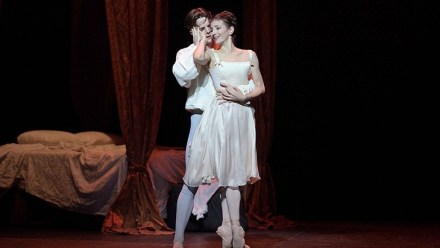
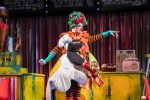
‘Ballet is woman’ insisted George Balanchine, but ballet can also be a big man in a dress as any fan of Les Ballets Trockadero de Monte Carlo will testify. The Trocks began life in 1974, dancing for a select few in pop-up performance spaces in Manhattan, but the troupe’s irresistible blend of low comedy and high art soon outgrew its coterie audience. By the mid-1980s it was a fixture on the national and international tour circuit. Japan, with its ancient tradition of cross-dressing onnagata, is practically a second home. Classical ballet has long been a soft target for physical comedy — think of Freddie Starr retrieving a packet of Rothmans from the ‘lunchbox’ at the front of his tights or Morecambe and Wise joining the four little swans.

It gets my vote

Theatre

Sylvia, the Old Vic’s musical about the Pankhurst clan, has had a troubled nativity. Illness struck the cast during rehearsals. Press night was postponed by a week. On the evening of the delayed performance, the show was cancelled just before curtain-up. We were told that a ‘concert version’ would be presented with understudies filling certain roles and with scripts on stage to prompt imperfect memories. I saw no scripts. And the absence of key performers made no discernible difference. This looked to me like the A-team. The director, Kate Prince, has a terrific show on her hands and although the introductory run has ended, the material can only get stronger as she continues to refine and improve it.

Murderer or Madonna?

Opera

At the end of Act Two of Tosca there are some 30 bars of orchestral music — accompaniment to a very specific set of stage directions. During this time Tosca takes two candles and places them on either side of the dead Scarpia’s head. She then removes a crucifix from the wall and lays it on his chest. The tableau is a messy, bloody one, but the message is clear: here the politics of religion and the religion of politics are one and the same. A pietà or the body of a thug? A murderer or a Madonna? It’s all just a matter of spin. In a year of embattled Supreme Court nominations and moral muscle-flexing by our own DUP, Edward Dick’s new, 21st-century Tosca for Opera North relishes these slippery elisions and entanglements of church and state.

Close encounter | 27 September 2018

Cinema

The Wife is an adaptation of the Meg Wolitzer novel (2003) and stars Glenn Close. Her performance is better than the film, but it’s such a magnificent performance that it more than carries the day. She is stunning. Close plays Joan Castleman, wife of Joe Castleman (Jonathan Pryce), a literary giant who has always been lionised, and for reasons we’ll discover she is simmering with rage. We’ve seen Close do rage before, but this time the rage is multilayered, nuanced, subtly restrained. No bunnies are boiled, in other words, although having said that, if I were Joan, I’d have boiled Joe’s bunny and whatever else was to hand, like his head. But that could just be me.

Get Carter | 27 September 2018

Radio

The writer Angela Carter (born in 1940) grew up listening to the wireless, her love of stories, magic and the supernatural fed by Children’s Hour, and especially a strange, frightening and yet captivating dramatisation of John Masefield’s novel Box of Delights. In the introduction to Sunday’s Drama on Three, which gave us two of her plays written for radio, Carter (voiced by Fiona Shaw) says that what she particularly likes about the medium is the way the listener has to (or is allowed to) contribute to the narrative, adding their imagination, their mind-pictures, their own way of seeing.

Let’s hear it for the ladies who paint

This article was originally published on Spectator USA. It has been several decades since the art world – that swirling miasma of idealism, virtuosity, pretense and money – has recognised the men of the New York School, also known as the Abstract Expressionists, as truly great artists. Paintings by Jackson Pollock, Franz Kline, Robert Motherwell and Willem de Kooning have long been in high demand, now more than ever; their canvases regularly fetch hilarious sums, well into the eight and nine figures. But that’s just the men. Paintings by their differently chromosomed colleagues have been going for a relative song. Now, thankfully, that’s changing.

‘Search me, squire’

Arts feature

I think everyone was a little nervous of Harold. Including Harold, sometimes. He was affable, warm, generous, impulsive — and unpredictable. Like his plays, where the hyper-banal surfaces — the synthetic memories and false nostalgia of Old Times, the aural drivel of Rose in The Room, the bogus familial warmth of The Homecoming — are fragile and about to be displaced by something ugly and authentic, something obscure and violent. Plays where on countless occasions — think of Lenny in The Homecoming or the alcoholic Hirst in No Man’s Land — a speech will take off into dramatic Tourette’s, unstoppable and at the edge of sense. The plays are edgy, alert to something sinister at the periphery.

Shock and gore

Exhibitions

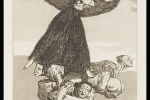
Last year my wife and I were wandering around the backstreets of Salamanca when we were confronted by a minor miracle. The iron gates of the convent of the Agustinas Descalzas — generally chained and padlocked — were ajar. Quickly we slipped through before they closed again. Inside was a vast 17th-century church, slightly dusty and completely deserted. On the high altar and the walls of the transepts were paintings by Jusepe de Ribera, a great master who is today half-forgotten. His art has seemed perhaps too gory, too dark — in short, too Catholic — to appeal to British tastes. But that may be about to change: next week, a Ribera exhibition opens at Dulwich Picture Gallery, the first ever seen in this country.

A soldier’s-eye view

Exhibitions

The first world war paintings of Paul Nash are so vivid and emotive that they have come to embody, as readily as any photograph, the horrendous, bitter misery of the trenches. His blighted landscapes represent the destruction of a generation of soldiers, men who were blasted apart as carelessly as the bomb-shattered mud in ‘The Mule Track’ (1918) or the reproachful twists of blackened wood and pocked land in ‘Wire’ (1918/9). These works are fixtures in our visual understanding of that war. It is strange, then, to see an exhibition of first world war art that excludes Nash, his brother John, and indeed any of the other artists we associate with the period. No Otto Dix or Max Beckmann, no Sydney Carline, William Orpen or John Singer Sargent. But, one little C.R.W.

Round the horn

Arts feature

After the England football team beat Tunisia at this summer’s World Cup, they celebrated with a swimming-pool race on inflatable unicorns. Purple hooves, rainbow manes, cutesy eyes, yellow horns like upended Cornetto cones. The millennial unicorn is unrecognisable from the medieval. The proud unicorns of bestiaries and courtly romances have become the twinkling Bambis of Instagram. Search #unicorn (more than nine million posts) and canter into a pastel clearing of long lashes, swishy tails and crystal horns. ‘My favourite colour,’ announces one unicorn, pink, prancing, wide-eyed, ‘is glitter.’ Compare the simpering My Little Unicorn of the emoji palette with the noble creature in the ‘Unicorn Tapestries’ (c.

If girls don’t like physics, it’s down to biology

Columns

I was delighted to see Claire Foy win an Emmy award for her portrayal of the Queen in the fine Netflix series The Crown. It may have helped assuage her annoyance at initially being paid £200,000 less than her co-star, Matt Smith, who did a fairly good impersonation of a young, brooding Duke of Edinburgh. Foy had more lines than Smith, is as capable an actor as Smith, was the leading role and, importantly, is at least as fit as Smith. This last point is vital because television often casts people on account of their attractiveness, because viewers like looking at attractive people rather than at hideous fat munters. Whatever, there is still sexism around and Foy’s treatment seems to be a good example of it. I can think of no other reason she was paid less, other than sexism.

What Phoebe did next

Television

After the all-conquering success of Fleabag — her brilliant dark comedy about a smart but rudderless young woman in London — Phoebe Waller-Bridge could presumably have done whatever she wanted for her next TV project. And what she wanted to do next, it now turns out, is very odd indeed. Killing Eve (BBC1, Saturday) — which Waller-Bridge has adapted from a novel by Luke Jennings but doesn’t appear in — has its moments of recognisably ordinary life. But not many. Near the beginning, for example, Eve Polastri (Sandra Oh) woke with a Saturday-morning hangover and unwelcome memories of her karaoke performance the night before.

A matter of life and death | 20 September 2018

Cinema

Faces Places is a documentary directed by Agnès Varda in collaboration with JR, the famous Parisian photographer and muralist (although, if you’re as shallow as I am, your first thought may also have been: how is this possible now that Larry Hagman is dead?). The pair visit small towns in France, meeting ordinary people, taking their photograph, blowing the photographs up huge, and pasting them outdoors on buildings and barns and trains. It sounds arty-farty, and I suppose it is, but it is also a mesmerising meditation on lives lived, friendship, ageing and mortality. Plus it throws in this fact for good measure: Jean-Luc Godard can be a total bastard. I didn’t see that coming, I must say.

The write stuff | 20 September 2018

Music

No one any longer denies the immense significance of Wagner’s musical-dramatic achievement, even if they find it repellent. But his reputation as a writer — of operatic texts, autobiographical and biographical memoirs, practical essays on how to conduct particular pieces, vast and less vast theoretical works, ranging from speculations on opera and climate to theologico-political musings — is not high. Nor should it be, except for the more ‘occasional’ pieces. He was in fact a major contributor to mauvaises lettres, and no kind of systematic thinker, however much he might have liked to be. His only prose that is consistently readable comes in his letters, some of them enormous, all of them full of life and colour.

Public enemy

Theatre

Arinzé Kene’s play Misty is a collection of rap numbers and skits about a fare dodger, Lucas, from Hackney. Lucas (played by Kene) gets into a scuffle on a bus and is later arrested for entering London Zoo without a ticket. That’s the entire narrative. Obviously, Kene can’t create an evening’s entertainment from such meagre pickings, so he turns his tribulations as a dramatist into the show’s second storyline. Playwrights moaning about writing plays is a theme of scant interest to audiences, but Kene enlists our sympathy by examining his quest to write a drama that satisfies both black people and the playgoing bourgeoisie.

Bingo with Birtwistle

Music

A pregnant silence, a peaty belch from the tuba, and the scrape of brass on brass as gears lock into position and judder forward. It’s almost worth making a bingo card for a Harrison Birtwistle première these days, and I’m not complaining. His last big orchestral work, Deep Time, showed worrying signs of him mellowing into some sort of late period. Not here though, he isn’t. Grinding brass cogwheels? Tick. Sudden stillnesses, punctuated by deadpan creakings and poppings? Tick. Primal screeches from the woodwinds, jarring against chords of millstone grit? House!

The Spectator writers’ party, in pictures

It's the Spectator's 190th birthday this year and we celebrated with an end-of-summer drinks party in the garden for the writers and cartoonists who make the magazine what it is. In keeping with Fleet Street tradition, there was no food and plenty of booze – and everyone was kept entertained by great music from Charlie Wolfin and his jazz trio.

‘If you don’t want to taste the goat’s milk, at least watch the farmer in action’

Did Ashraf Marwan jump, or was he pushed? Not his fall off the balcony of his luxury apartment in London in July 2007, which is how Marwan, an Egyptian diplomat turned billionaire, met his unexplained and highly suspicious death, but his tumble into the arms of the Mossad, into whose tender embraces he slipped in 1970. At the time, Marwan was also in the even more tender embraces of Mona Nasser, daughter of Egyptian dictator Gamal Abdel Nasser. After Nasser’s death in 1970, Marwan became a close aide to Anwar Sadat, and brokered military and diplomatic deals with the Saudis and Gaddafi’s Libya. All the while, Marwan was supplying top-grade intelligence to a Mossad contact in London, while dodging surveillance by Nasser’s old advisers.

The little cloth dyer who made it big

Arts feature

Tintoretto was il Furioso. He was a lightning flash or a thunderbolt, a storm in La Serenissima of Renaissance Italy, a maverick and a cheat. One of his friends, a fellow Venetian, likened him to a peppercorn overwhelming ten bunches of poppies. More often than not, those poppies were rival artists. He trampled them like an overgrown child. Henry James said that ‘if Shakespeare is the greatest of poets, Tintoretto is assuredly the greatest of painters’. He was at least the most aggressive. A series of exhibitions opens in Venice this autumn to mark the 500th anniversary of Tintoretto’s birth. If they show him to be half as devious as his first biographers described him, then it will be all anyone can do to salvage his good name.

There will be blood | 13 September 2018

Exhibitions

For the past few decades, admirers of video-games have every couple of years mounted a new attempt to persuade the wider arts-loving public of the form’s merits. Look, they say, games are not all about shooting people in the face! They are a dynamic fusion of animation, architecture, intellectual challenge, music and drama! They can be political and subversive! This is true, and yet somehow it never catches on. Will a new exhibition at the V&A enjoy any greater success? You walk through a series of large black rooms with giant screens that appear to be floating through the air. Along the walls are ranged game designers’ working notebooks, and concept art for the characters and landscapes, beautifully rendered in inks and watercolours.

Full of Eastern promise

Cinema

The cast and producer of Crazy Rich Asians were present at the screening I attended and said a few words to kick us off. At this point the film — the first with an Asian-American principal cast since The Joy Luck Club in 1993 — had been number one in America for three weeks, so they talked about a ‘cultural shift’ and how this was ‘as much a movement as a movie’. I confess, a lump came to my throat along with a tear to my eye, which is odd, given I’m usually such a hard-hearted old trout. It’s now difficult to know what to say next, but the safest thing has to be: while I’m pleased the film exists, and we should all be pleased this film exists, it is still only an average romcom.

Go West | 13 September 2018

Television

This week’s guilty pleasure is Tom Clancy’s Jack Ryan (Amazon Prime). It’s trash, of course, but very well done, high-octane, watchable trash. And if you want to feel better about your lowbrow tastes, make sure you read the finger-wagging critique by one Sonia Saraiya in Vanity Fair first. ‘Jack Ryan feels like a machine designed to turn us all into the sort of viewers who disappear smiling down jingoistic Fox News rabbit holes,’ she says, enticingly. And: ‘Both its protagonist and its plot are based on the foundational, unquestioned notion that American-military might — the best-funded killing infrastructure in human history — is helping to save the world.

Always look on the dark side of life

Theatre

Hampstead’s boss Ed Hall was so impressed by Stephen Karam’s play The Humans that he wanted to direct it himself. Instead, thanks to a stunning series of accidents, he was able to bring the original Tony award-winning production from Broadway to London. And here it is, directed by Joe Mantello. It’s a family drama, which opens with Dad and Mom, in their sixties, arriving for Thanksgiving at a dingy New York apartment occupied by their daughter Brigid and her fiancé Richard. All the characters are heavily scarred by life. Richard, aged 38, hasn’t yet completed his sociology degree because he suffers from severe depression (possibly triggered by his subject choice, although the writer isn’t cynical enough to make such a cheap crack).

Striking the right note

Music

I was at a funeral the other day at which the music was so inspiring that I struggled to feel sad. That’s fair enough, you may think — but the person in the coffin was my own mother. This is a difficult point to explain in cold print, but there are reasons why I wasn’t grief-stricken at the death of the person who meant most to me in the world. My mother Pamela loved my sister and me with a passion; she radiated holiness, but in an unobtrusively English way. She was also a very private person, sometimes driven to distraction by her attention-seeking son. She never sought — and never received — any official recognition of her decades of service to the Catholic Church.

Hank Mobley, the greatest sax player you never heard

Jazz may be an egalitarian, collaborative music, but jazz musicians honor their best with the laurels of hierarchy. Everyone knows the royal monikers of ‘Duke’ Ellington and ‘Count’ Basie, and most people know that Billie Holiday was ‘Lady Day’. But there’s also a whole aristocracy of hip name-drops: ‘The Baron’ (Charles Mingus), ‘Pres’ (Lester Young), ‘The Court Jester’ (Ornette Coleman), ‘The High Priest’ (Thelonious Monk). The list goes on, and on. The mid-century saxophonist Hank Mobley (1930–86) was never ennobled in such fashion — unless you count Dexter Gordon’s hilarious handle for his friend, ‘The Hankenstein’.