Culture

Culture

The good, the bad and the ugly in books, exhibitions, cinema, TV, dance, music, podcasts and theatre.

Top scorer

Opera

Gershwin’s Porgy and Bess springs to life fully formed, and pulls you in before a word has been sung. A whirlwind flourish; the hectic bustle of violins and xylophone, and then a quick fade into an image of a woman cradling a child and ‘Summertime’, the very first number we hear sung. The aria’s fame actually serves the drama. The thrill of musical recognition as the curtain rises on an unfamiliar world is replaced by astonishment at the dramatic instinct that allows Gershwin to expend a melody like that before his story has even started, in the certain knowledge that what follows can, and absolutely will, live up to what for any composer other than Gershwin would be a once-in-a-lifetime inspiration.

Shining circles and silver spools

Radio

Flies buzzing, strange rustling, crunching sounds, and then the most chilling screech you’ll have heard all week. Vultures were feeding off the carcass of a zebra in Kenya, recorded by Chris Watson. He had been up before dawn, on the look-out for a suitable carcass to attract the scavenging vultures. He was lucky to find one and clipped two microphones to the ribcage, running the cable to his recording vehicle 50 yards away. By break of day the vultures had appeared and were taking their breakfast. Watson believes that recording sound at such close quarters ‘really fires our imaginations in a unique way’. He was not the only contributor to The Changing Sound of Radio on Radio 4 Extra (produced by Jessica Treen) to talk about radio as if it is a visual medium.

This is a man’s world

Theatre

Sir David Hare’s weird new play sets out to chronicle the history of the Labour movement from 1996 to the present day. But it makes no mention of Corbyn, Momentum, the anti-Semitism row or rumours of a breakaway party. The drama is located in the dead-safe Miliband era and it opens with talk of a leadership election. The two best candidates, Pauline and Jack, are old lovers from university. Pauline is a doctor who entered politics when budget cuts threatened the hospital where her mother was being treated for cancer. Jack is a colourless Blairite greaser, a sort of Andy Burnham without the mascara, who is still besotted with Pauline despite being newly married to Jessica.

Man bites man

Cinema

Matteo Garrone’s Dogman, which is Italy’s entry for the foreign language Oscar next year, is bleak, unflinching, oppressive, masculine (very), violent (shockingly) and basically everything you’d expect me to hate. Except I didn’t. It is out of the ordinary. It has a magical central performance. It is tense, as you wait for the little man to face down the big man, if he does. Plus there are lots of lovely dogs, which always helps, and none are harmed. Aside, that is, from the yapping chihuahua thrown into a freezer to shut it up. So there is that, too.

Banksy’s stunt wasn’t even original – and why we should support ads on Sydney Opera House

It was announced last week that the woman who bought Banksy’s 'Girl With Balloon' will be going through with the purchase. And who could blame her? The prospect of owning a piece of ‘art history’, as she called it, is an enticing one to any investor, regardless of its condition. The video documenting Banksy’s triumph has clocked over 12 million views since it was uploaded to his Instagram account, and one could certainly argue it highlights the disconnect between the intrinsic value of art and that ascribed to it by ever-changing tastes. But it would be wrong to give artistic credit for what is essentially a publicity stunt. Not least because it's so unoriginal. Does Banksy not know about Jean Tinguely’s 'Study for an End of the World, No.

Houses of ill repute

Arts feature

Architects and politicians have a lot in common. Each seeks to influence the way we live, and on account of that both, generally, are reviled. But architecture is more important than politics. Unless you are an anchorite or a polar bear, it’s unavoidable. And it lasts longer. The best architecture affects our mood. Exaltation, if you are lucky. And the worst influences our behaviour: a riot with burning Renaults, if you live in a French banlieue. But, as a new exhibition at the Wellcome Collection suggests, architecture may also, in one way or another, affect our health. At ground level, this is quite obvious. Damp, foul air, extreme temperatures, bad drains, structural collapse, fire risks, asbestos and socially hostile environments can all, alas, be experienced in buildings.

Lost in the Pacific

Exhibitions

At six in the morning of 20 July 1888, Robert Louis Stevenson first set eyes on a Pacific Island. As the sun rose, the land ‘heaved up in peaks and rising vales’. The colours of the scene ‘ran through fifty modulations in a scale of pearl and rose and olive’, rising into ‘opalescent clouds’. The whole effect was a ‘suffusion of vague hues’ shimmering so that mountain slopes were hard to distinguish from the cloud canopy above. Oceania, the new exhibition at the Royal Academy devoted to the region’s arts and cultures, is almost as beautiful as that dawn landscape, and just about as difficult to make out with any precision. Nonetheless, it is full of the most marvellous things to see.

Christine and the Queens: Chris

More from Arts

Grade: B– Ooh goody — a parade to rain on! You wouldn’t believe the hyperbole expended by the rock critics on this middle-class French lass, real name Héloïse Letissier. Or maybe, being used to such mass gullibility, you would. ‘Bogglingly intelligent’ and ‘a thrillingly uncompromising artist, playing with ideas of gender, identity and individuality to pop-bright melodies’, for example. Her first album in English, Chaleur humaine, was similarly bestrewn with pop-hack ejaculate, to the extent that it resembled a plasterer’s radio. Why? Oh, check out the back story. Very gender fluid. Leftie. French. Channelling early 1980s electro pop and dance. And here she is with her hair cropped and calling herself Chris.

MacMillan’s #MeToo minefield

More from Arts

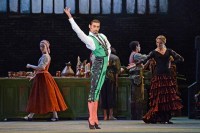
Kenneth MacMillan’s Mayerling is a #MeToo minefield. Crown Prince Rudolf of Austria-Hungary is a serial seducer, a man of many mistresses, a grabber of princesses. Were he alive and kissing today, he’d check himself into an Arizona rehab clinic. In 1889, it was laudanum and a loaded pistol. Rudolf ought to be tormented, driven by ennui and the oppression of the imperial court to darker and darker thrills. Ryoichi Hirano, who opens the Royal Ballet’s 2018/19 season as the Crown Prince, is not dark enough. It is his debut as Rudolf and his performance is studied and contained. Hirano is handsome, tall, Apollonian.

Get woke, go broke

Television

You won’t be aware of this because the BBC has been keeping it very quiet. But the new Doctor Who is — wait for it — a woman! Let me say straight away that Jodie Whittaker is a delight. Opening as the new Doctor is never easy — all that tiresome establishing rigmarole you have to go through along the lines of ‘I’m feeling all funny. Almost like I’m a completely different actor but in the same body. What can it be? Who am I? Has anyone watching at home worked it out yet?’ But already we like her. Yes, at the moment she’s still a bit of a mishmash of previous Doctors but this will change as she grows into the role.

Second thoughts | 11 October 2018

Theatre

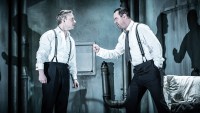
Pinter Two, the second leg of the Pinter season, offers us a pair of one-act comedies. The Lover is a surreal pastiche of married life. A suburban housewife has a paramour who visits her daily while her husband is at work. The husband knows of his rival and discusses his wife’s infidelity as if it were a normal aspect of marriage. He toddles off to the office and a little later the lover arrives: it’s the husband. They begin a game of role play. The wife is a whore and the husband is her trick. This neat device dramatises the theory that marriage is prostitution in disguise. Director Jamie Lloyd presents the show as a paranormal absurdity. Garish pink dominates the couple’s weird, rectilinear home. Pink walls, pink doors, pink shelves, pink everything.

Hollow man

Cinema

Damien Chazelle’s First Man is a biographical drama that follows Neil Armstrong in the decade leading up to the Apollo 11 mission to land a man on the moon (1969), but while it’s strong on mission, and technically dazzling, it’s weak on biography. Who was Armstrong the person? What made him hell-bent on such peril? Did he fear never returning? As portrayed here, he’s essentially yet another strong, detached, emotionally unavailable man of few words, so this is a set-piece action film at heart. A Mission Possible, if you like. Unlike Chazelle’s previous two hits (Whiplash, La La Land), the director himself did not write the screenplay. Instead, it’s been adapted by Josh Singer from James R. Hansen’s book on Armstrong.

On the double

Radio

How very odd of Radio 4 not only to release The Ratline as a podcast before broadcasting it on the schedule in the conventional manner, but also to give its network listeners an edited-down version. It’s as if the podcast of Philippe Sands’s programme, which investigates war crimes by the Nazis, fuelled by his own family history and what he discovered while writing his book East West Street, has been given priority, and anyone who listens in the old-fashioned, switch-of-a-button way is somehow second-best and doesn’t deserve the full monty. The first episode of the ten-part series was six minutes longer online than on-air. What’s in those missing minutes, I wondered? Not much. A bit of filling. Some extraneous detail.

Don’t judge a play by its audience

Columns

There is a new book out about the sun — the bright thing in the sky, not the newspaper. It sounds very interesting. ‘Science Museum The Sun — One Thousand Years of Scientific Imagery’. You can get it from that place ‘Science Museum’, which I seemed to remember was once called the National Science Museum but which has now ridded itself of that hateful word ‘national’ as well as its unfashionable definite article. In the introduction to the book, the authors Harry Cliff and Katy Barrett write: ‘The images and texts featured here are almost always the product of collaborative work.

The stirrer and the monk

Arts feature

Sometimes Andrea Mantegna was just showing off. For the Palazzo Ducale in Mantua, he painted a false ceiling above the Camera degli Sposi. Around a great trompe l’oeil oculus, apparently open to the sky, assorted gawpers and cherubs lean nosily over the parapet: ‘What’s going on down there, then?’ Only the Duke and Duchess of Gonzaga entertaining their friends from Ferrara. A terracotta pot is half off the edge, supported only by a thin rod. One nudge from a misbehaving putto and — whoops! — just missed the Duchess. Some of the putti stick their heads through the trellis. Another stands on a ledge, flashing us his bare, plump, crinkly bottom, brilliantly foreshortened by Mantegna. Giovanni Bellini’s figures tend not to show us their bums.

Almond ayes

Music

When Soft Cell first appeared on Top of the Pops in summer 1981, miming along to their version of Gloria Jones’s ‘Tainted Love’, it felt like a moment of palpable newness. Well, it certainly did if you were prepubescent and really had no idea what sex actually was. Romantic love — in either its glory or disappointment — was the everyday subject of the pop song, but here was this funny little fella in black, with studded accessories, singing of a love that was ‘tainted’. I had no idea what he got up to when the lights went out. I knew that homosexuality existed — in the same way that California condors existed, and Olympic athletes existed.

Ballet’s Antichrist

More from Arts

William Forsythe has been called a lot of things in his four decades as a dancemaker: wilful provocateur, ‘pretentious as hell’, even ballet’s Antichrist. But nothing, he claims, to warrant US government officials showing up, unannounced, at his door and threatening him with arrest. Had he been reported by an angry dance purist, perhaps? After all, this is the choreographer who has done more than any other to push the limits of what ballet can be, the great forward-thinker hailed for his athletic, sometimes bewildering, deconstructions of an art form that goes back centuries. It’s gained him an army of devoted (read obsessive) fans, but also some vocal detractors.

A world apart | 4 October 2018

Radio

The most inspiring voice on radio this week belongs to Hetty Werkendam, or rather to her 15-year-old self as she talked to the BBC correspondent Patrick Gordon Walker in April 1945. He was with the British soldiers who entered the Bergen-Belsen concentration camp and witnessed the horrors of that scene: dead bodies in piles with no one to bury them, living people lying beneath them too weak to move, or using them as pillows. Hetty was one of several children interviewed by Gordon Walker, her voice so strong and resolute and light in spirit, in spite of all that she had seen and experienced. Talking now, aged 88, to Mike Lanchin for Children of Belsen on the World Service, she insists, ‘It is not a sad story I am telling you.

The naked and the dead

Opera

Yes, Oscar Wilde never wrote it. No, Strauss didn’t intend it. In fact, the composer famously demanded the Dance of the Seven Veils be ‘thoroughly decent, as if it were being done on a prayer mat’. But that doesn’t stop this striptease and musical money shot being the look-but-don’t-touchstone of any Salome. A blonde, blank-faced Barbie doll in gym knickers, vest and shiny trainers stands in a spotlight, a baseball bat in her hands. Strauss’s oboe begins its suggestive arabesques but Salome remains quite still, her eyes fixed impassive, unblinking on the audience. Eventually her hips begin to twitch, her back arches and she goes sullenly through the motions of sensuality, never breaking her gaze, defying us to find her desirable.

Mother’s ruin

Television

It’s a radical thought I know, but I sometimes wonder what it would be like if a new TV thriller began by carefully introducing the characters and basic situation, before proceeding chronologically from there. In the meantime, though, there’s BBC1’s The Cry, which didn’t just start with the traditional blizzard of time-shifts, but continued like that for the next hour. In one of the more prolonged of Sunday’s many opening scenes — it lasted at least 60 seconds — main character Joanna (Jenna Coleman) explained to an unseen listener that ‘that’s when this began, with two faces’.

God and monsters

Theatre

The drop-curtain resembles a granite slab on which the genius’s name has been carved for all time. The festival of Pinter at the Harold Pinter Theatre feels like the inauguration of a godhead. And it’s not easy to separate the work from the reverence that surrounds it. Pinter One consists of sketches and playlets written in the period after 1980 when the author abandoned his anarchic underclass comedies and set about analysing power and its abuses. But his originality deserted him and he began to write like a student troll with a sadistic streak. In Press Conference a newly appointed minister discusses murdering dissidents’ children by snapping their necks. In Precisely, two boozy establishment figures chat about bumping off 20 million citizens.

The story behind my famous picture of Margaret Thatcher

I was surprised and delighted to find Morten Morland’s wonderful imitation of a photograph of Margaret Thatcher peering through the curtains of Number Ten on The Spectator’s cover. It reminded me of one of my memorable experiences as a photographer with the ‘Iron Lady’. I was a staff photographer at the Times for about 15 years covering some very memorable events worldwide. In November 1990, I was called into Simon Jenkins’ office, the editor at that time, who wanted to see me for a 'very important' assignment. The Times had been given the exclusive news that Margaret Thatcher had been ousted as Prime Minister and would be leaving No.10. Simon told me he had been granted the exclusive to interview her in Downing Street at midday.

Not easily Suede

Arts feature

‘I always think they’re not lusting after me,’ Brett Anderson says of the middle-aged fans who still turn up to see his band Suede and leave the shows a little flushed and excited. ‘They’re lusting after something that doesn’t really exist. They’re remembering their wild youth. It’s faintly comical to me when I think about myself in the 1990s and the sexuality of it. That got a bit out of control, I suppose. And it’s odd, because I’m quite a reserved person in lots of ways, so I don’t really know what was going on there.’ Oh, Brett, you do yourself a disservice. Look at yourself! Not an ounce of flab, dressed like a clothes-horse, face all sharp lines and clean planes. You’re a well-preserved man.

Doors of perception

Exhibitions

A reflection on still water was perhaps the first picture that Homo sapiens ever encountered. The importance of mirrors in the history of art has been underestimated. Alberti, Vasari and Leonardo recommended them as a tool for painters. Van Eyck delighted in them. Caravaggio had one in his studio. And they haven’t stopped fascinating artists. Shape Shifters, the new exhibition at the Hayward Gallery, might as well have been entitled ‘Modern Art through the Looking Glass’. Consequently, you see yourself all over the show, generally in surprising forms and positions. Early on, for example, you come across Anish Kapoor’s ‘Non-Object (Door)’ (2008), a rectangular block of highly polished stainless steel, each side of which is curved and convex.