Culture

Culture

The good, the bad and the ugly in books, exhibitions, cinema, TV, dance, music, podcasts and theatre.

The Green Room Podcast from Spectator USA: What do we get? Pete Shelley of Buzzcocks

Two poets named Shelley have graced the English language. One was Percy, and the other is Pete. Just as an intellectual is someone who can hear the William Tell Overture without thinking of the Lone Ranger, so a true lover of a three-minute pop song is someone who, hearing the words ‘Shelley’ and ‘Manchester', thinks not of ‘The Masque of Anarchy’ and the Peterloo Massacre, but of ‘What Do I Get?’. ‘Ever Fallen In Love (With Someone You Shouldn’t Have)?’, ‘I Don’t Mind’, and the dozens of other songs that Pete Shelley wrote and sang with Buzzcocks.

You be the judge

Arts feature

James I and VI liked to term himself Rex Pacificus. Like most politicians who talk a lot about working for peace, he was an appeaser. Inheriting the English throne after Elizabeth, whose foreign policy was defined by breaking Spanish dominance, James appears to have seen the purpose of his own Whitehall government as being to facilitate every Spanish demand. The first high-profile victim of James’s Iberophilia was the war hero and poet Sir Walter Raleigh. Within four months of Elizabeth I’s death in 1603, Raleigh was on trial for treason under the new regime. His death sentence was commuted until 1618, when it was carried out at the direct request of the Spanish ambassador. Shakespeare’s Globe is staging the trial of Walter Raleigh as a piece of theatre this month.

The ex factor | 22 November 2018

Exhibitions

It is easy to assume that the contours of art history are unchanging, its major landmarks fixed for ever. Actually, like all histories it is a matter of shifting perspectives. As we move through time, the view backwards constantly alters. The rising and falling critical estimations of the painter Richard Smith are a case in point. Had you asked an art-world insider in 1963 who the brightest rising star of British art was there is a strong chance — though other names such as David Hockney might have been mentioned — that the answer would have been Smith (1931–2016). Appropriately, 1963 is the end date of an excellent little show at Hazlitt Holland-Hibbert gallery. This collates many of the most impressive pictures from Smith’s earliest and most seductive period.

The Green Room podcast from Spectator USA: What a Performance!

‘You’re a comical looking geezer. You’ll look funny when you’re fifty,’ Chas the gangster says to Turner the rock star in Performance, Donald Cammell and Nicholas Roeg’s notorious Sixties movie. ‘A heavy, evil film,’ the reviewer from It magazine wrote when Warner Brothers finally released Performance in 1970. ‘Don’t see it on acid.’ Fifty years on, I’m casting the pod on this week’s Green Room with cinema historian Jay Glennie, author of a definitive account of the legendary and still alarming making of Performance.

Mumford & Sons: Delta

More from Arts

Grade: D+ I promise you this isn’t simply class loathing. Yer toffs have contributed to British rock and pop and it hasn’t all been unspeakably vile. There were moments when Kevin Ayers held our interest, for example, and even Radiohead. And then there’s that man of the people, Joe Strummer. So let’s excuse Mumford & Sons their weighty class baggage and just concentrate on the music, which is irredeemably awful and makes Coldplay sound like the MC5. Someone has given them beats, cute little digital beats, to set beneath the faux folk which once irritated and now just bores one into a stupor. There is also that thing beloved by people who cannot write songs — atmospherics: ominous cymbals, metronomic piano, an overwash of organ and sonorous synths.

A triumph for crony casting

Theatre

Michelle Terry, chatelaine of the Globe, wants to put an end to penis-led Shakespeare by casting women in roles intended for men. To showcase her war on male cronyism she presents a version of Macbeth starring Paul Ready as the king. She plays the queen. In real life the two are married. This must be rather galling for the actresses who auditioned for the lead role only to find that Ms Terry’s pro-woman policy had collapsed before the demands of her lord and master. But their on-stage partnership is astonishingly powerful. Set in the Sam Wanamaker theatre, a gilded little playhouse with uncomfortably cramped seats, this candlelit Gothic thriller has a palpable sense of horror and menace. Behind every flickering shadow lurks a traitor with a dripping knife.

Tigers and tutus

More from Arts

La Bayadère opens with a sacred flame and ends with an earthquake. In between, Marius Petipa’s ballet of 1877 gives us an India of the imagination, an India that never was. It is a place of tigers and tutus, scimitars and slippers. Cultural appropriation, you say? But who could object when it’s all so Pondicherry pretty: a durbar dream of silk harem pants, beaded bracelets, sun-goddess gowns, swags of hibiscus, palanquins, hookah pipes, snakes, divans and dances of the seven tie-dyed veils. The temple backdrops are gorgeous and preposterous. I’m the king of the swingers, oh… Besides you can hardly culturally appropriate when the company of the Royal Ballet is the grandest of grand bazaars.

Leading ladies

Radio

I wonder what Michelle Obama, the former First Lady who remade that role in her own image, would make of Hannah’s attempts on The Archers to embody the 2018 version of an empowered, liberated woman? Does Obama secretly listen in to Ambridge each night? Has she been impressed by the soap’s attempt, via Hannah, to address the #MeToo movement? Does that explain why she blessed Radio 4 (rather than an online audio provider) with the great coup of reading herself from her new autobiography, Becoming? But first (for those unfamiliar with Hannah’s antics) let’s go back to Ambridge. She arrived on the scene as the new pig woman; Jazzer’s antithesis (Jazzer being a stereotypical Glaswegian, addicted to booze and having a good time).

Just say yes

Television

Narcos is back on Netflix, set in Mexico this time, with a cool, world-weary, manly voiceover swearily lecturing us at the beginning that if we smoked sensemilla in the 1970s, then we were partly responsible for the bloody, endless drug wars that went on to kill more than half a million people. Oh really? Sensemilla (derived from the Spanish for ‘without seeds’) is the kind of product of human ingenuity and free markets we should be celebrating, not decrying. It’s more compact than bog-standard weed, making it easier for entrepreneurs to ship, thereby increasing their profit margins. It affords a sweeter-tasting hit and a more euphoric high, thereby giving greater pleasure to the consumer.

Sound and fury | 22 November 2018

Opera

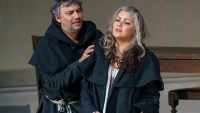
The People are angry. In fact, they’re bloody furious. As the lights flash up on David Pountney’s production of Prokofiev’s War & Peace, the entire cast confronts the audience: grim, braced, defiant. And before you’ve had time to wonder if this sort of thing is just the long-term legacy of Les Misérables, or whether opera directors really are in love with totalitarian imagery, they unleash hell. This is the chorus of Welsh National Opera, after all. You just know they’re going to slay, and they do. The massive, world-historical Epigraph to Act One shakes the walls and your place is no longer to question, but to sit there and be overawed. To be fair, a Soviet composer during the second world war could hardly get away with anything less.

Pirates on parade

Arts feature

Avast there, scurvy dogs! For a nation founded on piracy (the privateer Sir Francis Drake swelled the exchequer by raiding the Spanish, who were in no doubt that he was a pirate), it is appropriate that Britain should give the international archetype of the pirate his language. The language of the Victoria & Albert’s exhibition A Pirate’s Life for Me at the Museum of Childhood in Bethnal Green is a banquet of humour and doggerel. Whether you arrive a slipperslopper sea-cook, reeking of Havanas, or pushing treasures in a pram, you will stare at walls, speak in tongues and smile. These master (and mistress) mariners of yore have their grappling hooks deep in the psyche of maritime nations. In their infancies, modern states needed pirates.

All about his mother

Exhibitions

Fin-de-siècle Paris was not just the art capital of the world, it was also the fashion capital. In 1901, 300,000 Parisians were employed in the rag trade, and one of them was Édouard Vuillard’s mother. Stout, sensible and self-sufficient, Mme Marie Vuillard was no Mimi out of La Bohème, embroidering flowers in a draughty garret. She was the independent patronne of a dressmaking atelier — more of a couture flat, admittedly, than a couture house, operating out of rented apartments in the garment district. Before being left a widow with three children, she had prudently invested in a small business producing dresses and made-to-measure corsets for a fashion-conscious petit bourgeois clientele.

Brought to book | 15 November 2018

Exhibitions

‘The barbarians drive us to the sea, the sea drives us to the barbarians; between these two means of death we are either drowned or killed.’ So wrote the British monk Gildas in his 6th-century proto-polemic On the Ruin of Britain, recording the arrival of the hated ‘Germans’ to the island. Bad news for the Britons, but fantastic for visitors to the British Library, now running perhaps the most significant exhibition of recent times, Anglo-Saxon Kingdoms. Historians dislike the term ‘Dark Ages’, but by any measurement western Europe saw a collapse in living standards, literacy, population, trade and significant cultural output from 500 ad. Yet that only makes the flame that appeared all the more striking, and the exquisite art so inspiring.

You’ve lost me

Cinema

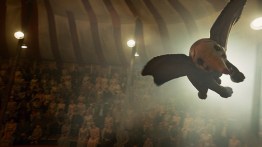
Fantastic Beasts: The Crimes of Grindelwald is the sequel to the Harry Potter prequel Fantastic Beasts and Where to Find Them, and either J.K. Rowling’s plots are now so labyrinthine she makes your average John le Carré look like Noddy, or I failed to put in sufficient homework, or it’s a plain mess. Whichever, I hadn’t a clue what was happening most of the time. I like the whole Potter industry well enough, but I can’t say I’m a superfan. I don’t even have an opinion on whether Dumbledore is gay or not, which is the surest sign of non-superfandom. But while a film should cater to those in the know, it should also be open to all, surely.

Yoko One: Warzone

More from Arts

Grade: A+ Ooh, you can have some fun with this when the unwanted guests swing by this Christmastide. These are the ‘greatest hits’ of a serially indulged caterwauling loon with the political disposition of a spoiled seven-year-old, redone to make them even worse than they were before. So, put on ‘Why’ as you hand around the cocktails and the seasonal canapés. Trumpeting elephants, angry crows, an ominous synth and Yoko howling ‘Why? Whhhhhhhhhhhhy? Wok Wah Wheeeeeeeee! Ag ag agag ag! Whhhhhhy?’ Like a particularly angry and talentless Diamanda Galas. But don’t let a smile give the game away as this unendurable, pretentious garbage resounds around the room. Instead, flip to ‘It’s Gonna Rain’.

Monkey business | 15 November 2018

Television

The opening episode of BBC1’s Dynasties — the new Attenborough-fronted series from the Natural History Unit — introduced us to ‘a territory ruled by a strong and determined leader: an alpha male known as David’. Despite what you might think, though, this wasn’t a reference to the Natural History Unit itself, but to a troop of chimps in Senegal, whose power struggles unfolded on Sunday in an almost Shakespearean way. As ever, Sir David started by demonstrating that he can still handle a spot of location shooting, in this case bellowing a few lines from a jeep speeding across the African savannah. But after that, he was again content simply to supply an authoritative voice-over and the occasional joke.

Face time | 15 November 2018

More from Arts

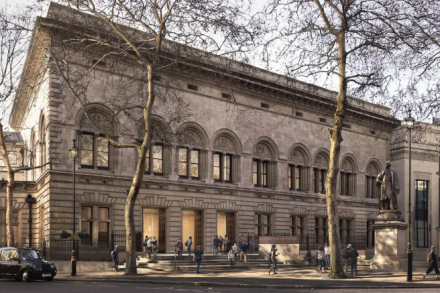
You can, perhaps, glimpse Lorenzo Lotto himself in the National Gallery’s marvellous exhibition, Lorenzo Lotto: Portraits. At the base of an altarpiece from 1541 a gaggle of paupers stretch their arms up in hopes of receiving the charity being handed out by Dominican friars above. One of these, a bearded, red-robed man, is supposed to be a self-portrait. If that is the case, it was a characteristic place to put himself. Lotto (1480/1–1556/7) was an intensely pious man and, in later life, poverty-stricken. But the most unusual point about this picture is that for the rest of the crowd of indigents he made studies from life of genuine poor people (and noted the modelling fee he paid them in his book of accounts).

Sounds of war

Radio

Amid all the remembrance, Radio 3 came up with a simple yet effective way of reflecting on war’s impact. Threaded throughout the day on Sunday were ‘sonic’ memorials, three minutes of silence, or rather opportunities to stop and reflect. Not the music of a requiem mass, or a lonesome bugle, but the sounds of those places where the worst battles in recent history — from Antietam in America (during the Civil War) to Huaihai (between the Kuomintang and communists in China) via the Somme, Stalingrad and Afghanistan — were played out.

The good, the bad and the ugly | 15 November 2018

More from Arts

Every era has its western. For 30 years, from The Big Trail through to The Searchers, John Wayne reigned supreme across American cinema, a dispenser of justice forged on the battlefields of the Civil War. Then, from the 1960s, John Ford’s foundations were mixed with Italian influences to create the brutal anti-heroes of the spaghetti westerns. After that, the western began to feel old-fashioned, and started to be lampooned in films such as Blazing Saddles and Three Amigos for its reliance on archetype and cliché, before, at the close of the century, Cormac McCarthy reinvented it as something sparse, literary and realistic. And now, this era’s western takes that one step further.

Britten’s Blackadder moment

Music

‘What passing-bells for these who die as cattle?’ We’ve heard a lot, lately, of the knell that tolls through the opening bars of Benjamin Britten’s War Requiem, and at Liverpool’s Anglican cathedral it was played on actual church bells. The Royal Liverpool Philharmonic Orchestra’s percussionist Graham Johns has had a set specially cast, and as he struck them video screens relayed the moment all the way down the cathedral’s length. The orchestra was a one-off, assembled half-and-half from the RLPO and the NDR Radiophilharmonie Hannover (the conductor Andrew Manze holds positions in both cities), and this was a major civic occasion, attended by gold chains of all sizes and preceded by speeches from city worthies.

Nervous laughter

Features

At 8.45 p.m. I was back in the toilets again feeling pure terror. In front of me was a narrow window which I thought I might be able to squeeze out of if I dislocated both my shoulders. This seemed a more attractive proposition than the alternative: leaving the loo and stepping out on stage to deliver my maiden stand-up comedy performance. In theory, a few months ago, it sounded like a great idea. Everybody is anxious at the moment. I’m anxious, you’re anxious, everyone born after 1990 is anxious, or so the newspapers tell us. I stay up at night haunted by a sense of strange foreboding. I once went to a party and found four people crying in the bathroom.

Breaking his silence

Arts feature

Arriving in Budapest, I receive a summons I cannot refuse. Gyorgy Kurtag wants to see me. Famously elusive, the last of the living avant-gardists is about to present his first opera at La Scala Milan this month and, if past form is anything to go by, he’s unlikely to utter much about it beyond a cryptic Magyar aphorism. Kurtag is 92 and his Scala opera — Fin de Partie, after Samuel Beckett’s Endgame — is a hefty 450 pages long, which may be as much music as he has written in half a lifetime. So why is this master miniaturist — famous for compressing his ideas down to a few chords — submitting a vast opera to the unforgiving glare of an Italian first-night audience?

The big sleep | 8 November 2018

Exhibitions

‘I want big things to do and vast spaces,’ Edward Burne-Jones wrote to his wife Georgiana in the 1870s. ‘And for common people to see them and say, “Oh! — only Oh!”’ That, however, was only the first part of my own reaction to the exhibition at Tate Britain of Burne-Jones’s works. Perhaps I’ve got a blind spot when it comes to B-J, but time and again I found myself thinking, ‘Oh no!’ Nonetheless, this comprehensive display and the accompanying catalogue give plenty of clues as to where he went wrong. Sir Edward Coley Burne-Jones (1833–98) followed an extremely unusual career path.

Mike Leigh

More from Arts

So there I was in Soho Square on a cold and rainy morning, nibbling my complimentary almond croissant and eagerly looking forward to the advance preview of Mike Leigh’s new historical epic Peterloo. This People’s Uprising of 1819, and its brutal suppression by a wealthy, uncaring and out-of-touch metropolitan elite, took place precisely 200 years before we finally leave the EU next year. And thrilling if traumatic times they were too. ‘An old, mad, blind, despised and dying King… A people starved and stabbed in th’ untilled field…’ wrote Shelley in some of his most ferocious lines.