Culture

Culture

The good, the bad and the ugly in books, exhibitions, cinema, TV, dance, music, podcasts and theatre.

Pick a painting

Features

  Alexander McCall Smith   There is a painting in the Scottish National Gallery of Modern Art that I find quite haunting. It is called ‘A Portrait Group’, and is by the Scottish artist James Cowie. Cowie painted this picture in 1933 and then reworked it in 1940. He was an art teacher, and often used his pupils as models. In this painting, he didn’t get the models to sit together, but created the painting from separate studies he had made of various sitters. For me it is about friendship. Here are four young people on the cusp of their adult lives. What lies ahead of them? Will they find friendships as strong as those of these early years?

Heuberger: Der Opernball

More from Arts

Grade: A– 1898: two Parisiennes and a housemaid secretly invite each other’s partners to the Paris Opera ball and… c’mon, you can guess the rest. It’s Christmas: you don’t want Götterdämmerung. You want luxury, you want tunes and you want irresponsible fun. Richard Heuberger’s waltz-operetta Der Opernball is basically a deluxe box of musical liqueur chocolates, and it’s never been easier to guzzle the lot. Heuberger was a moonlighting music critic (he famously remarked that Schoenberg’s Verklärte Nacht sounds ‘like someone smeared the score of Tristan while the ink was still wet’), and he was working to a tight deadline.

Out of this world | 13 December 2018

Radio

Take yourself back to (or try to imagine) Christmas 1968; a year full of disturbances, dashed hopes and extreme violence at home and abroad. On 21 December, a huge explosion occurred; not, for once, a herald of catastrophe but at Cape Kennedy, where the engines of the Saturn V rocket, ‘the most powerful machine ever made’, were ignited, launching the Apollo 8 mission. Three astronauts in a tiny metal box were thrown up into space. Three days later, on Christmas Eve, they would broadcast back to the world images that would change for ever the way we see our planet.

Brothers grim | 13 December 2018

Theatre

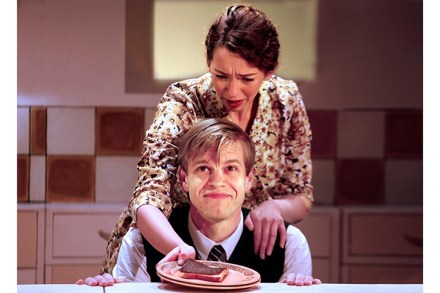
Sam Shepard was perhaps the gloomiest playwright ever to spill his guts into a typewriter. The popularity of his work must owe itself to some deep grudge nursed by America’s elite against the redneck states. True West is a standard Shepard ordeal: a pair of damaged, inadequate, bitter, loveless white males are cudgelling each other to pieces in a dingy Californian hellhole. For good measure he adds a dollop of bad plotting and improbable detail. We meet two thick angry brothers, Austin and Lee, living together in the house of their absent mom. Austin is busy writing a screenplay and Lee wants to borrow Austin’s car to go on a burglary spree. Austin hands over the keys because he needs a bit of privacy for a meeting with a film producer in the kitchen. Come off it.

Winter wonderland | 13 December 2018

More from Arts

Not another Nutcracker, I thought on the way to the Opera House. Haven’t we had our fill of Sugar Plums? I took my seat, the Grinch of Covent Garden, wondering if we couldn’t have The Winter’s Tale for a change. The lights went down, the orchestra assembled and within six bars of Tchaikovsky’s irresistibly sparkling score I was sinking into my seat as into a bath of hot Glühwein and contentedly sighing: bring on the dancing snowflakes… Peter Wright’s production, with sets and costumes by Julia Trevelyan Oman, remains a midwinter night’s dream of Lebkuchen cosiness: snow-capped gables, Biedermeier comfort, goffered mob caps and Fezziwig frock coats, as pretty as an album of découpage. Anna Rose O’Sullivan is Clara.

There’s something about Mary

Cinema

So, Mary Poppins returns, and I was, of course, primed to be spiteful, as is my nature. Not a patch on the original. Why did they bother? Why did they imagine it was necessary? Wasn’t the first film practically perfect in every way? Have someone play her who isn’t Julie Andrews? Are you right in the head? The original (1964) is one of the best-loved films ever. I love it, even though the fact that Mrs Banks was made to put away her suffragette nonsense to become a Proper Mother now makes me go: grrrr. So I had my spite at the ready. My spite was champing at the bit. But then I had to put most of it away, annoyingly, as this is not a travesty.

High and mighty | 13 December 2018

Music

In this 200th anniversary of the birth of Mrs C.F. Alexander, author of ‘Once in Royal David’s City’, all of us for whom Christmas properly begins when we hear the treble solo of verse one on Christmas Eve should remember her and be thankful. She was born Cecil Frances Humphreys, ‘Fanny’, to a successful land agent in Dublin in 1818, and she seems to have been genuinely mild, obedient, good as He. From an early age she had an instinctive liking for vicars, rectors, deans, bishops and archbishops, although she was shy and at her most relaxed with children and dogs. She eventually married a Church of Ireland rector of her own, William Alexander, who later became a bishop, and they lived a long, happy life of parenthood and charitable works.

The Green Room, Spectator USA’s Life & Arts podcast: The Greek way of death

As the old year dies, our thoughts turn to what happens next. What better time, then, to cast a seasonally morbid, deeply philosophical, and curiously uplifting pod with David Saunders of the J. Paul Getty Museum in California? The Getty Villa’s new exhibition, Underworld: Imagining the Afterlife is all about ideas of what happened next if you died as an Ancient Greek. The Greeks thought of the Underworld, or ‘House of Hades’, as a bleak and somber location, defined by the absence of life’s pleasures. Not surprisingly, this Hotel California of the soul was a rare subject in Greek art. And, not surprisingly, the prospect of a one-way ticket on Charon’s ferry encouraged many Greeks to plan ahead, in the hope that they might improve conditions.

Love hurts

Arts feature

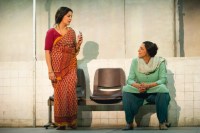
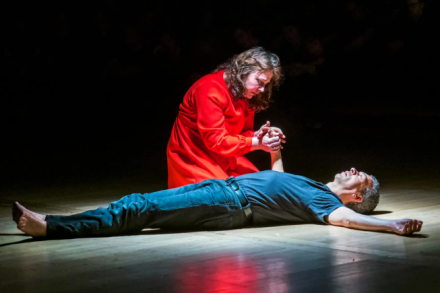
There is very little art about modern poverty, because who wants to know? It is barely acknowledged, unless there is redemption, or salvation, as in A Christmas Carol. Those most suited to make it — those who are actually poor — are usually too busy doing something else, such as surviving. So, it is remarkable to learn that Alexander Zeldin’s play LOVE, a success at the National Theatre in 2016, is now a film and will air this weekend on BBC2. The closest thing to it recently was Benefits Street, which was exploitative and, therefore, an instant hit. Zeldin is 33. He read French at Oxford University and is artist-in-residence at the National Theatre. His work is plain and understated. He listens, rather than writes, and there are no diatribes, just calm despair.

The birth of minimalism

Arts feature

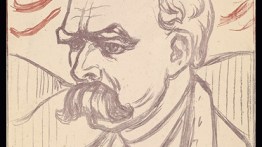
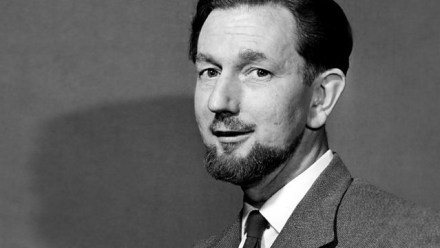
The Spectator is responsible for many coinages. One of the most significant came in 1968, when an article by our 24-year-old music critic, Michael Nyman, appeared with the headline ‘Minimal Music’ (reprinted below). It was a wry joke about music that was more experimental than strictly minimal but it stuck and a musical style that, whatever you think of it, has rarely been matched in influence or reach was born. Walking home from the Fugs’ concert, organised by the Middle Earth at the Round House last week, I was shocked by the 4 a.m. silence — by its awesome superiority to a lot of modern music, and by its unfamiliarity.

What’s That Thing? Award for bad public art 2018

More from Arts

Not a bad year for the award. Honourable mentions must go to the landfill abstractions of Oxford’s new Westgate Centre, to the bees that have appeared in Manchester’s streets to promote the ‘unique buzz’ of the city and to Gillian Wearing, a once decent conceptual artist who has taken to sculpture like a cat to water with her statue of Millicent Fawcett. Nothing, however, brought more mush to our towns than the first world war commemorations. As Simon Jenkins wrote in these pages, ‘reaching for a grand sweeping gesture, something “profound”, is too tempting’ in commissions about war. ‘The search for wishy-washy universals soaks up all the energy and bromides usually result.

One for the girls

Television

Don’t watch The Sinner (originally on Netflix; now on BBC4) because, despite your better judgment, you’ll only get addicted after its irresistibly grabby opening. A pretty if slightly distraite mother called Cora Tannetti — Jessica Biel — is on a lakeside beach with her bearded beta cuck husband and their little boy, surrounded by other relaxed groups of weekend picnickers. Suddenly, she takes huge exception to a hunky male sitting nearby and derangedly stabs him to death with a fruit knife. Why? That’s why it’s being sold as a new genre — the ‘whydunit’ — because obviously we know whodunit already.

There’s no place like Roma

Cinema

Roma is the latest film from Alfonso Cuaron (Gravity,Y Tu Mama Tambien, Harry Potter and the Prisoner of Azkaban) and you’ll probably already have heard that it’s wonderful, a masterpiece, magnificent, Oscar-worthy. But as I know you won’t believe it until you hear it from me (sigh, the responsibility is too much sometimes) I can confirm all of the above. At this point I should note that many cinephiles have complained that it deserves to be seen at the cinema, on a full-sized screen with full-sized sound, but as it’s a Netflix film (sneer, sneer) most won’t be able to watch it this way. I did see it at the cinema, at one of the very limited London showings (£18.50!

Voices of doom

Opera

It’s December, and while musical theatre is busy celebrating ‘warm woollen mittens’, opera, as usual, is far more interested in the tiny frozen hands inside them. Because nothing says Christmas quite like consumption, and I’m not talking turkey and mince pies. London’s opera companies are serving up a heaped sleighful of heartbreak this year. English National Opera is going traditional with La bohème, while the Royal Opera is thinking outside the snow-covered coffin with Carmen. There’s something for everybody, so long as it’s tragedy. ENO’s Bohème is the safe option, the show you take your granny to.

Taking the Michael | 6 December 2018

Theatre

One of the biggest stars of the 1970s was the professional lard-bucket Mick McManus, who plied his trade as an all-in wrestler. The sport was televised to millions. The parents of the playwright Michael McManus must have calculated that by giving their child the same name as ‘The Dulwich Destroyer’ they would subtly galvanise his intellectual ambitions. Their ploy paid off. The young Michael McManus, lumbered with the identity of a potato-shaped pugilist, seems to have toiled night and day to distinguish himself from his pot-bellied namesake. He succeeded in establishing his intellectual credentials by working as a political diarist, a ministerial adviser, and by writing well-received biographies of Jo Grimond and Ted Heath.

The Green Room: Spectator USA’s Life & Arts podcast: Talking blues with Chris Thomas King

This week on the Green Room, I’m talking the blues with Grammy-winning blues artist Chris Thomas King. Earlier this week, King wrote for Spectator USA a scathing criticismof the policies of the Grammys’ Blues category. King is an African American from Louisiana. He is the son of a blues musician, and grew up in his father’s juke joint. He was one of the last blues musicians to be ‘discovered’ by anthropologists from the North. He has won two Grammy awards, in 2001 for the soundtrack of the Coen Brothers’ film O Brother, Where Art Thou?, in which he starred as a blues singer who has sold his soul to the devil, and in 2002 in the category of Best Historical Album, for his tribute to Charley Patton, Screamin' and Hollerin' the Blues.

Moderne times

Arts feature

On 10 September 1973 the 1930s Kensington High Street department store formerly known as Derry & Toms reopened as Big Biba. It sold the dress designer Barbara Hulanicki’s distinctive look in furniture, paints and wallpaper, sports equipment and food, as well as her familiar fast fashion. If you had to define that aesthetic then, you’d have said it was campy and kitschy. But above all you’d have said it was deco, an increasingly familiar word for the between-wars moderne style in everything from buildings to jewellery. Derry & Toms itself was a 1933 moderne temple of commerce, slathered in stylised ironwork and bas-reliefs.

Hunter, scholar, boaster, dreamer

Exhibitions

The Assyrians placed sculptures of winged human-headed bulls (lamassus) at the entrances to their capital at Nineveh, in modern Mosul, to ward off evil. The mighty lamassu to the right of the Nergal Gate had been on guard for some 2,700 years when Isis vandals took a drill to it in 2015 and blew away its face. Today a copy, crafted out of date syrup cans, stands on the Fourth Plinth in Trafalgar Square. It wears the oblong beard and proud look of the Assyrian kings. The original sculpture dated to the time of Sennacherib, who ruled Assyria from 705 to 681 BC, and transformed Nineveh into a magnificent metropolis. No stranger himself to violent desecration, he made his eldest son king of Babylon, but went on the rampage when the Babylonians rebelled and had the ruler dispatched.

Disappointed of north London

Cinema

Disobedience is an adaptation of Naomi Alderman’s novel about forbidden, lesbian love in orthodox Jewish north London, starring Rachel Weisz and Rachel McAdams and I so wanted to root for the film and its characters. Go for it, women! Smash the patriarchy that says you must always be the object of sexual desire and never the subject! I’ll put you up, if needs be. I have a spare bedroom and it’s all yours! But while this should be a searing, Brokeback Mountain-style drama about love, longing and repression it just plods along, often clumsily. I didn’t root or not root as in the end it was impossible to much care. The film opens in London with a rabbi (Anton Lesser) giving a sermon in a synagogue before dropping dead.

Last suppers

Radio

You don’t need headphones to appreciate, and catch on to, the unique selling point of radio: its immediacy, its directness, that sense that someone is talking to you, and you alone. In fact, if anything, headphones take away from radio’s ability to reach out to the isolated and the lonely, to create that connection between you, the listener, and that someone else, the person behind the mic. With headphones the voice gets inside your head, but it’s not like having a conversation. That USP also explains why listening in the car works so well, creating a companionship while driving alone along a road empty of human contact, surrounded by fast-moving machines. You need that voice to reassure and remind, keep you focused and aware.

Some day their prince will come

More from Arts

The Royal Ballet is a company in search of a prince. It has no lack of dancing princesses. You could search the kingdom and find no lovelier dancers than Marianela Nunez, Lauren Cuthbertson, Francesca Hayward, Natalia Osipova, Akane Takada, Sarah Lamb, Laura Morera and Yasmine Naghdi. But a true prince is as rare as a golden egg. Since Sergei Polunin went so energetically awol in 2012, the Royal Ballet has lacked a male principal with all four virtues of the leading man: classic handsome looks, height, faultless technique and some gift as an actor. Polunin had it all. He was dishy, dashing and dangerous. He had a fifth quality, too: seductive, flaring charisma. The company was less without him, and he lost without them.

Secrets and lies | 29 November 2018

Television

Shortly before her husband’s funeral, the undertaker told the eponymous main character in Mrs Wilson (BBC1, Tuesday) that, ‘We’re here to make this tragic time as straightforward as possible.’ By then, though, we already knew this remark was the kind that, in a school set book, would soon be underlined with the words ‘Dramatic irony!!’ written in the margin. That’s because in its quiet way — devoid of both globetrotting locations and international terrorism — Mrs Wilson is as tangled and morally ambiguous as The Little Drummer Girl. The opening episode began in the far-off days of 1963: so far off, in fact, that Alison Wilson (Ruth Wilson) was first seen nipping home from her office typing pool to make lunch for her husband Alec.

The saddest music in the world

Music

It’s a strange compliment to pay a composer — that the most profound impression their music makes is of an absence. I can’t claim much prior experience of the composer Mieczyslaw Weinberg, who died in 1996: a vague sense of a Shostakovich-like figure who had a bad time of it under Stalin, and the composer of an opera, The Passenger, for which great claims are made by people whose judgment I respect but who probably, on balance, spend too much time with their heads in Eastern Europe. By the end of the first evening of this ‘Weinberg Weekend’, devised by Mirga Grazinyte-Tyla and the City of Birmingham Symphony Orchestra, I felt slightly ashamed about that. Gidon Kremer played his own violin transcription of Weinberg’s 24 Preludes for solo cello.

The 1975: A Brief Inquiry Into Online Relationships

More from Arts

Grade: C A derided year in pop music, 1975 — and yet a great one. The mainstream was horrible, but we had Neil Young’s Tonight’s The Night, Patti Smith’s Horses, Guy Clarke’s Old No. 1 and Television just beginning to break through. It is in the lacunae, before the next big wave, that we hear the most inventive music, which is why ’75 — with Queen and disco hogging the charts and the blind alleys of prog and metal as your only alternative — was so good. But I suppose you want to hear about the band, The 1975 — one of Britain’s biggest. Oh, Britain. The 1975 are a bunch of middle-class Mancs led by a gobby SJW junkie — hell, what’s not to like.