Usa

The UN decides to take “all necessary measures” against Gaddafi

"There will be no mercy. Our troops will be coming to Benghazi tonight." Perhaps it was the murderous threat contained within Gaddafi's latest radio message that shocked the United Nations into action today — because shocked into action they have been. After sweating and toiling over the precise formulation of a resolution on Libya, the UN Security Council finally reached the voting stage this evening. And it has now voted 10-0 in favour of member states taking "all necessary measures … to protect civilian and populated areas, including Benghazi, while excluding an occupation force." Brazil, India, China, Russia and — staggeringly — Germany all abstained. What this means, in practice, is a no-fly zone — and more.

The call of the wild

Annie Proulx (pronounced ‘Pru’) began her writing career — quite late, in her fifties — as E.A. Proulx, to baffle misogynist editors; then she was E. Annie Proulx, until she dropped the E and became simply Annie the Proulx. Annie Proulx (pronounced ‘Pru’) began her writing career — quite late, in her fifties — as E.A. Proulx, to baffle misogynist editors; then she was E. Annie Proulx, until she dropped the E and became simply Annie the Proulx. (Her father’s ancestors, who left Anjou for Canada in the 17th century, were called Prou or Preault; her mother’s arrived in New England soon after the Mayflower.) Her fiction tends to be about hard times in rural America, and though her new book is a memoir it runs true to form.

Pillars of Sand

The Middle East is set for renewed displays of public anger towards the region's governments. Events in Bahrain are particularly worrying. Troops took control of the capital, killing at least four protesters in the worst violence in the Gulf kingdom in decades. The trouble in Bahrain, which houses the U.S. Navy's 5th fleet and is home to a large U.S. military base, illustrates a point Ben Judah and I make in a new article: that the three pillars of US post-World War II power in the Middle East - commercial ties, military bases and client states - are crumbling: "A new Middle East is taking shape, buffeted by Pacific trade winds and owing allegiance to more than one power.

Egypt becomes freer

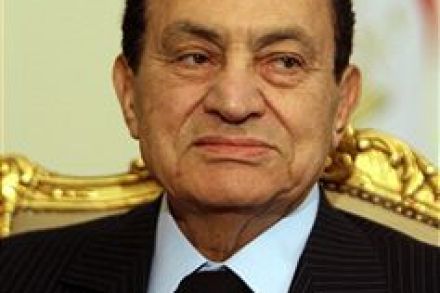
The world does really end with a whimper, not a bang, as T.S. Eliot said. After 31 years in power, seventeen days of protests, more than 300 dead and a shouting match between the US administration and its one-time Egyptian ally, it looks as if Hosni Mubarak will be leaving office tonight. Twitter is atwitter with news that the Egyptian strongman will soon make a TV appearance during which he is expected to hand power to newly-anointed Vice-President Omar Suleiman. Expect Tahrir Square to erupt in a festival of freedom, as the heroic, web-enabled protesters savour their unlikely but amazing victory. But while Egypt’s revolution has been more successful than many in the US and British believed it could be, it is not yet the time to celebrate.

Al-Jazeera is not a new BBC World Service

Egypt has made al-Jazeera English. The Qatari satellite channel has been the “go-to” channel; it has had more reporters on the ground than the BBC and CNN; and it has used technology in ways that make Western media look like they belong to a different era. Newspapers from the New York Times to the Wall Street Journal have talked about the channel's role in the protests. And all this despite its broadcasts being banned in Ben Ali's Tunisia and blocked in Egypt. Facing these constraints, the TV channel switched to social media like Facebook, Twitter, and YouTube. Its website posted Live Messages — audio messages recorded from phone calls placed by correspondents — on the ground, and used a facility called Scribble Live to get these updates online fast.

From the archives: Christopher Hitchens on the Challenger shuttle disaster

It is 25 years, to the day, since the Challenger shuttle tragically disintegrated over Cape Canaveral. Here is the deeply poignant piece that Christopher Hitchens wrote for The Spectator at the time: The Shuttle Disaster, Christopher Hitchens, The Spectator 1 Feb 1986 Cape Canaveral was the scene of so many non-lethal disasters in the early Sixties that it gratefully accepted a change of name to Cape Kennedy – even though the very change itself involved a memorial to a trauma. Few now remember the process by which the launching pad of the space programme reverted quietly to its earlier and (until Tuesday morning) more placid title. But nobody who saw the flame fill the screen and then dissolve into anarchic debris will ever forget Canaveral.

At war with the Greeks

America’s love of the ancient republics has had military consequences in the present If you’re 40 or older and I ask you to think back to the worst moments of your life as a schoolchild, memory will probably take you straight to Latin class. Remember how it was taught by a wizened old beak in a faded gown, who favoured merciless drilling, responded to grammatical errors with a rap of the cane, and squeezed the fun out of even the most heroic Roman tales? Latin has largely disappeared from English schools and I dare say that 19 out of every 20 among you don’t miss it. By contrast, it is thriving on the other side of the Atlantic. Eager young teachers offer Greek and Latin classes in a growing number of schools, public and private.

Am I offending the wrong Americans?

Q. Why did God give liberals annoying, whiny voices? A. So that even the blind could hate them. Q. Why did God give liberals annoying, whiny voices? A. So that even the blind could hate them. This is probably my favourite joke from a new book I just published in the US, (hence the use of ‘liberal’ in its American sense), called 365 Ways To Drive A Liberal Crazy. Though I don’t think it’s quite as funny as the Obama ‘Men Who Stare At Goats’ joke or the one about Nancy Pelosi and the sheep on the desert island, I like it a) because I invented it (or, rather, adapted it from an old Eighties racist joke) and b) because it offends so many liberal pieties.

A tale of ego and hypocrisy

Sarah Ellison has profiled Julian Assange and his relationship with the Guardian for Vanity Fair. Read the whole piece for each petulant tantrum, sordid disclosure and twist of hypocrisy, but here are the opening paragraphs to get you started. ‘On the afternoon of November 1, 2010, Julian Assange, the Australian-born founder of WikiLeaks.org, marched with his lawyer into the London office of Alan Rusbridger, the editor of The Guardian. Assange was pallid and sweaty, his thin frame racked by a cough that had been plaguing him for weeks. He was also angry, and his message was simple: he would sue the newspaper if it went ahead and published stories based on the quarter of a million documents that he had handed over to The Guardian just three months earlier.

A debt-filled New Year

The Spectator is out today, with a cover story that I would commend to CoffeeHousers. Failure to learn from history usually condemns a nation to repeating its mistakes. That's why we should be nervous that no one seems to have worked out what caused the crash. Little wonder: the guys doing the analysis are the same guys who failed to spot the crisis building up, so it suits everyone to blame the banks. "How was I to know," says everyone from Gordon Brown to Joe the Pundit, "that they were doing all these complex debt swap thingies? They deceived everyone, the bounders." There is another analysis – and it's our cover story, written by Johan Norberg.

Bad enemy, worse lover

Five years after his death, Saul Bellow’s literary reputation has yet to suffer the usual post-mortem slump, and publication of these lively letters should help sustain his standing. Five years after his death, Saul Bellow’s literary reputation has yet to suffer the usual post-mortem slump, and publication of these lively letters should help sustain his standing. It’s less likely to boost his reputation as a man. Bellow was never humble about his talents, and the surviving early letters show an intellectual precocity leavened by the vernacular of melting-pot Chicago. Yet initially he was reluctant to plumb home-grown strengths for his work.

Chinese burns

The latest cache of Wikileaks has done America no end of good. The Saudis urged the US to bomb Iran – a sign that the Arab world can make common cause with the States and Israel. It has also emerged that North Korea has sold the Iranians long range rockets – Moscow, Berlin and Istanbul are all within the Ayatollah’s range. But the most important revelation is that China has tired of North Korea’s lunatic machinations, recognising that the rogue state is an impediment to global and regional security. China is also convinced that the country will not survive Kim Jung-il’s death and favours a union of the two Koreas, provided the new state is pro-Chinese (could it be anything but?).

There was more to Blair than a winning smile

Following Sir Christopher Meyer's review of George Bush's Decision Points, here is the other half of the double act. The closest I’ve come to meeting Tony Blair was knocking into Michael Sheen on the street. I got no closer reading Blair’s memoir, most of which is beyond parody. Cherie Booth QC is a strong armed nocturnal adventuress; Anji Hunter is a bountiful babe; and Mr Blair is a would-be Casanova with a taste for premonitions and Schindler’s List. You barely notice New Labour’s reform programme under the torrent of erratic writing and bizarre digressions.

So far from God . . .

Ciudad Juárez, Mexico’s second largest border city, is clogged with rubbish, fouled with car exhaust and, increasingly, flooded with narcotics. Ciudad Juárez, Mexico’s second largest border city, is clogged with rubbish, fouled with car exhaust and, increasingly, flooded with narcotics. Mexican drug cartels are now so deeply ingrained in the city’s political and social fabric that not a single bar or shop remains ‘un-narcotised’. Mexico in the 21st century, according to Ed Vulliamy, is a nation shadowed by gangland enterprise and the rat-tat-tat of Kalashnikovs. To live on the US-Mexican border, how ever, calls for special qualities of endurance.

Sir Christopher Meyer reviews George Bush’s memoirs

Sir Christopher Meyer, the former British Ambassador to the United States, has reviewed George Bush's biography for the latest issue of The Spectator. We've pasted his entire review below, for readers of our Book Blog. Taking the long view, Christopher Meyer, The Spectator, 20 November 2010 While Tony Blair emerged from his memoirs as a chameleon of many colours, there is only one George W. Bush in Decision Points. The book reads like the man speaks. If it has been ghosted — and Bush gives thanks to a multitude of helpers — it has been done with consummate skill to preserve the authentic Bush voice. The result will be unexpected, even unwelcome, to many.

Playing with fire | 11 November 2010

As the G20 summit begins in Seoul, the emphasis in much of the papers is on the economic hostility between America and China. The FT's Gideon Rachman wrote a cover piece on this matter for The Spectator two weeks ago, which we've reprinted here for the benefit of CoffeeHousers: In a couple of weeks’ time, David Cameron and George Osborne will arrive in China and witness at first hand an economic boom that is shaking the world. The British duo will doubtless receive a polite and outwardly respectful reception. But, as I discovered on a visit to Shanghai last week, Chinese diplomats and academics have noted the deep cuts in British spending — and they are drawing the obvious conclusions about the relative fortunes of the two nations.

Reading the Tea Party

Copyright BBC Tea Party America with Andrew Neil, Renegade Pictures for the BBC This Tuesday we will find out the electoral strength of the Tea Party, the insurgent political movement that has already toppled several favourites of the Republican Establishment. From this side of the Atlantic, it has been hard to get a handle on the Tea Party. Does it represent a right turn in US politics or is it just a rag-tag group whose policies and candidates are just too extreme to be electable? To answer this question, Andrew Neil headed to the States this summer; travelling to the states where the Tea Party has made the most impact. His documentary on it airs on BBC 2 at 7PM on Monday, there’s a clip from it above.

Pastures new for David Miliband?

David Miliband's logic is difficult to fault. If he stayed, he would be treated as the torch bearer for those disgruntled Labour members who feel they were robbed. Without him, such people have no one to turn to. New Labour will now dissolve. 'Progress' - supposedly for the next generation of Blairites - held their meeting in a Manchester venue named the Comedy Store and that says it all. Game over: as Neil Kinnock put it last night "I've got my party back".   No matter how loyal he would be, David Miliband could not but be seen as a focal point for the (many) Labour MPs who hate all that. Sure, it is a bit odd his saying on Monday "the fightback starts here" and on Wednesday "well, good luck with it guys - I'm offski". But it's better than the alternative.

Way out west

This year America celebrates the cent-enary of Mark Twain’s death. This year America celebrates the cent-enary of Mark Twain’s death. He is the nearest that country gets to a national treasure, with a hefty bibliography to show it: the University of California Press’s 70-volume Works and Papers represents but a fragment, and in June Penguin published an entire book on the food Twain ate. Now here comes Roy Morris Jr with a contribution covering Twain’s pre-fame journeys among the mines and saloons of the western frontier. What does it add? Samuel Clemens (as Twain was born) worked as an itinerant printer and a Mississippi riverboat pilot before a reluctant stint as a Confederate guerilla at the outbreak of civil war.

Girls from the golden West

Who was the first American to marry an English duke? Most students of the peerage would say it was Consuelo Yzagna who married the eldest son of the Duke of Manchester in 1876. But the banjo-strumming Cuban American Consuelo was not the first Yankee duchess. As early as 1828 the American Louisa Caton married the eldest son of the Duke of Leeds. This was half a century before the dollar princesses, trading titles for cash, played havoc with Burke’s Peerage. Louisa and her sisters were the pioneers of the American invasion of London society. Their conquest was so successful, and they became so assimilated, that they left barely a ripple. Only now has Jehanne Wake researched and pieced together their story. The four Caton sisters were born into one of the grandest American families.