Usa

Mubarakism after Mubarak

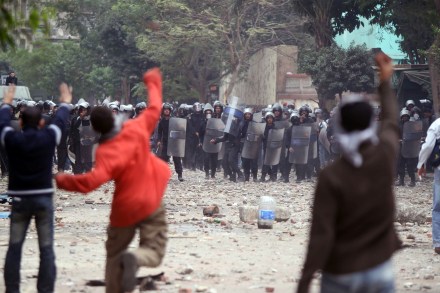
The future of Egypt has been hanging in the balance since Hosni Mubarak was toppled. Now there is real cause for concern, as scores of protesters clash with state security forces. The problem, above all, is military overreach. Stuck in a 1960s view of itself, and keen to preserve their money, status and power, the military has been thwarting the process of change. Since Mubarak's fall they have continued behaving how they always have and worse — arresting protesters, muttering about US-led conspiracies, demanding extra-constitutional rights and clamping down on dissent. Worst of all, the West has been all to willing to take them at their word.

Talkin’ ’bout long-term stagnation

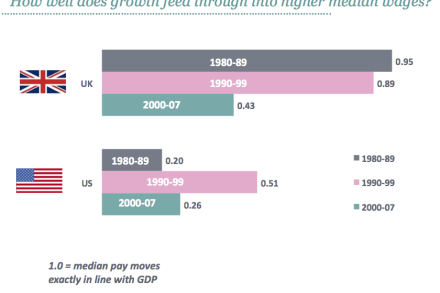
Politics is often a messy squiggle, but this morning's Resolution Foundation event did much to reduce it to a binary choice. Do we follow the US into a decades-long stagnancy around low-to-middle-income earners? Or do we not? James Plunkett explained the basic dilemma on Coffee House earlier, but more was said by a group of panellists which included Jared Bernstein, Martin Wolf, Steve Machin and Lane Kenworthy. Here, for the saddest CoffeeHousers, are eight points that I've distilled from my notes. This is more reportage than opinion, but I thought you might care to applaud or eviscerate some of the arguments that were put forward: 1) The UK triumphant. Or not quite — but at least we've outpaced the US on most measures of income growth for low-to-middle earners.

How European sovereign debt became the new sub-prime

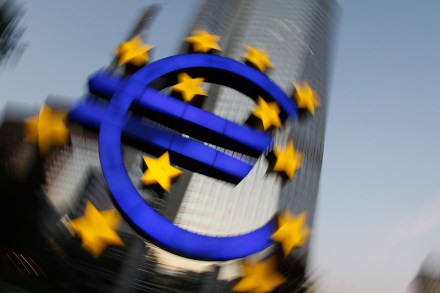
The New York Times has a great piece today on how banks became so exposed to the sovereign debt of European countries with a history of defaulting. Here’s the nub of the argument: “How European sovereign debt became the new subprime is a story with many culprits, including governments that borrowed beyond their means, regulators who permitted banks to treat the bonds as risk-free and investors who for too long did not make much of a distinction between the bonds of troubled economies like Greece and Italy and those issued by the rock-solid Germany. Banks had further incentive to overlook the perils of individual euro zone countries because of the fees they earned for underwriting sovereign debt sold to other investors.

Democrats’ strong results bolster Obama’s hopes

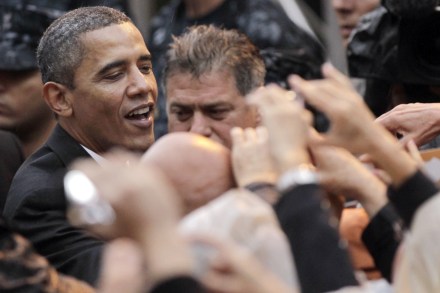
Things haven't been looking particularly good for the Obama 2012 campaign of late. Half the country disapproves of his performance so far, the economy's very weak and Mitt Romney's grip on the Republican nomination is tightening. And the last two sets of November elections have seen the electorate move towards the Republicans. In 2009, they took over the governorships Virgnia and New Jersey. Last year, they won control of House of Representatives and increased their numbers of Senators and Governors. But this year, the story's different: Democrats scored some important wins yesterday, making their prospects for 2012 that bit brighter.

After America: Get Ready For Armageddon by Mark Steyn

There are people sent to depress us, and prominent among them is Mark Steyn, whose speciality is apocalyptic predictions. Following his bestseller America Alone: The End of the World as We Know It, which was about the collapse of all of the Western world with the exception of the United States, he is now predicting the collapse of the US as well, leaving the entire ‘free world’, as it used to be called, at the mercy of those great enemies of freedom, China and Islam. He writes: There will be no ‘new world order’, only a world without order, in which pipsqueak failed states go nuclear while the planet’s wealthiest nations are unable to defend their borders and are forced to adjust to the post-American era as they can.

Palestine presses on in the UN

While the Palestinian bid for membership at the United Nations moved closer to rejection, it turned out that Palestine has a veto over which UN agencies the United States funds. For after Palestine gained admission to UNESCO, the US administration followed through on its threats and cut the organisation's funding. As UNESCO is based on assessed contributions from member-states, others cannot make up the short-fall. The Palestinian Authority is now considering making applications to the WHO, WIPO and the International Telecommunications Union – technocratic bodies that actually play a large in role. For example, the WHO is crucial for dealing with global pandemics like SARS and Swine Flue.

The coming world oil order

Following on from Daniel’s post this morning about a more inward looking America, Daniel Yergin has a very interesting essay in the Washington Post about how the changing balance of the US’s energy supplies are going to change its geo-strategic priorities. Yergin makes the point that by 2020, Canada could be a bigger oil producer than Iran and Brazil could be producing more than half of what Saudi Arabia is currently pumping out. Put these developments together with increased domestic energy production in the States itself and the fact that China is on its way to overtaking the US as the world’s largest oil consumer, and the geo-politics of energy begins to look very different.

American isolationism and its consequences

I've spent the last couple of days in the United States, far away from the brouhaha in Europe. What has struck me most during meetings with US officials is how low down their list of priorities Europe — and indeed Britain — comes. This is an Asian Century, and the US means to focus inwards and eastwards but not elsewhere. As an official put it to me, "we see Britain moving away from Europe and being distant to us." There is even talk of closing down US European Command. This new focus will have a number of consequences. Take Libya, for instance. The UK and France could have fought the war, and won, without the US, but American involvement allowed casualties and collateral damage to be minimised.

Reigning for dummies

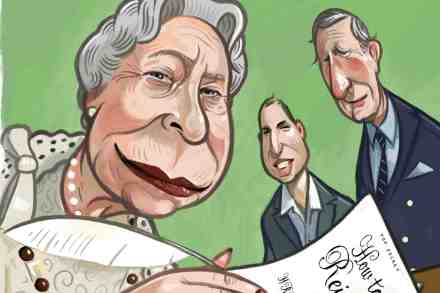
  What is the Queen’s secret? She seems to defy political gravity. Right now, an English monarch is in Australia being feted by her subjects, who seem delighted by this very un-modern constitutional arrangement. Paul Keating, the former Prime Minister of Australia, recounts in The Times today the time he advised the monarch to let go. “I told the Queen as politely and gently as I could that I believed that majority of Australians felt the monarchy was now an anachronism; that it had gently drifted into obsolescence.” This was 18 years ago. There is no such sign of this now, with just 34 per cent of Australians being in favour of dumping Her Majesty – the lowest figure for 20 years. Why?

Palin and Rubio say no to 2012 bids

It's been quite a week for Republicans deciding they're not interested in entering the White House in 2013. First, Christie closed the door on a presidential bid on Tuesday. Last night, Sarah Palin followed suit, saying: "After much prayer and serious consideration, I have decided that I will not be seeking the 2012 GOP nomination for President of the United States... My decision is based upon a review of what common sense Conservatives and Independents have accomplished, especially over the last year. I believe that at this time I can be more effective in a decisive role to help elect other true public servants to office – from the nation’s governors to Congressional seats and the Presidency.

Romney’s Churchill fixation backfires

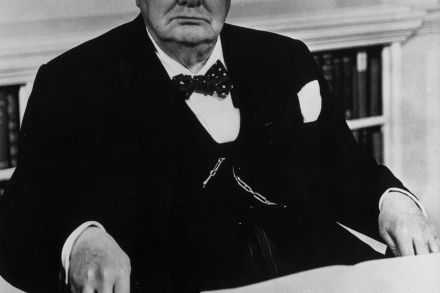
A couple of weeks ago Mitt Romney used Winston Churchill – or his bust, at least – to attack Obama. This week, he used the former Prime Minister to defend his flip-flopping. Or at least, he thought he did. Here's what he told a town hall in New Hampshire on Wednesday: 'In the private sector, if you don't change your view when the facts change, well you'll get fired for being stubborn and stupid. Winston Chuchill said, "When the facts change, I change too, Madam".' Unfortunately, as NBC have pointed out, the line wasn't Churchill's at all. It is usually attributed to John Maynard Keynes, but even that may be aprocryphal. So has another attempt to get over his record backfired on Romney? As Abraham Lincoln famously said, "You betcha!

The last of England

Martin Vander Weyer's column in the latest issue of the magazine is essential reading. It features five current stories from the business world. The Vickers report, Martin says, will merely offer the same poor service for consumers at a greater cost. Martin also notes, as he did two weeks ago, that American banks are winding down their lending to European counterparts in anticipation of a crash, and adds that American politicians are keen to paint Europe as the bogeyman for their financial ills, conveniently ignoring the failure of Obama's hugely expensive stimulus. Martin also touches on unemployment and the Eurozone crisis. His final vignette is a parable for our troubled times and I reproduce it below:  The last of England My pub of the week.

From the archives: “New York’s loss is also the world’s”

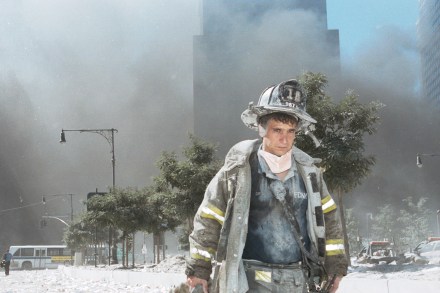
Today marks the tenth anniversary of the terrorist attacks on 11 September 2001. Here is the article Matthew Bishop wrote for The Spectator in response: Spirit of the Blitz, Matthew Bishop, 15 September 2001 New York People walk a lot in Manhattan. Its streets are always crowded. But never before like this. An hour after the attack on the World Trade Center, thousands of New Yorkers - refugees in business attire - trudged north as downtown evacuated. Many were covered from head to toe in white ash. Most walked in silence, contemplating the fact that somebody they know is probably dead, and that in the next 24 hours they will find out who. Others desperately tried to contact loved ones.

From the archives: 9/11

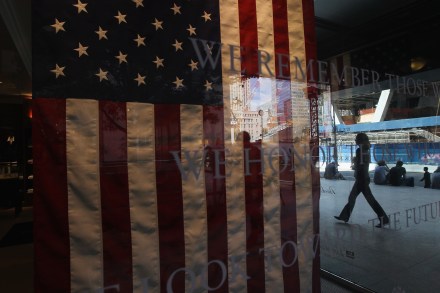
This Sunday marks the tenth anniversary of the terrorist attacks on 11 September 2001. Here is the article Stephen Glover wrote for The Spectator in response: "The terrorists want us to believe the world has ended. We must not fall into their trap.", Stephen Glover, 15 September 2001 As those who are old enough remember what they were doing when President Kennedy was shot, so we will all recall what we were doing when we heard about the attack on New York. I was reading the controversial new book about Tina Brown and Harry Evans, which I had planned to write about for this column. Then my elder son rang me. Immediately Tina and Harry and their New York lives seemed wholly irrelevant to what was going on there now.

Newsflash: Americans and Europeans like each other

A decade has passed since the attacks of 9/11 and so much water has flown under the proverbial bridge. Today, ordinary Americans don't want to have a leadership role in the world, and Europeans aren't too keen on it either. And having dithered over what to do about Guantanamo Bay, most people in the US and Europe don't trust President Obama's counter-terrorist policies. Right? No, actually wrong. According to the tenth-annual public opinion survey of the general public in the United States, Turkey, and 12 European Union member states – the Transatlantic Trends – 54 per cent of respondents from European countries surveyed want the United States to show strong leadership in world affairs. That’s a switch from the Bush years.

Day of reckoning | 3 September 2011

No one could say that we didn’t have warning of these events in the most specific terms. A month before 11 September 2001, the President’s daily intelligence brief was headed ‘Bin Laden Determined to Strike in US.’ Other official warnings from this time and earlier were so specific, and so specifically ignored, that a former National Security Adviser at the White House, Sandy Berger, would on four separate occasions in 2002 and 2003 abstract official top secret documents from the National Archives by stuffing them in his socks. (Because of Berger, we now don’t know what these warnings consisted of). There were any number of commentators, too, who saw exactly what was coming.

Music, moonlight and dahlias

The words that echoed constantly in the back of my mind as I read this book were from Paul Simon’s song ‘Train in the Distance’: ‘the thought that life could be better is woven indelibly into our hearts and our brains’. The words that echoed constantly in the back of my mind as I read this book were from Paul Simon’s song ‘Train in the Distance’: ‘the thought that life could be better is woven indelibly into our hearts and our brains’. Paul Hollander’s thesis is that modern America’s ultra-individualism has led its citizens to expect perfection in every aspect of life, relationships included. Which means that Uncle Sam and Auntie Samantha are in for a few disappointments.

The fallout from the DSK affair

It was an eventful day in New York yesterday. The rape case against Dominique Strauss-Kahn collapsed and, soon after, an earthquake struck that corner of the States’ eastern seaboard — thankfully there have been no reported deaths and damage appears to have been light, although there were fears about the safety of an ageing nuclear plant after the tremors. Medieval chroniclers might have drawn equivalence between the two events: the natural disaster being the judgement of God on the human drama in court. DSK was the premier contender for the Socialist presidential nomination to fight the despondent Nicolas Sarkozy, a battle he might have won.

The markets rout

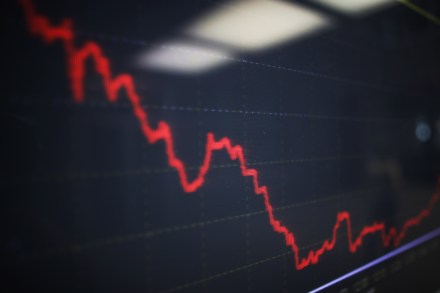
The recent rally on the markets is now the most distant memory. Stocks continued to fall today amid concerns about the European sovereign debt crisis, negligible growth figures in the developed world and cooling Asian economies. Robert Peston has an excellent account of the causes and effects of the latest rout. Banking stocks were brutalised, with Barclays and RBS both shedding more than 10 per cent of their value, with Lloyds and HSBC not far behind. Continental banking stocks were similarly mauled, with Soc Gen losing 12.34 per cent and Commerzbank being shorn of 10.42 per cent of its value. But the unease spread across exchanges as investors put their money in the safest havens.

Dark days

There’s a pessimistic mood in Westminster at the moment, a sense of gloom about the economic prospects of the West. The government expects there to be another round of the European sovereign debt crisis this autumn and believes that the problems of the eurozone will take at least a decade to resolve. No one I’ve spoken to really believes that the plan Merkel and Sarkozy announced on Tuesday will be enough to keep the markets at bay for long. Looking across the Atlantic doesn’t raise spirits either given the state of both the American economy and political system. But the global economic situation will get an awful lot worse if the Chinese bubble bursts.