Usa

From the archives: the Bill Bratton edition

As James Forsyth says today, No10 wants Bill Bratton to not just take charge of the Met but start a revolution in policing. A 'Stop Bratton' campaign has duly begun with Sir Hugh Orde, himself a candidate for the job, saying that he's not sure he wants to "learn about gangs from an area of America that has 400 of them.” But it’s worth noting, though, that Bratton has advised the British government before: in June 2006, at the beginning of John Reid’s tenure at the Home Office. Allister Heath (now editor of CityAM) went to meet him and reported back in The Spectator. His piece is below. ‘You can control crime’, Allister Heath, The Spectator, 24 June 2006 It was as if the two men had suddenly burst out of nowhere.

An American context for UK defence cuts

Yesterday’s defence select committee report provoked stern critiques of the government’s defence policy from Alex Massie and Matt Cavanagh. It is hard to dissent from Matt’s view that Cameron, Fox and Osborne will be defined to some extent by how they handle the defence brief, which, as Alex points out, also proved to be Gordon Brown's undoing.  It is also clear, as both Matt and Alex say, that the SDSR suggests that Britain is entering a period of ‘strategic shrinkage’, in terms of the size of the defence establishment at any rate. A political squall has erupted over this, but it’s worth pointing out that western countries are narrowing their military horizons.

From the archives: Touching the face of God

This week will be remembered in history as the moment that America’s ambitions in Space ended. It's an event that marks America’s withdrawal as the greatest global superpower in history; in fact, nothing describes America’s apparent decline quite as starkly as the final landing of the Space Shuttle, Atlantis, a couple of nights ago. Fate rarely contrives such neat endings. Two years ago, Mary Wakefield argued in these pages that the real Space Age is yet to begin. Maybe, in the meantime, here is how the Spectator magazine marked America’s greatest triumph in Space. Success story, John Graham, The Spectator, 26th July 1969 Washington The Americans are simply an amazing people.

“Why I hit Murdoch”

The Guardian’s Comment is Free has given a platform to the self-styled comedian Jonnie Marbles, who attacked Rupert Murdoch with a plateful of shaving foam. He says he did it ‘for the people who couldn’t’, which is ironic given that he couldn’t either after, owing to Wendi Deng’s bejewelled fist. This has sparked a debate about whether it is fit and proper to have allowed Marbles the space. CoffeeHousers’, over to you… PS: In a tweet that exceeds the limits of parody, Alec Baldwin appears to have called for David Cameron to resign as Prime Minister of England. The actor also adds that we're a very talented nation.

Lucky miss

In Dreams From My Father, his exploration of race and roots, Barack Obama recalled the tales heard in childhood about the man who gave him his name. His father, they said, was a brilliant economist who grew up herding goats in western Kenya, then won a scholarship to the University of Hawaii, where he fell in love with a white woman. ‘There was only one problem: my father was missing. Nothing my mother or grandparents told me could obviate that single, unassailable fact.’ My boy, I thought on finishing this book, you have no idea how lucky you were. Sociologists may worry about the impact absent fathers are having on a generation of young black men robbed of male role models. But there are worse things in life than being abandoned by your father.

Stand up for freedom and freedom will stand up for you (eventually)

It was hard to be a supporter of U.S. President Ronald Reagan in Western Europe. As a student living in West Germany at the time, I remember well the commonly held view of him: B-rate actor who read cue cards, a nuclear-weapons-obsessed warmonger, and not very bright to boot. Never mind that he had also been a popular two-term governor of the most populous state in the U.S. (California), because that did not fit with the bumbling cowboy narrative. When he called the Soviet Union “the evil empire” the chattering classes saw it as simplistic, unsophisticated and cringe-worthy. Not so the people caught behind the Iron Curtain who silently cheered someone who stood up for them and spoke the truth about the oppression under which they were living.

Britain’s ill-defined counter-terror strategy exposed by America’s clarity

In a post over at the Staggers, defence and security expert Matt Cavanagh has compared and contrasted Barack Obama’s review of US counter-terrorism policy and the coalition’s recent update of the Prevent strategy, together with David Cameron’s professed ‘muscular liberalism’. Here are his insights: ‘The new (American) strategy contains a fairly detailed discussion of the Arab Spring, arguing for applying "targeted force on Al Qaida at a time when its ideology is under extreme pressure" from events in North Africa and the Middle East.

An American view of tuition fees

When I visited the US recently, I got talking to some American teenagers about university. They (like me) had just left school and were trying to decide where to go next. I explained that in the UK, the Government's plan to raise tuition fees to £9,000 a year had led to riots. Their jaws dropped. They couldn't understand what the fuss was about. In the US, fees can reach $40 000 a year for the private Ivy League colleges. The reaction in the UK seemed ridiculous to them. They felt we should be grateful that we didn't have to pay $40,000. [Although, to be fair, some state universities only charge around $5000].

Lagarde three giant steps closer as Russia, China and the US back her IMF bid

The 24 members of the IMF board are meeting to see if they can agree that Christine Lagarde should be the organisation’s next leader without a formal vote. Lagarde has already gained formidable backing. 40 per cent of the membership had indicated its support before today’s meetings, while her closest competitor, Mexican Augustin Carstens, had mustered just 12 per cent of the IMF’s votes. The remaining 48 per cent is now concentrating behind Lagarde’s candidacy. Her popularity extends beyond Europe into the vital emerging markets.  Russian Finance Minister Alexei Kudrin gave his signature today, saying that he hopes she will ‘secure reform of the IMF in the interests of developing world.

Britain makes new senior diplomatic appointments

From the Number 10 website: The Prime Minister is pleased to confirm the following senior appointments: Sir Peter Ricketts, currently the Prime Minister’s National Security Advisor, to become HM Ambassador to France; Sir Jon Cunliffe, currently the Prime Minister’s Advisor on Europe and Global Issues, to become the UK’s Permanent Representative to the European Union in Brussels; Sir Kim Darroch, currently the UK’s Permanent Representative to the EU, to become the Prime Minister’s National Security Adviser; and Sir Peter Westmacott, currently HM Ambassador France, to become HM Ambassador to Washington. These changes will take effect from January 2012.

Attention shifts to Yemen

Since last week’s attack on Yemen’s President Saleh and his subsequent flight, Sana’a has been on the cusp of anarchy. Perhaps as many 400 people were killed in riots last week and the killing continues. Western diplomatic services fear for the safety of their citizens in Yemen. The MoD has been preparing contingencies. Forces and materiel deployed in the Libya are moving east. Two fleet auxiliary ships, equipped with helicopters and landing craft, and 80 Royal Marines have been stationed off the Yemeni coast. Should the 800 or so British nationals in Yemen need to be evacuated, the marines will secure a bridgehead. A further detachment, currently on exercises in Albania, is poised to join the task force.

Meeting Christine Lagarde

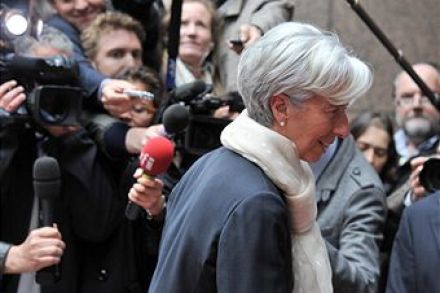
The FT has been speaking to Christine Lagarde, the French finance minister tipped to become managing director of the IMF. A few salient points emerge from it. First, she has more than a dash of hard-nosed Gallic defiance. Responding to the charge of a lack of a qualification in economics, she reiterated the comments she made to the Today programme earlier in the years: “From what I know of the job, I think I can do it. One of the qualities that people recognise in me is my ability to reach out, to try to build a consensus, to bring people to the common interest while still being a very firm and no nonsense person.” Her empathy is well documented, as is her sympathy for all things American.

Grading Obama’s visit

It was a good state visit. Actually, it has been an excellent visit. Much better than George W Bush's and even Barack Obama's 2009 trip to London. The US president got his photo with Wills 'n' Kate. The Prime Minister got his presidential high-fives. There were some odd points. The personal chemistry between David Cameron and Barack Obama made the ping-pong match better than it would naturally have been. For, let's be honest, table tennis is not a natural US-UK sport. There were policy differences between the two leaders too, for example on Libya and deficit reduction. In the end, though, the way to judge visits is not to think about Evening Standard covers or how much of the Today programme was devoted to the US president, but to look at strategic issues.

How the US presidential campaign will change American foreign policy

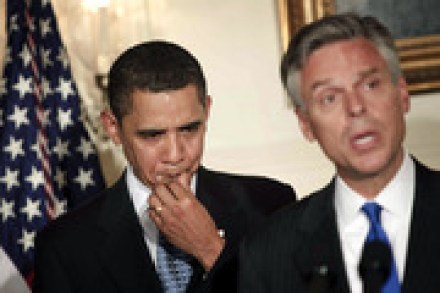
Whoever wins the Republican nomination and takes on Barack Obama in the 2012 presidential election is going to campaign hard on the issue of the US national debt and the idea that constantly running deficits is dragging the nation into decline. This is going to have a serious impact on the foreign policy debate in the US. It is striking that John Huntsman (pictured with Barack Obama), the former US ambassador to China who was governor of Utah and is running as a middle of the road Republican, has chosen to introduce himself to voters in New Hampshire with criticisms of the cost of the Libya mission. He said, ‘I think we have to be very careful about where we choose to spend our money and what we define as being important to our national security interest.

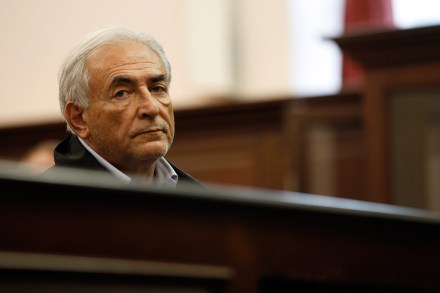
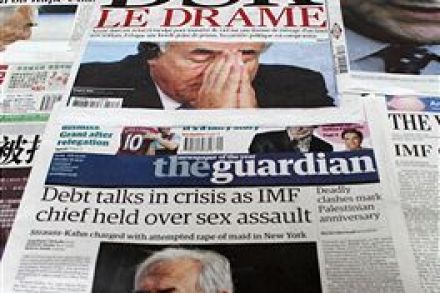
DSK resigns from IMF

The IMF has issued three press releases on Dominique Strauss-Kahn since his arrest last week, but none more resonant than the latest. It contains this statement from their now former-Managing Director: Ladies and Gentlemen of the Board, It is with infinite sadness that I feel compelled today to present to the Executive Board my resignation from my post of Managing Director of the IMF. I think at this time first of my wife—whom I love more than anything—of my children, of my family, of my friends. I think also of my colleagues at the Fund; together we have accomplished such great things over the last three years and more.

Could a Briton run the IMF?

With Dominique Strauss-Kahn, known as DSK, undertaking scientific and forensic tests to determine if he sexually assaulted a hotel maid, the International Monetary Fund will be run by its No. 2 official, John Lipsky. A former banker, Lipsky was appointed “first” deputy managing director in 2006, and was expected to step down later in the year. But the change at the top will bring the former Permanent Secretary of the Department for International Development, Minouche Shafik, into the limelight.

The ISI chief must be sacked

The US-Pakistani relationship has always been fraught, but it is particularly fractious right now. It is highly likely that the US will conduct more Abbottabad-type raids following the killing of Osama Bin Laden. According to sources in the US government, several locations were under surveillance alongside Bin Laden's compound. And that was before the CIA snatched the "motherlode" of information from the Bin Laden raid, which will give hundreds of new leads. People like Ayman al Zawahiri, Abu Yahya al Libi, and Saif al Adel will be sleeping a little less soundly these days. Regrettably, the Pakistani government has done little to prepare its population for the likelihood of new raids, preferring to blow off steam over the US violation of Pakistani sovereignty.

The world’s most wanted man becomes the world’s most wanted photograph

Will we see pictures of the dead Bin Laden? When Saddam's sons were killed, pictures of their corpses were released by the American military, on the grounds that it was crucial for Iraqis to believe they were no more. This time, we're told that Bin Laden has already been buried at sea, the Saudis having refused to repatriate his body. The CIA say they have pictures from yesterday's assassination, and that the pictures of Bin Laden circulating right now (which have been picked up by some of the British media) are fake. It's unclear whether they intend to release the real pictures. Bin Laden's body was identified by some members of his family, and DNA tests were probably conducted to give Obama the proper degree of certainty.

How about reintroducing conscription?

The American academic and foreign policy realist Stephen Walt has put an interesting idea on his blog: would re-introducing the draft make America less interventionist? Perhaps it would, and perhaps there’s a good case to be made for doing the same in Britain. Calling for a return to conscription might sound like a silly right-wing trope, but it makes sense from an anti-war perspective: we might be less eager to send our soldiers to fight and die in distant conflicts if there were the slightest possibility that we might have to go, too. I’m not sure I agree, though. It’s not as if national service prevented war in the past. We happily shipped off young men to Korea in the 1950s, for instance. Maybe compulsory military training only encourages bellicosity.

Now the questions are Nato’s to answer

Now, at least, we know: Nato will be taking charge of the no-fly zone that has been erected around Libya. And we might even welcome the news. As soon as the Americans made it clear that this was not their conflict to command, a new leadership arrangement was always going to be required — and Nato were the obvious choice. The only real barriers to their assumption of power have been French enthusiasm and Turkish reluctance, but they now appear to have been reconciled. In so far as this has clarified the next steps in Libya, it is a good thing. But confusion remains, and in wholesale quantities.