Uk politics

Watch: Iain Duncan Smith slams May’s Brexit plan

Theresa May is in the Commons attempting to convince MPs to back her Brexit plan. But it isn't going well. Iain Duncan Smith was particularly critical of the PM's backstop blueprint, telling May that while he appreciated her efforts it wasn't good enough. Here's what he said: 'For all of the effort and work, the reality is that this is not the withdrawal agreement, and the withdrawal agreement will make it very clear that, should we struggle with a negotiation for a free trade arrangement and not complete that process, we will fall into the Northern Ireland backstop as it exists at the moment. And that will mean we are bound by those restrictions which force Northern Ireland through a separate arrangement.

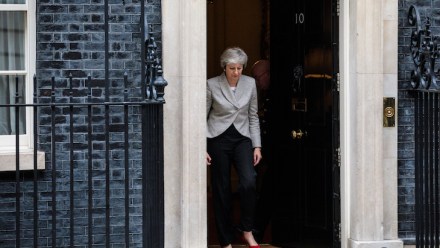
Theresa May’s Downing Street Brexit statement: full text

Throughout these difficult and complex negotiations with the European Union I have had one goal in mind: to honour the vote of the British people and deliver a good Brexit deal. Last week we achieved a decisive breakthrough when we agreed with the European Commission the terms for our smooth and orderly exit from the EU. Alongside that withdrawal agreement we published an outline political declaration setting out the framework for our future relationship. Last night in Brussels, I had a good, detailed discussion with President Juncker in which I set out what was needed in that political declaration to deliver for the United Kingdom.

The Brexit political declaration confirms we are heading to a blind Brexit

With the leak of a 26-page political declaration this morning – an enhanced version of last week’s briefer document – we now know the shape of the future EU-UK relationship which May and the EU negotiators want to achieve in the long run – if, and this could turn out to be a big if – the UK ever manages to escape from the purgatory of the backstop. It is not a bad document in itself. Neither does it bear much of a resemblance to Chequers. The big difference is that it envisages a future trade deal which encompasses services as well as goods – Chequers envisaged Britain pretty well staying in the single market for goods while diverging on services.

Technology won’t solve the Irish border question. Here’s why

Amongst some Brexiteers, there is an eternal faith in technology to solve the Irish border question. This is mistaken. Yet still the idea refuses to go away. Now Theresa May is using this belief to try and get wavering Tory MPs to back her Brexit deal with Brussels. Yesterday, the Prime Minister’s spokesman said the solution for the question of the Irish border 'could involve technological solutions'. He went on to say: 'I think there was discussion in cabinet about the fact that the withdrawal agreement recognises and keeps open the potential for alternative arrangements to avoid a hard border on the island of Ireland.' No 10 is implying that if the UK would put this idea on the table then the EU would be obliged to accept it and allow the UK to escape the backstop.

Where were the Brexit no deal warnings during the Scottish independence debate?

Four years ago, 45 per cent of Scottish voters favoured leaving the UK. Many of the warnings about the negative impact of independence on the Scottish economy were justified. But they did not extinguish a yearning for independence – and the same could be said of the EU referendum, with the caveat that this time a majority voted to leave, and many of the warnings were unjustified. An ineradicable desire to get our country back triumphed over the Project Fear campaign conducted by the Treasury and the whole of the nomenklatura that sought to preserve position, power and privilege for itself and to suppress any notion that ordinary people, in Britain or in any other European country, could have a say in how they are governed.

Extinction Rebellion is a wannabe Marxist revolution in disguise

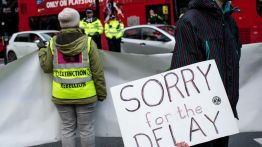
Anyone trying to get about London over the past few days may have come across the activities of a group called Extinction Rebellion, which blocked Westminster and several other bridges on Saturday, blocked Lambeth Bridge today and plans to repeat the exercise later this week. Its tactics are simple – it gathers raggle-headed eco warriors, together with some terribly nice middle class students, buses them up to London and then disgorges them to sit in the middle of the road, where they then get arrested for blocking the traffic. But no matter the illegal tactics. The world is in the middle of ecological crisis, and so, of course, the normal rules of political protest do not apply.

Jeremy Corbyn is as deluded about Brexit as Jacob Rees-Mogg | 21 November 2018

Now that the coup of the plastic spoons appears to have failed – Jacob Rees-Mogg and his accomplices could not even synchronise their pocket-watches – Theresa May finds herself back where she has been all along: strengthened by her weakness. This is a remarkable situation for any prime minister but not, for May, an unprecedented one.  It helps that her enemies are so utterly incompetent. The sallow men of the European Research Group are not only not a government in waiting but not a collection of kingmakers either. Just as Voltaire quipped that the Holy Roman Empire was in fact none of these things, so we may say something similar about the ERG.  But, in fairness to the Moggists, they are not the only group suffering from delusions of influence.

This MP has summed up everything wrong with the transgender debate

MPs have been talking about gender and sex and the law. This is a good thing. That’s the job Parliament is there to do, after all: debate complicated, contested issues in order to decide how and if to make laws, and to make sure the country is a place where differing views and arguments can be tested. So well done to David T.C. Davies, who brought about today’s debate in Westminster Hall, and well done too to MPs such as Layla Moran, Hannah Bardell and Lilian Greenwood who took part in the debate. Some of the things that were said in the debate were sensible and thoughtful, some were not. But in a sense, that doesn’t matter; the same is true of all parliamentary debates, which are inevitably a mixture of insight and cobblers.

Why aren’t there more women MPs?

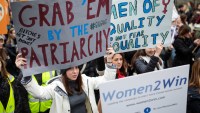
It's 100 years today since women were able to stand for Parliament, and the Women and Equalities Committee marked it with a hearing on the barriers to getting more female MPs. It has only been in the past few years that the total number of women ever elected into Parliament has passed the number of men currently sitting on the green benches, and 32 per cent of MPs are women. This puts the UK at 48 in the world rankings for gender representation in its Parliament, which isn't great. I was one of those giving evidence to the Committee this morning, using research I've conducted for my book, Why We Get The Wrong Politicians.

When the BBC’s ‘Reality Check’ reporter met his match

The BBC’s ‘Reality Check’ device is a piece of hubris, which this week met its nemesis. It effectively says: ‘We report untrustworthy politicians who disagree with one another. You, the stupid viewer/listener, obviously cannot be expected to work out where the truth lies. Our expert correspondents will tell you.’ The main man who does this on Brexit is called Chris Morris. His version of ‘reality’ is strongly pro-Remain. If you read his online summary of the withdrawal agreement, for example, he says that ‘the Brexit process has caused an enormous amount of anxiety and uncertainty’ in relation to immigration. That is a defensible proposition, but one depending on a point of view.

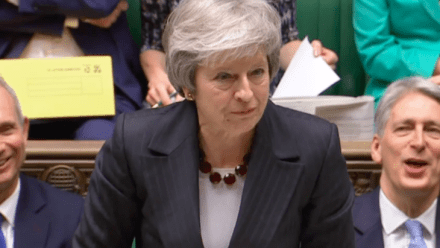
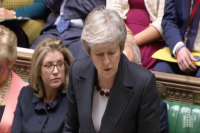
Theresa May fails to calm her Brexit critics at PMQs

Jeremy Corbyn is not a forensic Commons performer. He is uncomfortable adjusting his questions to take into account Theresa May’s responses. This limits his ability to pin May down. Today, he asked a question on a customs and regulatory border in the Irish Sea. May emphasised that there wouldn’t be a customs border there. But Corbyn didn’t then pursue what kind of regulatory border there would be. The result was that May sustained no damage during their exchanges.  Once again, the lack of support in the chamber for May’s deal was striking. There were a couple of supportive questions from the Tory benches, but more hostile ones. The most difficult question of the session came from George Freeman, May’s former policy chief.

Did Amber Rudd’s Today interview actually help No. 10?

In her first interview since returning to the cabinet, Amber Rudd has set the cat among the pigeons. Speaking on the Today programme this morning, the new Work and Pensions Secretary appeared to go off script as she talked about the prospect of a 'no deal' Brexit. The former Remain campaigner said that Parliament 'will stop No Deal' if the deal is voted down as there 'isn’t a majority in the House of Commons to allow that to take place'. 'I don't think we are looking at another referendum. I think what will happen is that people will take a careful look over the abyss and despite what people say the EU withdrawal agreement will get through.' On the surface at least, it doesn't appear to be a particularly helpful intervention.

How the ‘people’s vote’ campaign gained momentum

A year ago, campaigners for a ‘people’s vote’ seemed an eccentric bunch of no hopers and bad losers. Mocked as ‘remoaners’, their arguments barely covered by the media, history had left them behind. As the leave campaigns’ central claim that we could have the benefits of EU membership while leaving the EU is revealed for the absurdity it always was, the ‘people’s vote’ has gathered mass support and moved from the fringes to the mainstream with heartening speed. One mark of the campaign’s success is that even its critics acknowledge that a ‘peoples vote’ is a viable solution to the constitutional, economic and diplomatic crisis that engulfs us.

Tories try out life as a minority government

MPs and ministers who had settled down in Parliament on Tuesday evening for a late night of votes on the finance bill were given an early reprieve – all votes were off. However, rather than an early Christmas present from No.10, the shelving of votes on the finance bill was down to a reason out of Theresa May's control: no working majority. With the DUP abstaining for a second day over grievances with the EU withdrawal text, the government decided to concede all amendments to the bill – including one from the SNP. It's not clear they would have lost on every single amendment but after the antics of Monday (when the DUP voted with Labour but not enough Labour MPs turned up to secure victory), all opposition MPs were on standby to try and inflict a defeat on the government.

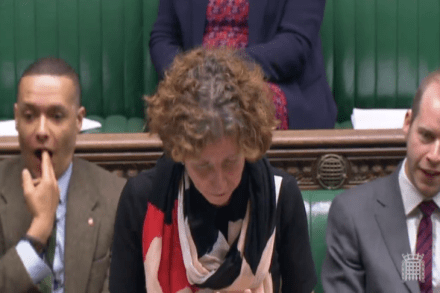
Watch: Clive Lewis misbehaves in the Commons

Clive Lewis is no stranger to controversy. The Labour MP was forced to apologise last year after he was caught on camera telling someone to 'get on your knees b****'. Now, Lewis has surpassed himself, by appearing to pretend to shoot himself while sitting on the Labour frontbench in the House of Commons. The Corbynista MP vented his frustration after his party colleague Anneliese Dodds was interrupted by a Tory MP making an intervention during a debate. Mr S wonders whether another Clive Lewis apology might be on the cards...

Has Mark Carney just ended the campaign for a ‘People’s Vote’? | 20 November 2018

The headlines will inevitably write themselves. The Bank of England backs Theresa May. The Prime Minister's beleaguered and precarious deal is the best of all the options available and the economy may well get through the next few months largely unscathed. Following the testimony this morning from the Bank’s governor Mark Carney, most people will pick up on the support he has given to the Prime Minister and his reassurance that the economy will survive our departure. And yet there were two more significant points that emerged from his testimony. The Bank is finally willing to concede that leaving without a deal wouldn’t be so bad after all. And just at the moment when not leaving at all has become a real possibility, the Bank has given up on it.

The threat to the environment that the green lobby tries to ignore

It’s not like the green blob to keep quiet when there’s a threat to the environment in the offing. Even the smallest hint of a problem is usually enough to work a tree-hugger into a frenzy. So it’s worth taking a look at their decision to keep shtum over the recent appearance of what may be one of the greatest threats to the natural world we have seen. Over the last few weeks, scientists and campaigners alike have been turning their attention to the question of how land can be used to tackle global warming. Their interest was prompted by the appearance of the Intergovernmental Panel on Climate Change’s (IPCC) special report on how the increase in global temperatures might be kept below 1.5°C.

Watch: Jacob Rees-Mogg rebukes reporter over Brexit ‘coup’

The Brexit bunch's bid to oust Theresa May has fallen rather flat, at least for the time being. Having failed to muster enough letters to force a vote of no confidence in the Prime Minister, the European Research Group now appears to be desperately backtracking. Jacob Rees-Mogg, who enjoyed the limelight at an impromptu press conference outside Parliament last week when a vote appeared to be imminent, seemed somewhat more shy this morning when he was asked about the attempt to bring down the PM – rebuking a reporter for calling it a 'coup': 'Coup is entirely the wrong word. Indeed it is a rather silly word. This overegged language is rather damaging to political debate.