Uk politics

Watch: Theresa May apologises for queue-jumping comment

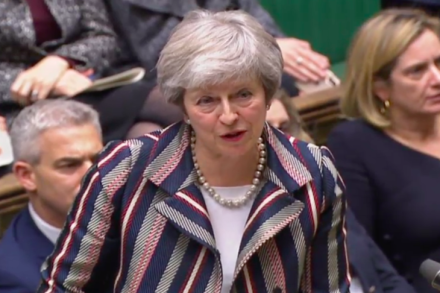
When Theresa May stood up at the CBI conference earlier this month and declared that under the new Brexit immigration system, EU nationals would no longer be able to 'jump the queue', she met a hostile reaction. The rhetoric led to fellow leaders, MPs and voters going on the offensive over the comments. Today Theresa May took the opportunity to apologise for that comment. Asked in the Chamber by the SNP’s Philippa Whitford whether she wished to apologise for insulting EU nationals like Whitford's husband, a German national and a doctor, who have contributed to society and made a home here, May said she should not have used that phrase: 'I should not have used that language in that speech'.

My deal or chaos: May’s message to MPs as she faces the Commons

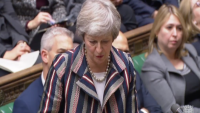
It only took a few lines of Theresa May's statement to the House of Commons on her Brexit deal before MPs started making dissenting noises all around her. The Prime Minister started by listing the ways in which the deal 'takes back control' for the British people, telling MPs that this included control of Britain's borders, ending the jurisdiction of the European Court of Justice, an end to 'vast annual payments we send to Brussels', protecting jobs through a new Free Trade Area, protecting the country's security and maintaining 'the integrity of our United Kingdom, meeting our commitments in Northern Ireland and delivering for the whole UK family, including our Overseas Territories'.

Full text: Theresa May defends her Brexit deal in the Commons

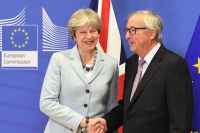
At yesterday’s Special European Council in Brussels, I reached a deal with the leaders of the other 27 EU Member States on a Withdrawal Agreement that will ensure our smooth and orderly departure on 29th March next year; and, tied to this Agreement, a Political Declaration on an ambitious future partnership that is in our national interest. Mr Speaker, this is the right deal for Britain because it delivers on the democratic decision of the British people. It takes back control of our borders. It ends the free movement of people in full once and for all, allowing the government to introduce a new skills-based immigration system. It takes back control of our laws.

A Brexit deal between Tories and Labour is just common sense

Despite – or perhaps because of – the fact that I’ve spent most of my adult life writing and talking about politics and politicians, there are still things about politics that I just cannot, on a fundamental level, understand. Top of the list is tribalism, the “my party right or wrong” stuff that reduces public policy to the level of football chants. (Yes, football is another thing I don’t get. Surprising, I know.) Apart from anything else, taking the view that the people and ideas of the other side are automatically bad is surely utterly self-defeating? Politics is about persuading the greatest number of people to agree and support you, whether at elections or during day-to-day governing.

If May forgets to talk to her MPs, her Brexit deal is doomed

Theresa May is back in the Commons this afternoon updating MPs on her Brexit deal. She’s in the middle of a frenzy of campaigning that makes her efforts during the referendum itself look quite lacklustre (admittedly not hard, given how little effort the then Home Secretary put into that campaign), with phone-ins, newspaper interviews and a bid for a live TV debate on Brexit with Jeremy Corbyn. Tomorrow, May is also going to tour the UK to sell her deal to the public. The Prime Minister’s strategy is to talk over the heads of her warring party and straight to the public, in the hope that at least some of those MPs will heed the real opinions of their constituents and switch to voting for the deal in Parliament.

What happens next? Five Brexit scenarios

Theresa May's deal has been approved by the EU27 but now the difficult part begins. No.10 must work out a way to get the EU withdrawal agreement through the Commons. Given that the number of Tory MPs who have said they won't support it is past the 80 mark (see the full list here), that looks no easy task. A vote is mooted for Tuesday 11th December. So, given that Plan A looks rather optimistic, what are the alternatives? No-one – not even those at No.10 – are entirely certain what would happen if the deal is voted down. However, here are the main scenarios to expect come the vote: MPs back May's deal on first vote At present, this seems an unlikely option. However, if No.

Will Theresa May’s Brexit deal end up in the dustbin?

Because Theresa May's Brexit deal has been so long in the coming – almost two and a half years – and has been so comprehensively trailed and leaked, yesterday's formal ratification of the terms of our departure from the EU and the shape of our possible future relationship with the EU feels like the mother of all anti-climaxes. But cynicism and lethargy are to be resisted: that ratification really matters. Because because - at last we have THE DEAL. Until yesterday, everything about Brexit was presumption, speculation, rumour and hypothesis. Finally we know what Brexit means to a Prime Minister who had no other job but to find out what it means.

Jacob Rees-Mogg: Changing strategy means changing leader

‘Away with the cant of “measures not men”! — the idle supposition that it is the harness and not the horses that draw the chariot along. No, Sir, if the comparison must be made, if the distinction must be taken, men are everything, measures comparatively nothing.’ George Canning said this in 1801 and recent events remind us that he was right. In the end the only way to change the policy is to change the person, as the individual determines the direction and is rarely willing to try a different route. As I have known this quotation for decades, it was naïve of me to expect the Prime Minister to change her policy. It is not how it works: the wrong policy means the wrong person.

Knighted Tory MP: I still won’t back May’s deal

Oh dear. Over the weekend No.10 came under much criticism after it emerged that John Hayes had been awarded an impromptu knighthood. Unkind souls were quick to suggest that the motivation for giving the long time Tory Eurosceptic the honour was less than pure. With the crunch Brexit deal vote coming up the track, Tory Brexiteers claimed this was part of a cynical attempt by Downing Street to win a vote in favour of May's deal. Alas, it seems that were these No.10's intentions, their efforts will go unrewarded. Hayes tells the Mail on Sunday that he has no plans to vote for May's deal: ‘As I’ve made very clear before my honour, I cannot support the deal as it now stands.’ So much for the chumocracy...

Is the backstop vulnerable to challenge under human rights law?

The most contentious part of Theresa May’s Brexit deal are the Northern Ireland specific provisions of the backstop. These would see various EU rules and regulations apply in Northern Ireland even after the UK has left the EU. If they came into force, they would create—in some areas—a kind of regulatory border in the Irish Sea. But, as I say in The Sun this morning, these provisions might be illegal under European Human Rights law. A case in 1999 brought against the UK government, the Matthews case, at the European Court of Human Rights established that people have a right to vote in elections to the parliaments that set their laws.

Revealed: Philip Hammond’s speech at DUP conference – Boris, Rees-Mogg and the backstop

With the DUP currently refusing to vote with the Tories following grievances over the proposed Irish backstop, Theresa May's party is having to try out life as a minority government. Piling on the pressure, DUP leader Arlene Foster has told the BBC that her party would have to revisit its confidence and supply deal with the Tories permanently if May's Brexit deal passes through Parliament. So, spare a thought for Philip Hammond. Spreadsheet Phil was given the task of being sent to DUP conference to charm attendees on behalf of the government. Mr S's mole in the room reports that the Chancellor managed to crack a few jokes at the expense of his Tory colleagues. On recent cabinet resignations: 'I look around the room and I see some people I know. I see a lot of new faces.

Will May’s Brexit deal stop us making jokes about Juncker?

Article 129 (3) of the withdrawal agreement provides that ‘the United Kingdom shall refrain, during the transition period, from any action or initiative which is likely to be prejudicial to the Union’s interests, in particular in the framework of any international organisation, agency, conference or forum of which the United Kingdom is a party in its own right.’ What does that mean? That we are not free at the UN Security Council to oppose any item of EU foreign policy? That we cannot cut our rate of VAT? That we must not make jokes about Jean-Claude Juncker? Needless to say, there is no reciprocal obligation on the EU to do nothing prejudicial to the interests of the United Kingdom.

Supporters of a second referendum should be careful what they wish for

The campaign for a second referendum continues to grow. On the Conservative side, nearly a dozen Tory MPs now support a 'People's Vote’ and if Theresa May's deal gets voted down, this number is likely to rise further. Among Labour MPs, support is even greater; if it wasn't for Jeremy Corbyn and John McDonnell, it seems safe to say that a second vote would almost certainly be Labour party policy by now, with the SNP and the Lib Dems also on board with the idea. But a question remains: have those calling for a second vote really thought about the possible consequences? It is clear that many of those campaigning for another referendum have a simple objective: to block Brexit. But this could easily end up backfiring. Take the 2014 Scottish independence referendum.

Watch: Theresa May dodges Brexit deal question

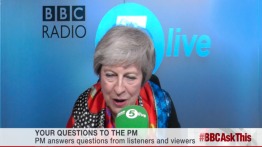
Theresa May is back on the radio flogging her Brexit deal to a sceptical public. Unsurprisingly, few of those who phoned in to BBC 5 Live seemed impressed by what the Prime Minister had to offer. One listener asked the PM to tell him, without any 'political waffle', whether her deal is better than staying in the EU. But May's bid to do just that didn't exactly work out to plan. At the end of May's minute-long answer, the host Emma Barnett asked for the caller's verdict: EB: 'Michael, did the PM answer your question?' Caller: 'No' Emma Barnett ended the interview by asking May how she and Philip would celebrate if the deal got through Parliament. The PM seemed momentarily stumped by the question before the Maybot kicked in with an answer: TM: 'If...well...er...I will...

Dominic Raab is just saying what a lot of Leave MPs are thinking

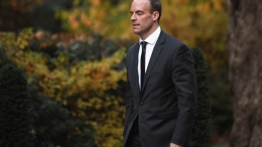
After resigning as Brexit Secretary over Theresa May’s proposed deal, Dominic Raab has restyled himself as one of the more loyal of the Brexiteer rebels. He used an appearance on the Andrew Marr show over the weekend to say that although he would note vote for the deal as it currently stands, he still backed Theresa May as Prime Minister and would vote for her in any confidence vote. This morning he is upped the ante, however, with an interview on the Today programme. Discussing both the withdrawal agreement and the future framework (which was set out on Thursday), Raab was frank in his assessment. The Tory Brexiteer said he would prefer EU membership to what’s currently on the table.

What’s in the small print of Theresa May’s “political declaration”?

Granted, it's not another 40 horrors list but Mr Steerpike was struck by Paragraph 79 of the EU/UK Political Declaration: 'The future relationship must ensure open and fair competition. Provisions to ensure this should cover state aid, competition, social and employment standards, environmental standards, climate change, and relevant tax matters, building on the level playing field arrangements provided for in the Withdrawal Agreement and commensurate with the overall economic relationship.' That would suggest that the starting point for the supposedly final UK-EU trade deal relationship is… wait for it…. the backstop. The one that we're never supposed to use.

Will May’s Brexit deal survive a vote in the Commons?

First things first. There has been a widespread misunderstanding of why Angela Merkel made it known yesterday that if the Brexit deal – Withdrawal Agreement and Political Declaration – wasn't done and dusted by today, she would not be bothering to turn up in Brussels to formally ratify it on Sunday. Her conspicuous intervention was not aimed at putting pressure on Theresa May to be more emollient in the last leg of negotiations. The German Chancellor was in fact asking the likes of the Spanish premier Pedro Sanchez to stop misbehaving and causing unnecessary bother (Sanchez has been playing to a domestic audience by saying he would block any agreement that deprived him of a veto on the future of Gibraltar). "The chancellor was doing the PM a favour" said an official.

May tries to sell her Brexit plan to the Commons – with limited success

Tory MPs offered a warmer reception to Theresa May's statement in the Commons this afternoon than they managed during yesterday's Prime Minister's Questions. The Prime Minister herself seemed very confident as she explained today's political declaration to MPs. That's about as far as you can go when looking for signs of success in this afternoon's Commons Brexit drama. For instance, straight after the statement, we received confirmation from Iain Duncan Smith that he and other Brexiteers do still find the Brexit deal unacceptable and will kill it in the Commons.