Andrew Montford

Andrew Montford is deputy director of Net Zero Watch.

How Britain’s fracking industry was regulated into irrelevance

From our UK edition

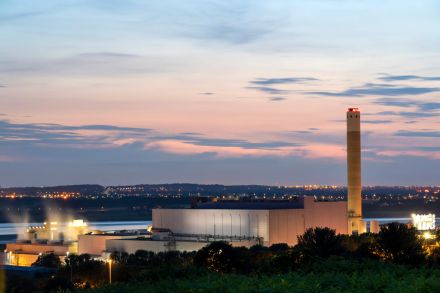
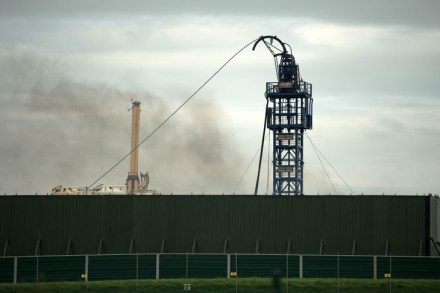
This week the fracking company Cuadrilla announced that it was permanently closing its two shale mines in Lancashire, after the Oil and Gas Authority (OGA) declared that shale gas companies must seal up the wells they had drilled and return the land to nature. It is, on the face of it, a very strange step to take at this time. The wells have not been producing any gas for some years, of course, ever since environmentalists launched their scare campaign against the industry. It was a campaign that was astonishing in its brazenness. Tiny earth tremors recorded near the wells, of a scale that is entirely normal in, say, the mining industry or in geothermal energy developments were rebranded by activists ‘earthquakes’.

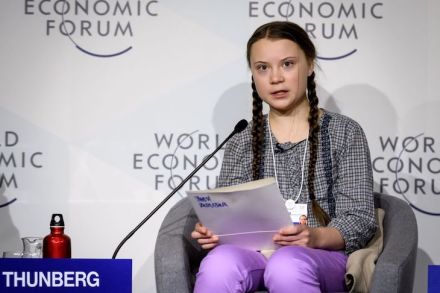
What’s behind climate change activist Greta Thunberg’s remarkable rise to fame?

From our UK edition

The rise to fame of Greta Thunberg, the teenage climate activist, has been nothing short of extraordinary. Less than a year ago, she was an unknown schoolgirl from Sweden, albeit an unusual one: she is the daughter of a famous opera singer and an actor. Thunberg also has Asperger’s syndrome, obsessive-compulsive disorder and selective mutism. The latter, she says, ‘basically means I only speak when I think it's necessary’. ‘Now is one of those moments,’ she said in a Ted talk watched hundreds of thousands of times on the topic that first brought her into the public eye: her decision to stage a ‘school strike’ last August to draw attention to climate change. Thunberg’s profile has only grown since.

The void at the centre of Britain’s net zero strategy

From our UK edition

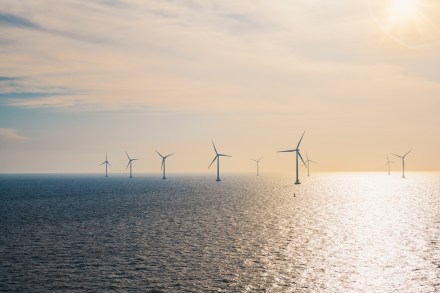
Boris Johnson wants to turn your house green. This week, he published the plan for doing it. In fact, the strategy for delivering net zero carbon emissions is, in essence, to convert the whole economy — including your home — to electric power and then to deliver most of that power using offshore windfarms. We are rapidly approaching a time when wishful thinking collides with reality The fundamental problem with this approach, however, is what we will do when the wind isn’t blowing, or, just as importantly, when it unexpectedly stops blowing. The failure to address this issue upfront means that net zero is likely to fail, expensively. The stubborn refusal to do so, even now, means that failure may well be a catastrophic one.

The hidden cost of Net Zero

From our UK edition

‘We cannot allow debt to keep rising’, the Chancellor said to Parliament last week, repeatedly emphasising the need to ‘level’ with the public about the size of the national debt. Strange then that just days later it was revealed that ministers have been doing the opposite when it comes to the costs of the fashionable cause of ‘Net Zero’. Instead government officials deliberately hid ‘more realistic’ estimates which showed Net Zero would cost billions more than publicised, while agreeing amongst themselves that the predicted costs were ‘highly uncertain’.

The good news on climate

From our UK edition

As I watch the snow blow past my window, it’s hard not to scoff at the idea of a ‘climate emergency’. However, I’m probably in a minority. The idea that we are currently experiencing a dangerous deterioration in our weather has been pushed so hard, and for so long, that the man in the Clapham Uber is now thoroughly convinced. Those of us who have the time and inclination to look at the evidence for such claims, on the other hand, realise that they are largely overblown. The Global Warming Policy Foundation, where I work, has just published a review of the impacts of climate change and it’s a valuable antidote to the relentless alarmism pushed by some academics.

Boris’s wind power pledge won’t be cheap

From our UK edition

Boris Johnson likes a big announcement. Back in his days as London mayor, he told us he was going to build a new airport on an island in the Thames estuary and a tree-lined ‘garden bridge’ further upstream. Although not as hare-brained as his more recent plan to build a bridge to Ireland, neither of these schemes ever came to anything. Much of the government’s announcement today of a major green spending spree gives the impression of having been conjured up with the same lack of any serious intent, ‘smart cities’ being an obvious example. However, some of it looks positively alarming. Take home insulation, for example.

It’s time for an honest debate about the true cost of going net zero

From our UK edition

When the Committee on Climate Change (CCC) launched its report on the feasibility of entirely decarbonising the UK economy, we were told the expense involved was manageable. The CCC’s chief executive Chris Stark explained that the project ‘carried a cost – of one to two per cent of GDP – which was affordable’. His claims were noted approvingly by MPs during debates in Parliament on whether to enshrine a ‘net zero’ emissions target in law. While others complained about the lack of a clear cost-benefit case, CCC chairman Lord Deben put aside these concerns.

Has Netflix’s Our Planet hidden the real cause of walrus deaths?

From our UK edition

Over the weekend, social media and the newspapers were full of stories of Pacific walruses plunging over sea cliffs to their deaths. Heart-wrenching film of the corpses of these magnificent beasts piled up on the shore have been driving many to tears. This all came about as the result of the latest episode of Our Planet, the new wildlife extravaganza from Netflix. As is normal for such programmes, the story that accompanies the animal eye-candy is told by Sir David Attenborough and, as is positively compulsory, it is spiced with multiple references to the horrors of global warming.

Alexandria Ocasio-Cortez is wrong: the world won’t end in 2030

From our UK edition

So apparently the world is going to end in a few years’ time. Yawn. It's fair to say that this is a message that has been heard on a regular basis for as long as anyone can remember – traditionally from long-haired gentlemen adorned with sandwich boards, but in recent years more often from (sometimes equally hirsute) climate scientists, environmentalists and green-minded politicians. This week's message of doom comes from Alexandria Ocasio-Cortez, the Congresswoman who is the latest big thing in US Democrat political circles. Ocasio-Cortez is on the green warpath and would like us all to know that 'the world is gonna end' in 2030 if we don't 'address climate change'. Stop sniggering at the back, this is serious.

The threat to the environment that the green lobby tries to ignore

From our UK edition

It’s not like the green blob to keep quiet when there’s a threat to the environment in the offing. Even the smallest hint of a problem is usually enough to work a tree-hugger into a frenzy. So it’s worth taking a look at their decision to keep shtum over the recent appearance of what may be one of the greatest threats to the natural world we have seen. Over the last few weeks, scientists and campaigners alike have been turning their attention to the question of how land can be used to tackle global warming. Their interest was prompted by the appearance of the Intergovernmental Panel on Climate Change’s (IPCC) special report on how the increase in global temperatures might be kept below 1.5°C.

Why so-called ‘earthquakes’ shouldn’t stop fracking in Lancashire

From our UK edition

So, just a week after starting work on releasing the gas trapped in the shales beneath Lancashire, energy company Cuadrilla Resources decided to stop work, at least for the rest of the day. Soon after they had started pumping water into the rocks a mile below the surface, there were a series of microseismic events – tiny earth tremors. The green blob and their friends in the mainstream media were waiting, and quickly launched their habitual barrage of moral indignation. The Metro, for example, breathlessly reported that nearby Blackpool had been 'hit by four earthquakes'. The Guardian was likewise certain that these were 'earthquakes'.

Why is the British government stifling nuclear innovation?

From our UK edition

The government's announcement last week of a funding package for feasibility studies into a range of modular nuclear reactors went largely unnoticed by the media. However, as a report published this week makes clear, the news actually represents a significant reversal of policy, and one that achieves the remarkable feat of making the UK’s energy future look even bleaker than it does already. George Osborne, for all his faults, showed commendable vision when he launched a government competition to design small modular nuclear reactors (SMRs) in 2015. SMRs are a new approach to nukes that would involve building large numbers of small reactors rather than a few enormous ones, like the infamous Hinkley Point C.

This silly season, why not panic about global warming?

From our UK edition

It all started so well. When the BBC decided that the good weather had gone on long enough to make it newsworthy, they invited the Met Office’s Stephen Belcher on to Newsnight, no doubt hoping that he would fan the flames with some lurid claims about how we were all going to fry in years to come. They were therefore no doubt thoroughly disappointed by his rather measured response, and his suggestion that that it was 'probably part of natural cycles in the weather, but... superimposed on [a] background of global warming'. However, as the warm spell has turned into a heatwave, environmental correspondents in the media have been unable to resist progressively more lurid tales. This is the silly season after all, and there’s none quite as silly as an eco-warrior in the sunshine.

Remote windfarms are bad news for birds

From our UK edition

Last week, the government announced that it was going to allow onshore windfarms to once again gain access to the vast pots of money set aside for renewable energy. However, there was one very important restriction: only windfarms on remote islands would be eligible. In practice, we are therefore talking about the Inner and Outer Hebrides and the Northern Isles of Orkney and Shetland. Having come to office on the back of a campaign pledge to stop the spread of onshore windfarms, this represented something of a U-turn, but the reaction has been comparatively muted. This is slightly surprising, because in ecological terms, the islands of Scotland are pretty much about as sensitive as it’s possible to get.

Why Britain can never rely on wind power

From our UK edition

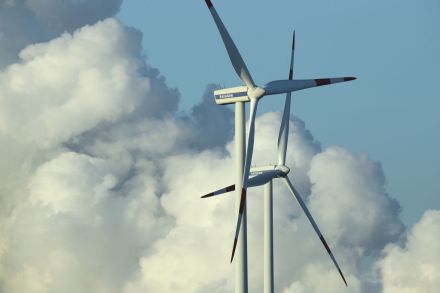
For the last ten days or more the UK has been becalmed. In theory, our windmill fleet should be able to generate 20 gigawatts of power, more than 50 percent of peak demand at this time of year, but with barely a puff of wind this month, it has been generating next to nothing. If the weather forecasters are right, the lull will not end for a few more days yet. We should be thanking our lucky stars that we still have fossil fuels and nuclear to keep the lights on. It’s hard to think of a better demonstration of the absurdity of windmills as a way of powering a modern economy.

Why weather apps can’t be trusted

From our UK edition

The Times reports this morning that Bournemouth business leaders are hugely annoyed with the BBC, whose weather app predicted thick cloud and thunderstorms for the recent bank holiday. In the event, it was sunny and warm, but the damage had already been done, and takings on the seafront were said to be down by nearly 40 percent as people decided to stay at home rather than risk a soaking. While weather forecasting is undoubtedly getting better, it seems fairly clear that ultra-local forecasts of the kind you find on weather apps can be very misleading: reducing the whole forecast to a single icon, as most apps do, removes all the nuance. The lesson seems to be that if you are going to make a decision based on a forecast, you should watch the TV weather and get it explained to you.

Cumbria’s floods can’t just be blamed on the ‘climate change bogeyman’

From our UK edition

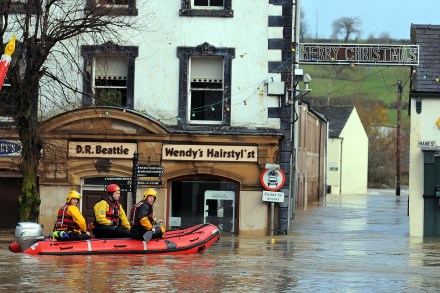
The flooding in Cumbria came at a bad time for those who make their living hyping global warming. Pretty much everyone who might have wanted to listen to their message was focused on the global climate talks in Paris and far too busy to worry about what was happening in Carlisle and Keswick. But that hasn't stopped a few people from trying to take advantage. The Met Office's chief scientist Julia Slingo was unable to resist the temptation to issue a statement linking the floods to climate change. This was handy for Liz Truss, the minister in the firing line for the failure of the flood defences, who repeated the claims yesterday. Slingo might have been expected to exercise a bit of caution here.

How green and peaceful really is Greenpeace?

From our UK edition

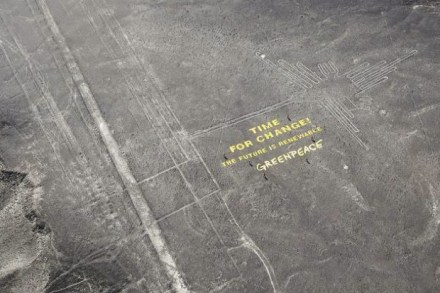
For the best part of half a century Greenpeace’s constant campaigning on environmental issues has been an almost unmitigated success. Its effectiveness has brought it both astonishing wealth and almost unimpeded access to decision-makers. During this time, it has had what amounts to a free pass from the media, its claims and methods rarely questioned by credulous environmental correspondents. But are the wheels finally coming off? Looking back over the last few years it’s easy to get that impression: an organisation that once seemed untouchable has found itself having to answer some very sharp questions about the way it behaves and operates.

Maria Eagle is talking nonsense about floods and climate change

From our UK edition

The Shadow Environment Secretary Maria Eagle headed off to Woking today, where she addressed an audience of environmentalists at WWF’s swanky new headquarters. Her speech, which was widely trailed, was full of silly season fare, and her superficial understanding of the climate debate shines through. Take this for example: ‘The Met Office, the Committee on Climate Change and the overwhelming majority of the scientific community all tell us that last winter’s floods are consistent with the projected consequences of climate change.’  ‘Consistent with’ is one of those gloriously weasel phrases that the more disreputable kind of climate scientist likes to use when speaking to politicians.

There is something very wrong with climatology

From our UK edition

In the last few days climate scientists have found themselves back on the front pages, and once again it’s for all the wrong reasons. The furore this time has been prompted by an eminent climatologist named Lennart Bengtsson, who agreed to join the Academic Advisory Council of the Global Warming Policy Foundation, Nigel Lawson’s sceptic think tank. Within days of his agreement, Bengtsson felt obliged to resign, apparently having been subjected to a wave of protests and threats of ostracisation from colleagues, one of whom publicly insinuated that the 79-year-old Bengtsson was senile.