Travel

Dear Mary: Why don’t my neighbours appreciate my 8 p.m. Thursday firework?

Q. For me the hallmark of a really close friend is someone with whom you feel comfortable enough to bring a phone call to an abrupt halt with no need for explanation. I too am over 70, but unlike your correspondent from New Zealand (Dear Mary, 9 May) am still working full-time — now from home. Yet my telephone rings throughout the day with calls from the sort of people I might see, at most, twice a year in the outside world, now wanting lengthy chats. I could just tell them that I am still working flat-out but the problem is that these are often people I feel guilty about because, to be blunt, they are keener on me than I on them and I have neglected them, and so I don’t feel I can hurt their feelings by explaining that I need to get on.

The ‘new normal’ in a time of coronavirus

From our US edition

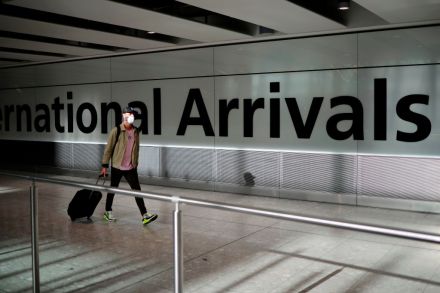
Most of us have known about coronavirus for around four months, but already it has revolutionized everything that came before it. Age-old institutions and customs are dead, and the world will never look the same. There is precedent for this, of course. Before the so-called ‘Spanish Flu’, which emerged in 1918, young men had had a curious coming of age ritual in which they sat together in holes in the ground and fired guns at groups of young men from other countries. Soon, these men preferred to ‘socially distance’ themselves in armored vehicles. Normal life had been disrupted.Normal life is being disrupted again. Nothing will ever look the same. But how will it look? What will the ‘new normal’ involve in the coronavirus age?

new normal

Six places in Britain that make you feel like you’re abroad

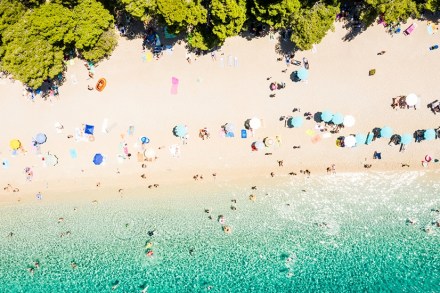
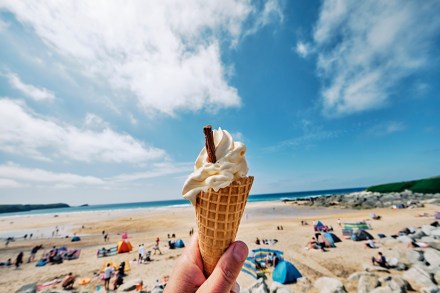
Even when lockdown ends in Britain it may be a while longer before international borders begin to reopen. But not being able to hop on a flight doesn’t mean you can’t enjoy an exotic escape. There are plenty of beautiful spots across the British Isles that make you feel as though you’re hundreds of miles from home. Here is our pick of the best. Somerset Lavender Farm, Somerset Sipping a coffee al fresco and gazing over the lilacy haze of fields at this family-run farm, you’d think you were in deepest Provence. In fact you’re just 10 miles from the UNESCO world heritage city of Bath and right on the fringes of the Cotswold Hills. The working farm has around 50,000 plants, including five acres of different types of lavender and a rose garden.

Is there any better place for an EU-subsidised arts festival than Galway?

I was still digesting my delicious breakfast (kippers, poached eggs and soda bread — all local) when the sad news reached our party of freeloaders (sorry, I mean distinguished international journalists): a force ten gale was blowing in, so tonight’s opening ceremony on the headland by the harbour had been cancelled. ‘Ah well, let’s go and get drunk,’ said my new friend Shane. So we did. Galway is this year’s European Capital of Culture and, while Brexiteers may welcome their liberation from this perennial EU shindig, if you’re going to stage a state--subsidised arts festival anywhere then Ireland’s liveliest little city is probably the best place, despite the frequently filthy weather.

Prue Leith: My carbon footprint should put me in jail

I made the mistake of saying I thought insects might help feed the world. They are high-protein, cheap to farm (they breed like rabbits and grow like Topsy), require little water and energy and probably wouldn’t mind being factory-farmed. Now my post is full of mealworm powder and cricket flour and invitations to champion bug farms. Being an adviser to the hospital food review has been surprisingly uplifting. The panel members are mostly NHS professionals who are champing at the bit to improve matters and have already led changes in their own hospitals, so know it can be done. In one hospital, lunch was as good as the best home cooking. Yes, some hospital food is dire, and reform will be a huge task and take years.

Nothing can beat the romance of luxury train travel between the wars

There may never have been a murder on the real Orient Express, but otherwise Agatha Christie’s depiction of luxury train travel was pretty accurate. Cordon Bleu cooking, accompanied by fine vintage wines and served by immaculately turned out waiters, was offered to the first class passengers, who often included members of the aristocracy and senior diplomats. The Orient Express was inaugurated in 1883, just as the railways, both in the UK and elsewhere, were starting to realise that their more affluent customers were not only a key source of revenue but also deserved special attention. As Martyn Pring puts it: ‘Higher society was on the move, requiring more opulent and spacious modes of transport.

Tsar quality: the charm of Tbilisi

‘These regions are not under the control of the central government,’ reads a warning on a map of Georgia in the bustling centre of Tbilisi. ‘Travelling to these regions is not advisable.’ One of these regions is Abkhazia, only a few hours’ drive away. The other is South Ossetia, barely an hour from here. Since 2008 both have been occupied by Russian troops, in defiance of the Georgian government, yet here in the Georgian capital tourism is booming, and many of these tourists are Russians. This neat irony encapsulates what makes Tbilisi such a fascinating city, a looking-glass metropolis in which nothing is quite what it seems.

Uzbekistan: where east meets west and past meets present

You realise what a rarity western tourists are when the locals ask to take selfies with you. I was standing under the mammoth ramparts of the Ark, Bukhara’s great palace fortress, when two women came up and asked if they could have their picture taken with me. One was dressed Uzbek-style in a colourful dress and matching trousers, with a scarf knotted around her head; the other in a western blouse and trousers. We lined up, beaming, in front of a haughty two-humped camel. Visiting Uzbekistan is a huge adventure. It’s the heart of Central Asia and the old Silk Road, a land of deserts and oases where you can still feel as if you’re stepping back in time. But it’s also unexpectedly safe, easy, inexpensive and welcoming.

The island where monkeys steal from your minibar

A short flight from Kuala Lumpur, the island of Langkawiis a wise choice for anyone seeking to shake off the woes of city life. The odd bit of tourist tackiness on roadside advertising signs aside, there’s no escaping the sheer, virtually unspoiled natural beauty of the place. Even my hotel, The Datai — which recently underwent a year-long $60 million refurbishment — feels like a traditional rainforest villa. When I step out on to the veranda, I revel in the ancient jungle just beyond the sun loungers. I’d heard before arriving that Langkawi was teeming with wildlife but that’s nothing to prepare for actually being there and experiencing nature in its full. Give or take, that is, some air-conditioning, room service and other modern conveniences.

Why Tuscany always beats Provence for me

A family of peacocks is sunning itself in our villa garden. They all look extraordinarily happy and composed, especially the baby one, for whom (like us, come to think of it) this is a whole new experience. But then, the 150 hens wandering in and out of their coops painted like beach huts don’t look exactly overburdened themselves; nor do the sheep, pigs and cows in their 220 acres of lush Tuscan terrain near the Merse river about 45 minutes southwest of Siena.

The exotic Silk Road is now a highway to hell

This engaging book describes the Norwegian author’s travels round the five Central Asian Stans — a region where toponyms still make the heart beat faster: Samarkand, Bukhara, Tashkent. Fittingly, given the means by which foreign powers have harmed the Stans, Erika Fatland begins her story with the disastrous methane spill which Soviet geologists caused in Turkmenistan in 1971. But it seems that however malign exterior forces have been, these countries are perfectly capable of — if not experts in — producing ghastly politicians themselves. Saparmurat Niyazov, known as Turkmenbashi, emerges top of a hotly contested field of nutters. He declared himself a prophet, and banned dogs from Ashgabat because he didn’t like their smell.

On the road in Atlantic Canada

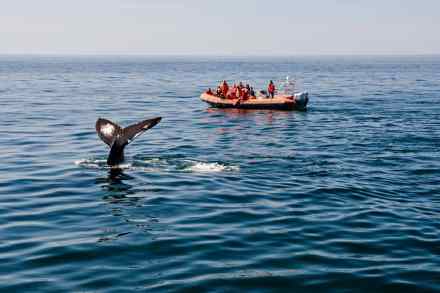
‘There, that’s what we want to see,’ shouts our captain, pointing. My head flings back as the Zodiac flies through the open water towards a plume of ocean spray. Metres from our boat, there’s a breach, then a tail slap and more spray. Two giant humpback whales. ‘Meet Flip and Flop,’ the captain announces smugly. Flip and Flop glide only inches away, dwarfing our boat. They perform to wails and applause from a grateful audience. I am in awe and keep my camera tucked firmly in my bag — I want to enjoy every moment. The spectacle lasts for 40 minutes or so before we bid farewell and head back to shore. Peggy's Point I’m on a road trip through Nova Scotia and New Brunswick, two of the three provinces that make up The Maritimes.

Whatever happened to glasnost and perestroika?

This is a timely book. It addresses the challenges of a fractious and fractured Europe. The first word of the title means ‘truth’ in Russian, and the author’s point is that we have collectively lost sight of that essential commodity. Rory MacLean, whose previous books include Stalin’s Nose, Under the Dragon and Falling for Icarus, retraces in reverse a journey he made 30 years ago. Starting in Moscow this time and ending in London, his aim is ‘to understand what had gone wrong’ since the heady optimism following the fall of both the Soviet Union and the Berlin Wall: ‘I wanted to learn how refugees, the dispossessed and cyberhackers had been used by nationalists.

Why I welcome the collapse of Facebook’s currency

When Facebook announced details earlier this year of a global digital currency called Libra — backed by a roll call of other corporate giants — I declared myself a sceptic on the grounds that behind its libertarian sales pitch, the concept was really ‘a power-grab for cash balances and personal data out of the conventional banking system’. Furthermore, ‘since when did any project originated by Mark Zuckerberg and his pals have the good of the world as its prime objective?

Round North Korea with Michael Palin in rose-tinted spectacles

Michael Palin in North Korea, a two-part documentary in which the Python is given a tightly choreographed tour of that country, aired on Channel 5 last year. Palin dances with cheerfully drunk residents of the country on International Workers’ Day; picnics with his guide, a woman called So Hyang; plays catch with an inflatable globe with some children; learns Taekwondo; sees some beautiful scenery — mountains, rivers as well as cities comprised of coordinated, colourful blocks, with monuments dedicated to the Great Leaders (as the rulers of North Korea past and present are collectively called). But there are some more sinister sights, such as a road lined with huge concrete pillars, ready to be knocked down to obstruct it in the event of an invasion from the south.

Visiting the world’s masterpieces is a quixotic undertaking

From his base in London, Martin Gayford has spent much of his career as an art critic travelling. He has interviewed and sometimes befriended many leading artists and scrutinised their works close up in their own environment. He has found that artistically creative men and women are not really very different from normal people. The text of this informative and entertaining book is comprehensively balanced, fair, lucid and subtly witty, although some of the illustrations are handicapped by the smallness of the format. Art criticism itself can be an art. Gayford’s curiosity is wide and his judgments are tolerant, no matter how onerous the investigations can be. He explores remote, uncomfortable places, often accompanied by his wife Josephine, to whom the book is dedicated.

On photography, shrines and Maradona: Geoff Dyer’s Neapolitan pilgrimage

At the Villa Pignatelli in Naples there is an exhibition by Elisa Sighicelli: photographs of bits and pieces of antiquity from, among other places, the city’s Archaeological Museum. Put like that it doesn’t sound so interesting but the results are stunning. Walking through the Archaeological Museum after seeing the exhibition it was difficult to discover the original objects from which Sighicelli’s samples were taken. One instance, a tight crop of fingers pressing into a calf, is from a highly elaborate, much restored and augmented sculpture with so much going on — a naked swirl of bodies, a rearing horse, a sympathetic doggy — it’s hard to imagine how she found it in the first place.

Looking for a new idea? Try borrowing an old one

Recently I suggested a new approach to commuter-train overcrowding. It simply involved reformulating the problem by accepting that not all overcrowding is equally bad: 100 people forced to stand 10 per cent of the time do not experience anything like the same irritation as ten people who have to stand 100 per cent of the time. So my suggestion was that a proportion of peak-time train seating — even a few peak-time trains — should be reserved for annual season ticket holders. But when I mentioned this to a group of engineers, one pointed out something that hadn’t occurred to me: ‘Airlines already do that.’ ‘They do?’ ‘Well, airlines don’t have season tickets, but they do have frequent flier programmes.

Savannah

Savannah GA is supposed to have lots of ghosts, but I’d forgotten that. It was an April morning and sunlight filtered through the Spanish moss. As I arrived at Wright Square, someone fell into step with me and we crossed the road together. At the other side I glanced to see who it was. No one. Huh. This is the Ghost Coast and there is an industry around it, including night-time tours in a black trolley bus that end in a visit to Savannah’s most haunted residence, the gothic Sorrel-Weed House. At dusk you pass groups of people being told unsettling stories — I caught a snippet about a cat that vanishes into thin air. One evening a friendly grey shadow wound itself about my shins. Was it an apparition?

An alternative route

Just 48 hours before the conclusion of the Conservative leadership contest, Allan Cook, chairman of HS2, wrote to the government to confess that the costs of the project could rise from the current projection of £56 billion to as much as £86 billion. Given that Boris had already announced that he is to review the project, it was pretty much akin to a condemned prisoner writing a letter of confession. The Prime Minister is not fond of doomsters and gloomsters who pooh-pooh things for the sake of it, and as we know is partial to the odd vanity project. More-over, he seems as fond of trains as he is of model buses.