Lesley Downer

How claims of cultural appropriation scuppered an acclaimed new ballet

From our UK edition

On 14 March 2020 I was at Leeds Grand Theatre for the première of Northern Ballet’s Geisha. The curtains swung open on fishermen flinging out their nets, geisha, samurai, 19th-century Japanese village folk, followed by the sudden appearance of American sailors. It was in essence a Japanese Giselle: the tale of a geisha, spurned by her American lover, who dies of grief, and whose restless spirit returns from the grave. Far from being offended, the Japanese Embassy offered their official imprimatur It was a unique production. Many of the dancers at Northern Ballet are Japanese, Chinese or Korean and this was an east Asian story.

My encounters with the Mayans

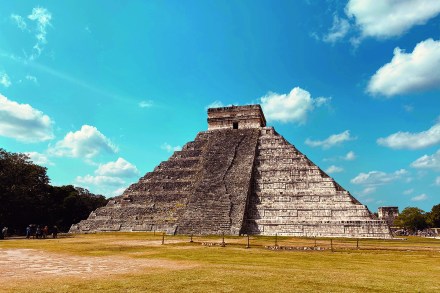
I met a traveler from an antique land...” Visiting the Mayan ruins in Yucatán, it’s hard not to think of Shelley’s immortal “Ozymandias.” Proud though it once was, little remains of that extraordinary civilization. I began my encounter with the Maya at Chichen Itza. Gazing up at the spectacular faceted pyramid which dominates the complex, I tried to imagine myself back a thousand years, negotiating the precipitous staircase that leads straight up the sheer face to the chamber at the top. I wondered at the ballpark, as big as a football field, and the domed observatory and labyrinthine temples and studied the intricate carvings which scrolled across walls and pillars and stelae.

mayan

Samurai nights in Aizu

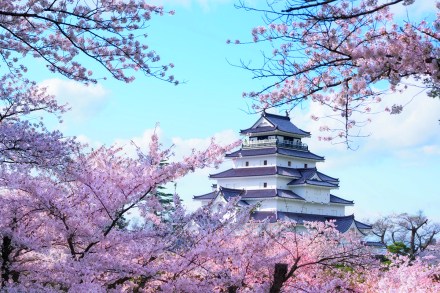
I started my visit to Japan’s north country deep in the mountains, in hot water in a bath the size of a swimming pool. Quietly simmering, I was intrigued to notice that the glass which formed the outside wall was not misted up, though the water was steaming. Through the darkness I could make out trees, bushes and the glint of the lake below. I waded over and reached out my hand, only to discover that there was no wall. One side of the bath was entirely open to the air. For the Japanese no journey, particularly to the north, is complete without soaking in as many hot springs as possible. The mineral-rich waters are the upside of the geological turbulence that brought about the devastating tsunami of March 2011. Today everyone knows the name ‘Fukushima’.

aizu

Under the skin of Seville

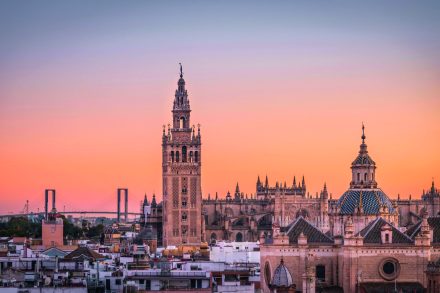
It was night when I arrived in Seville. A taxi took me through a maze of winding backstreets then came to an abrupt halt at the head of a pedestrian-only lane. ‘You’ll have to walk from here,’ said the driver. Uncertainly I dragged my suitcase down one dark alley after another, then suddenly came out onto a plaza lined with orange trees. Soaring above me, spotlit against the black sky, was the cathedral steeple. It was a breathtaking sight with its delicately latticed walls of golden stone, so tall I had to tip my head back to see the spire at the top. The cathedral stretched beside it, filling an entire block. Four hundred years have passed since Seville was the greatest and most glamorous city on earth, as glittering and alluring as New York City is today.

seville

On the road to Mandalay

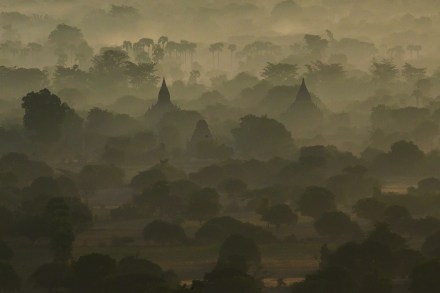
Traveling in Myanmar, it’s hard not to think of Rudyard Kipling’s immortal lines: ‘On the road to Mandalay,/ Where the flying fishes play.’ These days both Kipling and Myanmar (or Burma, as we still think of it) are out of favor. The mere mention of a visit elicits raised eyebrows and hisses of disbelief, though it seems that travelers can visit China, which is just as repressive, with impunity. But despite the disapproval, Myanmar retains its allure. Even the names are magical. Who wouldn’t want to take the road to Mandalay or sail the Irrawaddy? There were no flying fishes the day I arrived in Mandalay.

burma mandalay

Flavors of the past

You realize western tourists are a rarity when the locals ask to take selfies with you. I was standing under the mammoth ramparts of the Ark, Bukhara’s great palace fortress, when two women came up and asked if they could have their picture taken with me. One was dressed Uzbek-style in a colorful dress with matching trousers and knotted headscarf, the other in a western blouse and trousers. We lined up, beaming, in front of a haughty two-humped camel. Visiting Uzbekistan is a huge adventure. It’s the heart of Central Asia and the old Silk Road, a land of deserts and oases where you can still feel as if you’re stepping back in time. But it’s also unexpectedly safe, easy, inexpensive and welcoming. At the airport, even the immigration officials were smiling.

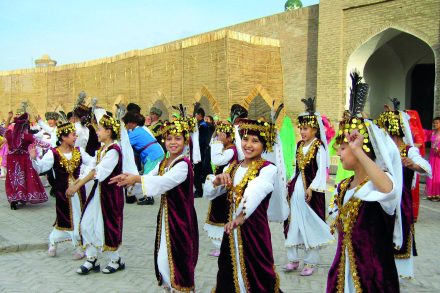
uzbekistan Dance to the music of time: Celebrations at the ancient Khorezm Mamum Academy, Khiva, 2006

Uzbekistan: where east meets west and past meets present

From our UK edition

You realise what a rarity western tourists are when the locals ask to take selfies with you. I was standing under the mammoth ramparts of the Ark, Bukhara’s great palace fortress, when two women came up and asked if they could have their picture taken with me. One was dressed Uzbek-style in a colourful dress and matching trousers, with a scarf knotted around her head; the other in a western blouse and trousers. We lined up, beaming, in front of a haughty two-humped camel. Visiting Uzbekistan is a huge adventure. It’s the heart of Central Asia and the old Silk Road, a land of deserts and oases where you can still feel as if you’re stepping back in time. But it’s also unexpectedly safe, easy, inexpensive and welcoming.

Japan’s reluctant princess, Empress Masako

From our UK edition

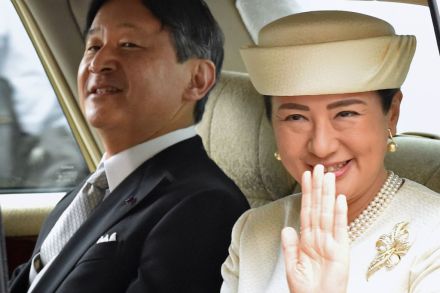
It’s been a big couple of weeks for royal events. On this side of the world, Archie Harrison Mountbatten-Windsor arrived. On the other, Emperor Naruhito’s accession to the chrysanthemum throne of Japan marked the beginning of a new era. All eyes however have been on the new Empress Masako, who has kept largely out of public view for many years. So who is Japan’s enigmatic new Empress? A month after marrying Crown Prince Naruhito in 1993, Princess Masako was seated at a state banquet between Bill Clinton and Boris Yeltsin. She chatted with Clinton in English, Yeltsin in Russian, and greeted Francois Mitterrand in French. She seemed like a breath of fresh air blowing through the staid old imperial palace.