Travel

Instagram is ruining tourism. Could fandom save it?

From our US edition

It was shortly after noon on a Sunday in Edinburgh, and I was attempting to remedy my jet lag at the local BrewDog outpost with a pint of sour ale and a large helping of pizza. I’d flown in on the red-eye from New York to attend a conference, hadn’t had much sleep, and initially thought I was hallucinating when I saw that one of the few other patrons in the bar was a notably tipsy woman wearing wizard robes, waving a wand around as she talked to her drinking companions. They were, I noted, red and gold robes: Gryffindor. (Professor Minerva McGonagall, Gryffindor House’s notoriously strict faculty overseer, would be unlikely to approve of such drunken behavior in public.

fandom tourism

The service station problem: it’s becoming impossible to correct a mistake

My first award for intelligent design this week goes to Dublin airport for displaying a sign which reads ‘Lounges. Turn back. No lounges beyond this point.’ It may seem like a trivial thing, but it takes a rare intelligence to think in this way. It’s one thing to put up a sign that says ‘Lounges, this way’. But it takes nous to think ‘yes, well and good, but what happens if people see the first sign but miss the second one?’ In all likelihood, they would end up walking 500 yards in the wrong direction, as I nearly did. Signage and wayfinding are mostly designed for people who never make mistakes. Should you misread your gate number at an airport, and end up at gate 92 instead of gate 29, you are doomed.

Dear Mary | 30 May 2019

Q. A delightful but disorganised friend has invited several of our circle for a weekend at his family’s beautiful country home, having hosted a similar group last year. I have received all the particulars and accepted with pleasure. However, I know of another friend (in last year’s group) to whom the host mentioned the possibility of this year’s reprise, but she has not had full details. How can I delicately figure out if this is an oversight or deliberate? — Name and address withheld A. Ring the host and mention that you are thinking of asking for a lift with this friend but don’t want to put your foot in it if she hasn’t been asked. At this point the host will say that, sadly, for whatever reason, he hasn’t asked her this year.

Dear Mary | 17 April 2019

Q. I am not a professional writer but on the strength of a short piece I contributed to a Festschrift have been asked to extend this to a 5,000-word memoir. I had no idea how difficult I would find it to do this work outside of the office context in which I normally operate. I can’t seem to crack this challenge. It’s not that I find I can’t write. My problem is that I can’t start. Every day I find a reason to procrastinate. What do you suggest? —Name and address withheld A. Ask one of your most ruthless and greedy friends to help you out. Send him a cheque for a substantial sum and make the agreement that you will email him 500 words a day every day for ten days by 5 p.m. at the latest and if ever you fail to do so he can cash the cheque.

A great track record

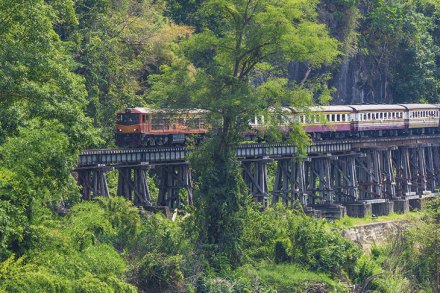
Monisha Rajesh wrote lovingly about the Indian railways in her previous book, Around India in 80 Trains; but her new one set her wondering whether the train journey had lost its allure elsewhere — for which there is a strong case to be made in Britain, at least. The constant outpouring of anger in the media about the horrors of modern travel seems to have captured the public mood: the delays, the cancellations, the overcrowding, the fatuous announcements, the garish logos of the privatised companies and the overspending on major projects all seem set to undermine our love of the railways. Rajesh, however, muses that the greater threat might in fact come from an unexpected direction — that the trains are now too good.

Tuning up to Linz

You never know who you might meet on a river cruise. It was my 89-year-old father-in-law, Noel, who first recognised a tall, professorial man only a few years younger than him remonstrating with an uninterested official at Munich airport about a pre-paid taxi to Passau, where we were due to board our ship. ‘That’s Humphrey Burton,’ said Noel. ‘We worked together at the Beeb, though he was far more important than me.’ Noel is forever modest but you could argue that Burton was the Melvyn Bragg of his day — a description I later put to him but one from which he recoiled not exactly in horror, but certainly in mild disgust.

The rock of ages past

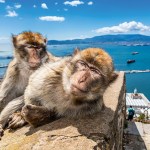
How lazy, snobbish and wrong it is to mock Gibraltar for the lager and fish and chips clichés. Yes, you can get lager and fish and chips there; nothing wrong with  that. The pint of lager I had in a pub in Gibraltar Main Street was excellent. And the funny thing is that, unlike consciously ‘British’ pubs in Rome or New York, there was no ersatz feel to it. It was exactly like a pub in Britain, down to the two middle-aged office workers in shirtsleeves, exchanging dull office chat, breaking off occasionally for low-level, awkward flirting with the barmaid, who was in her twenties. That’s what’s so gripping about Gibraltar: you move, in an instant, from carbon-copy Britain to a completely parallel, foreign universe.

A tainted paradise

Ian Fleming’s voodoo extravaganza Live and Let Die finds James Bond in rapt consultation of The Traveller’s Tree by Patrick Leigh Fermor. ‘This, one of the great travel books, is published by John Murray at 25s’, proclaims a footnote in the first edition. Fleming was a friend of Leigh Fermor, so this is to be expected. Published in 1950, The Traveller’s Tree may still be the best non-fiction account of the West Indies. ‘It’s by a chap who knows what he’s talking about’, M tells 007, knowingly. But Paul Morand’s 1929 Hiver caraïbe comes a close second. The question is: why has it taken 90 years for this masterwork to appear in English?

The ice was all around

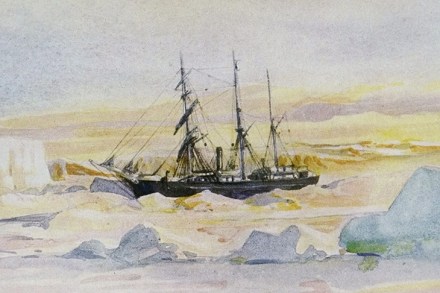
‘We had seen God in his splendours, heard the text that nature renders. We had reached the naked soul of man.’ Ernest Shackleton’s lines unscroll through both these complementary books. David Grann’s The White Darkness is all-man, the gripping story of mighty but quite straightforward struggles. The Library of Ice, brimming with men, women, ships, science, complexity, brevity and beauty, has a precision and quiet brilliance which suggest the feminine. In fact, these qualities belong simply to the author, Nancy Campbell. Readers will finish her quasi-travel book, a search for an ‘understanding’ of ice, wary of any idleness of expression, any generality in thought. Campbell seems incapable of either.

The tech timewasters

I have just spent a weekend planning a family trip to Chennai and Hyderabad. Since some of the flights are booked with reward points and some are not, our flights are under three separate booking numbers, each of which requires a separate login. I also had to print out booking confirmations from three different hotels, four boarding cards for the internal flights from Madras to Hyderabad, and a separate docket for my airport parking. That doesn’t include the two hours my wife spent applying for online visas, or the 90 minutes I spent getting approval to use a British credit card on an Indian airline website. Or the time I spent inputting my family’s passport details into another airline website, while also pre-ordering vegetarian meals for my pinko daughter.

Hair-raising stuff

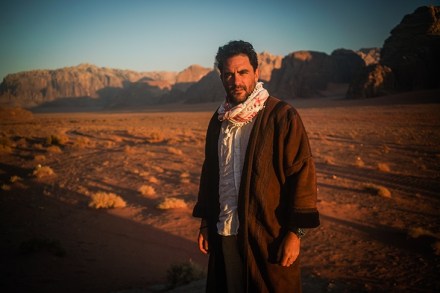
Ask most people whether they fancy a four-month, 5,000-mile trek across the Middle East and they might conclude you need your head seen to. With civil war raging in Syria, Iraq mired in internecine conflict while mopping up the remnants of Daesh, al-Qa’eda running amok in southern Yemen and simmering strife between Israelis and Palestinians, walking across 13 countries might not seem like an obvious itinerary. But Levison Wood, it is fair to say, is not your average traveller. A committed biped, he is the author of a trio of books on walking the Nile, Himalayas and Americas respectively. Ostensibly unlike the other television-led journeys which preceded it, this expedition was meant to be a lower key affair, though online publicity for an accompanying documentary suggests otherwise.

Why better beats bigger

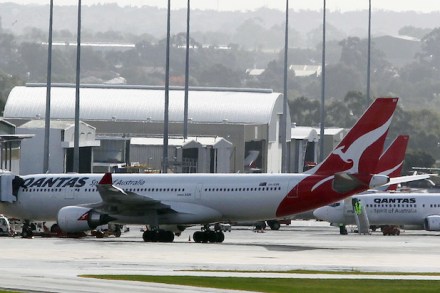
A few weeks ago I flew to Sydney to speak at a conference. The first leg was on the new Qantas route non-stop from London to Perth, the UK’s longest flight. Two million people live in Perth, of whom 250,000 were born in the UK, so the route makes sense. But I was dreading the length of the flight. Granted, I wasn’t travelling at the back of the plane, but I was surprised to find the 16-hour flight little worse than an eight- or ten-hour one. For one, there is the unexpected bonus that you can fall asleep whenever you like. On shorter flights, if you miss a narrow window-of-nod an hour or so after take-off, you are doomed to get too little sleep; here you could flip between sleeping, watching films and reading at your whim. But the real difference is the airliner.

Life on Unst

‘I’d like a copy of the Times,’ said the visitor from the south. ‘Yesterday’s or today’s?’ the shopkeeper asked. ‘Today’s, of course.’ ‘Come back tomorrow.’ Life on Unst has its idiosyncrasies, but personally, I blame the weather forecasters for giving the nation the impression that the place may not even exist. Their London-centric maps of Britain, showing Scotland fading into the distance, leave us off entirely. Not surprising, as we are the most northern of the Shetland Islands and nearer Bergen than Aberdeen. Newcastle is to us the deep south. Yet we hold a key position in defence.

Curiosity – and cats

To Jan Morris, I am anathema. That goes, too, for David Attenborough. It is a word that this unarguably great writer likes: ‘It rolls well off the tongue.’ Why are your reviewer and the great broadcaster anathema, you ask. Well, we have been to the zoo. In this almost entirely enjoyable book no-one comes in for quite so much disapproval as those of us who have been to the zoo.I mention David because, when I was young, he took me to the zoo. However, despite this sinfulness, I would be surprised if Morris, who is a year older than Attenborough, does not recognise in David a confrère in the war for niceness against nastiness, kindness against cruelty. This book, apparently written because Morris has ‘nothing much else to write’, is more weighty than it seems.

Two men on a mountain

A book that opens in a Lahore refugee camp, shifts to Cat Bells Fell, rising above the shores of Derwentwater, and then swoops between the Ranigunj coalfields in Bengal, Belsize Park, a handicrafts exhibition at Kharagpur, Kensington Gore, military intelligence headquarters in Calcutta, an aircraft factory in Wembley and the Himalayas is bound to keep its readers jumping. In The Last Englishmen, Deborah Baker has written an exuberant, scene-changing, shapeshifting group biography, with John Auden and Michael Spender as its chief human protagonists. But she makes the Himalayas, and Mount Everest, palpable and vivid characters in her story too. John Auden was the geologist elder brother of W.H. Auden and became a global expert on the Himalayas.

Best Buys: Credit cards for use abroad

If you're going abroad for your summer holidays, you want to make sure that your credit card gives you the best exchange rates, as well as the smallest possible withdrawal fees. Here are some of the best cards on the market at the moment, from data supplied by moneyfacts.co.uk.

Abominably elusive

In 1969 the body of an ape-like creature, preserved in ice inside an insulated box, came to light in Minnesota. Its provenance was unclear, but the rumour went round that it was a Bigfoot, the North American equivalent of the Himalayan yeti. After two days peering through the box’s glass cover, the Belgian zoologist Bernard Heuvelmans convinced himself that the rumour was correct. His description of the Minnesota Iceman was published in the Bulletin of the Royal Belgian Institute of Natural Sciences. It included the detail that ‘when erect, the penis would certainly not have been particularly striking in its dimensions’. As if this wasn’t bad enough for the poor animal, it later transpired that its penis, along with the rest of its body, was made of latex.

The Empty Quarter is a great refuge for lonely hearts

Here’s a treat for desert lovers. William Atkins, author of the widely admired book The Moor, has wisely exchanged the dank, wind-lashed chill of Britain’s moorland for eight of the world’s fieriest deserts, from the Empty Quarter of Oman and Egypt’s Eastern Desert to the Taklamakan in China and an unlikely stint at Burning Man in America’s Black Rock Desert. It’s not entirely clear what prompted these particular journeys or this specific quest. We learn in the second sentence that a long-standing girlfriend has gone to live and work abroad and Atkins is not going with her; so perhaps a retreat into the desert is the wholly appropriate response in a travel writer searching for new territory to furrow.

Lone and level sands

Here’s a treat for desert lovers. William Atkins, author of the widely admired book The Moor, has wisely exchanged the dank, wind-lashed chill of Britain’s moorland for eight of the world’s fieriest deserts, from the Empty Quarter of Oman and Egypt’s Eastern Desert to the Taklamakan in China and an unlikely stint at Burning Man in America’s Black Rock Desert. It’s not entirely clear what prompted these particular journeys or this specific quest. We learn in the second sentence that a long-standing girlfriend has gone to live and work abroad and Atkins is not going with her; so perhaps a retreat into the desert is the wholly appropriate response in a travel writer searching for new territory to furrow.

Voyeur or visionary?

Few writers seem less deserving of resuscitation than Henry Miller. When the Scottish poet and novelist John Burnside was asked to contribute the latest volume of Princeton’s ‘Writers on Writers’ series, he planned to choose Marianne Moore, a clearer influence on his poetry. Miller was too messy. A non-conformist and autodidact, his most famous novel, Tropic of Cancer, opened the door to literary obscenity, and also gave him the reputation of a pornographer. Burnside admits that he wrote the book less from a conscious decision than ‘out of need’. To his credit, he does not skirt Miller’s notoriety, nor does he deny that much of his subject’s erotic writing is ‘embarrassing’.