Tony blair

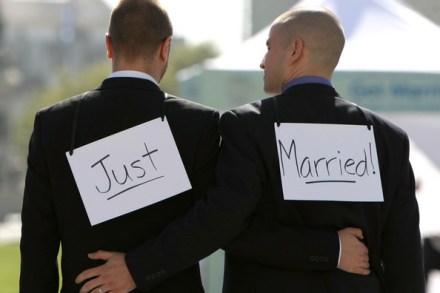
The folly of Cameron’s gay marriage culture war

For some time now, a growing number of Tory MPs have been quietly informing the whips that they will not be voting to support gay marriage. They’ve been getting letters from their constituents, and even those in favour of the idea know that they can’t afford to support it. When a cabinet member spoke to the whips office recently, he was given a startling reply: don’t worry, it will never come to a vote. The consultation is ongoing, but the agenda is being dropped. The effect it’s having on the morale of the Tory grassroots is calamitous. I look at this fiasco in my Daily Telegraph column today, and here are the main points. 1. The kulturkampf over gay marriage defines American politics, not Britain’s.
The Blair-Brown wars continue

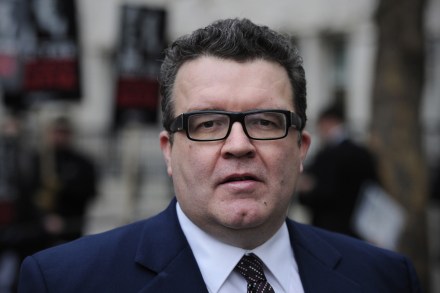
It took the Tory party 15 years to recover from the bad blood created by Margaret Thatcher’s forced resignation. So it is, perhaps, unsurprising that five years on, the bitterness from Tony Blair’s being pushed out of office has not yet subsided. Phil Collins, who was a speechwriter to Blair, has today written a scathing piece about Tom Watson, the leader of the so-called curry house coup against Blair. Collins accuses Watson of putting the ‘occupation of internal power’ in the party by his faction above the interests of the Labour party.

Mr Cameron goes to Leveson

One of the media’s vices is to assume that the public are as interested in stories about journalism as journalists are. This always makes me slightly reluctant to write about the Leveson inquiry - more fascinating for my trade than to anybody else. But the Leveson inquiry is about to enter its political phase which, I think, makes it more relevant. Politicians will start appearing before it from towards the end of next month and, as I say in the Mail on Sunday, David Cameron is scheduled to face the inquiry which he created in mid-June. Six other Cabinet ministers are expected to be summoned before the inquiry. For Cameron, this is going to be a tricky moment (think horses, Oxfordshire weekends etc).

What is being done in the name of ‘national security’?

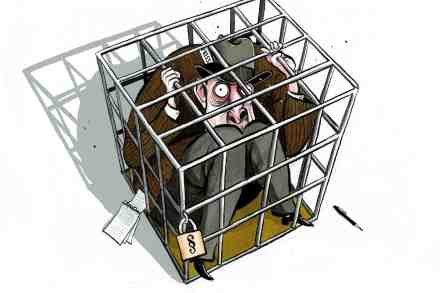
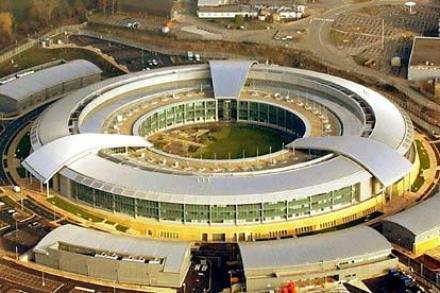
The liberty versus security debate has returned to Westminster, and it's just like old times. David Davis is having great fun beating up the government, except this time it's a Tory-led one. And as so often, Davis has a point. Much rot is spoken in the name of 'national security,' which can be used by the right as 'health and safety' is used by the left: a verbal trump card, to win any debate and justify any policy. So it has proved with this bun fight over the snooping powers about to go through parliament. It has split the coalition, and even the Tory party. In my Telegraph column today, I try to work out what's going on. First, what isn't going on: the idea that MI5 or MI6 want secret trials, or to read all our emails, is bonkers.

Everyone’s a loser

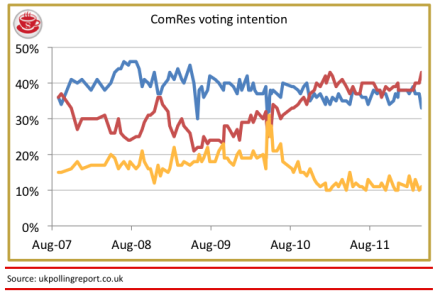
Have the opinion polls ever looked more discouraging, overall, for the Tories during this government? Not that I can remember, although I'm happy to be corrected. Not only does YouGov's poll for the Sunday Times (£) have Labour ahead by nine points, but there are also some pretty dismal supplementary findings. For YouGov, both David Cameron and the coalition score their lowest approval ratings since the start of this Parliament. For ComRes in the Independent on Sunday, 72 per cent of respondents reckon the government is ‘out of touch with ordinary voters’; 81 per cent say the government created ‘unnecessary panic’ over fuel; and so on. It's probably no surprise that Tory MPs are now telling the Indy that ‘It is a friggin' shambles’.

The government’s keen to avoid the petrol chaos of 2000

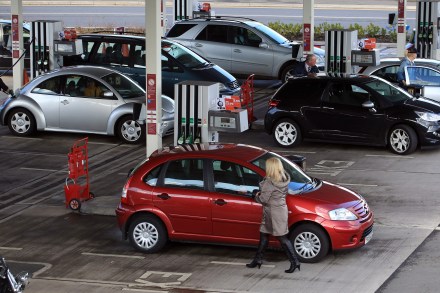
So, once again, we face the prospect of disruption at the pumps, as tanker drivers have voted for strike action over their terms of employment. According to the union Unite, their demands are 'industry minimum standards and industry wide bargaining on pensions, terms and conditions, training and health and safety'. In all, around 2,000 drivers at seven fuel distribution companies voted, with 61 per cent of them in favour. A majority approved strike action at five of the seven firms, while at DHL and Suckling drivers rejected it. The government is, naturally, keen to avoid such a disruptive strike and has been quick to condemn it. Energy Secretary Ed Davey told the Today programme this morning that 'This strike is completely unnecessary. It should not go ahead.

The Tories’ perception problem

Introducing Ed Miliband, Labour's best hope since Tony Blair. Oh, I'm kidding, of course — but it's still striking that, this morning, Labour have their biggest lead in a ComRes poll for seven years. And the size of the lead? Ten points, but it could be even bigger. The Peter Cruddas revelations fell right in the middle of ComRes's polling. Apparently, those interviews conducted after Sunday had Labour with a 17-point lead. Of course, you can slap every caveat across this that you like: we're still ages away from the election; one poll does not make a trend; the 17-point figure is based on a subset of a subset of people; and so on. But this ComRes poll, and a few others out today, will still jangle nerves and fray tempers along Downing Street.

Ed gets another kicking

Who let Ed Miliband out again? You’d have thought that Labour HQ would have learnt from the #AskEdM debacle but apparently not. Ed popped up on Radio 5 Live today following his Made in Britain speech to answer questions from voters. It’s hard to work out whether the callers were CCHQ staffers in disguise or ordinary members of the public, thanks to the extreme vitriol thrown at Ed. He had little of interest to say on the EU (he wouldn't have signed the treaty), child benefit (he can't promise to reverse the cuts) and Labour’s attitude towards business (he's pro-, apparently). Instead, the callers took the opportunity to attack him personally. As Dot Commons reports:  'They ranged from the biting...

Miliband finds his niche, and leaves Cameron looking boorish

Miliband is getting the measure of PMQs. Not with respect to Cameron. With respect to himself. He’s learned that his strongest register — sanctimony — will always ring hollow unless it’s attached to a powerful cause. And his gags don’t work. So he’s ditched his team of funny men and wise-crackers and turned to his political instincts instead. Miliband’s gut worked today. He began with a question which he knew Cameron couldn’t answer. Why hasn’t the government activated the laws requiring banks to name all employees earning over a million year? The PM answered by not answering. He performed a transparent switcheroo from the particular question to the general topic.

Academies work, now let them expand

ARK Schools, one of the leading City Academy providers, has just released another amazing set of results with GCSE passes 11 percentage points higher last year than were achieved in 2010. This is staggering progress, given that these schools are serving the same neighbourhoods with the same demographics as the council-run schools which they replaced. It is also a reminder that the City Academy programme, started by Tony Blair and Andrew Adonis and expanded by Michael Gove, can claim to be the most rapidly-vindicated social experiments in recent history. The results of ARK’s schools speak best for themselves: ARK’s formula clearly works, and I’d like to see it applied to many more schools rapidly.

A real-life whodunnit

The Saville Report into the events of Bloody Sunday is ten volumes or 5,000 pages long and was five years in the writing. The inquiry lasted 12 years, including those five years, and cost the taxpayer £200 million. Some 2,500 people gave evidence, nearly 1,000 of whom gave oral witness. It was set up under one prime minister, Tony Blair, in 1998, and its conclusions were delivered in June 2010 under a different prime minister, David Cameron. It was the lengthiest and costliest inquiry in legal history. The events it was concerned with — the shooting by members of the 1st Parachute Regiment of 13 civilians attending a civil rights march — took place on 30 January 1972, or 38 years before the report was delivered. Was it worth it?

IDS must stay the course on welfare reform

Welfare wars are erupting again, with Iain Duncan Smith’s bill amended in the Lords and more showdowns ahead. Number 10 has been completely robust, threatening to use rarely-invoked powers to overrule the Lords. In my Telegraph column today, I say why it’s so important that David Cameron does not go wobbly – as his predecessors did.   Tony Blair understood the need for radical welfare reform, especially when his idol Bill Clinton introduced it in America. Listening to his speeches in the mid-90s is heartbreaking: he had precisely the right idea, but lacked the determination to implement it.

Uncivil service

Political cultures differ. In Iran, for example, hyperbole is expected in all political conversations. So slogans always call for ‘Death to the US’, and nothing less. In Britain, of course, the use of language is more even-tempered, but other rules apply. Blaming the civil service for failure is considered OK, but charging an individual official, even a Permanent Secretary, for the same is considered off-limits. If a minister were to try it, then he'd be accused of trying to pass the buck on towards defenceless officials. But, as Camilla Cavendish points out in today's Times (£), failure is often also the fault of senior officials who, despite problems in the past, move seamlessly from job to job and from Department to Department.

Obama enjoys the high life

Amidst all the talk of Tony Blair’s post-office earnings, it is interesting to read in The Times of Barack Obama’s post-presidency ambitions. In Jodi Kantor’s new book on the Obamas, the president is quoted telling old friends of the couple that: ‘When I leave office there are only two things I want. I want a plane and I want a valet.’ Now, I am sure Obama made the remark half in jest. But it does show how quickly politicians become accustomed to the conveniences of office. Though in Blair’s case, his money-making seems to be motivated more by a desire to match the lifestyle of the global elite that he met in office and now spends so much time with.

It’s poverty, not race, that ought to concern us more

My Daily Telegraph column today is about how poverty is a greater problem in Britain than racism, which I describe as an ‘almost-vanquished evil’. This has drawn some criticism, not least from those asking (understandably) what a white guy like me can know about racism. Not much, but plenty of academics have done a hell of a lot of work into racism in Britain (including two brilliant, young academics, Matt Goodwin and Robert Ford). And their studies present a far brighter picture than we're used to. The abject failure of the BNP is not just down to Nick Griffin being a plumb — it’s because he tried to hawk a racist message to the most tolerant country on earth. CoffeeHousers may be interested on why I think this is so. Here are five points: 1.

Woolf tucks into perfidious Albion

Yesterday night's news that a senior FCO official lobbied Oxford University on behalf of Saif al-Islam Gaddafi adds more ordure to the already fetid story of Britain’s role in Colonel Gaddafi’s rehabilitation. The Woolf Inquiry into Saif’s dealings with British universities and businesses found that, 'It was made clear [to Oxford] … that the FCO would appreciate help in this case since Libya was opening up to the West again.'  Oxford resisted; but this episode has hardly covered Britain’s elites in glory: the civil service, BAE and august universities are all criticised in Woolf's report.

Another voice: Why Cameron had no choice but to fight

Fraser performed a valuable service to the MPs currently debating a motion proposing a referendum on membership of the European Union by imagining what he thought David Cameron ought to have said: "Sure, guys, have your vote. It's a backbench motion, so the government won't take part and as you know I've booked a trip abroad next Thursday anyway so I won't be here. But I was serious when I said those petitions are a way to 'rebuild trust in politics'. If this reached the threshold I set — 100,000 votes — then I'm happy for this to be debated, with a free vote. If you ask me, it's an odd time to discuss a referendum. But hey, I run the government — not parliament. You guys work for your constituents, not for me. So go for it.

Your scorecard for today’s EU referendum vote

I hope you adjusted your calendars accordingly, CoffeeHousers. The parliamentary debate and vote on an EU referendum starts at 1600 today — and what morbid fun it promises to be too. Fresh from being bawled out by Nicolas Sarkozy at the weekend, David Cameron is returning to London to be bawled out by a significant proportion of his own party. And while the Tory leadership is certain to defeat David Nuttall's Eurosceptic motion, it will not avoid being wounded in the process. Most of the wounds have already been self-inflicted.

The End of a Delusion

The sight of Colonel Muammar Gaddafi blood-stained and bewildered, pulled around by a crowd in the final moments of his life is not a sight that will cause much pity. For more than four decades he had none for those Libyans whom he repressed and killed — anymore than he had for the victims on Pan Am Flight 103, his other multiple acts of terrorism, or his pointless and bloody interventions across Africa. Yet there is something pitiful about it: perhaps most obviously because watching his end is to watch the end of a delusion. Even more than Saddam Hussein crawling out of a hole in the ground and saying that he wanted to negotiate, the sight of Gaddafi coming out of a soil-pipe armed with a golden gun seems the perfect example of reality catching up with the autocrat.

The centre ground’s there for the taking

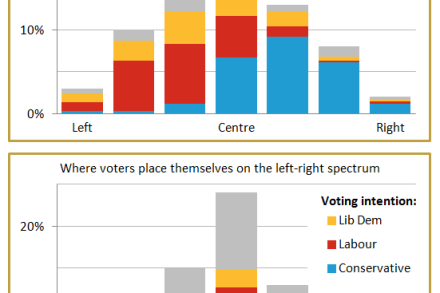
YouGov recently repeated its occassional exercise of asking people where they'd place themselves, the parties and the leaders on the left-right spectrum. Anthony Wells reported some of the findings on Saturday: Cameron is seen as slightly less right-wing than his party, while both the Tories and Labour appear to have moved away from the centre-ground since the election. One thing these YouGov numbers allow us to do is see where on the spectrum the parties get their support from. First, how people voted in 2010 and then how they say they'd vote now: This looks broadly as you'd expect, with Labour dominating among left-wing voters and the Tories doing likewise on the right.