Tony blair

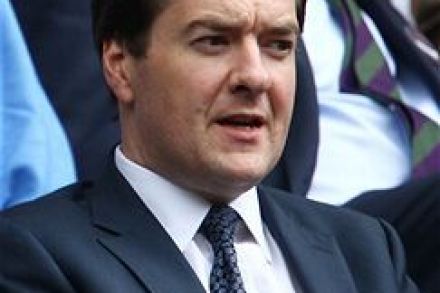
Osborne’s dire warning

This morning’s headlines are apocalyptic: “Global economy on the brink”, “Six weeks to save the Euro”, “Collective action needed now”. The unifying theme is the lack of leadership in the Eurozone: someone must grasp the nettle, say external politicians and commentators. Meanwhile, Charles Moore points out, with typical understatement, that Europe is leaderless by nature: no one is in charge and that is its tragedy. Moore doesn't mention the European President, who could, conceivably, offer direction and insist on fiscal discipline; but Herbert Van Rompuy is yet to meet that challenge. You wonder if someone of Tony Blair’s international standing might have succeeded where Van Rompuy has so far failed.

From the archives: On liberal wars

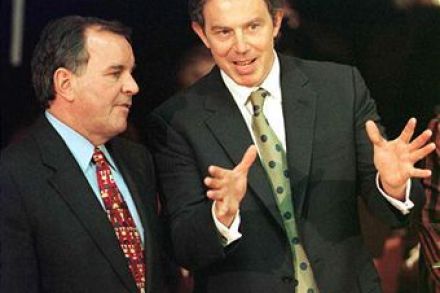
David Cameron’s speech to the United Nations yesterday was, among other things, a defence of liberal intervention. It reminded numerous observers of Tony Blair’s famous speech in Chicago in, the setting for the so-called Chicago Doctrine that guided his foreign policy thereafter. The Spectator said surprisingly little about Blair’s speech, perhaps because it wrote the following 5 days before the speech was made on 22 April 1999. End this liberal war, The Spectator, 17 April 1999 We can now see how liberals start wars, and wage them. First, they notice on television that people are being ill-treated or murdered.

Exorcising the devil…

Ed Miliband is busy trying to shift both his party and the centre ground to the left. To that end, he announced his support for the Palestinian bid for statehood, which, as Martin Bright notes, was an attempt to distance himself from the legacy of Blair, and to a lesser extent Brown, by supporting a definitively left-wing cause. The British Opposition’s view on Palestinian statehood is utterly immaterial to the Middle East peace process, so the announcement was merely a presentational ruse, a reminder that Miliband is unlikely to talk about substance until Liam Byrne has published the party’s policy review later this year.

Blair returns to warn of the dangers of Iran

With the tenth anniversary of 9/11 approaching, Tony Blair has given an interview to The Times. What’s making news is his—to my mind, accurate--warnings about just how dangerous it would be for the Middle East for the Iranian regime to get a nuclear bomb. But what struck me about the interview was how much easier Blair believed things would be in Afghanistan and Iraq than they have been.  He tells the paper that: “What that means is that you can knock out, militarily, the regime, but then when you’re engaged in the process of nation building afterwards, it’s not like nation building was in, say, the Balkans or Eastern Europe.

Tony Blair revealed to be godfather to one of Rupert Murdoch’s children

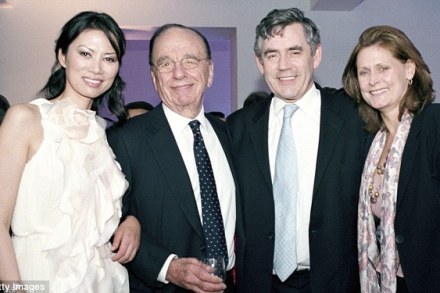
It is a sign of just how close the Blairs and the Murdochs were that Tony is godfather to one of Rupert Murdoch’s young daughters. But it is also a sign of the changed politics around Murdoch that this news will now be a major embarrassment to Blair. Wendi Deng Murdoch has, the Daily Telegraph reports, told the October edition of Vogue that Blair was present at the christening of her two daughters on the banks of the River Jordan last year. He is, the paper says, godfather to the elder one.

The quiet man barks

Almost exactly a year ago, Tony Blair's memoirs wafted into bookshops to cause a stir ahead of conference season. Now it it seems that Alistair Darling's, due out next Wednesday, will do exactly the same. Judging by the extracts published over at Labour Uncut, the quiet man of the last Labour government will splash his simmering frustrations and enmities right across the page. Gordon Brown, he will say, became increasingly "brutal and volcanic". Mervyn King was "amazingly stubborn and exasperating". And Ed Balls and Shriti Vadhera will be accused of "running what amounted to a shadow treasury operation within government".

The schools revolution in action

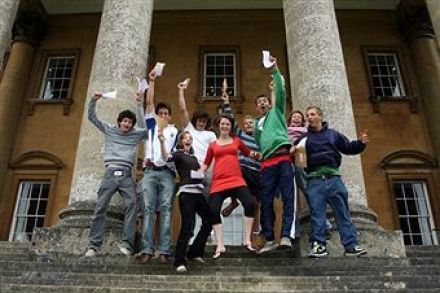
Harris Academies, one of the best-known new chains of state secondaries, have today posted an  extraordinary set of results. It's worth studying because it shows how a change of management can transform education for pupils in deprived areas. Pour in money if you like, but the way a school is run is the key determinant. This is the idea behind City Academies, perhaps Labour's single best (and most rapidly-vindicated) policy. The notion is rejected by teaching unions, who loathe the idea that some teachers are better than others. Bad schools are kept bad by the idea that their performance is due to deeply-ingrained social problems, etc. Harris has produced a table showing the results of their schools when they were last run by the council, and this year's results.

Blair on the riots

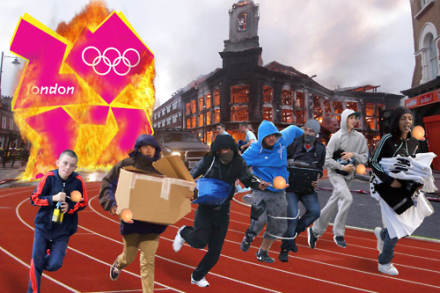
Tony Blair has dropped in to write an article on the social context to the recent riots. It’s insightful, especially as a testament of his failings in government. At the close of his premiership, he says, he’d realised that the acute social problems in Britain’s inner cities were “specific” and could not be solved with “conventional policy”. So much for ‘education, education, education’, Blair’s favoured solution was a mixture of early intervention on a family by family basis to militate against the “profoundly dysfunctional” upbringings these young people endure and a draconian response to antisocial behaviour. Alas, he was forced from office for before implementing the plan.

In response to CoffeeHousers | 13 August 2011

CoffeeHousers have been generous in their response to my post on the need for an inquiry. I thought I’d respond in a post, rather than the comments. 1) Why rush to think that poverty is the problem? Rhoda Klapp raises this very good point. In 1996, American academics looked at various riots round the world since the war – I’d urge CoffeeHousers with a serious interest to read the report here). They found “little evidence that poverty in the community matters” – ie, there are much poorer cities, where people don’t riot. Other factors matter, mainly risk versus reward. I used this study as when writing the leader for this week’s magazine.

Phone hacking fag-ends

Yesterday, in his statement to the Commons, David Cameron responded to a question from Labour MP Helen Goodman about Andy Coulson by saying: ‘He was vetted. He had a basic level of vetting. He was not able to see the most secret documents in the Government. I can write to the hon. Lady if she wants the full details of that vetting. It was all done in the proper way. He was subject to the special advisers’ code of conduct. As someone shouted from behind me, he obeyed that code, unlike Damian McBride.’ The story has developed since then.

The Lib Dems try to exploit phone hacking

The phone hacking saga continues interminably.  Simon Hughes appeared on Sky News earlier in the day to discuss the latest revelations. He refused to condemn David Cameron for entertaining Andy Coulson at Chequers and turned on Tony Blair instead. He said: "I'm much more critical of the fact that under the Blair era we knew, and this will all come out in the public inquiry, we knew that Blair flew just before the 1997 election to the other side of the world to meet Murdoch, we know that Tony Blair, three times in the ten days before the Iraq war was declared, was in touch with Rupert Murdoch" The Iraq War holds a special place in the hearts of some Liberal Democrats.

From the archives: When Gordon loved Rupert

Gordon Brown graced the political stage with a rare cameo this week – if half an hour of deluded invective masquerading as reasoned piety qualifies as a cameo. Brown would have you believe that he had nothing to do with Rupert Murdoch. This following piece by Peter Oborne says otherwise.   The murderous intent of Gordon Brown, Peter Oborne, 20 April 2002 This Friday a triumphant Gordon Brown flies to New York for a business conference. The Chancellor and his colleagues perhaps see the trip as a well-earned break.   In No.10 Downing Street there is a temptation to take a more jaundiced view, and interpret it as a quick exit.

Enter Gordon Brown, with dynamite

The clunking fist is descending on Rupert Murdoch. After rumours all afternoon about Gordon Brown giving a statement on phone hacking to the Commons, the Guardian has come up with specifics: News International, they allege, used private investigators to target our Prime Minister's phone, his bank account and his family's medical records. You should be able to watch it all go down in the Commons, very soon. As Guido has said, there is more than a hint of cold, cold revenge about this. For all his overtures to the Murdoch press, Brown never wound his way into their affections as Tony Blair did. The Sun's decision to shift over to the Tories, in 2010, sparked Brownite anger at the time. That anger still rankles.

Barroso’s EU confidence trick

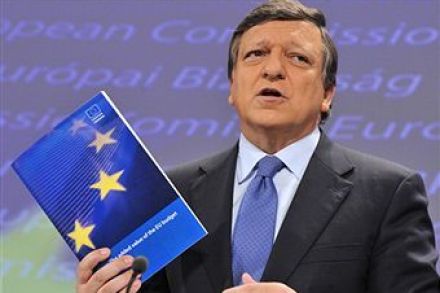
Say what you like about Jose Manuel Barroso, he's a wily old card. The European Commission president makes public demands for Britain to surrender its rebate in European Union membership fees. The government refuses. Then, hey presto! Headlines suggesting that Brussels has been seen off. "Brussels bribe to buy off UK rebate," says the Daily Mail. "Britain's rebate is fully justified and we are not going to give way on it," a Treasury spokesman tells the media. The quotation is true, Barroso did indeed offer £23 billion to tweak the UK funding formula, and a short-termist like Gordon Brown might have accepted. But the battle for Britain's EU spending was lost under Blair. In 2001-02, Britain was a net beneficiary of EU to the tune of £900 million.

Personality and politics

One of the things about the press that politicians frequently complain about is that papers concentrate more on personalities than policies. But reading the latest extracts from Alastair Campbell’s diaries you see just how much personality matters. Indeed, according to Campbell, Tony Blair excluded Gordon Brown from a discussion about what to do after 9/11 not because of any difference about how to respond but because he had become fed up with how difficult Brown was to deal with on a personal level. Now, there are nowhere near the personal tensions at the top of this government that there were in the last one. But because politicians are humans and not purely rational actors, the individual relationships in the government matter.

Can Cameronism be Europeanised?

In 1997 New Labour was not just a domestic programme; it was a foreign policy too. Known as the "Neue Mitte" in Germany, Blair's Third Way soon attracted such converts as the German chancellor, the French prime minister and the Danish leader. In the end, it produced few results for Britain, failing – much as Harold Wilson did in the 1970s – to curry favour for the UK through party political links with other leaders. But for a few years, much as New Labour looked across the Atlantic to the Democratic Party, so Europe's Social Democrats looked across The Channel. International recognition for his deficit reduction plan notwithstanding, David Cameron has no such effect so far. But some have been swayed by his domestic agenda.

General outspokenness 

Recent wars have given rise to an unusual phenomenon in British civil-military relations: frequent, and often high-profile interventions, by serving or recently retired senior military officers in public debates. The latest has been the intervention of Britain's chief naval officer, Admiral Sir Mark Stanhope, who questioned the Navy’s ability to sustain the Libya campaign. Different prime ministers have dealt with this kind of outspokenness in different ways. Tony Blair was too weak to rein in Army chief Sir General Richard Dannatt, while Gordon Brown did not have the credibility, vis-à-vis the military, to do so either. David Cameron is different. He is at the height of his powers and determined that he, not the military leadership, should exercise command.

Milburn withdraws the Blairite seal of approval

Alan Milburn's article for the Telegraph this morning is a rhetorical blitzkreig against the coalition and their NHS reforms. From its opening shot that "The Government health reforms are the biggest car crash in NHS history," to its closing call for Labour to "restake its claim to be the party of progressive, radical reform," it is searing stuff. And no-one is spared, least of all Andrew Lansley and his "foolish bout of policy-wonking". Such fierce language is unusual, even by the standards of cross-party rough 'n' tumble. What makes it extraordinary is that Milburn is employed by the government to work on their social mobility agenda. The coalition's last report on the matter even expanded and prolonged his role.

Miliband and the past

Labour's simmering resentments and self-doubts have been boiling over recently — and today is no different. Compare and contrast The Sun's interview with Tony Blair with Andrew Grice's article on Ed Balls in the Independent. For Blair, Labour ought to be claiming more credit for their preparatory role in some of the coalition's reforms, such as the Academies programme. For Balls, they ought instead to be dodging blame for the state of the public finances. As Grice reports, "Ed Balls has rejected demands from allies of Ed Miliband that he admit Labour spent too much when they were in power." From the rest of the piece, the shadow chancellor's position sounds rather like that of John Wayne's Captain Nathan Brittles: "Never apologise.

Bring on the strikes

An old boss of mine once said to me: when you start a new assignment, seek out a fight — and win it. The same advice should be given to incoming Prime Ministers. U-turns, as Mrs Thatcher knew, just create demand for more U-turns. If the government is willing to revise its NHS plans, then why not reopen the Defence Review, or alter the pledge to spend 0.7 of our national income on overseas aid (or at least abandon the questionable idea of legislating for it)? But seeking out and winning battles, while avoiding too many retreats, is not enough. To be great, a Prime Minister needs good enemies. Mrs Thatcher had great enemies in Michael Foot and Neil Kinnock. Tony Blair did too.