Tony blair

Britain should call for reform of existing blasphemy laws

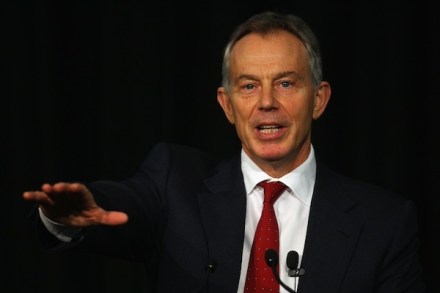
Around the time that speculation was mounting about Tony Blair's possible return to British politics last month, I went to a public discussion about faith and public life by the man himself and Rowan Williams in which Charles Moore was both participant — or should I say, combatant — and moderator. It was, as you’d expect, a lively affair in which the two Catholic converts took radically dissimilar views on most things, and Islam in particular. In retrospect, one of the remarks that strikes me as remarkable was Mr Blair’s throwaway contention that inter-faith discussion should be conducted on terms agreeable to the faiths in question.

Blair should not be cowed by Tutu

Far from being upset about Archbishop Desmond Tutu repeating something he first said nine years ago, Tony Blair should be proud of his achievements in Iraq. This aspect of Blair’s legacy was raised again over the weekend when Tutu pulled out of an event where he was due to share a stage with the former Prime Minister. It is curious that while Tutu refused to associate with Blair he has happily endorsed the ‘Global March to Jerusalem’. Its members include Ahmed Abo Halabiya who is part of the Hamas administration in Gaza. During a speech he told followers: 'Have no mercy on the Jews, no matter where they are, in any country. Fight them, wherever you are. Wherever you meet them, kill them. Wherever you are, kill those Jews and those Americans who are like them.

All that Vaz

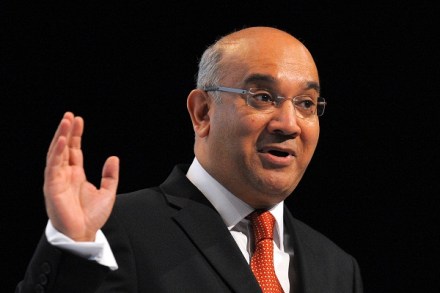
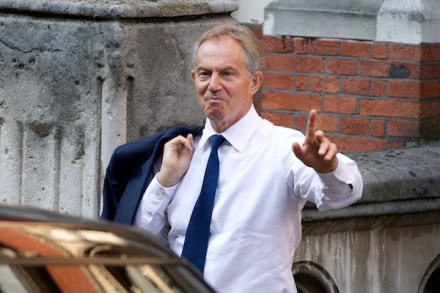
The Red Fort in Soho went multi-coloured last night as politcos from across the spectrum gathered to celebrate Keith Vaz’s 25th year in Parliament. Top of the a-list was Tony Blair, fresh from lunch at Downing Street with the Queen. No sign of his wife, again, but his son Euan was pressing the flesh. If the rumours that he wants to follow in his father’s footsteps are true, then this was the perfect event for him. Disgraced Phil Woolas was loitering in the shadows. The sacked MP for Oldham turned lobbyist was making a rare public appearance. But it was the presence of Home Secretary Theresa May which got tongues wagging.

Tony Blair’s legacy on tackling extremism

It may be unpopular to say, but there is reason to be charitable to Tony Blair and his latest warnings about Islamist extremism. The former Prime Minister gave afascinating interview to Charles Moore in yesterday’s Telegraph where, inter alia, he talks about the challenge of militant Islam. 'The West is asleep on this issue,' he tells Moore. Blair has been more vocal and unequivocal on the issue than almost any other politician in recent years. He notes that the success of his Africa Governance Initiative faces 'this threat above all others'. Failed states in the Horn of Africa have accentuated this, while one of the unintended consequences of the Libyan revolution has been to strengthen Islamist militants in northern Mali – an area the size of France.

Uncontrolled immigration

So the 2011 census results for England and Wales are out. And sure enough it turns out that the last decade has seen the largest population increase in any decade since records began. Twice that of the previous decade. Woe betide anybody who does not welcome this with a punch in the air and a few ‘Woohoos’. Despite having no democratic mandate for this societal transformation — indeed acting against public opinion on the matter — the last Labour government oversaw an immigration system which either by accident or design went demonstrably out of control. Naturally, some people will welcome this. They will say that another city the size of Manchester springing up every year is exactly what this country needs. In which case I hope they live there.

The return of St. Tony

What is it, do you suppose, that Tony Blair has learned in the five years since he ceased to be Prime Minister that would make him a better Prime Minister now? That the Brazilians speak Portuguese, perhaps — this was a fact apparently unknown to him hitherto. What else? Blair has done an interview with Andrew Marr during which he said he would very much like another crack at leading our country, and that the last five years had been very useful and he’d learned lots of stuff which would enable him to do the job better.

A lesson for Cameron from Blair

A few years back the radio disc jockey John Peel died. Some public sorrow was expressed and soon Tony Blair issued a press release explaining his personal sadness. A little while later someone else who was popular died and the same thing happened. A few days later still and hundreds of thousands of people were killed and many more made homeless by a Tsunami out East. For several hours Blair was silent. Some media jumped on this and whipped up public expressions of shock. ‘Why has our Prime Minister not expressed sadness about the Tsunami deaths?’ and so on. I don’t know why Blair took a few more hours than was then normal for him to issue a personal grief-o-gram. But I doubted then, and doubt now, that it was because he was jubilant about the disaster.

The yellows imperil Gove’s schools revolution

Michael Gove has caused a storm this morning, with his proposal to split GCSEs. The Mail has the scoop, but, essentially, this is in a bid to improve standards — Gove plans to replace GSCEs in maths, English and the three sciences, which will be awarded separately rather than as a block, with something similar to the old O-level; he also want more rigorous exams in history, geography and modern languages. Modules are also to be a thing of the past; Gove’s curriculum will be a test of memory as well as a test of understanding. Courses may be completed in 2 years or 3 years (ie, aged 17), depending on candidates' ability. Finally, Gove wants to introduce a new certificate for those pupils who are not academically inclined.

Why are the unions frightened?

Labour has only ever won a general election from the autumn of 1974 onwards when its leader has been called &"Tony Blair”. Four other leaders tried, but they were not called &"Tony Blair,” and Labour paid the price. I find it hard to credit the left’s failure myself sometimes, and, equally, find it easy to understand how Labour supporters became riddled with self-hatred and self-doubt as they saw ‘their’ Blairite government in action. But it is going a bit far for Paul Kenny of the GMB to deal with the compromises of the past by calling on Labour to declare the Blairte think tank Progress an anti-party organisation and ban it     I won’t detain you for long with the obvious objections.

Here come the Blairs and the Coe

While summer party season is warming up, is the work drying up for Cherie Blair?  At last night's Renaissance Photography Prize at the Mall Gallery, Mrs Blair took full advantage of being introduced as Cherie Booth QC. 'As a barrister there are important people for me here - solicitors!' She went on to name check the sponsors Freshfields in a brazen nudge for their work. The short-listed photographers and breast cancer charity of course played second fiddle. *** Crossing the road to the annual Beating the Retreat on Horse Guards Parade, crowds were anticipating a royal to receive the salute and oversee proceedings. Drum roll please, trumpets ready, here comes — Sebastian Lord Coe. Cue audible groans.

The message for Leveson

George Osborne and Michael Gove are two of the Cabinet ministers closest to the Prime Minister. In their appearances before the Leveson Inquiry, they have both made clear that they are not interested in some giant new regulatory system for the press. Indeed, the vigour with which Gove made this argument rather got under the judge’s skin, while Osborne openly mocked the kite-mark system that Leveson is so interested in. The implicit message to Leveson was: propose something too big and you might as well post your final report to the Long Grass at the back of Downing Street.   Now, both Osborne and Gove are to the right of the Prime Minister politically, and both are less inclined to seek consensus than the PM.

Vintage Brown

Gordon Brown’s appearance at Leveson is yet another reminder of his stubborn refusal to ever admit error. The contrast between his and Tony Blair’s testimony is striking. One is left wondering how Brown ever became Prime Minister. Brown is maintaining that he didn’t get too close to the Murdochs, and that he never knew or encouraged his special advisers to brief against Tony Blair or other colleagues. Taking Brown at his word, the latter suggests that his operation was even more dysfunctional than we thought. One thing worth noting is that Brown has denied wholesale Rupert Murdoch’s claim, made on oath, that Brown called him after The Sun withdrew its support from Labour and told him that he had no choice but to 'make war' on the company.

The return of the Tony Blair Show

The Tony Blair Show was back in town today. The former Prime Minister was clearly less nervous in front of this inquiry than he was in front of Chilcot; there was little of the passion and intensity in his voice that there was that day as he defended his decision to take the country to war. But Iraq, again, provided the most memorable moment of his appearance so far as a protestor burst into the courtroom and accused him of being a ‘war criminal’. (The ease with which security was breached both in Parliament for Murdoch’s select committee appearance and today at Leveson is something that should worry us more than it does.) On the substance of the inquiry, Blair was predictably smooth. He slipped away from any difficult question in his usual style.

Cameron can no longer laugh off Ed

The Cameroons have long taken comfort in their belief that Ed Miliband will never be Prime Minister. They have seen him as a firebreak between them and electoral defeat. Three things have driven their conviction that the Labour leader will never make it to Number 10. First, their belief that he fails the blink test: can you see him standing outside Number 10? Second, the next election will almost certainly be fought on the economy, Labour’s weakest area. Their final reason was a sense that he would never get the full support of those on the Labour side who know how to win elections. But recent events suggest that this confidence that Miliband will lose the next election might be misplaced.

The folly of Cameron’s gay marriage culture war

For some time now, a growing number of Tory MPs have been quietly informing the whips that they will not be voting to support gay marriage. They’ve been getting letters from their constituents, and even those in favour of the idea know that they can’t afford to support it. When a cabinet member spoke to the whips office recently, he was given a startling reply: don’t worry, it will never come to a vote. The consultation is ongoing, but the agenda is being dropped. The effect it’s having on the morale of the Tory grassroots is calamitous. I look at this fiasco in my Daily Telegraph column today, and here are the main points. 1. The kulturkampf over gay marriage defines American politics, not Britain’s.

The Blair-Brown wars continue

It took the Tory party 15 years to recover from the bad blood created by Margaret Thatcher’s forced resignation. So it is, perhaps, unsurprising that five years on, the bitterness from Tony Blair’s being pushed out of office has not yet subsided. Phil Collins, who was a speechwriter to Blair, has today written a scathing piece about Tom Watson, the leader of the so-called curry house coup against Blair. Collins accuses Watson of putting the ‘occupation of internal power’ in the party by his faction above the interests of the Labour party.

Mr Cameron goes to Leveson

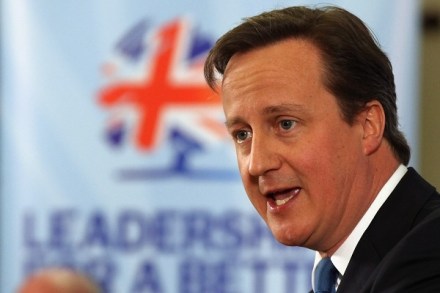
One of the media’s vices is to assume that the public are as interested in stories about journalism as journalists are. This always makes me slightly reluctant to write about the Leveson inquiry - more fascinating for my trade than to anybody else. But the Leveson inquiry is about to enter its political phase which, I think, makes it more relevant. Politicians will start appearing before it from towards the end of next month and, as I say in the Mail on Sunday, David Cameron is scheduled to face the inquiry which he created in mid-June. Six other Cabinet ministers are expected to be summoned before the inquiry. For Cameron, this is going to be a tricky moment (think horses, Oxfordshire weekends etc).

What is being done in the name of ‘national security’?

The liberty versus security debate has returned to Westminster, and it's just like old times. David Davis is having great fun beating up the government, except this time it's a Tory-led one. And as so often, Davis has a point. Much rot is spoken in the name of 'national security,' which can be used by the right as 'health and safety' is used by the left: a verbal trump card, to win any debate and justify any policy. So it has proved with this bun fight over the snooping powers about to go through parliament. It has split the coalition, and even the Tory party. In my Telegraph column today, I try to work out what's going on. First, what isn't going on: the idea that MI5 or MI6 want secret trials, or to read all our emails, is bonkers.

Everyone’s a loser

Have the opinion polls ever looked more discouraging, overall, for the Tories during this government? Not that I can remember, although I'm happy to be corrected. Not only does YouGov's poll for the Sunday Times (£) have Labour ahead by nine points, but there are also some pretty dismal supplementary findings. For YouGov, both David Cameron and the coalition score their lowest approval ratings since the start of this Parliament. For ComRes in the Independent on Sunday, 72 per cent of respondents reckon the government is ‘out of touch with ordinary voters’; 81 per cent say the government created ‘unnecessary panic’ over fuel; and so on. It's probably no surprise that Tory MPs are now telling the Indy that ‘It is a friggin' shambles’.

The government’s keen to avoid the petrol chaos of 2000

So, once again, we face the prospect of disruption at the pumps, as tanker drivers have voted for strike action over their terms of employment. According to the union Unite, their demands are 'industry minimum standards and industry wide bargaining on pensions, terms and conditions, training and health and safety'. In all, around 2,000 drivers at seven fuel distribution companies voted, with 61 per cent of them in favour. A majority approved strike action at five of the seven firms, while at DHL and Suckling drivers rejected it. The government is, naturally, keen to avoid such a disruptive strike and has been quick to condemn it. Energy Secretary Ed Davey told the Today programme this morning that 'This strike is completely unnecessary. It should not go ahead.