Tony blair
Friday
Balls in the limelight
The most important political consequence of the leak of the Project Volvo documents is that it reminds everyone in the Labour party of what a divisive figure Ed Balls is. Ever since the leadership contest, where his reputation as a plotter crippled his candidacy, Balls has been trying to soften his image. He has sought to present himself as a more collegiate figure. But this leak is a reminder of how Balls used to operate and why some people in the Labour party will do everything they can to prevent him from becoming leader. We now wait to see what emerges about how these documents made their way into the
Your five-point guide to the Ed Balls files
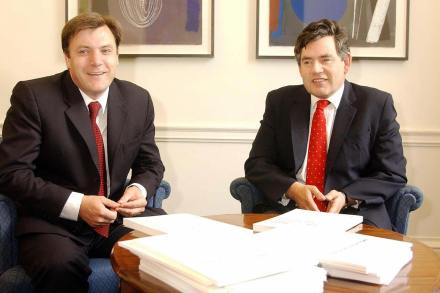
Intrigue, hilarious intrigue this morning, as the Telegraph releases a bunch of documents that clarify just how far the Brownites went to oust Tony Blair. They are, it is said, from the personal files of Ed Balls, and they are copious in both quantity and variety. From straightforward poll results to 31-page reports on how Brown is a Volvo not a BMW, this is a real insight into the numerous pathologies of party and government. Here’s my five-point overview: i) The leadership coup in waiting. It starts only two months after the 2005 general election, and Balls’ own ascent to Parliament, with a memo setting out the structure of Brown’s
Thursday
Blair is still a believer
To an extent, British politics is still determined by whether or not you agree with Tony Blair. For more than a year, the coalition and the opposition have been debating whether to continue Blair’s public service reforms; this is a testament to his failure as Prime Minister as much as it to his success. Today, has given an interview to the Times (£), coinciding with the release of his memoirs in paperback. He uses it to question the Labour party’s current journey back into “nostalgia”. He says: “The attraction of a concept like Blue Labour is it allows you to say that there’s a group of voters out there we
Friday
From the archives: Bush in London
You may have noticed that Barack Obama came to the country on a state visit this week. But he wasn’t the first US President to be extended an invitation from the Queen, oh no. George W. Bush beat him to that particular honour in 2003. Here are a couple of Spectator pieces from the time, the first the magazine’s leader column, the second by Peter Oborne: Don’t burn Bush, The Spectator, 15 November 2003 The Queen’s state carriage has carried some pretty rum types over the years. Nicolae Ceauscescu took a break from murdering his countrymen to take a ride down the Mall in June 1978. In 1994 it was
Thursday
More freedom for some schools means better schools all round
Academies, as CoffeeHouser knows, are booming. There were around 200 of them when Michael Gove became Education Secretary last May. Now, just a year later, and steaming well ahead of expectations, there are over 600. This is, as Benedict Brogan suggests in his Telegraph column today, one of the great successes of the coalition era — albeit one that owes a debt to Andrew Adonis, Tony Blair and all the school reformers that came before them. And it is a triumph of quality, as well as of quantity. The simple, overwhelming truth is that academies are, on the whole, better than the schools they replace. Just look at the table released by the
Friday
From the archives: The Good Friday Agreement
On Sunday, it will be thirteen years to the day since the people of Northern Ireland voted in a referendum on the Good Friday Agreement. The result was one of overwhelming support: 71 per cent to 29. Here is Bruce Anderson’s take on the Agreement from his Politics column at the time: Mr Blair was rough on Mr Ahern (and while Unionists were there), Bruce Anderson, The Spectator, 18 April 1998 Occasionally, one is glad to be wrong. In this column last week, I wrote about the imminent collapse of the Ulster peace process. It seemed then as if everything was unravelling; the gaps between the various sides
Tuesday
Clegg’s great rejuvenator falls a little flat
‘Constitutional reform is a waste of time, pure and simple. It never actually achieves its avowed end of reconnecting the voters with democratic institutions,’ wrote John McTernan, the former advisor to Tony Blair, recently. There are signs that the current government agrees. Nick Clegg has unveiled the next stage of his constitutional reforms today by revealing draft plans to reform the House of Lords. The coalition speaks in unison in public: the Cabinet discussed reform last and apparently there was “very strong support for the proposals around the table”. But dissenting voices must have sounded in private. The inestimable Rachel Sylvester reveals (£) that Clegg’s draft is very
Thursday
MacShane’s contradictory testimony to the Iraq Inquiry
A trickle of documents from the Chilcot Inquiry have been released today, among which is the written witness statement of former Europe Minister Denis MacShane. It’s rather intriguing. MacShane told the inquiry that it was his understanding that France ‘would not leave the US, Britain and other allies alone in any action against Saddam’ and that President Chirac then vetoed military action in the UN at the stroke of the twelfth hour, apparently against the wishes of his colleagues and France’s political establishment. MacShane says he gained this impression after speaking to a senior French official at the Anglo-French summit at Le Touquet on 4 February 2003, six weeks before
Wednesday
Exclusive: Gove's free school policy gets Labour support, finally
This week’s Spectator reveals the rather tantalizing fact that Peter Hyman, Tony Blair’s former director of strategy, is setting up a Free School in East London. This – I kid you not – is a very good thing. Newham School 21 will teach kids between the ages of 4 and 18 – an ambitious span of ages – and will open its gates in September 2012 if all goes to plan. Whatever you think about Blair, Hyman is a quietly impressive figure, coining the phrase “Education, Education, Education” and then leaving Downing Street in 2003 to become a teaching assistant. Now, as the deputy head of a school in Ealing,
Libya: Bombing does not preclude preparing a Plan B
The PM is looking to intensify the military campaign in Libya. Losing is not an option. Just think about it. The US gets its man; Britain gets angry, bombs a bit and then goes home. The dictator lives on in infamy: very Clintonesque. To avoid such an ignominious end, a delegation from Benghazi has been called to London in order to hatch a plan with Britain and her allies. But at the same time it may be prudent for someone in government – quietly and out of sight, of course – to look at a Plan B. Not for execution now, but ready in case the time comes. Why a
Monday
Osama Bin Laden's death: the world responds
We have already seen Barack Obama’s statement on the death of Osama Bin Laden. Below is more reaction from across the world: David Cameron: “The news that Osama Bin Laden is dead will bring great relief to people across the world. Osama Bin Laden was responsible for the worst terrorist atrocities the world has seen – for 9/11 and for so many attacks, which have cost thousands of lives, many of them British. It is a great success that he has been found and will no longer be able to pursue his campaign of global terror. This is a time to remember all those murdered by Osama Bin Laden, and
Thursday
The Royal Wedding by numbers
I know, I know, it’s deeply unromantic to anticipate tomorrow’s Royal Wedding through the prism of opinion polling. But as no one ever said that a political blog has to be romantic — and as there are some quite noteworthy findings among all the data — we thought we’d put together a quick round-up for CoffeeHousers. So here goes: 1) The guest list. There has, I’m sure you’ve noticed, been quite some hubbub over the fact the Gordon Brown and Tony Blair haven’t been invited to the wedding — especially in view of the Syrian ambassador’s invitation, since withdrawn. But some new polling from YouGov — highlighted by PoliticsHome —
Thursday
Reinforcing the schools revolution
There is extraordinary news today, suggesting that the Academies revolution is continuing apace. What was a trickle under the Labour years is turning into a flood. This time last year just 1 in 16 state secondaries had ‘Academy’ status: that is, operationally independent within the state sector. Now, it is 1 in 6. By Christmas, it should be 1 in 3. And by the next election, the majority of state secondary schools in Britain — about 1,600 — should have turned into Academies. Had Gove suggested such an expansion before the election, he would have been laughed at. The last time the Conservatives sought to give state schools independence was
Friday
From the archive: the consequences of Nato bombing Kosovo
There are two reasons to return to the Kosovo Conflict for this week’s hit from the archives. First, of course, the surface parallels with Libya: Nato involvement, bombing raids, all that. Second, that yesterday was the 12th anniversary of Nato’s first operation in Kosovo. Here’s Bruce Anderson’s take from the time: Milosevic has Kosovo, Nato has no idea, Bruce Anderson, The Spectator, 3 April 1999 There is a precedent for Kosovan conflict: Suez. Then, as now, our indignation was inflamed by misleading historical analogies; Milosevic is not Hitler, any more than Nasser was. Then, as now, we were afflicted by geopolitical tunnel vision, and lost all contact with the wider
Saturday
Gaddafi defiant as the international coalition prepares his noose
https://www.youtube.com/watch?v=WJl8s8DSYvQ The fog of war lies thick in Benghazi this morning. There are reported explosions and gunfire and Sky News is showing footage of a Soviet-era fighter jet combusting in mid-air over the city; it is not clear if the aircraft was the victim of anti-aircraft fire, air-to-air combat or technical malfunction. Equally, it is unclear if the international coalition’s campaign has begun – leaders will meet in Paris today to finalise diplomatic agreements before mobilisation, but defence analysts say that French and Italian aircraft could already be patrolling Libyan skies. The Gaddafi regime has been typically deranged in response. Some ministers insist that the ceasefire is real; Gaddafi on the
Friday
The threat to a British liberty
It’s a funny old world. I have now been contacted by two journalists informing me that Bedfordshire Police are investigating The Spectator. Why? Because of the Melanie Philips blog where she referred to the “moral depravity” of “the Arabs” who killed the Fogel family in Israel. CoffeeHousers can judge for themselves if they agree or disagree with her language and views – but should this be illegal? The Guardian has written this story up, claiming The Spectator is being investigated by the Press Complaints Commission. This is untrue. The PCC tell me that a complaint has been lodged, but that’s as far as it has gone. They investigate only if
Thursday
Time to bury the hatchet?
Who says irony is dead? The Four Barrow Hunt and the Countryside Alliance are holding a fundraising auction in April. The lots are largely predictable: a subscription to the Telegraph, a French holiday home and a cured fox pelt. More surprising is the signed copy of Tony Blair’s A Journey, with its comparatively brief account of the 700 hours of parliamentary time he devoted to banning fox hunting. What, you may ask, would the good folk of the Four Barrow want with that memoir? Time to bury the hatchet? Perhaps. But, equally, Blackadder’s assessment of the magazine ‘King and Country’ is recalled: ‘Ah, yes, without question my favourite magazine; soft,
Wednesday
The emergence of a Cameron doctrine
Daniel Finkelstein makes a simple but important point in the Times today (£): a Prime Minister’s foreign policy is determined by events more than by instincts. The revolts in the Middle East are defining David Cameron’s diplomacy. The emerging policy is a realistic expression of Britain’s current domestic and international capabilities. Cameron’s speech to the Kuwaiti parliament did not match Harold Macmillan’s ‘winds of change’ speech because Britain no longer disposes of continents. Likewise, Tony Blair’s messianic tendencies belong to a past era. Colonel Gaddafi’s murderous stream of conscious could have given cause to evoke the moral certainty of an ‘ethical foreign policy’. Cameron still empathises with Blair’s cause in
Saturday
A new dawn for Dubya?
Who is the unsung hero of the Egyptian revolution? Why, the 43rd President of the United States of course. (And, presumably, Tony Blair as well.) Reuel Marc Gerecht leapt to praise Bush in the pages of The New York Times. ‘President George W. Bush’s decision to build democracy in Iraq seemed so lame to many people because it appeared, at best, to be another example of American idealism run amok — the forceful implantation of a complex Western idea into infertile authoritarian soil. But Mr. Bush, whose faith in self-government mirrors that of a frontiersman in Tocqueville’s “Democracy in America,” saw truths that more worldly men missed: the idea of