Thomas Lorman

Dr Thomas Lorman is a lecturer in Central European History at UCL. He is co-editor of 'A History of the Hungarian Constitution' (IB Tauris)

Viktor Orban is not abandoning Europe

From our UK edition

The news that Hungary and China have signed a security pact, following a visit by to Budapest by Wang Xiaohong, Minister of Public Security, has been a long time in the making. In 2012, two years after beginning his second term as Prime Minister, Viktor Orban formally re-orientated Hungary’s economic and foreign policy under the slogan of the ‘Eastern Opening’. Orban understood the frustration that had returned him to power with a two-thirds majority in Parliament. Two decades of integration with western Europe had made plenty of Hungarians prosperous, but not the majority.  The introduction of the free market in Hungary was accompanied by the mass closure of businesses, and unemployment rocketed.
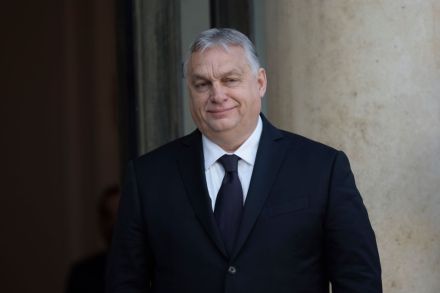
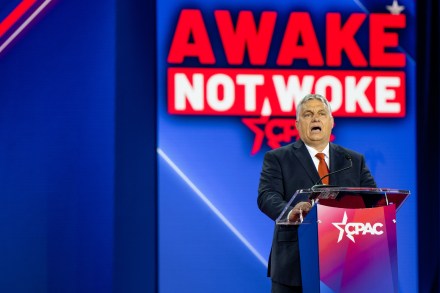
Viktor Orbán’s Texas rodeo

From our UK edition

Say what you want about Viktor Orbán, but he gives a good speech. His address on Thursday in Dallas on the opening day of CPAC, the annual jamboree of the American right wing, was wide-ranging, hard-hitting and quite funny. One of his best jokes – paraphrasing Pope Francis – was ‘that Hungary was the official language of heaven because it takes an eternity to learn’. It also happens to be nonsense. Hungarian is recognised as considerably easier to learn than Arabic or Mandarin, but Orbán doesn’t do nuance.

Why Hungary’s opposition failed

From our UK edition

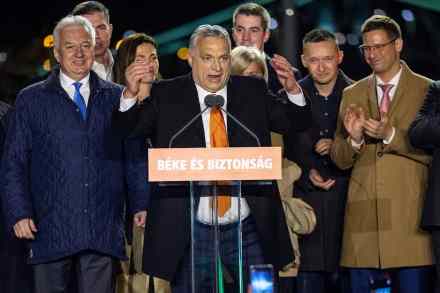
Viktor Orbán has now spent a total of 16 years as Hungary’s Prime Minister but he has not lost his hunger for power. Energetically campaigning across the country, exploiting every advantage of incumbency, and excoriating the incompetent opposition, on Sunday he notched up his fourth landslide victory in a row. Crucially, he maintains the two-thirds majority in parliament that he has held since 2010, allowing him him to amend the constitution whenever he chooses. Predictably, the opposition challenged the legitimacy of the election process even before the votes had been counted. They note that the lion’s share of the media supports Orbán. But this is an excuse, not an explanation.

Viktor Orbán has played a perfect game with Putin

From our UK edition

On 3 April Hungarians will have their ninth set of free parliamentary elections since the collapse of the communist dictatorship in 1989. The winner is likely to be Viktor Orbán and his Fidesz-KDNP coalition, which is leading in five of the six major polls. Russia’s invasion of Ukraine will not change that dynamic even though the opposition leader, Péter Márki-Zay has called Orbán a ‘traitor’ for his long-standing friendship with Vladimir Putin. Ever since Viktor Orbán began his second stint as Hungary’s prime minister in 2010, he has repeatedly played the provocateur within the EU, tweaking the eurocrats’ noses with his cultural conservatism and hostility to mass immigration.

Viktor Orbán or: How I Learned to Stop Worrying and Love Putin

From our UK edition

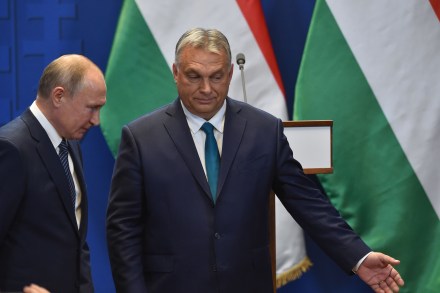
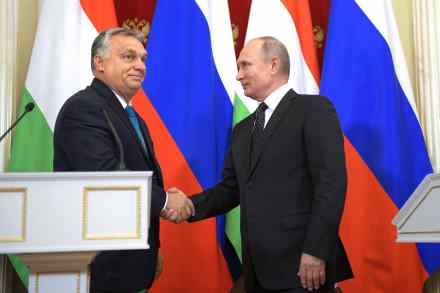
Viktor Orbán first came to prominence when in 1989 he declared on live TV that Hungary must put an end to the ‘Russian occupation’. On the first day of February this year, he held his thirteenth meeting with Vladimir Putin. What’s changed? Like much of his generation, Orbán initially believed that the fall of communism would mean a ‘return to Europe’ — with not only western democracy but also a western standard of living. Yet after a brief and unpleasant stint studying in Oxford, the student politician discovered that Britain’s future elites were ignorant and decadent.

How to beat Orbán? Copy him

From our UK edition

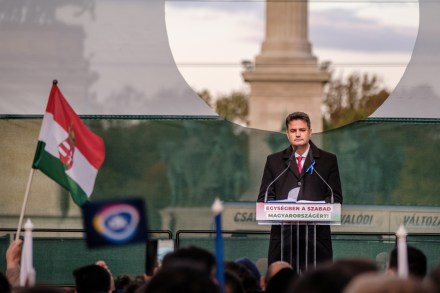
Opposing Viktor Orbán is a formidable task. Support for his coalition hovers at around the 40 per cent mark while the parliamentary system makes it harder for opposition parties to break through. By 2018, all of the opposition parties, most of which are firmly on the left, realised they were individually incapable of breaking through. They began fielding joint candidates and had some early success when Gergely Karácsony won the mayoralty of Budapest. So they agreed late last year to select a common candidate for the prime ministership at next spring’s elections. Last weekend, a political outsider, Péter Márki-Zay, became the candidate.