Russia

Donald Trump is confronting a reality that Europe has ignored

From our UK edition

Donald Trump’s rendition of Nicolas Maduro was a brilliantly executed coup. It was also an exhibition of America’s hard power, power that has underpinned the rules-based international order that protected America’s allies for decades. Now those allies fear that the rules-based order is as much a smoking ruin as Maduro’s Caracas compound. European hysteria is, however, misplaced. President Trump has not inaugurated a new era of disorder, he has responded to realities about which European elites have been in denial. The post-war international order has been crumbling for more than a decade. And British governments have been enablers of that process. One of the most determined users of hard power in subverting every restraint has been communist China.
Europe’s self-deception over Greenland

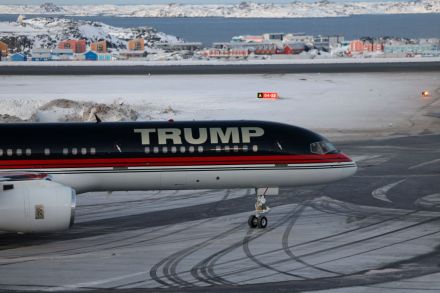
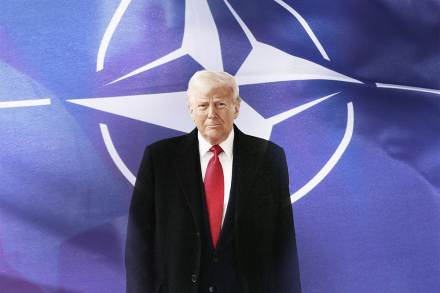
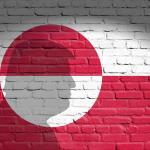
As Donald Trump weighs up taking control of Greenland, Britain and the EU has fallen back on a familiar strategy: talk tough, and do nothing. The UK joined France, Germany, Italy, Poland, Spain and Denmark yesterday in making a joint statement affirming that "Greenland belongs to its people." Arctic security, it said, must respect "sovereignty, territorial integrity and the inviolability of borders." Invoking it Article 5 the United States would expose NATO’s limits rather than overcome them If Donald Trump decides to take Greenland, Europe’s initial response would be loud, formal and legally impeccable. Europe and the UK would protest loudly, threaten, – and then do almost nothing at all.

European countries are expanding their militaries. Why aren’t we?

From our UK edition

Following America’s extraordinary raid on Venezuela last week, Donald Trump has pointed to Greenland, which belongs to the Kingdom of Denmark, as the territory he plans to turn his attention to next, staking a claim he has made repeatedly since his return to the White House. Trump said this week that America needs Greenland ‘for national security. Right now’. He told reporters he is ‘very serious’ in his intent. The US President might be claiming Greenland in the name of peace and stability, but there is every chance his neo-imperial attempts to see off the threat from China and Russia will backfire. Will his actions herald the return to a land-grabbing, power--flaunting global order like that of the 19th century?

Global fish stocks have been perilous for decades – so why is still so little being done?

From our UK edition

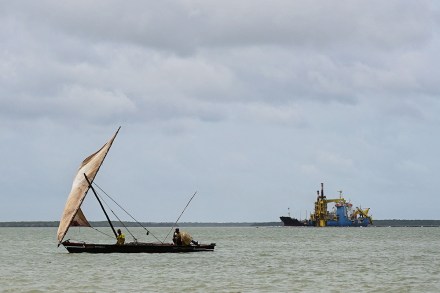
The great American activist Aldo Leopold once argued that to be a modern environmentalist was to suffer a world of wounds as you endured the losses inflicted on one cherished organism after another. No one, then, can suffer more anguish than the campaigner for the world’s fishes. In this wide-ranging, heartfelt, meticulously assembled account of our oceans Rose George shows why. She tells us that there are four million fishing vessels worldwide, the most appallingly efficient belonging to China, the EU, Taiwan, Japan, Russia and the USA. It is primarily these giant industrial regimes that have driven four-fifths of the planet’s fishes to the edge of sustainable limits. Much of this damage was done decades ago. Even in the 1970s the North Atlantic fisheries were declining.

The case for annexing Greenland

What do you think: is it manifest destiny that the United States acquire or at least exercise control over Greenland? That’s pretty much how we got Texas, California, New Mexico, Hawaii, the Philippines, Puerto Rico, Guam and American Samoa. Then there was the Louisiana purchase. In 1803, Thomas Jefferson doubled the size of the United States, paying France $15 million or a bit less than three cents per acre for a land mass that is about 26 percent of the contiguous United States. And let’s not forget about Alaska. A few facts about Greenland. It is big: 836,000 square miles. It is home to about 50,000 people, mostly Inuits. Historically, it has been seen as the semi-autonomous property of Denmark.

The surreal drama of Helsinki’s history

From our UK edition

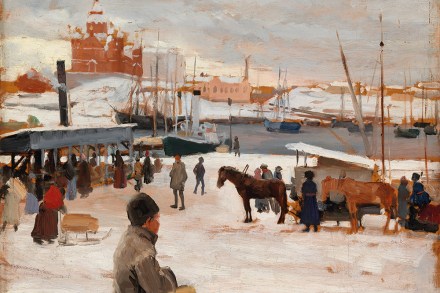
In 1920, the young Finnish architect Alvar Alto flew over Helsinki for the first time. He was aghast. ‘An aviator can see where the monkeys have been and destroyed so very much,’ he recalled. Alto’s aerial view reflected a story of fragmentation and occupation spanning some five centuries, now surveyed by the historian Henrik Meinander. The capital, explains the author, was bashed about by a series of bad actors – Swedes, Russians and Germans – until Finland stood its ground and became an independent nation in the early 20th century. Helsinki is ‘a city shaped by the sea, a city best seen from the sea’, writes Meinander. ‘Wherever you are in Helsinki’s inner city, you will always be close to the water.

Trump’s ‘peace plan’ for Ukraine is wicked

From our UK edition

It is necessary to deal with criminals. It is immoral – and, if history teaches, dangerous – to absolve them of crimes and reward them. Yet this is how Trump’s peace plan treats Putin’s Russia. In the morally inverted universe of the plan, there is no distinction between perpetrator and victim, aggressor and defender, militarised dictatorship and democracy. Invading a peaceful neighbour with no provocation whatsoever, Russia killed as many as 100,000 Ukrainian soldiers and 14,534 civilians, including over 3,000 children, who perished in incessant missile and drone bombings of residential buildings, schools, hospitals, churches, maternity wards, kindergartens and children’s playgrounds.

Boris Johnson: will cowardly Europe betray Ukraine again?

Boris Johnson has urged European leaders to hand $247 billion of frozen Russian central bank assets to Ukraine – but says he fears they “lack the courage” to do so, in an interview with The Spectator. The former British prime minister also warned that Trump is at risk of “morally polluting” himself if he caves to Putin’s demands in peace negotiations and encouraged his negotiating team to stop the “nauseating deals” they are discussing about joint business ventures.“I think Europe is at a very difficult point because Europe has got to do the reparations alone,” Johnson said. “And I'm worried that they lack the courage. They must do it. I think that's the only way to get the Americans to take Europe seriously.

Boris Johnson
european leaders

European leaders have changed their tune on war

Ten days after Thanksgiving, news watchers were exposed to one of the more culturally incongruous images in recent history: Ukrainian President Volodymyr Zelensky and French President Emmanuel Macron beaming in front of the British Prime Minister’s house at 10 Downing Street, giving each other the locked-thumbs handshake familiar to African-American jazz musicians and professional athletes of the 1970s. Right on, brother! At that moment, according to Ukrainian media, thousands of Zelensky’s soldiers had been encircled by Russian troops near the city of Pokrovsk (or Krasnoarmiisk, as it may well soon be renamed). Large gaps were appearing in the Ukrainian front, desertions were rising and Russians appeared to be opening a new front east of Kharkiv.

The war in Ukraine is reaching its endgame

Painfully and chaotically, the outline of the peace deal that will eventually end Russia’s invasion of Ukraine is emerging as the US leans on Kyiv to abandon key red lines. It may still be months before the guns finally fall silent. But one by one various roadblocks to an eventual agreement are falling away. Crucially, this week Volodymyr Zelensky conceded that his country needed new presidential and parliamentary elections. Moreover, for the first time, he floated the possibility that a Ukrainian military withdrawal from Donbas could be put to a national referendum.  "The Ukrainian people must answer the territorial question," Zelensky told reporters on Thursday. "I say clearly: yes, I support elections.

Will US businesses profit from a return to the Russian market?

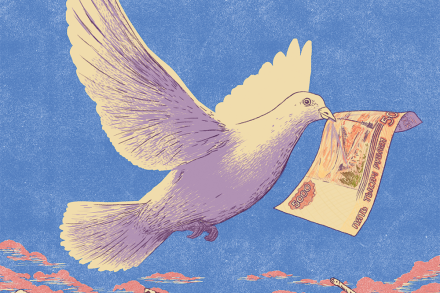
Rome Will peace in Ukraine also prove to be a great deal for US business? Vladimir Putin would certainly like Donald Trump to think so. Within days of Trump’s election victory last November, the Kremlin ordered major Russian corporations to prepare detailed proposals for economic cooperation with Washington. Coordinating these efforts were Maxim Oreshkin, deputy head of Putin’s presidential administration, and Kirill Dmitriev, the US-educated Harvard, Stanford and Goldman Sachs alumnus who heads Russia’s sovereign investment fund.

Trump’s brave new world

No one ever tucked themselves up in bed to read a government document – at least not in the expectation of enjoying it. The standard format is one of hundreds of pages of impenetrable jargon yielding no more than nuggets of significant ideas. The Trump administration has admirably cut through that tendency to produce a National Security Strategy (NSS) that is worth reading: a coherent outlining of America’s strategic intentions on the world stage. Originally composed by Michael Anton, a brilliant mind who is sadly leaving the State Department, the document concisely lays out a Trumpian vision of America’s role in the 21st century.

What Ukraine really needs from Europe

If bear hugs were army divisions and brave words cash euros, Volodymyr Zelensky would have ended his tour of European capitals this week the best-armed and best-funded leader in the world. "We stand with Ukraine," vowed British Prime Minister Sir Keir Starmer after hosting a summit for Zelensky and top European allies at Downing Street on Monday. "We support you in the conflict and support you in the negotiations to make sure that this is a just and lasting settlement." Germany’s Chancellor Friedrich Merz declared that "nobody should doubt our support for Ukraine" and added that "the destiny of this country is the destiny of Europe." France’s President Emmanuel Macron promised that Europe has "a lot of cards in our hands.

What are Ukrainian children doing in North Korea?

The regime of North Korea has continued to exploit the war in Ukraine to spread its propaganda. This week we learned that Ukrainian children, abducted by Russia, are being sent to an infamous North Korean summer camp. The children have reportedly been taught to "destroy Japanese imperialists" and heard from North Korean soldiers who destroyed the USS Pueblo, a spy ship captured and sank by North Korea in 1968.  This Ukrainian children have been at the Songdowon International Children’s Camp, located near the port city of Wonsan on the country’s east coast.

Why Putin thinks he’s winning

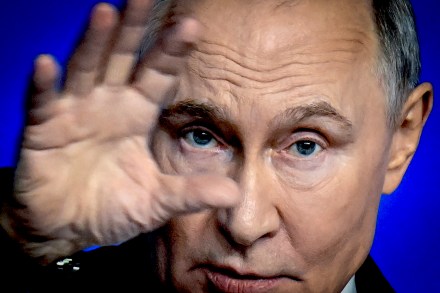
The Kremlin pulled out all the stops for the visit of Donald Trump’s son-in-law Jared Kushner and special envoy Steve Witkoff to Moscow yesterday. Accompanied by Putin’s envoy Kirill Dmitriev, Witkoff and Kushner strolled through crowds on Red Square with minimal security after lunching at a fancy restaurant on Petrovka street. Not coincidentally, Chinese foreign minister Wang Yi was also in town for a meeting with Russian Security Council head Sergei Shoigu, where Russia affirmed its support for Beijing’s One China policy.  It was a sophisticated piece of great power signaling intended to send a multi-part message to Donald Trump.

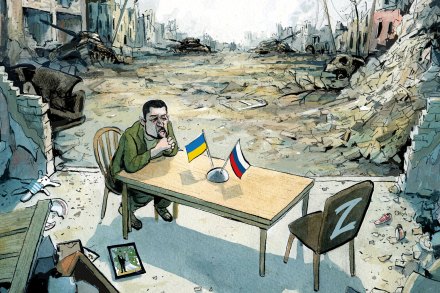
Can Zelensky surrender?

Kyiv The urge to run from danger is only human. It was palpable when air raid sirens sounded as I left the Ukrainian city of Dnipro, which is close to the front line and under relentless attack nightly from Russian drones. Five MiG-31 aircraft were in the air, Telegram channels with access to reliable intelligence reported. The warplanes can be armed with either the Iskander ballistic missile – which travels at up to 5,400mph – or the Kinzhal hypersonic missile, top speed 7,700mph. So fast there wasn’t enough time to find a shelter. We sat in traffic with bated breath, waiting. A deep boom resonated through the mini-bus and two colleagues of mine began praying. Was it an intercept or an impact – or a Patriot defense battery firing? We still don’t know.

zelensky ukraine
Michael McFaul

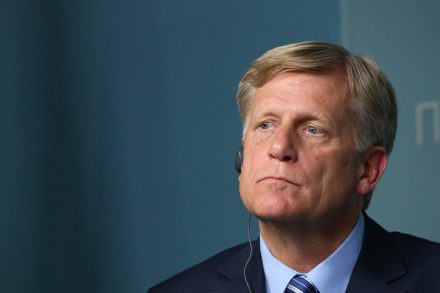
It feels as if Michael McFaul’s audience has long since left

Since the end of the Cold War, politicians and commentators have been searching for a new paradigm through which to understand international relations. Notwithstanding Francis Fukuyama’s oft-misunderstood The End of History, we have tried various patterns to classify the world order, of which George W. Bush’s “Axis of Evil,” first used in 2002, was among the more enduring. In Autocrats vs. Democrats: China, Russia, America, and the New Global Disorder, Michael McFaul acknowledges the widespread if nebulous consensus that the challenge presented by Russia and China is a kind of second Cold War – historian Niall Ferguson has labeled America’s relations with China “Cold War II.

Inside the mind of Putin’s real hatchet man

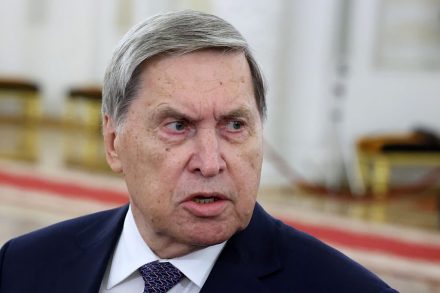
As Moscow and Washington prepare for talks on the latest version of Donald Trump’s peace plan, leaked recordings of a conversation with US envoy Steve Witkoff have thrown a spotlight on to senior diplomat Yuri Ushakov. It seems he, not Foreign Minister Sergei Lavrov, is the prime mover behind Russia’s negotiating position. The stature of Lavrov, once a legend in the diplomatic community, has steadily diminished since 2014, when he wasn’t even consulted before Vladimir Putin decided to annex Crimea. Every year since then, the now-75-year-old minister has petitioned Putin to be allowed to retire; every year this is denied. Instead, Lavrov remains confined to a role of repeating threadbare talking points to audiences who frequently and openly disbelieve him.

ushakov russia ukraine putin

The path to peace in Ukraine will be tortuous

From our UK edition

In order to impose peace terms, you first need to win the war. That fundamental principle seems, for the moment, to elude Ukraine’s European allies. Donald Trump, on the other hand, has taken the more pragmatic – some would say more cynical – view that Ukraine will never defeat Russia and therefore needs to make the best of a bad lot. Trump’s strategy for peace in Ukraine has been to browbeat Volodymyr Zelensky into approving a deal acceptable to Vladimir Putin. In fairness, Trump has also gone some way to putting the squeeze on the Kremlin too, by sanctioning the oil giants Rosneft and Lukoil, authorising the Ukrainians to use US--provided long-range weapons against Russian targets, and threatening to provide Kyiv with Tomahawk cruise missiles.

Fact-checking the Venezuela war hawks 

As the US Navy remains primed for action in the Southern Caribbean, Venezuelan dictator Nicolás Maduro prepares for what could be an American attempt to remove him. And as President Trump alternates between calling Maduro on the phone and authorizing air strikes, a bevy of misinformation is being peddled by public figures with an agenda. There are so many claims and counter-claims on the air waves right now that it’s difficult to separate fact from fiction. A sizable chunk of this disinformation is of course being sold by Maduro himself, a man who has learned from his predecessor and mentor, the late Hugo Chávez, that it’s easier to blame the United States for all of your problems than own up to your own catastrophic policy errors.