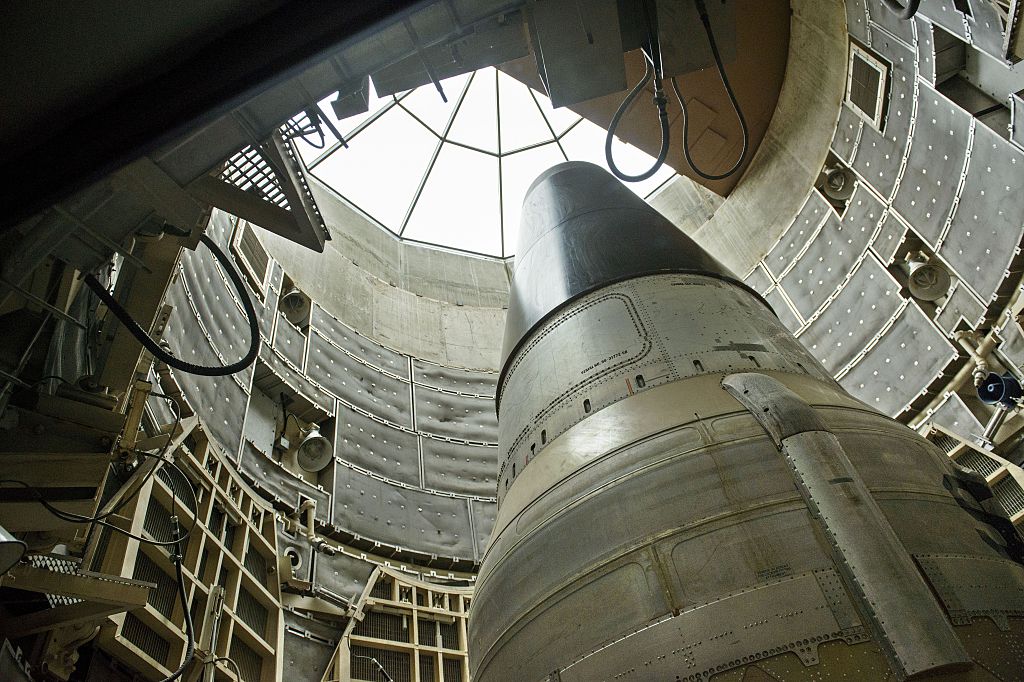
When the New Strategic Arms Reduction Treaty (New START) expires tomorrow, the United States and Russia will, for the first time since the early 1970s, operate without a binding agreement limiting their strategic nuclear forces. That fact alone is striking. What is less obvious – and more consequential – is what the expiration reveals about the state of nuclear order in a world increasingly shaped by authoritarian ambition and multipolar competition.
Signed in 2010, New START capped each side at 1,550 deployed strategic warheads and restricted the number of missiles and bombers that could carry them. Equally important were the verification provisions: inspections and data exchanges designed to reduce uncertainty and prevent worst-case assumptions. For more than a decade, the treaty provided a measure of predictability between Washington and Moscow, even as broader relations deteriorated. It reduced arsenals from Cold War peaks and reassured NATO allies that some guardrails still restrained the Kremlin’s nuclear threats.
Those guardrails have, however, been deliberately weakened by Moscow. In February 2023, Vladimir Putin suspended Russia’s participation in New START, explicitly linking the move to Western support for Ukraine. Washington halted its own inspections months later. Putin’s subsequent suggestion of a one-year extension, floated without any commitment to restoring inspections, was little more than theater – a calculated attempt to shift blame while Russia continued its war of aggression in Ukraine. Russia’s long record of violating or withdrawing from arms control agreements makes its commitments particularly unreliable.
The immediate danger is not a sudden surge in warheads, but a strategic fog in which worst-case assumptions dominate. In a world defined by rising tensions in Europe and the Indo-Pacific, that is no trivial change. The expiration of New START coincides with an increasingly multipolar nuclear landscape: China is projected to continue to expand its arsenal toward 1,000 warheads by 2030, North Korea presses ahead with its nuclear ambitions, and regional nuclear threats are growing ever more complex. The United States – and NATO – must now navigate this uncertainty decisively and confidently.

For American allies, the consequences are immediate and profound. Europe, already contending with Putin’s military aggression, must consider the implications of a world without New START limits. In the Indo-Pacific, Western allies face China’s expanding nuclear posture and increased threats from North Korea. The removal of formal US-Russia guardrails increases global uncertainty, making strong coordination with allies and clear strategic guidance from Washington more important than ever.
None of this calls for wishful thinking about partnering with authoritarian states. Arms control matters because it puts hard, verifiable facts on the table – showing rivals enough of each other’s hand to prevent rapid escalation. Strip those guardrails away, and Washington and NATO are left to navigate a world of shadows: postures harden, doctrines grow more trigger-ready and every crisis carries a heavier risk of sliding toward catastrophe.
Yet the expiration also opens a door for action, providing the West with an opportunity to strengthen its deterrence posture and address emerging threats. In shaping any future agreement, the United States must prioritize a nuclear posture that is diverse, flexible and resilient, capable of deterring threats across multiple theaters. Options include increasing warheads on existing ICBM and SLBM platforms, as well as accelerated modernization of bombers and submarines, helping to maintain a robust, forward-looking deterrent.
Taken together, the trends of adversary expansion underscore the growing imperative for the United States to maintain capable and resilient forces. Since 2010, Russia has upgraded its submarine-based strategic systems, whilst maintaining a significant arsenal of nonstrategic weapons which fall outside the limits of any treaty obligation. China has dramatically expanded its ICBM forces, while US capabilities have largely remained steady. Washington cannot afford to cede strategic initiative at this critical time.
The future must not be a replay of the past. The United States must lead by establishing a successor to New START fit for the modern era, bringing China into a framework of restraint, while placing transparency and non-proliferation at the heart of national security strategy. While the expiration of New START removes one of the last institutional brakes on miscalculation, decisive action can turn this moment of strategic risk into an opportunity to secure a stable nuclear order for the future.





Comments