Russia

With no coherent strategy, Britain seems perpetually adrift in the world

From our UK edition

The British state seems perpetually befuddled. Every international crisis catches it in its sudden glare like so many headlights trained on a nervous rabbit hopping hopelessly around a motorway. One moment Russia is invading Ukraine, then Hamas attacks Israel, Israel flattens Gaza, America knocks out Venezuela, then attacks Iran, while all the time China leers over Taiwan. Each new event leaves us spinning. Whose side are we on? What do we want? How do we get it? We use grand words to navigate our way in the confusion: ‘the special relationship’; ‘the national interest’; ‘the rules-based order’. But if these once signified some grand story we could all relate to they now feel empty and confusing.

Why Ukraine’s Russian oil strikes are backfiring

Every drone Ukraine fires at a Russian oil terminal is meant to defund Moscow's war in Ukraine. Right now, each one may be doing the opposite. Ukraine's strikes on Russian oil export infrastructure are intended to starve Moscow of the budget revenues that fund its war machine. The logic is straightforward: disrupt exports, reduce revenues, constrain the war effort. Kyiv has been explicit about this: Ukrainian officials consistently frame attacks on oil terminals as direct hits on Russia's war chest, treating every barrel that cannot be shipped as a ruble that cannot be spent on missiles or mobilization. Reuters puts the scale of that disruption in stark terms – at least 40 percent of Russia's crude export capacity, roughly 2 million barrels per day, is currently offline.

ukraine oil drone

The Iran war is just what Putin’s depleted coffers need

Of all the parties watching the chaos in the Middle East unfold, one should be rubbing its hands together with particular satisfaction. Russia has not fired a shot in this conflict, lost no allies it cannot afford to lose and has so far gained rather a lot, with more to come. A cynic might call it the perfect war for Vladimir Putin. Moscow's public reaction has been characteristically theatrical. The Foreign Ministry denounced American and Israeli actions as a "reckless step" and a "dangerous adventure." Things have gone no further. There has been no announcement of political or military support for Iran from the Kremlin – nor is there likely to be: Russia needs its drones and missiles for Ukraine.

putin

Putin is enjoying the Iran war

After Iran unleashed a torrent of missiles against its neighbors – including those with whom it had enjoyed friendly relations such as Turkey and Azerbaijan – few regional leaders are in the mood to congratulate the new Supreme Leader Ayatollah Mojtaba Khamenei. Few, but not none. "At a time when Iran is confronting armed aggression, your work in this high office will undoubtedly require great courage and dedication," wrote Vladimir Putin in an official message of congratulation to Khamenei Junior. "I am confident that you will honorably continue your father’s legacy and unite the Iranian people in the face of these severe trials.

‘More than half our squad were executed’: Inside Russia’s rotten army

The Russians are on the warpath – and Europe is Vladimir Putin’s next target. That was British Prime Minister Keir Starmer’s alarming claim at the Munich Security Conference in February. Britons "must be ready to fight, to do whatever it takes to protect our people, our values, and our way of life," Starmer warned. Britain and Germany’s top military commanders delivered the same message in a recent article. Russia’s military posture "has shifted decisively westward," wrote Air Chief Marshal Sir Richard Knighton and General Carsten Breuer. Soon the Kremlin "may be emboldened to extend its aggression beyond Ukraine." Really? According to much western coverage in mainstream and social media, the Russian army is crumbling, corrupt and inept.

How Silicon Valley is calling the shots on the battlefields of Ukraine

Sometime in the late morning of February 4, somebody at SpaceX headquarters pressed a computer key. A command line was beamed to Starlink’s 9,600 satellites in low Earth orbit. Their onboard processors, circling 550 kilometers above the Earth, instantly obeyed the command and fractionally changed their operational settings. Back down on the frozen ground, in the trenches, bunkers and ruined cities of Russian-occupied Ukraine, hundreds of Starlink terminals lost internet connectivity. As another freezing night set in, the Russian army’s drones and tactical comms went dark. “We are left without communication!” complained a frontline Russian military officer in a video posted on the Telegram channel “Voenkory Russian Spring.

‘More than half our squad were executed’: Inside Russia’s rotten army

The Russians are on the warpath – and Europe is Vladimir Putin’s next target. That was Sir Keir Starmer’s alarming claim at the Munich Security Conference earlier this month. Britons ‘must be ready to fight, to do whatever it takes to protect our people, our values, and our way of life’, Starmer warned. Britain and Germany’s top military commanders delivered the same message in a recent article. Russia’s military posture ‘has shifted decisively westward’, wrote Air Chief Marshal Sir Richard Knighton and General Carsten Breuer. Soon the Kremlin ‘may be emboldened to extend its aggression beyond Ukraine’. Really? According to much western coverage in mainstream and social media, the Russian army is crumbling, corrupt and inept.

No, Zelensky: World War Three hasn’t started

Ukrainian President Volodymyr Zelensky says that World War Three has already started. Speaking to the BBC on the eve of the fourth anniversary of the Russian invasion, it’s understandable why he would want to take this line, but he's wrong. What is striking about Putin is the lack of a messianic ideology On an emotional level, Zelensky has seen millions of his citizens flee within and out of his country, its cities and infrastructure shattered and Vladimir Putin's propagandists denounce him variously as a Nazi apologist, drug addict and western puppet. Of course he will frame this in the most apocalyptic of terms. More to the point, Ukraine is now dependent on European aid. It is European money that keeps the government solvent, and arms the troops.

ukraine zelensky

Is the war in Ukraine any closer to ending?

Is the latest round of Russia-Ukraine peace talks, sponsored by the United States and currently under way in Geneva, likely to hasten the war’s end? Donald Trump seems to believe so. On Friday, President Trump claimed that "Russia wants to make a deal, and Zelensky will have to hurry. Otherwise, he will miss a great opportunity. He needs to act." Europe, for its part, remains deeply skeptical and is urging Ukraine to fight on. As the EU's Foreign Affairs chief Kaja Kallas told the Munich Security Conference last week, "the greatest threat Russia presents right now is that it gains more at the negotiation table than it has achieved on the battlefield.

Why is America determined to pick a fight with Poland?

Until very recently it was hard to find more stalwart allies of America in Europe than the Poles. Poland was an early supporter of Washington’s policy to expand Nato and actively pushed for a stronger US role in central and eastern Europe. The Poles also stood up as an enthusiastic member of every US-led military coalition, taking leading roles in Afghanistan and Iraq. It was to Warsaw that US President Joe Biden traveled – twice – in the wake of Putin’s invasion of Ukraine to give barnstorming speeches affirming that America would stand by Kyiv.  All the more surprising, then, that the recently-appointed US ambassador to Warsaw chose to pick a diplomatic fight that threatens to snowball into a profound rupture between the two onetime allies.

The world after New START

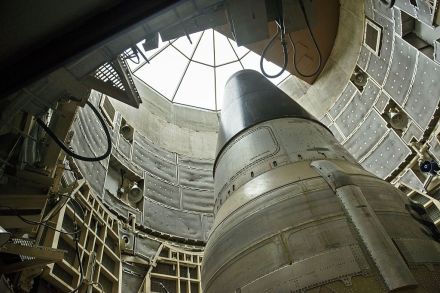
When the New Strategic Arms Reduction Treaty (New START) expires tomorrow, the United States and Russia will, for the first time since the early 1970s, operate without a binding agreement limiting their strategic nuclear forces. That fact alone is striking. What is less obvious – and more consequential – is what the expiration reveals about the state of nuclear order in a world increasingly shaped by authoritarian ambition and multipolar competition. Signed in 2010, New START capped each side at 1,550 deployed strategic warheads and restricted the number of missiles and bombers that could carry them. Equally important were the verification provisions: inspections and data exchanges designed to reduce uncertainty and prevent worst-case assumptions.

The secrets of Putin’s shadow fleet

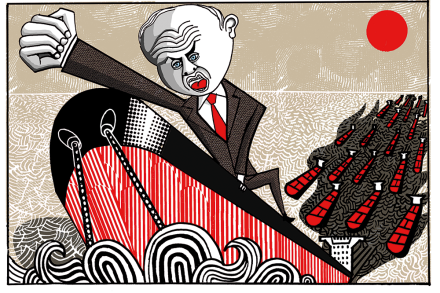
Of all the weapons in Vladimir Putin’s arsenal, the most strategically crucial has proved to be not hypersonic missiles but the motley fleet of oil tankers that have allowed Russian oil to keep flowing to international markets. Oil dollars have been the lifeblood of Russia’s war economy during four years of conflict. And the West’s failure to shut that export business down has, so far, been the single most important factor behind Putin’s continued military resilience. Economic sanctions were supposed to be the West’s superpower to punish the Kremlin for invading Ukraine in February 2022. So how come Russia now exports more oil by sea than it did at the beginning of the war?

Why is Ukraine trying to cancel Swan Lake?

From our UK edition

Two of Ukraine’s most famous ballet dancers face dismissal, cancellation and possible mobilisation into the army. Their crime? They dared to dance a segment of Russian composer Pyotr Tchaikovsky’s Swan Lake during a European tour. The Ukrainian Ministry of Culture slammed Serhiy Kryvokon and Natalia Matsak’s performance as ‘promoting the cultural product of the aggressor state’. The National Opera of Ukraine cancelled Kryvokon’s next scheduled performance – as well as his exemption from compulsory military service and permission to travel. If the dancer returns to his homeland, he will not be able to leave again.

US special forces’ secret weapons

By using a sonic weapon in the mission to capture Nicolás Maduro, as Donald Trump appears to have confirmed, Delta Force commandos not only triggered a paradigm shift in warfare, but served poetic justice. When asked whether such a weapon had been used, the President replied: “It’s probably good not to talk about it.” But then added: “Nobody else has it, we have some amazing weapons that nobody knows about.” The following morning, at Davos, Trump said: “They weren’t able to fire a single shot at us. They said, ‘What happened?’ Everything was discombobulated.

sonic

Trump’s credible threat at Davos

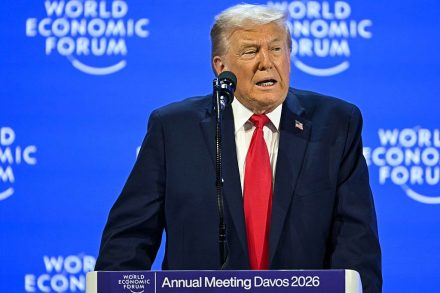
The headline from Trump’s Davos speech is clear: I won’t use military force to take Greenland. That’s what the President told the world’s leading politicians and business executives at the World Economic Forum. That declaration was very good news for all of them and for US investors, who immediately started buying stocks, erasing about half the losses suffered Tuesday, when the threat of force seemed possible. They all knew that carrying out that military threat would shatter the institutional foundation of Western security: NATO and US-European relations. Instead of military threats, Trump emphasized America’s disproportionate contributions to European defense since World War Two. It was finally time for them to bear a fair share of the burden.

davos Trump

Arctic role: what does Trump really want from Greenland?

From our UK edition

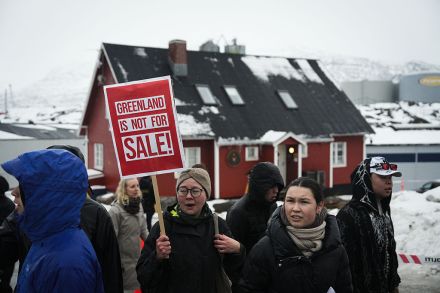
Donald Trump has probably not read Machiavelli, even the short one, The Prince. Machiavelli’s most famous advice was that it’s better for a prince to be feared than loved. But above all, he said, a ruler should strive not to be hated. Nobody likes a bully. The US President, however, clearly doesn’t care about any of this in his attempt to intimidate Denmark into handing over Greenland.  Why does Trump want Greenland? A clue lay in his meeting at the White House last week with the Florida Panthers ice hockey team. The team lined up for a photo: red ties and muscle-bound torsos bursting out of suit jackets, Trump in front of them at a lectern. ‘Good-looking people, young, beautiful people, I hate them. You hate standing here with all this power behind you.

Who will rule the Arctic?

From our UK edition

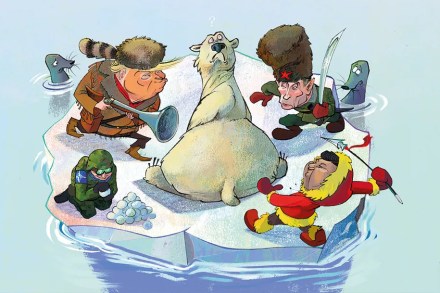
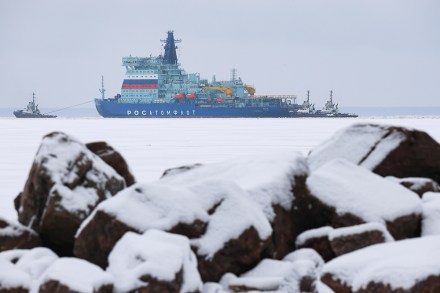
In 2007, two Russian submersibles descended from the ice at the North Pole to plant a small Russian flag on the sea floor more than two miles down. While the aquanauts were greeted as heroes in Russia, the reaction of other Arctic nations was somewhat less positive. ‘This isn’t the 15th century,’ complained the Canadian foreign minister. ‘You can’t go around the world and just plant flags.’ In response to the protests, President Putin – then Time magazine’s ‘Person of the Year’ – reassured the world: ‘Don’t worry. Everything will be all right.

Trump’s Greenland caper will heighten inflation

On February 24, Donald Trump will deliver the first State of the Union speech of his second term as president. That impending date goes a long way toward explaining Trump’s avidity for annexing Greenland – sooner rather than later – as the centerpiece of his program for restoring an American golden age of imperial power. Nothing would please Trump more than to be able to declare mission accomplished when he addresses Congress in February. Far from backing away from the issue, Trump, who will travel to Davos next week, is doubling down. He seems convinced that he can cow European leaders into submission, but the more he badgers them, the greater the likelihood that they begin to resist.

Greenland

Greenland and the new space race

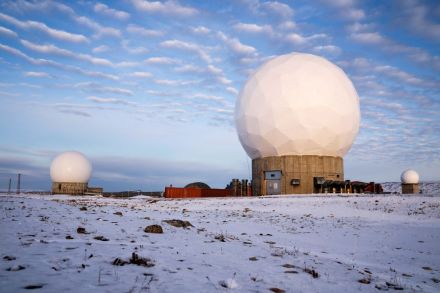
Donald Trump’s desire for Greenland is not just about access to oil, minerals and control of the new strategic and commercial corridors opening in the region. It’s also about data. Specifically, the most important data in the world. For decades, Pituffik Space Base – formerly Thule – in Greenland has been central to US space defense and Arctic strategy. It’s the US military’s only base above the Arctic Circle and their most northerly deep-water port and airstrip. It’s home to the 12th Space Warning Squadron. Its massive AN/FPS-132 radar has 240 degrees of coverage surveying the Arctic Ocean and Russia’s northern coast, especially the Kola peninsula where it has concentrated its strategic nuclear weapons.

greenland

The Kremlin’s plan to create a new wave of Ukrainian refugees

From our UK edition

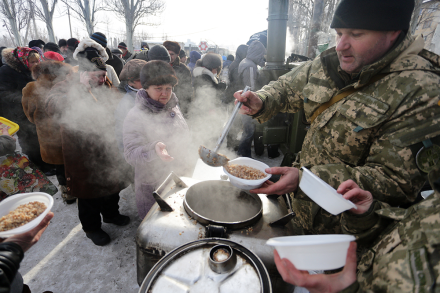
What is the limit of Ukrainian civilians’ endurance? In nearly four years of relentless war, Ukraine’s people have faced summary executions, ‘drone safaris’ where unmanned aerial vehicles hunt people down city streets and constant bombardment of cities by swarms of drones and missiles. This winter their remarkable resilience faces its severest test yet as Russian forces reach a tipping point in their systematic attempt to knock out the country’s energy infrastructure. In each of the past three winters, Vladimir Putin has attempted to render Ukraine’s cities uninhabitable by plunging them into darkness and cold, without success. But this time it looks like the Kremlin’s campaign to weaponise winter may be succeeding.