Lisa Haseldine

Lisa Haseldine

Lisa Haseldine is The Spectator's online commissioning editor - foreign affairs.

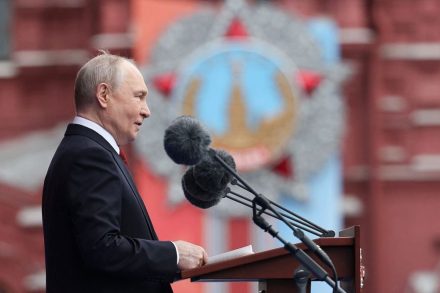
Putin’s paranoia was plain to see at Moscow’s Victory Day parade

From our UK edition

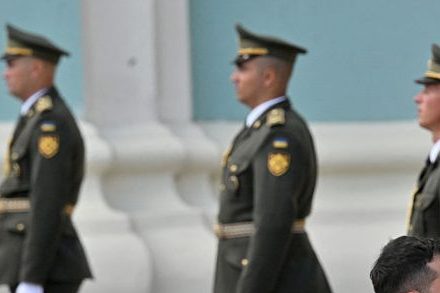
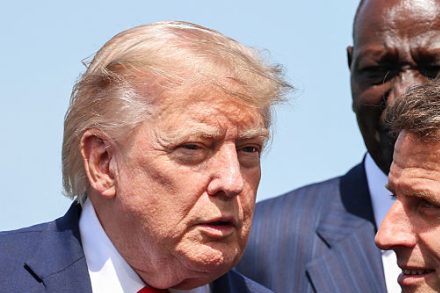
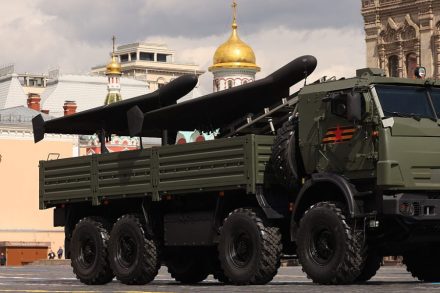
Thanks to Donald Trump, Vladimir Putin could enjoy his Victory Day parade in Moscow safe in the knowledge that no Ukrainian drones would come hurtling onto Red Square while he was inspecting the Russian troops. Taking to Truth Social last night, the American president declared that he had requested that Moscow and Kyiv observe a three-day ceasefire, starting today and lasting until 11 March.  ‘This ceasefire will include a suspension of all kinetic activity, and also a prison swap of 1,000 prisoners from each country,’ Trump said. At the time of writing that truce is still holding, with both Putin and his Ukrainian counterpart Volodymyr Zelensky stating that they would stick to the agreement.

Why is maternity care in Britain getting worse?

From our UK edition

Chelsea and her partner had been trying for a baby for two years. Following several miscarriages, she became pregnant again last spring. ‘We were overjoyed,’ the 26-year-old says. ‘We thought this time everything would finally be different.’ Joy rapidly turned to worry when Chelsea began to suffer headaches and visual disturbances and made several trips to Worthing Hospital, part of University Hospitals Sussex NHS Foundation Trust. Eventually, foetal distress was picked up during a scan; after a transfer to another hospital and an emergency Caesarean, Bonnie was born in September at just over 26 weeks’ gestation. She had suffered a brain bleed and had chronic lung disease. ‘I knew something wasn’t right,’ Chelsea says.

Trump’s missile cut has left Germany exposed

It has been a choppy 12 months for transatlantic relations since Friedrich Merz was sworn in as chancellor of Germany a year ago today. Fittingly, he is marking one year in office by dealing with the fallout of a spat with Donald Trump which has resulted in very real consequences for German – and potentially European – defence. On Friday, the Pentagon announced that 5,000 American troops would be withdrawn from German soil over the coming six to 12 months. Additionally, contrary to an agreement struck between Merz’s predecessor Olaf Scholz and Joe Biden, no new intermediate-range missiles would be stationed in Germany in the immediate future.

Gwyn Jenkins: ‘Russia remains the gravest threat to our security’

From our UK edition

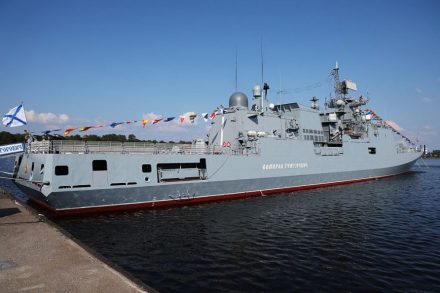
With Donald Trump’s noisy war on Iran about to enter its third month, it can be easy to forget that another conflict is going on much closer to Britain’s shores. Vladimir Putin’s war on Ukraine is creeping towards a grim milestone of its own: by the beginning of June, it will have gone on for longer than the First World War. Today, Navy chief Sir Gwyn Jenkins issued a timely reminder that the danger posed by Moscow extended far beyond eastern Europe. ‘Russia remains the gravest threat to our security,' he warned. Speaking at the Royal United Services Institute (RUSI) think tank in London, Jenkins, First Sea Lord and Chief of the Naval Staff, revealed that incursions by Russian ships and submarines into British waters had jumped by almost a third in the last two years.

How does Starmer plan to secure the Strait of Hormuz?

From our UK edition

Despite usually being a fan of escaping domestic trouble with travel abroad, Keir Starmer would be forgiven for thinking his trip today was terrible timing. The Prime Minister was in Paris this afternoon for a summit hosted by president Emmanuel Macron tackling the thorny issue of how to make the Strait of Hormuz safe again. Starmer joined Macron alongside approximately 50 representatives of other countries for the meeting – named the ‘Strait of Hormuz Maritime Navigation Initiative’. While many leaders, including those from Australia, Canada and South Korea, dialled into the meeting virtually, Starmer and Macron were joined in person by their German and Italian counterparts Friedrich Merz and Giorgia Meloni. Notably, no representative from the US was invited.

Even dirty Russian tricks might not save Viktor Orban

From our UK edition

With a week to go until Hungary heads to the polls, Prime Minister Viktor Orban is fighting to save his political skin. Unusually for a set of Hungarian parliamentary elections, on 12 April, eyes across Europe and beyond will be glued to this set of results. Whether or not Orban remains in power will have widespread ramifications, not just for Hungary but also for the EU – and even Ukraine and Russia. After 16 years in power, Orban’s Fidesz party is trailing in the polls with roughly 39 per cent compared to the approximately 49 per cent of his opponent and former Fidesz colleague Peter Magyar’s party, Tisza – relaunched under his leadership just two years ago.

Lisa Haseldine, Matthew Parris, Damian Thompson, Peter Pomerantsev, Chas Newkey-Burden & Catriona Olding 

From our UK edition

41 min listen

On this week’s Spectator Out Loud: Lisa Haseldine reports from Svalbard; Matthew Parris reflects on the Iran crisis during Holy Week; Damian Thompson assesses how Pope Leo XIV is quietly reshaping the Vatican; Peter Pomerantsev reviews Jack Watling’s Statecraft; Chas Newkey-Burden provides his notes on marathons; and finally, from Provence, Catriona Olding reflects on comfort and companionship. Produced and presented by Patrick Gibbons.

Russia has its eyes on Svalbard

From our UK edition

Svalbard The quiet hillside by Longyearbyen’s church gives visitors to the capital of Norway’s Svalbard archipelago an austere but beautiful panorama of the bay that cradles the town. Tall, sharply steep mountains, blanketed with snow, collide with the blue-grey waters of the Arctic below. From that hillside, I watched the quiet bustle of Longyearbyen. Since Donald Trump threatened Nato with the biggest crisis in the alliance’s history by stating his desire to take control of Greenland in the name of US ‘national security’, Svalbard’s residents have been uneasily looking westward. The US President has repeatedly claimed that only he can prevent the island, which is just 185 miles from Svalbard, being used as a staging post for an attack on the West by Russia or China.

Britain’s defence spending is lower than we thought

From our UK edition

Whenever Keir Starmer and his ministers are pressed on the lack of a plan to raise Britain’s defence spending with any speed, they skirt the question with the reply that ‘we are delivering the largest sustained increase in defence spending since the Cold War’. But are they actually? Earlier today, Nato published its general secretary Mark Rutte’s annual report for last year, which outlines the work of the alliance across the globe. Included in it are several tables of figures which set out how much each Nato member is estimated or known to have spent on defence each calendar year going back to 2014. The figures in today’s report have been updated to include the latest estimates for each country for 2025 – both as a percentage of GDP and in real terms.

Can Europe help fix Britain’s defence muddle?

From our UK edition

Could an agreement for Britain to join Europe’s defence fund ‘Security Action for Europe’ (Safe) be back on the cards? Speaking in Paris yesterday, European Council president Antonio Costa suggested as much. ‘It could take some weeks, ‌months, ⁠but for sure, we will achieve an agreement with the UK on the Safe issue,’ he said. Nato officials last month warned Starmer that uncertainty over Britain's defence spending and the speed of rearmament risked undermining the country’s status in the alliance Talks between Britain and the EU on joining the £130 billion scheme broke down last November when Brussels demanded the government hand over a £5 billion joining fee. France, reportedly, was the most hardline proponent of this ‘pay to play’ model at the time.

Reeves should tax expats to fund Britain’s defence spending

From our UK edition

Open the first page of any British passport and you will be met by a request on behalf of the King to give its ‘bearer such assistance and protection as may be necessary’. These words are a great source of pride: they symbolise the privilege any Brit abroad has to approach a British embassy and ask the government for help, be that with a lost passport, trouble with foreign law or even being evacuated from a warzone. At the moment, that privilege is essentially universal: whether or not you live in the UK permanently or pay taxes to the Treasury, as long as you remain a British citizen, you can demand that the government help you in your hour of need. But should this really remain the case?

James Heale, Lisa Haseldine, Simon Heffer & Lloyd Evans

From our UK edition

25 min listen

On this week’s Spectator Out Loud: James Heale reflects on Nigel Farage's leadership team; Lisa Haseldine argues that Europe is in denial over its defence; Simon Heffer looks at the extraordinary rise – and tragic fall – of the first Labour Prime Minister, Ramsay MacDonald; and finally, Lloyd Evans reviews the plays I'm Sorry, Prime Minister and American Psycho. Produced and presented by Patrick Gibbons.

James Heale, Lisa Haseldine, Simon Heffer & Lloyd Evans

‘J.D. Vance was right’: Is Europe finally waking up?

From our UK edition

Munich, Germany The organisers of the Munich security conference weren’t subtle. A large statue of an elephant stood in one of the lobbies. The logo on all official documents was an elephant, this time with bits of countries printed on it. A poster for an exhibition celebrating the meeting’s 60th anniversary had an image of an elephant in a stately room. Everyone understood the meaning of the elephant in the room: it was America’s disregard for Europe. At last year’s meeting, J.D. Vance had declared the biggest threat to Europe was not from Russia or China but ‘from within’. Europe’s leaders were becoming tyrannical, the Vice President argued, arresting citizens for exercising their free speech.

Starmer: Britain must be ready for war

From our UK edition

Munich, Germany It’s no secret that Keir Starmer prefers foreign diplomacy to the domestic side of his job. So after perhaps the most difficult week of his leadership so far, the Prime Minister was no doubt relieved to have made it to the Munich security conference today, addressing delegates in the main conference hall this morning. Starmer was unexpectedly forthright in his address: Britain would be prepared to fight Starmer began by warning that the prospect of war for Britain was no longer a remote one. Russia, he warned, could be ready to use force against the Nato alliance ‘by the end of this decade’. In doing so, he echoed key figures of the British armed forces and intelligence services who, in recent months, have said much the same.

Has Marco Rubio done enough to reassure Europe?

As Marco Rubio boarded his flight for Munich on Thursday night, he sought to reassure nervous Europeans that they weren’t about to be berated by America. ‘We’ll be good,’ he said. It appears the US Secretary of State kept his word when he addressed the Munich security conference this morning. Rubio kicked off his speech by harking back to 1963, the year Munich played host to the first security conference. Back then, he said, ‘the line between communism and freedom ran through the heart of Germany.’ ‘Soviet communism was on the march and thousands of years of western civilisation hung in the balance.’ Triumphing over communism had, however, allowed the West to be seduced by the ‘dangerous delusion that we entered “the end of history”’.

AOC

The Democratic primary in Munich

While all eyes and ears at the Munich security conference will be on US Secretary of State Marco Rubio on Saturday, it was America’s Democrats who were able to enjoy their moment in the spotlight on Friday. The party was out in force: Californian governor Gavin Newsom, member of Congress Alexandria Ocasio-Cortez and Michigan governor Gretchen Whitmer were among the high-profile party delegates on panels at the Bayerischer Hof hotel, where the conference is held. Campaigning for the next Democratic party presidential primary isn’t expected to kick off in earnest for another year.

Will Merz get his ‘transatlantic reset’ with America in Munich?

From our UK edition

The Munich security conference started with a bang today. Breaking with tradition, German chancellor Friedrich Merz opened the conference with a punchy speech about relations between Europe and America. ‘A rift, a deep chasm, has opened up between Europe and the United States,’ he declared. ‘We need to talk,’ Merz said. ‘This is more urgent than ever.’ Proclaiming that the world had entered an era of ‘big power politics’, he painted a particularly bleak picture of global affairs. ‘The international order, as it was in its heyday, no longer exists,’ he said.  Merz called on the allies of Ukraine to do more to put pressure on Russia to end its invasion. He argued that Europe could go harder and faster: ‘Russia’s GDP is €2 trillion.

Can Starmer escape his problems in Munich?

Can Starmer escape his problems in Munich?

From our UK edition

11 min listen

Keir Starmer has headed to Germany for the Munich Security Conference to meet allies and discuss defence, NATO and the war in Ukraine. He is expected to meet Chancellor Merz and President Macron later, before delivering a speech in the morning. But – after his worst week as Prime Minister – can Starmer use this moment to reset his image as one of a statesman on the world stage, or could his problems follow him to Munich? Lisa Haseldine is attending the conference and joins Tim Shipman and James Heale to discuss. Produced by Patrick Gibbons.

Who shot Russia’s intelligence chief in Moscow?

From our UK edition

One of Russia’s top military generals, Vladimir Alekseev, is in a critical condition after being shot while leaving his Moscow apartment earlier this morning. Lieutenant General Alekseev, a deputy director in Russia’s military intelligence agency – still best-known by its former acronym, the GRU – has been taken to hospital following reports he was shot multiple times in the back in the lobby of his apartment block in the north of the city. The assailant fled the scene immediately after the shooting, which took place shortly after 7 a.m. local time, and reportedly has yet to be caught. No one has claimed responsibility for the attack yet. Nevertheless, this hasn’t stopped some in Russia from already pointing the finger at Ukraine.

Does Europe still have an ally in America?

European politicians had little rest this weekend after Donald Trump’s announcement on Saturday that he would be imposing punitive tariffs on the eight countries that had sent troops to Greenland last week. From 1 February, 10 per cent tariffs will be slapped on goods entering the United States from Britain, Denmark, Norway, Sweden, France, Germany, the Netherlands and Finland. They had, Trump said, ‘journeyed to Greenland for purposes unknown’ and he accused them of playing a ‘very dangerous game’. Denmark has stated that Greenland is not for sale; Trump is unlikely to back down By sending troops to Greenland on Thursday, those eight countries had only done what Trump implied he had expected of them.