Russia

Why would Putin sign Trump’s peace deal?

It was summer 2022. Ukraine had just taken back Kyiv, people were returning to the city, and the mood was one of euphoria, triumph and success. I was having dinner with a Ukrainian official in a neon-lit seafood restaurant in the center of the city, the curfew nearing. "If this ends like the West Germany or Korea scenario, that would be the best outcome," I said to him. He snapped at me: "You want me to tell my relatives in Kherson that they will never live in Ukraine?" Three years later, and even that unwelcome outcome is now far from what Kyiv is being offered by the Trump administration.
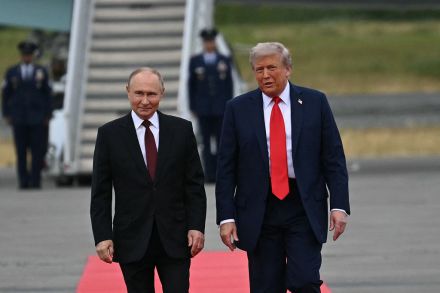
trump putin
electric

The battle for Ukraine’s electric grid

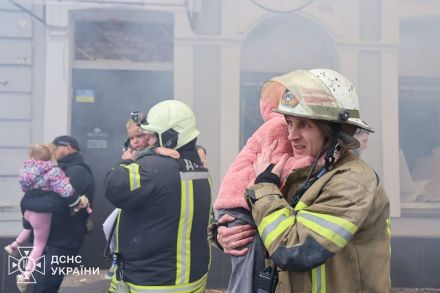
On Sunday, Ukrainian drones attacked the Shatura Power Station located about 75 miles east of Moscow. The 1,500-megawatt gas-fired facility provides heat and power to the residents of Shatura, a town of about 33,000. The drone attack caused three transformers at the plant to catch fire, and a local official said, “All efforts are being taken to promptly restore heat supply,” to the town. According to Reuters, the drone strike was “one of Kyiv’s biggest attacks to date on a power station deep inside Russia.” Sunday’s attack on the power plant in Shatura came two weeks after Ukrainian drones and missiles hit power infrastructure in the Russian cities of Belgorod, Voronezh and Taganrog.

Russia is willing to keep on fighting in Ukraine

At a time when western commentators are tying themselves in knots trying to parse the ongoing Ukraine peace discussions, the Russian media is suddenly strikingly united in its coverage. There is a common misperception that, like their Soviet forebears, the Russian press simply reproduces some standard party line, day in, day out. In fact, there is often surprising pluralism, with different newspapers having their own interests and angles. However, the Kremlin does impose its will when it comes to especially important or sensitive matters, with editors receiving tyomniki, informal but authoritative guidance from the presidential administration on lines to take and topics to avoid. When the press is speaking in one voice, that voice is Putin’s.

russia

Zelensky risks coup or civil war

Kyiv When is the price of peace ever fair? War does not determine who is right, only who is left, Bertrand Russell wisely observed. Very often conflicts come down to a numbers game – and on the numbers Ukraine is losing. Despite losing more soldiers, Russia is winning on the battlefield and unlike Ukraine hasn’t even begun mass mobilization.  Donald Trump’s proposed peace deal won’t turn the clock back on Ukraine's borders, or compensate Ukraine for Russian aggression and war crimes, or even punish Putin personally for starting a horrific and needless war that has claimed as many as 500,000 lives. If anything, the deal rewards him.  But Trump hopes his proposal will draw a line in the sand to stop the relentless bloodshed.

volodymyr zelensky

Will the Russia peace deal backfire on Trump?

Kyiv The rumor reverberating around Kyiv is that the FBI has been leaning on Ukrainian anti-corruption police to investigate Zelensky’s inner circle in order to force him to swallow the bitter US peace deal. Trump, as they say, has put the screws, or the feds, on Zelensky. The National Anti-Corruption Bureau – which is unravelling a $100 million war-profiteering scandal that has implicated many of Zelensky’s closest political allies – has denied the accusation point blank, and there’s not a single shred of evidence that it is true.

Witkoff’s Ukraine peace proposal is unworkable

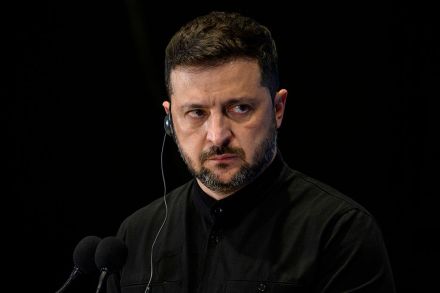
With Ukrainian president Volodymyr Zelensky’s political authority already under grave assault in the wake of a major corruption scandal, he now faces a new challenge – this time from his erstwhile ally, the United States. A high-level US delegation led by army secretary Daniel Driscoll is meeting Zelensky in Kyiv today to present the latest version of a peace plan aimed at ending the war. The contents of the plan have not been officially revealed and so far it has not been publicly endorsed by Donald Trump. But two things are already clear. One is that there’s nothing new in it. And two, there’s nothing good in it for Zelensky.

ukraine

Ukraine is on the verge of political collapse

From our UK edition

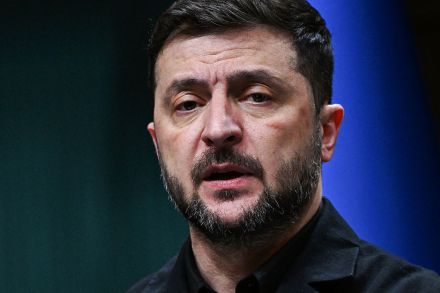
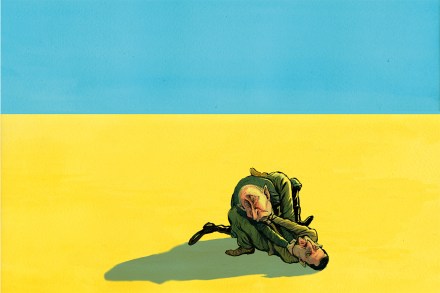
Defeat, political implosion and civil war – those are the jeopardies that Volodymyr Zelensky faces as Ukraine heads into the most difficult and probably the last winter of the war. Evermore effective Russian strikes against Ukraine’s energy and transport infrastructure are likely to plunge swaths of the country into cold and darkness. Russian troops continue to push forwards slowly and bloodily in Donbas and, more dangerously, on the southern flank in Zaporizhzhia. Desertions from the Ukrainian army are up four times since last year and the number of deserters now matches the number of active fighters. The US has turned off the money taps and Europe struggles to produce the cash Kyiv needs to keep its war effort going.

Why Europe can’t go it alone on Ukraine

Who will pay for Ukraine’s war effort now the Trump administration has turned off the financial taps? European leaders have expressed themselves ready and willing to take up the burden, with European Commission President Ursula von der Leyen affirming that “if we continue to believe that Ukraine is our first line of defense, we need to step up our assistance.” Individual countries have come up with generous funding packages – most open-handed of all being Germany, which has recently pledged more than €3 billion in direct funding. But that’s just a drop in the ocean compared to what Ukraine says it needs.

zelensky ukraine
azov enemy ukrainian

How the Ukrainian far right is preventing peace

Since the start of the Russian invasion of Ukraine in February 2022, discussion of the Ukrainian far right has been verboten in western media, largely because one of Vladimir Putin’s stated war aims is the “denazification” of Ukraine. Putin’s claim that Ukraine is a Nazi state has been recycled by Russian propagandists and the western party line has consistently been that while the Ukrainian military does have far-right strains, they are marginal and inconsequential. This may have been true in 2022, but things have changed significantly after almost four years of war. Today, far-right figures control some of Ukraine’s strongest military units, and neo-Nazi ideology is displayed openly in the Ukrainian ranks.

Laughing at Putin is a powerful form of protest

From our UK edition

Penal Colony No. 2. A girl in a green coat. Red splashes of fireworks against the night sky. She arrives back in Moscow: photographers, a clamour of questions, what is it like to be free? Meetings, cops, her little six-year-old son with a sparkler, a video being recorded, her mother nearby, anxious. Like the flickering, scratchy lens of a film projector, Maria Alyokhina’s Political Girl illuminates the story of her life from the moment she and the other members of Pussy Riot were let out of prison in 2013 until, in 2022, she finally fled Russia disguised as a delivery driver. Nine years of fighting the slowly tightening noose of Putin’s regime with an endless, almost crazed persistence.

Putin thinks time is on his side

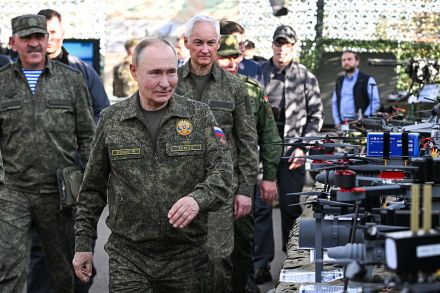
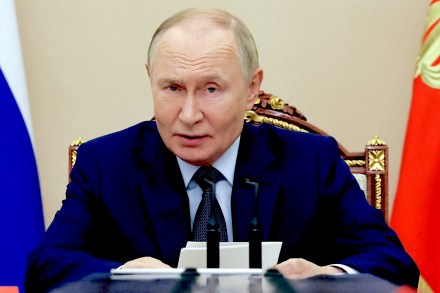
Very well then – war. That is the bottom line of Vladimir Putin’s response to Donald Trump’s latest attempts at mediating an end to Russia’s invasion of Ukraine. In August, Putin rejected the peace deal that Trump lined up in Alaska. Now, the Kremlin has scuttled the White House’s plan for a summit in Budapest by insisting that Russia’s demands for Ukrainian demilitarization and “de-nazification” remain in force. Clearly, the Russian President still believes that he can win the war on the battlefield – and terrorize Ukraine’s civilians. What is Putin’s plan?

putin

Will Trump meet ‘Little Rocket Man?’

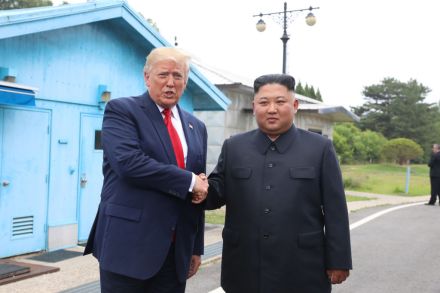
As President Trump sets off on his East Asian tour, all eyes will be on the bilateral summits that the US president will hold. After all, Trump has made no secret of his preference for tête-à-têtes over multilateralism. With a meeting with Xi Jinping scheduled in South Korea, on the sidelines of the Asia-Pacific Economic Cooperation (APEC) summit, the question of whether Trump will meet Little Rocket Man is unsurprisingly pervading, not least given how few details have been revealed as to Trump’s agenda. Although such a meeting, whether at the Demilitarized Zone or otherwise, seems unlikely at a time when US-North Korea relations are poor, nothing can be ruled out. Nevertheless, whilst the first Trump administration taught the world to expect the unexpected, Trump 2.

Kim Jong Un

So much for Trump’s peace push

Here we go again. Now that Russian president Vladimir Putin has resumed his bombardment of Ukraine, President Donald Trump is responding by sanctioning the oil giants Rosneft and Lukoil. So much for the vaunted peace push that Trump has been engaging in since he met with Putin in August in Alaska.  The atmosphere has turned distinctly frostier since they held their pow-wow. Budapest was supposed to be a reprise of the brief thaw that took place in August but Trump has got cold feet after the Kremlin indicated that it was in no mood to compromise over the actual boundaries between it and Ukraine.

Ukraine

From Russia with love

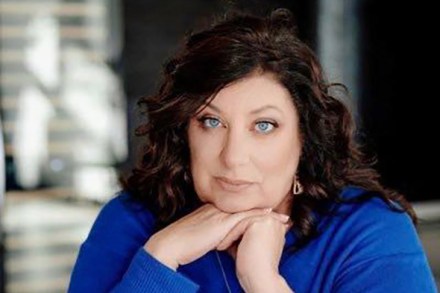
My morning routine is the same. Coffee, feed cats, exercise, walk, read the latest news. Except now I wake up in Moscow. The coffee shop, Skuratov, is Siberian and they roast their own beans. The coffee is strong with a chicory flavor. I meet my colleague from RT International and we discuss all the latest geopolitics and news around town. Later, I take the metro. For less than $5, I am across town. The metro is clean, marble and looks like a museum with beautiful sculptures. Unlike the metro in NYC or Chicago, there are no drunks, no rats and the train is quiet as passengers read their books or phones. No one has to clutch their purse or bag as there is very little petty theft.

tara reade

Trump, the foreign policy president?

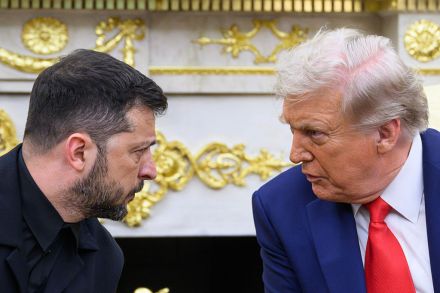
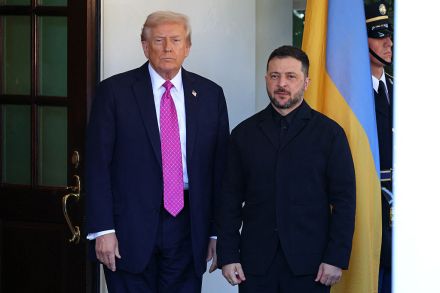
President Volodymyr Zelensky of Ukraine continued his excellent sartorial adventure at the White House, appearing in an elegantly cut black suit and shirt on Friday as he met with President Donald Trump in the Cabinet Room. But while they may have helped avoid any emanations of wrath from his host, his habiliments did not appear to prompt Trump to approve the dispatch of Tomahawk missiles to Kyiv, a coveted item indeed. “We’d much rather not need Tomahawks,” Trump said. “We’d much rather get the war over. It could mean a big escalation. It could mean a lot of bad things could happen.”  Back to square one, in other words. In August, Trump had claimed that his summit meeting with President Vladimir Putin would lead to a breakthrough. It never happened.

Trump

How Germany is preparing for war

From our UK edition

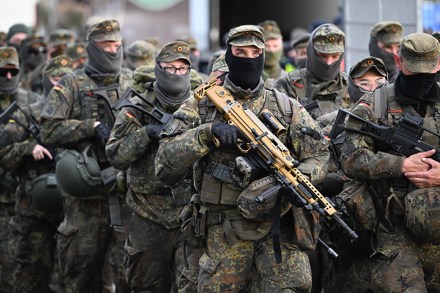
Hamburg What would happen if Russia was planning an attack on Estonia, Lithuania or Latvia – and the threat was sufficiently great that Nato felt the need to send troops east across Europe to face off against Moscow? This was the scenario the German Bundeswehr spent several days rehearsing last month, working out how the army would transport its soldiers towards Nato’s eastern flank in the event of conflict in the Baltics. For three days, the port city of Hamburg played host to the exercise Red Storm Bravo: 500 soldiers, along with roughly 300 members of the emergency services and other civilian organisations, took part – the largest military exercise in the city since the end of the Cold War.

Would taking back lost territories make Ukraine whole again?

For many of Ukraine’s supporters, Donald Trump’s recent declaration that Ukraine “is in a position to fight and WIN all of Ukraine back in its original form” came as a welcome – and unexpected – turnaround in US policy. “Ukraine would be able to take back their Country in its original form and, who knows, maybe even go further than that!” wrote Trump in a Truth Social post in late September. “Putin and Russia are in BIG Economic trouble, and this is the time for Ukraine to act.” But would taking back the lost territories of the Donbas, Zaporizhzhia, Kherson and Crimea make Ukraine whole again – or could a reconquest instead condemn Ukraine to perpetual civil war against itself and prolong the conflict with Russia indefinitely?

Ukraine

Letters: the Church of England still has something meaningful to say

From our UK edition

Moscow mule Sir: While visiting Russia, James Delingpole learned from the patriarchate’s press officer that under communism the Russian Church wasn’t allowed to exist (‘Letter from Moscow’, 27 September). However, that doesn’t accord with my own experience of being in the USSR during the Brezhnev era. As a student, I visited the 14th-century Zagorsk monastery complex just outside Moscow one Sunday and was spellbound by the heavenly chant of the Orthodox liturgy which lifted my soul. The church was full of babushkas as well as younger believers crossing themselves and kissing the icons. For all his faults and human-rights violations, Brezhnev, unlike Vladimir Putin, had not been indicted by the International Criminal Court for war crimes.

Moldova has been saved from Russian influence, but at what cost?

From our UK edition

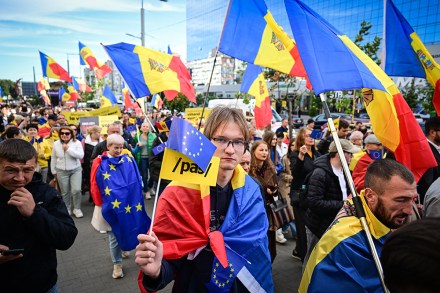
The European Union, guardian and champion of democracy, rightly takes a dim view when ruling parties ban their opponents, refuse to open polling stations in areas likely to vote against them, censor opposition news channels and allow a large staff of foreign election monitors to police social media in the run-up. If Serbia, say, or Georgia tried systematic election rigging of this kind, Brussels would be the first to call foul and disregard the result as illegitimate. But when it’s the EU that’s running the interference, as in Moldova this week, the rules are apparently quite different. This week the pro-EU party of Maia Sandu, Moldova’s President and a former World Bank official, won a slim majority in a general election.

What is Putin’s game?

From our UK edition

What happens when you boil a frog? It doesn’t notice the warming water until it is too late. According to Margus Tsahkna, Estonia’s foreign minister, Russia is boiling Nato like a frog. He fears that Vladimir Putin’s provocations of Nato (none of which on their own would necessitate a military response) will become increasingly and slowly severe, testing and ultimately undermining Nato’s defences. There is force to his argument. Two weeks ago, Polish air defences shot down Russian drones. Last Friday, Russian jets violated Estonian airspace and forced Nato planes to scramble. More drones, operated by a ‘capable actor’, according to a Danish Police spokesman, flew over Norwegian and Danish airports earlier this week, forcing their closure.