Royal family

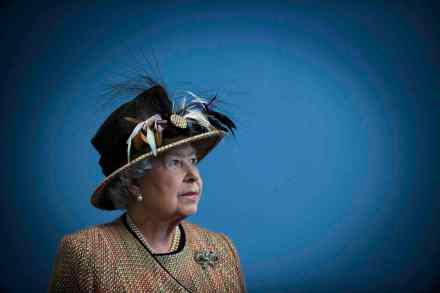
The Queen’s strength was that she did not change

Her task – did she ever quite realise it? – was to preside over a country in decline; and not merely to preside over it, but to be the nation’s anaesthetic, creating the illusion that the nightmare was not happening. When she was born, at 17 Bruton Street, by Caesarean section, on 21 April 1926, Britain commanded the mightiest, richest empire in the history of the world. By the time she died, Britain had ceased even to be what Gore Vidal once called it, an American aircraft-carrier. It was simply a muddle of a place, which had lost most of its manufacturing industrial wealth, all its political influence in the world, and any sense of national identity.

Memories of Princess Elizabeth

I am completely and utterly devastated by the passing of our wonderful, inspirational Queen, as I’m sure are so many in our fair isles. It is the end of the brilliant Elizabethan era. I was so proud to have been part of her last Jubilee. After being driven along the circuitous pageant route around London, I finished up seated in the Royal Box, waving at Her Majesty in what would prove to be her last appearance on the balcony of Buckingham Palace, where she sparkled in emerald green. This brought back memories of May 1945, when we were all celebrating the end of the second world war. My father drove his Riley Saloon as close to the gates of Buckingham Palace as was allowed, so that my mother, my sister Jackie and I could wave to the royal family while surrounded by cheering crowds.

What Charles shouldn’t do

One of the most regrettable trends of the past few decades is the creep of politics into every aspect of our public life. Institutions tasked with preserving our heritage, such as Tate Britain, Kew Gardens and the National Trust, are busy holding themselves to account for their historic links to slavery and colonialism, while the police, the civil service and the Church of England have embraced the mantra of equity, diversity and inclusion. The people in charge of these organisations – liberal, urban, highly educated – don’t think of these values as politically contentious, while those of us who don’t fall into those categories – probably the majority of the population – cannot help but feel alienated and disenfranchised.

Elizabeth II was our greatest diplomat

The grief is still raw and the news has barely sunk in. I feel quite heartbroken. But I know that many the world over feel the same. The death of Queen Elizabeth II has special resonance here in this country, in the Realms and in the Commonwealth. Yet there is barely a corner of the world that her smile did not touch. There is quote in The Great Gatsby I have always liked, and now it makes me think of her. For she ‘had one of those rare smiles with a quality of eternal reassurance in it, that you may come across four or five times in life. It faced, or seemed to face, the whole external world for an instant and then concentrated on you with an irresistible prejudice in your favour.

King Charles’s first address as monarch in full

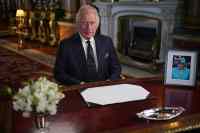
I speak to you today with feelings of profound sorrow. Throughout her life, Her Majesty the Queen – my beloved mother – was an inspiration and example to me and to all my family, and we owe her the most heartfelt debt any family can owe to their mother; for her love, affection, guidance, understanding and example. Queen Elizabeth’s was a life well-lived, a promise with destiny kept, and she is mourned most deeply in her passing. That promise of lifelong service I renew to you all today.

Lessons for life from the Queen

Having taken the Queen’s remarkable longevity, good health and work ethic for granted right until the end, might her subjects now appreciate her approach to life? Because through her combination of sheer graft – she received Liz Truss to kiss hands two days before she died – and her attitudes towards health, leisure and emotional resilience, Queen Elizabeth II bestowed on us an invaluable guide to living well. The problem is that most of us haven’t spotted it. It begins with some obvious don’ts: don’t smoke – the Queen had that lesson first-hand from her father George VI (albeit her sister Margaret didn’t listen).

I’ve finally been offended by a joke

I went to the O2 on Sunday night to see the comedians Dave Chappelle and Chris Rock. Chappelle, who survived an attempt to cancel him last year, didn’t disappoint, delivering some hilarious, politically incorrect jokes, and Rock was equally seditious, although his set went on for too long. But the rest of the evening was pretty painful. The effort it takes to get to this relic of the New Labour era is truly Herculean. Indeed, Rock made a joke about it, claiming he’d set off from his hotel on Wednesday morning and only just arrived. The Tube station is North Greenwich, one beyond Canary Wharf, and your only hope of getting there in less than 90 minutes from west London is via jet ski along the Thames.

The rise of the ‘neo-Geo’ country pile

The Queen’s wedding gift to Prince Andrew and Sarah Ferguson in 1986 was a brand new 12-bedroom house in the Berkshire countryside. Sunninghill Park was an unfortunate mash-up of architectural styles, from its Tudor-ish chimneys to its vaguely Arts and Craftsy roofline and the monumental columns flanking its entrance. And how we laughed. It was the first time a royal had lived in a new build since Queen Victoria’s son Prince Albert moved into Bagshot Park in Surrey in 1879. The Duke and Duchess of York’s property was instantly nicknamed ‘SouthYork’ thanks to its resemblance to Southfork, the Ewing family ranch in Dallas.

Drama queens: the return of Meghan and Harry

We’ve all spent months bracing ourselves for what our leaders assure us will be a dreadful winter. As the weather turns, we can look forward to ruinous energy bills, runaway inflation, collapsing health services, strikes, blackouts, more strikes, violent crime, and perhaps even – why not? – a nuclear war with Russia. As if that weren’t bad enough, Meghan and Harry are back, wafting over all the way from Montecito, California on billowy clouds of bonkers publicity, self-pity and self-help mumbo-jumbo. On Monday, as Britain announces a new prime minister, Meghan and Harry will attend a ‘One Young World’ summit for youth leaders in Manchester, where Meghan will deliver the keynote address.

The monarchy will survive Diana’s death (1997)

Today marks 25 years since the death of Diana, Princess of Wales. Andrew Roberts wrote The Spectator’s cover story that week, republished below and available at our digitised archive. The story that ended so horribly in that functional concrete Parisian tunnel early on Sunday had begun with a television show in 1969, when the victim was seven years old. In contradiction of Walter Bagehot's advice, daylight was let in on the magic of the monarchy. Before 1969, all had been deliberately obscure. Who now remembers Commander Colville? For over two decades, Commander Richard Colville DSC was press secretary, first to George VI and then to the present Queen.

Meghan’s Mandela moment

It seems that the last two years of interviews, podcasts and media briefings actually count as Meghan keeping shtum. Towards the end of a 6,500-word interview with the Cut, which covers the duchess’s views on the monarchy, the British press and racism, she says that she ‘never had to sign anything that restricts her from talking,’ adding ‘I can talk about my whole experience and make a choice not to’. At this point, Mr S doesn’t know whether this is an attempt at satire or if Meghan genuinely believes her ‘truth’.

Neckerchiefs are a sartorial risk worth taking

Neckerchiefs are an oddity. Once the cowboys' sweat-wiping tool, they are now a key accessory in the glamour – or camp and borderline tack – of a flight attendant’s uniform. My approach to them tends to sit somewhere in the middle. Neckerchiefs are useful, stylish, rebellious, but comforting – a rare choice for men’s fashionwear. A neckerchief can spice up a dull-coloured shirt without imprisoning your neck in a collar choked by its distant relative, the tie. But before becoming the fabric embodiment of smart-casual, the neckerchief was wholly utilitarian. Sailors began wearing them in the 16th century to combat the discomfort caused by dripping sweat rubbing against their stiff-collared shirts.

In defence of Fergie

My first reaction to anyone buying even a bog standard two-up-two-down terrace in London is a fake congratulations through gritted teeth. So when it was reported last week that the Duchess of York, ex-wife of disgraced Prince Andrew, had bought a £5 million mews house in Mayfair, I was surprised that I didn’t share the outrage of the general public. Sure, she does very little, spending her days lounging around in Royal Lodge, the Grade II-listed Windsor property she shares with her ex. But there’s a part of Sarah Ferguson that is totally relatable, and as she has tried – and often failed – to navigate the inner workings of the royal establishment, I have watched her with admiration.

A diplomatic sweetener: the power of marmalade

It took Paddington Bear to solve the age-old mystery of what the Queen keeps in her handbag. When Her Majesty pulled out a marmalade sandwich during the pair’s sketch at the Platinum Jubilee concert this summer, it did more than just tickle the audience. It also served to remind us of our national love affair with marmalade. Long before Paddington developed a taste for it, the preserve had been a stalwart of British popular culture, from Jane Austen (where Lady Middleton applies marmalade as balm for her daughter’s scratch) to Evelyn Waugh (where, in Brideshead Revisited, Charles Ryder eats ‘scrambled eggs and bitter marmalade with the zest which in youth follows a restless night’) – not to mention Samuel Pepys, Agatha Christie and Ian Fleming.

The art of choosing sunglasses

Only Princess Diana could carry off Wimbledon white-rimmed aviators with such style. Pictured in the Royal Box at The Championships in 1986, The Princess of Wales brought an edge to her natural elegance in these striking shades. White sunglasses scream summer so are a great addition to a holiday wardrobe, pairing well with colourful fabrics.  If you find white too stark then opt for ivory as a softer alternative. Quay sunglasses, £39 Coloured shadesYou can’t go wrong with a classic Audrey Hepburn style black shade paired with monochrome outfits, but they can sometimes look too harsh with the softer colour palette and floaty frocks of summer. A tinted lens and tortoiseshell frame can be a softer option for paler skin complexions and lighter hair colours.

Inside the clash between Boris and Charles

Boris Johnson is the kind of prime minister who believes that rules are there to be broken. This certainly seems to apply to his relations with the Crown. Conversation between the government and the monarchy is, by convention, kept strictly confidential. But when Prince Charles privately described the government’s Rwanda deportation policy as ‘appalling’ within political earshot, word leaked out suspiciously quickly – via Westminster channels. Johnson then chose to fuel the story at the Commonwealth summit in Kigali by telling broadcasters that Charles should keep ‘an open mind’.

‘It’s in my blood’: Why Prince Charles loves Transylvania

For the first time since the pandemic, Prince Charles has returned to Transylvania. When he visits the small village of Miclosoara, or, as the Hungarian locals who live here know it, Miklósvár, the weather is perfect. There’s a small breeze and a light rain has fallen, but the sun is now out. ‘Look at that!’ someone exclaims in surprise and points a finger in the air. It’s a rare sight: over the mossy rooftops, an angry jay is chasing off a stork. The storks returned weeks ago, and while some are still busy perfecting their nests most already have chicks to feed. Prince Charles looks around. The bird must be defending its own chick, he says. And there it is, a few yards down the dusty lane – a jay chick clumsily looking for a place to hide.

The royal rabble vs the Queen

By and large, the Platinum Jubilee celebrations were a success. Barring the odd moment of inexplicable poor taste, it was a well-choreographed blend of pageantry, ceremony and fun, and the deservedly viral clip of Paddington taking tea with the Queen seemed to epitomise a spirit of generosity and togetherness. Yet Her Majesty might be forgiven, looking at the headlines since the Jubilee, for wishing that she could always be in the company of an amiable fictitious bear, rather than her unpredictable and wilful family.

The art of the State Banquet

The French epicure Jean-Anthelm Brillat-Savarin, writing in the early decades of the nineteenth century, remarked, 'Read the historians, from Herodotus down to our own day, and you will see that there has never been a great event, not even excepting conspiracies, which was not conceived, worked out, and organized over a meal.' And indeed it is true that State Banquets are amongst the most important opportunities for discussion and diplomacy. Her Majesty The Queen has over the past 70 years received well over 100 inward State Visits. She has undertaken over 260 official visits overseas including nearly 100 outward State Visits, making her the most travelled monarch in history.

Are republicans becoming an endangered species?

How disappointing. Come Jubilee time and the Guardian can usually be relied upon to lead the way in publishing sour pieces moaning about ‘jingoism’, attacking the extravagance of a royal procession and trying to claim that the people who turn up to watch and join in with the celebrations are somehow outnumbered by people who would rather get rid of the royal family and live under a republic. At the time of the Queen’s Golden jubilee in 2002, Mary Riddell wrote of a ‘family that knows how to command a deference out of kilter with its popularity’, adding that ‘a third of the population wants a republic, a third couldn’t care what befalls the monarchy, but damp-palmed curtseyers abound.