Royal family

Which European countries are most affected by forest fires?

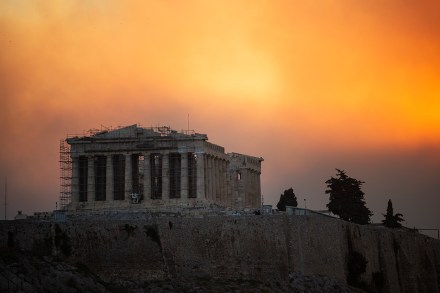
Grand tours When was there last a genuine British royal tour of Colombia? While the late Queen never visited the country, the then Prince Charles and Duchess of Cornwall spent several days there in October and November 2014. They visited the Peace and Reconciliation Centre in Bogota, and Charles attended a conference on the ‘Health of the Oceans’. The last working royal to visit was Sophie, Duchess of Edinburgh, last November, when she attended United Nations events tackling violence against women and girls. Burning question Which European countries are most affected by forest fires? Average percentage of land area burned each year: Portugal 1.02 Greece 0.38 Cyprus 0.3 Croatia 0.24 Italy 0.19 Spain 0.16 Bulgaria, Romania 0.

The three most radical words Jesus said

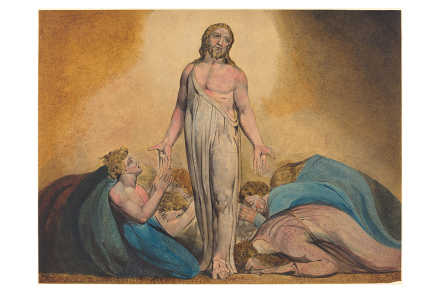
Some Jewish friends recently asked me: ‘What is Good Friday?’ At first, they said, they had thought it was so called because of the peace agreement signed in Northern Ireland in 1998. Then they had learnt that it was a Christian thing, but they weren’t sure what. They wanted to know why it was ‘Good’. This put me to the test. You cannot explain anything about Christianity without paradox. It was Good, I hazarded, because it was bad: Jesus had to die to rise. My friends were scrupulously polite, but I thought I detected increasing perplexity. Many films of Christ’s Passion have been made, but all from a more or less Christian point of view. The film I should love to see would be one made through the eyes of a practising Jew.

King Charles’s cancer and the future

From our US edition

On September 23, 1951, King George VI was operated on for cancer. It was a grueling, dangerous procedure, conducted at Buckingham Palace by Clement Price Thomas, a leading chest surgeon. The king, unsurprisingly, was miserable at the idea, saying, “if it’s going to help me get well again, I don’t mind, but the very idea of the surgeon’s knife again is hell.” Yet he was kept unaware of the seriousness of his illness, instead being informed that the cause of his health problem was nothing more urgent than obstruction in one of his bronchial tubes, which would require a “resection” of the lung, and that it would cure the “pneumonitis” that he believed he was suffering from.

Charles

How the BBC scapegoated Martin Bashir

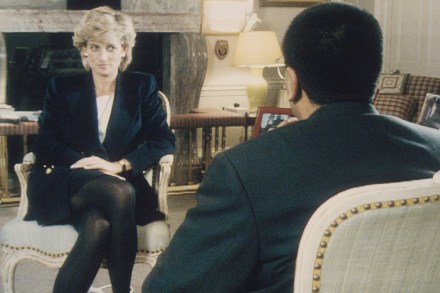
I have become rather obsessed with Martin Bashir and his downfall. Three years ago, I began researching for a play based around his infamous 1995 Panorama interview with Diana, Princess of Wales, which he secured by forging bank statements and reinforcing her belief that there was an Establishment conspiracy against her. When I started writing I thought I would soon understand him. But he still baffles me. When we corresponded recently via email, he suggested playing himself on stage or, failing that, what about Idris Elba? I couldn’t tell if he was joking.   I knew Bashir pretty well back in the day. We were fellow reporters at the BBC and ITV for 13 years. He even joined my covers band Surf’n’Turf on percussion, and very good he was too.

Modest fun: Red, White & Royal Blue reviewed

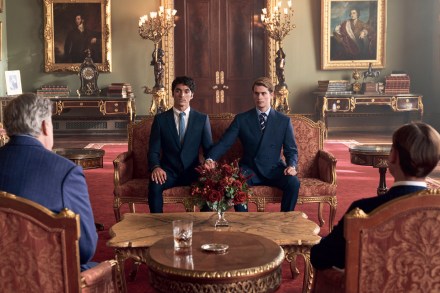
Red, White & Royal Blue is a rom-com based on the LGBT bestselling novel by Casey McQuiston. Nope, me neither, but the New York Times reviewed it as ‘a brilliant, wonderful book’ and on Amazon UK it has garnered nearly 44,000 reviews, with an average of 4.5 stars, so let’s not be hasty. The romance here is between ‘America’s First Son and the Prince of Wales’, says the blurb, which does sound juicy, and it’s not a YA (Young Adult) novel but an NA (New Adult) one, apparently, aimed at a slightly older audience. I did consider reading it so that I could say this isn’t as good as the book, as is standard in these instances, but then realised that as an OA (Old Adult) life is too (frighteningly) short and I couldn’t be bothered. But my best guess? Not as good as the book.

Flavour of the month: July – cycling, chocolate and an Isle of Wight invasion

In a new monthly series, Spectator Life will be bringing you facts, stories and items of general wonderment associated with the month ahead. Welcome to July – where we learn what ‘Twix’ is short for, why England’s World Cup-winning footballers painted white stripes on to their boots and how many times Charles and Diana met before their wedding… 1 July 1903: The first ever Tour de France gets under way. If you think the race has had its controversies in recent times, you should have seen it in the early years. Competitors sometimes had themselves towed along by cars, or simply got into the car for a lift. Others took the train.

The king and queen who saved the British monarchy

From our US edition

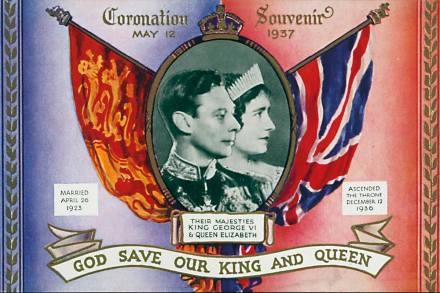
In some ways, the world of George VI and his consort Elizabeth, the future Queen Mother, from 1936-52 was very different from how we envision that of today’s British royal family; its rituals seem to belong to an era of Jurassic antiquity. In George’s day, Britain was still a global power, and its monarch ruled over both an empire and an elaborate court system with a “Page of the Backstairs” and a “Yeoman of the Pantry” — not to mention a fully staffed, oceangoing yacht — at his disposal. His coronation in May 1937 was as protracted as that of any maharajah. The Edwardian braid and sashes on display during more recent military pageantry look sadly Ruritanian by comparison. In other ways, their lives resonate more clearly with our own.

George queen

Harry and Meghan claim near-fatal ‘car chase’ through traffic-heavy NYC streets

From our US edition

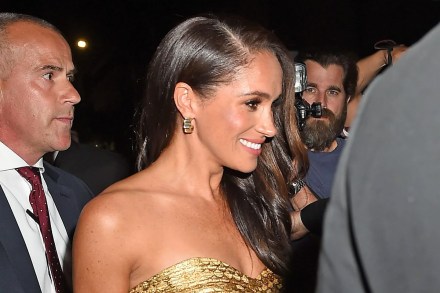
Prince Harry and Meghan Markle were followed by paparazzi in a "near catastrophic" car chase Tuesday night in New York City, according to a statement from the couple's spokesperson. "Last night, the Duke and Duchess of Sussex and Ms. Ragland [Markle's mother] were involved in a near catastrophic car chase at the hands of a ring of highly aggressive paparazzi," the spokesperson said. "The relentless pursuit, lasting over two hours, resulted in multiple near collisions involving other drivers on the road, pedestrians and two NYPD officers." https://twitter.com/chrisshipitv/status/1658844017918869510 The incident supposedly occurred as Harry and Meghan were leaving the Ms. Foundation for Women gala at the Ziegfeld Ballroom in Midtown.

car chase

Portrait of the week: Coronation protests, new powers for pharmacists and Labour gains ground

Home The day after the coronation, 20,000 attended a concert in Windsor Castle, including the King and Queen. ‘As my grandmother said when she was crowned, coronations are a declaration of our hopes for the future,’ said the Prince of Wales in a speech to the crowd. ‘And I know she’s up there, fondly keeping an eye on us. She would be a proud mother.’ His brother, the Duke of Sussex, had witnessed the coronation from the third row, and left for his family in America immediately after. On television, 20.4 million had seen the King crowned. The Metropolitan Police arrested 64 people, 13 to ‘prevent a breach of the peace’, charging four, two of them for the possession of Class A drugs.

Sorry Harry, I’m the real media intrusion victim

What an emotional wringer the royal family has put us through in the past two years, from the sadness of Prince Philip’s death to the joyful Platinum Jubilee, then Queen Elizabeth II’s own extraordinarily moving funeral, and now the coronation of her son. I’ve felt so privileged to have been at Buckingham Palace for the last three events, anchoring Fox News coverage in America. After we came off air on Saturday, I mused with my two US co-presenters about what may be the next major royal occasion: a wedding, a funeral, a silver jubilee (Charles would have to live as long as his grandmother for that to happen)? Or God forbid, will the British monarchy itself be terminally contaminated by the increasingly pungent whiff of republicanism sweeping the Commonwealth?

What happens when coronations go awry

Despite weeks of preparation and rehearsal, coronations don’t always go according to plan. Indeed, a botched coronation or one plagued by misfortune can be taken by the superstitious as a poor augury for coming reigns – sometimes justifiably. Case in point: the celebrations of Tsar Nicholas II and Alexandra Feodorovna in Moscow’s Dormition Cathedral on 14 May 1896. While the hours-long ceremony for the last Tsar and Tsarina went off without a hitch, the following national holiday and public feast in Khodynka Field led to a stampede where at least 1,300 died and 1,300 more were left with serious injuries. The cause?

In praise of minor royals

On a scaffold hung with black cloth, on a freezing January day in 1649, the instinct for sumptuousness died in these islands. It was killed alongside Charles I, kingly excess and belief in divine right and, with intermittent exceptions, has never recovered. And so when, time and again since September, we’ve heard about our new King’s plans for downsizing the monarchy, the bulk of the population has calmly nodded its assent. Trim, slim, streamline, skimp. Time to dispense with peripheral royal family members! Farewell to the jostling chorus line of the Buckingham Palace balcony of yesteryear, all oversized hats, Ruritanian frippery and excitable small children! Away with the hangers-on!

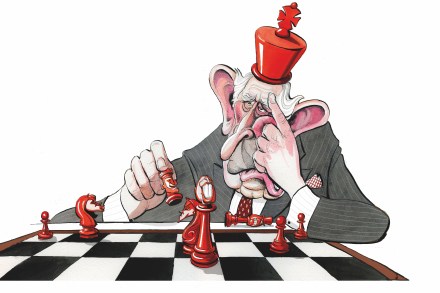
Charles III is fighting for the monarchy’s life

From our US edition

On September 10, 1946, British foreign secretary Ernest Bevin remarked, “kings are pretty cheap these days.” His comment was directed at the displaced monarchs who floated, dispossessed, around Europe, but it might also have been a dig at the ailing king George VI, who had found his métier in wartime but struggled to regain it afterwards. Less than six years after Bevin’s comment, the king died and Elizabeth II assumed the throne, leading to an unprecedented period of monarchical duration, stability and popularity. Yet after her own death last September, at the age of ninety-six, and the subsequent accession of her son, Bevin’s statement has assumed new and unlooked-for relevance.

Charles

Lessons for Meghan from Fergie

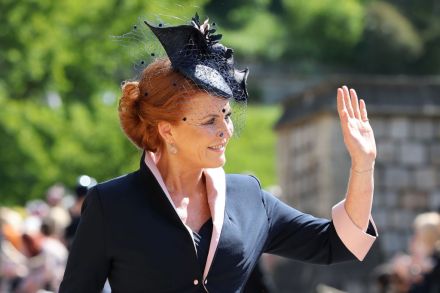
Before the Sussexes – before the Grabdication was a twinkle in Meghan’s crocodile eye – there was Sarah, Duchess of York; greedy, grasping, grubby Fergie. Some see Diana as when the stiff upper lip of heritage royalty became the trembling lower lip of the new breed. But the Princess of Wales was a teenage virgin with a headful of dreams lured into a marriage in which she was a breeding machine with a man who was still in love with his ex; this would have made any woman with spirit react. No, Diana was a hard worker with an attractive dash of spite – that revenge dress, that three-in-this-marriage quip – which stopped her from presenting herself as an all-round victim.

Is this Britain’s most historic house?

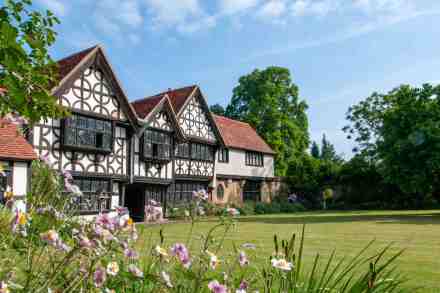
Hyperbole in estate agents’ brochures isn’t unusual – but when it comes to a write-up for Great Tangley Manor, which has gone on the market for £8.95 million, overkill is almost impossible. Believed to be the UK’s oldest continuously inhabited property – its Saxon foundations date from 1016 – the Grade I-listed moated manor house, in the village of Wonersh in the Surrey Hills Area of Outstanding Natural Beauty, comes with an extraordinary roll call of associated famous names. From the spheres of royalty, art, literature, garden design and even America’s Gilded Age, all have played their part in shaping secluded Great Tangley into a country house with a compelling story.

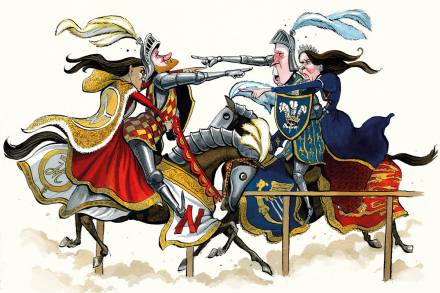
In defence of Prince Harry’s necklace

The revelation that Prince Willy allegedly broke Prince Harold’s necklace in a fight shows how unshockable we’ve become when it comes to Harry and Meghan drama. Because my main question after this particular episode isn’t about press standards or dysfunction in the royal family – it’s ‘why was he wearing a necklace?’. When I was a child, my mother would impress upon my brother, sister and me the importance of not being seen to do or wear anything that could be regarded as ‘naff’. Tattoos and earrings or necklaces (on men) were all deemed especially naff. As a result, between the three of us we have 12 tattoos at the last count. I also have an earring and a necklace.   Yet men’s necklaces are not as nouveau as my mother feared.

My advice to Harry and William

Reading about the latest about the pathetic-sounding scuffle between Prince Harry and his older brother, I think I could tell the pair a thing or two about fraternal enmity. My older brother, another Harry, and I have not spoken to each other in more than 30 years. He was taller, blond and looked Germanic. I was shorter, brown-haired and looked Greek. He never made it at school, whereas I collected lots and lots of sporting trophies. My father named him an executive in his shipping companies, I was the odd man out. Harry had the largest house in the Hamptons and the poshest apartment in New York, whereas I sort of lived a gypsy life. Harry was not athletic, I excelled in sports and represented Greece in three of them.

The power of the royal Christmas message

Today, shortly before 3 p.m., there will be a collective heave as backsides – weighed down from turkey and roast potatoes – are prised from dining chairs and plonked on to sofas to tune into the King’s speech. So I very much hope. For the royal Christmas broadcast is important, and this year’s of course marks a new era. This afternoon our televisions will bring us not only the first Christmas message from the new King, but indeed the first from any King. For while the tradition of the Christmas message began in 1932 under King George V, the first Christmas broadcast to be televised was not until 1957, and that of course was by Queen Elizabeth II.

The King’s speech

How the royals do Cornwall

There was arguably no better advocate for holidaying in Britain than Queen Elizabeth II. Her Majesty loved to spend her summers in Scotland, having stayed at Balmoral each August since she was a girl. But could the next generation of royals favour the warmer climes of Cornwall over chilly Scotland? It certainly seems so. After Charles became King, William inherited the Duchy of Cornwall estate from his father. Not only is he now responsible for the Duchy’s extensive portfolio of Cornish property and farmland but he also inherits the 500-year-old Restormel Manor in the heart of Cornwall. Situated only a few miles from the house that inspired Daphne Du Maurier’s Rebecca, it frequently hosted King Charles and the Queen Consort during their annual tour of the region.

The empty eco-activism of renting clothes

From time to time my Instagram algorithm will taunt me with a dress. It is – unequivocally ­– the most beautiful dress I’ve ever seen. Satin, emerald green, halter-neck. The dress retails for about £200, and is always sold out in my size. The ad that Instagram teases me with is for a rental, which you can pick up for £73. This is the latest fad in so-called eco-activism. Rent a dress for an astonishing amount – usually a dress that’s sold out or difficult to track down – and you will save the world! Fighting back against the mortal sin that is fast-fashion. The trend is so popular now that even the monarchy is getting involved. At the recent Earthshot Awards in Boston, Catherine, Princess of Wales, wore a bright-green, rented Solace London dress.