Putin

My one-way ticket out of Moscow

Things fall apart. Moscow friends call to say that I have to urgently send my 19-year-old son out of Russia. He is travelling on his Russian passport and a new law says that he is obliged to register for the military draft. Nikita is on a gap year working at a Moscow theatre and he begs not to be sent away. I dismiss the warnings. A day later, a friend’s nanny shows up at our door and hands me an inch-thick packet of high-denomination euros to take out of the country for her employer. The money’s owner is already en route to Israel on a private jet. I overrule my son and open up Skyscanner. Europe, the US and Canada have closed their airspace to Russian planes and the Kremlin has reciprocated. Istanbul is the only European destination still accepting flights from Moscow.

The myth that Russia and Ukraine are fighting over

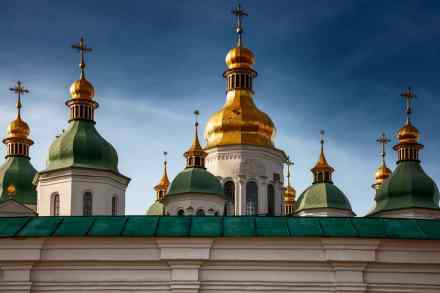
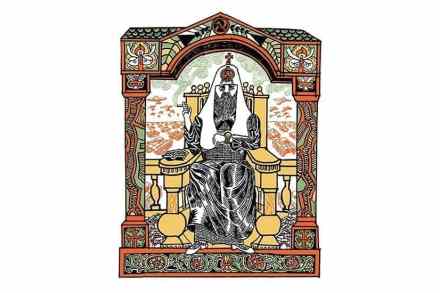
It seems strange now that any of us ever imagined that Putin might not invade. He thinks of Ukraine as rightfully Russia’s, heart, mind and soul. It’s there in that essay he wrote last year: Russians and Ukrainians are ‘one people’, he said, meaning not that they’re brothers so much as that Ukrainians have no right to a separate identity. And I wonder whether, in attempting to take Kiev, he isn’t also trying to lay final claim to the founding myth that Russia and Ukraine fight over and both think of as their own. Kiev is the setting for the epic tale of Kievan Rus, the first great Slavic state founded in the 900s by enterprising Viking Swedes. Putin clearly identifies with its warlord saint, Vladimir the Great.

What Tacitus knew about tyrants

Last week Aristotle offered a lesson in tyrant theory. This week Tacitus (ad 56-c.120) offers one in tyrant practice. Tacitus was a Roman historian who enjoyed a successful political career, rising to consul and provincial governor. He admitted that he laid its foundations under the tyrannical emperor Domitian (d. ad 96) – he memorably contrasted Domitian’s red face with the pallor his gaze induced in his victims – and thought his duty as a historian was to ensure that those responsible for murderous deeds or heroic actions should never be forgotten. His judgment of Domitian’s reign was worthy of Orwell: ‘Rome of old [i.e.

The courage on Ukraine’s front line

Central to the question of whether or not Ukraine can survive as an independent state is that of re-supply, not just of drones and anti-tank weaponry but also of food, especially if the conflict lasts for months or even years. The vast agricultural centre of the country is not being seeded, with potentially catastrophic consequences. Nato governments are providing lethal weapons and other aid, of course, but from what I have just seen in Berehove in western Ukraine there is another very heartening sign. For there is a large underground network of private, non-governmental groups – largely based on Christian groups with long-established family connections – that is transporting huge amounts of food and other non-lethal supplies into Ukraine.

Putin is bored

At the beginning of this year, Vladimir Putin was sitting comfortably in the Kremlin: his legacy so far a steady leader who had saved his people from the helter-skelter of robber capitalism in the 1990s and given them a modicum of stability and pride. He must have known that if he waged war on a country of 45 million brother Slavs, he risked losing it all. Liberty and life are now less certain. So why did he do it? Having spent four years in Moscow and more than two decades of Russia-watching, I have never believed that Putin was a chess grandmaster. While his apologists in the West lauded his cunning, I have always seen him as an improviser. Like the best at his favourite sport – judo – he prepares for combat, studies his opponent, and considers various eventualities.

The nuclear bunker market is booming

As the spectre of nuclear war returns so does another very modern phenomenon: a spike in interest amongst the paranoid rich seeking to procure their own nuclear bunker. Over in Texas – already home to a vibrant culture of ‘preppers’ who spend their time planning for every shade of apocalypse – one creator of custom shelters, Rising S Bunkers, says it’s had a 700pc increase in interest in the last month. Made from long-lasting plate steel, their bunkers are designed to be buried under the average American yard. Of the five units sold last month, the largest fetched $240,000.

Is Russia Today finished?

As the British authorities debate whether to ban the propaganda channel of a savage imperialist power, Russia Today is making a decent first of banning itself. Workers have been walking out for a week. The invasion was too much even for staffers who had spent years demeaning themselves by licking the boots of a dictatorship. Even if Sky and YouTube had not effectively closed the channel by pulling it from their platforms, RT would have faced extreme difficulty in continuing to broadcast from London, one ex-staffer told me. About half his former colleagues had quit, including large numbers of production staff the Russians needed to keep the channel on air. One had a Ukrainian family and was sick at the slaughter his paymasters had unleashed on his relatives.

What does it mean to go ‘full tonto’?

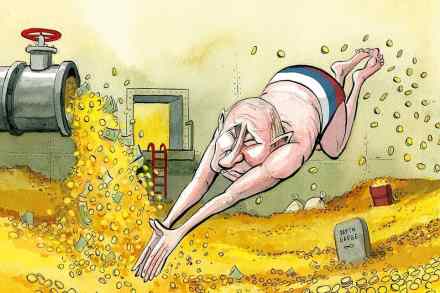
The wild one Defence Secretary Ben Wallace said that Vladimir Putin had gone ‘full tonto’. The word tonto is used in Spanish for ‘stupid’ or ‘foolish’, but one of its suggested origins has a meaning which would perhaps go down better with Putin himself. Tonto was used by Apache Indians as a term for the Western Apaches – mean ‘wild ones’. It went on to become the name of a native-American character in the 1930s radio show The Lone Ranger – later a TV series. The colour of money What will sanctions on the Russian economy mean?

The free world’s new reality

We are about to see brutality in Europe on a scale that will be almost beyond our comprehension. Russia is turning to increasingly indiscriminate bombardment of Ukraine to try to achieve its aims after the failure of its initial military strategy. Vladimir Putin’s invasion has shattered the old belief that the era of wars between European nation states was over because the consequences were simply too grim. The policy of sanctions as a deterrent failed. The assumptions that have driven European geopolitics for a generation are changing before our eyes. Nowhere is this shift more dramatic than in Germany. After reunification, the country’s defence spending plummeted and for decades subsequent governments rejected requests from allies to spend more on military.

The return of Actual Badness

In the spring of 2020, I advanced an abnormally hopeful proposition: that one blessing that might arise from a pandemic with otherwise few redeeming features was a cultural sobering-up. Maybe we’d regain a sense of perspective about the trivial non-problems of identity politics once finally faced with a proper problem. Boy, was I wrong. Instead, what proved a relatively mild disease, in the big, smallpoxian picture, fostered an even greater frenzy of ineffectual pettiness – park benches wrapped with police tape, government edicts about Scotch eggs, fisticuffs in supermarkets over thin, gap-prone facial napkins.

What the right gets wrong about Putin

A fracture on the international right may seem small fry given everything that is going on right now. But it is worth loitering over. Because in recent years an interesting divide has grown among conservatives on both sides of the Atlantic. On one side are the Cold War warriors and their successors who have continued to view Vladimir Putin’s Russia as a strategic threat. Meanwhile, a new generation has arrived at a different view. While the West has deranged itself with assaults on its own history, on biology and much more, an assortment of conservatives have come to see Putin as some kind of counterweight. A bulwark – even an admirable corrective – to the madness of our own societies.

The complicated business of swearing in Ukrainian

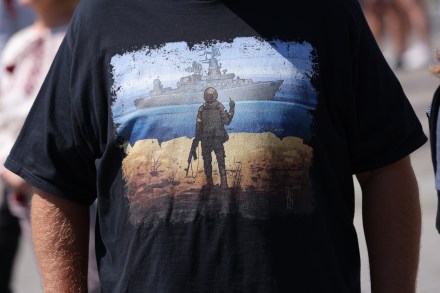
‘This will interest you,’ said my husband, looking up from the smeared screen of his telephone. For once he was right. It was a Twitter post about a memorable remark during the invasion of Ukraine. Snake Island is a small, bare outpost in the Black Sea near the Danube Delta. When a Russian cruiser invited the Ukrainian soldiers stationed there to surrender, they replied, ‘Йди на хуй’, transliterated as ‘Idi na khuy’. The point of the tweet was that their remark had been translated in a rather American way as ‘Go fuck yourself’, and a more idiomatic version in British English would be ‘Fuck off’. I agree, though it is not that simple.

Nuclear war, magic mushrooms and a teenage trip I’ll never forget

Vladimir Putin’s decision on Sunday to put his ‘deterrence forces’ – code for nuclear weapons – in a high state of readiness revived a fear in me that I haven’t experienced since the fall of the Berlin Wall. As someone who spent his teenage years during the Cold War, the threat of nuclear war was never very far from my mind. Indeed, one of the biggest political battles back then was between unilateralists and multilateralists and I was firmly in the latter camp, even starting a local anti-CND group called ‘A Sensible Approach to Nuclear Questions’. But the two sides were united in their fear of Armageddon, only disagreeing about the best way to avoid it. Peak anxiety for me occurred in 1980.

Does Putin pass Aristotle’s tyrant test?

Is Putin a tyrant? Aristotle (384-322 bc) might well have thought so. Seeing the turannos as a deviant type of king, Aristotle tested the distinction under four headings. Was he subject to the law? Did he rule for a set term, or for ever? Was he elected? And did he rule over willing subjects? We may judge Aristotle’s answer from the image he drew of the tyrant as a master of slaves who, knowing that his subjects hated him, did everything in his power to ensure they were incapable of moving against him. First, therefore, the tyrant stamped on anyone exhibiting the slightest independence of mind, since ‘the man who rivals the tyrant’s pride and spirit of freedom robs the tyrant of his position of mastery, undermining his authority’.

Putin’s rage: the Russian President won’t be easy to topple

 Moscow How will Vladimir Putin’s hold on power end? Will he be quietly retired by Kremlin rivals angry at a national humiliation, like Nikita Khrushchev after the debacle of the Cuban missile crisis? Deposed by KGB men even more hawkish than himself, like Mikhail Gorbachev? Overthrown by a popular revolt, like Tsar Nicholas II? Or will he die in his bed still the undisputed tyrant of a police state, like Joseph Stalin? Prediction has become a risky business in Russia ever since Putin threw his usual calculation and caution to the wind and launched a rash and fundamentally unwinnable war against Ukraine.

In Lviv, the mood is inspiring – and fanatical

Lviv, Ukraine On the Ukrainian side of the Polish border, near a place called Shehyni where the refugee crisis is brewing, an old black man approaches us. ‘Am I in Moldova?’ he asks gently in French, pointing to the fence. ‘No,’ I tell him. ‘That’s Poland.’ Moldova is 250 miles away. The man shrugs and returns to the endless queue of North African migrants. Several young men tell us that they have been there for four days waiting to cross. The Ukrainian guards hold baseball bats. British newspapers have reported ‘shocking racism’ at the border, and of course it is easier to get into Poland if you have a European or British passport and white skin. Yet we witness no ill-behaviour. It’s just a very cruel situation.

Letters: How the UK should respond to Russia

Soft options Sir: In relation to strengthening the impact of the Russian sanctions package (‘Tsar Vladimir’, 26 February), please may I suggest three enhancements? Firstly, to encourage the UK’s Dependencies, such as the British Virgin Islands, to enforce the UK’s sanctions on the government target list of Russian criminals who are operating within their corporate jurisdiction. Secondly, to define the Russian state, Putin and his cronies, as terrorists, much like the members of Islamic State. This is appropriate and proportional, and will enable institutions in the City, and elsewhere, to treat the Russians accordingly.

At least BP and Shell tried to teach Russia true capitalism

BP will offload the 20 per cent stake in Rosneft, the Kremlin-controlled energy giant, that is the residue of 25 years’ effort to teach true capitalism in Russia. Shell is ditching a deal with Gazprom, the other state oil and gas major, that includes participation in the stalled Nord Stream 2 gas pipeline to Europe and an LNG project at Sakhalin in the Russian far east. Western companies in many other sectors will abandon their footholds in Putin’s empire in the coming days. Russia’s one-generation dalliance with the western way of business – as opposed to lawless homegrown kleptocracy – is over. But just because Rosneft pays handsome dividends, let’s not vilify BP (or Shell) for trying.