Politics

What really happened to Politics For All

On 2 January I woke up late to the sound of my phone buzzing continuously and a sense that something had gone badly wrong. The first message was from a friend. ‘Having a nice holiday?’ he wrote, above a screenshot of my political Twitter account covered in block letters: ‘Suspended.’ My reaction was to swear in just the way my dad does whenever he crashes his car. Politics For All was a news aggregation service I started two years ago when I was 17. It took the most salient lines from news articles and posted them across social media, always pointing readers to the original publication. The aim was to engage a younger audience in politics by summarising stories in a more accessible way.

Robert Harris on Boris Johnson, cancel culture and rehabilitating Chamberlain

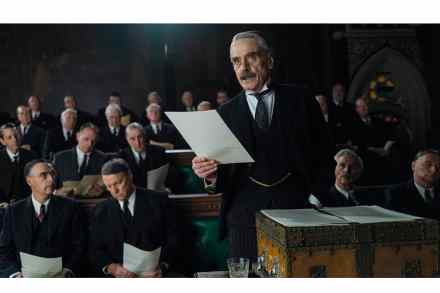
Robert Harris has long been on a one-man crusade to reverse history’s negative verdict on the architect of appeasement. He argues that it was Neville Chamberlain’s duty to go the extra mile for peace and give Britain the moral authority to fight Hitler in the second world war. ‘There seems to be a general feeling that he couldn’t have done much else. He bought us precious time.’ Now the appearance of an acclaimed Anglo-German Netflix film Munich — The Edge of War, starring Jeremy Irons as Chamberlain, and based on Harris’s 2017 novel Munich, gives him the chance to bring his quixotic campaign to a mass audience.

I’m sharing my boyfriend with 60,000 other people

I fell in love with a social media influencer. I could say there are three people in our relationship but I’d be lying. There are 63,423. Imagine a world in which your partner’s private life is his professional life: with thousands of fawning acolytes all vying for his approval, all competing for online traction — a traction that comes from your other half’s thumbs. His fingers hover over the phone rather a lot, giving updates into whatever he’s up to. It’s a little disconcerting. Life with an influencer can be challenging. Every trip must be documented, every meal photographed prior to consumption.

Labour MP Jack Dromey dies, aged 73

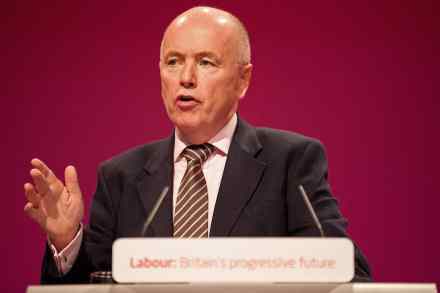
Jack Dromey, who has died today aged 73, was a Labour MP, a trade unionist and a campaigner. He was extremely well-liked across the House of Commons: something that those who didn't know him will have noticed immediately in the shocked tributes that have been pouring in from Westminster figures. He was a good MP, one with a clear set of political beliefs but who never let them stop him from working with those he disagreed with. He formed firm friendships with many MPs on the other side of the house, which is not something every member manages.

The Colston verdict is the triumph of values, not law

The verdict is in on the case of the Colston statue in Bristol. Not guilty. Every one of the accused is innocent. And I mean that: everyone is innocent until proven guilty. If found not guilty, they must — at all times — have retained their innocence. But something feels wrong. Eminent lawyers have described the verdict as both absurd and perverse. In the UK we ‘relate’ to law. We aren’t taught it in schools. Our parents, teachers, instead introduce it to us by osmosis. We have a feel for it, a grasp of it. We might have felt we knew what criminal damage was, and we might have felt that pulling down a statue was wrong. That turns out to be an error.

Rayner hits Johnson where it hurts

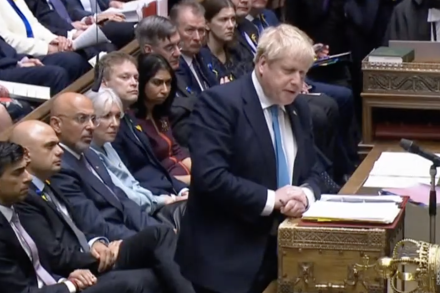
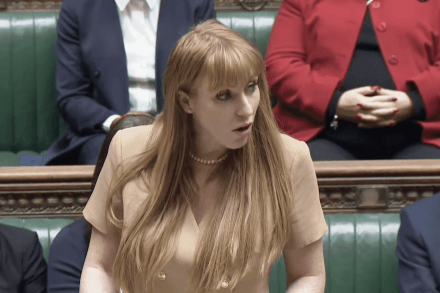
The first PMQs of the year gave us a preview of the political debate we’ll be having for the next few months. Labour went after the government on inflation. Angela Rayner asked Boris Johnson why he had dismissed fears over it as unfounded back in October: Johnson denied he had said it — which is an odd claim given what he said in that interview. She then punched the Tory bruise, by asking why Johnson wasn’t cutting VAT on fuel, as he had said he would do during the EU referendum. Johnson made the point that this help wouldn’t be well targeted, which is true. But the political pressure for this from Labour and his own backbenchers are going to make it very hard for him to resist.

Why should I be ‘cancelled’ for arguing that biological sex is real?

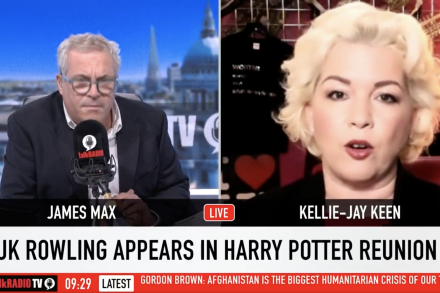
‘I just get the impression she hates men’, said a wound-licking James Max, on TalkRADIO, after he interviewed me on Wednesday. It’s a familiar accusation from those who fail to drum up rational arguments for the destruction of women’s rights. Max is currently filling in for Julia Hartley-Brewer this week on the station, which is a self-styled ‘home of free speech’ radio and TV station. In our interview, which lasted less than ten minutes and in which I appeared under my real name, Max offered a masterclass in how to ignore women’s concerns and centre men’s feelings above all. The tone was set when Max tried to link the views of J.K.

British horse racing’s debt to the Middle East

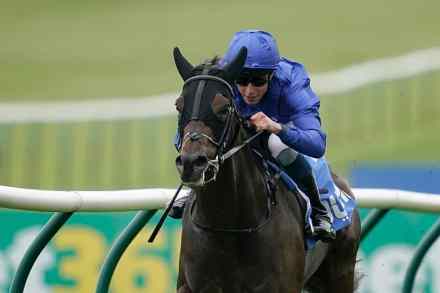
A joyful Saturday at Ascot recently reminded me that when the old Hurst Park Racecourse (near Hampton Court Palace) closed to become a Wates housing estate, the turf was taken to Ascot to form the basis of the jumping track then being established there. It was living beside Hurst Park — where the seven-furlong start abutted the Thameside Upper Deck swimming pool and jockeys focused on bikini-clad local lovelies sometimes missed the off — that turned me in my boyhood into a racing enthusiast, standing on the saddle of my bike perched against the boundary fence to watch the horses flash by or goggling at Prince Monolulu in his headdress flogging tips outside the front gate.

Richard Needham takes a businesslike attitude to the Troubles

This memoir from Sir Richard Needham, 6th Earl of Kilmorey, businessman and former Northern Ireland minister, has a frank opening: ‘I came from a family of barely solvent aristocrats, who distrusted trade and despised politics. For some inexplicable reason, however, I had always been fascinated by both.’ Although generations of Needhams before him had ‘uneventful’ military careers, at 15 Richard decided upon an alternative plan: ‘I would first make some money, and then enter politics and change the world.’ What follows is the tale of how that scheme played out. The literary quality of political diaries can be hit and miss; but Needham is a skilled storyteller, who can deftly sketch a character or situation in a few pithy phrases.

Frustration grows with Boris, but the social care cap passes

MPs have approved the government’s social care cap in the Commons. But the vote doing so was narrow, and there seem to have been a lot of Conservative MPs either abstaining (which would be a rebellion against a three-line whip) or absent. Some will have been unwell, and ‘slipped’, as it is known, for other reasons. But some may have agreed with the whips that their car was due to break down or a tooth due to need emergency dental work, thus preventing them from voting against this controversial amendment.

In praise of Stonewall

This morning saw a profound breakthrough in the trans debate. I say that on the basis of an interview Nancy Kelley, Stonewall's CEO, did with the BBC’s Emma Barnett on Woman’s Hour.  What’s important is not really anything that Kelley said, though some of that was indeed interesting and I’ll come to it in a second. What matters is that the interview took place at all, since that constitutes a significant shift in the way Stonewall does its work. Stonewall's instinct has been to largely avoid mainstream media and other political debates about its work on trans issues that is now its primary focus.

Johnson’s liaison committee skewering

Boris Johnson didn't enjoy his two hours in front of the Liaison Committee this afternoon, and not just because he was asked repeatedly about his handling of the Tory sleaze row. He also struggled with questions about what his government was up to more generally, and appeared at times exasperated with the select committee chairs who asked them. Having spent the past couple of months riffing on Kermit the Frog's mantra that ‘it's not that easy being green’, it seemed Johnson was starting to realise that it's also not that easy being Prime Minister. There is just so much to do, after all.

The best podcasts about money

Stories about money are never about money. They are about pain, about family, about atrocity, about luck, about health, about politics. And while we get a kind of vicarious thrill from listening to other people’s financial tales of woe, whether we are morally condemning a millennial for buying a daily flat white when she could be putting that $3 into a savings account that earns zero interest in the hopes that the city she lives in won’t be underwater from rising sea levels by the time she has enough for a deposit or just feeling gratitude that we are better off than the poor shmuck explaining their hundreds of thousands of dollars in student debt, rarely are these stories allowed to be as complex as their situations truly are.

Is Laura Kuenssberg leaving Westminster?

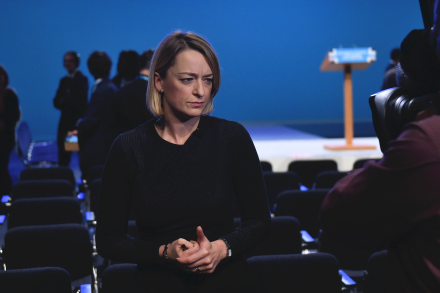
Is Laura Kuenssberg’s time as BBC political editor coming to an end? That’s the suggestion tonight after the Guardian reported she is in talks to step down from the role and move to a plum gig hosting the Today programme.  Rumours of Kuenssberg’s impending departure have been circulating around Westminster for some time now to little avail. But this time it is being talked up as part of a wider shake up of the Beeb’s lead presenters, with Jon Sopel recently announcing he is ending his US beat and returning to the UK. Rumours of Kuenssberg’s impending departure have been circulating around Westminster for some time now Kuenssberg’s time in the role has not exactly been smooth sailing.

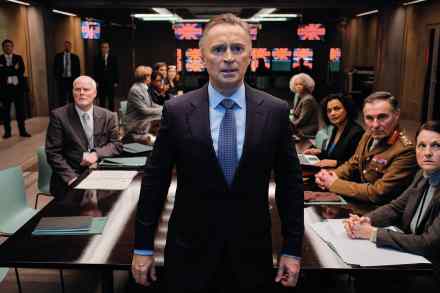
‘You should see some of the other scripts that come through’: Robert Carlyle interviewed

‘I always feel slightly sick when I hear actors talking politics,’ says Robert Carlyle — that polished Glaswegian burr sounding no less arresting over a slightly patchy Zoom connection. ‘I mean we’re all entitled to an opinion,’ he continues, sounding for a second as though he might be about to opt for a more diplomatic track. ‘I just find that too many actors find it difficult to get theirs across without sounding like a twat.’ It’s a fair point, you might think. But for Carlyle, it’s also been a good professional move. Reflecting on his career, he credits this aversion to mouthing off with inspiring his long-term commitment to keeping his head down.

I was on the floor in ’74

From our US edition

Canadian schlockmeister Bryan Adams, born within a fortnight of yours truly, waxed profitably wistful over his Summer of ’69, but I shall extol, for rather less remuneration, the Autumn of ’74. The goad is my editing of the newly published Congressional Journal of Barber B. Conable, Jr., 1968-1984. I was honored to undertake the task; the late Mr Conable, with whom I became friends, is without question the greatest public man to hail from our boondock. Selected on different occasions as the most respected member of the House of Representatives, the Republican Conable had among his many quirks a refusal to accept campaign contributions greater than $50.

conable

David Amess was killed doing one of the most crucial parts of an MP’s job

Sir David Amess was killed in the line of duty. He was doing one of the most important – and vulnerable – parts of an MP’s job, and he was killed while doing it. Most of the week, MPs go to work in a palace under armed guard. They live in houses with CCTV, panic alarms and rapid police response mechanisms in case of trouble. These measures have gradually been added to their lives as the perceived threat has increased. But in just over a decade, three serious attacks against MPs have taken place in the one place where they lack such security: their constituency surgeries. Stephen Timms was stabbed at his surgery in 2010. Jo Cox was murdered leaving hers five years ago. Today, Amess was killed at his.

Priti Patel strikes a bullish tone

The theme of Priti Patel's party conference speech this afternoon was very much 'large and in charge'. She devoted much of her address to talking about the immigration system, as you'd expect, promising stronger crackdowns on people being smuggled across the Channel in boats. Patel focused on the Vote Leave favourite: taking back control Whereas Boris Johnson and Michael Gove have talked about Britain 'voting for change' in 2016, Patel focused on the Vote Leave favourite: taking back control. She told the conference hall this was the key theme of her reforms to immigration, saying: 'My new plan for immigration is already making its way through parliament. At the heart of this plan is a simple principle. Control. That is not unreasonable.

Starmer’s speech will go down as a success

Keir Starmer gave a very long speech on the final day of Labour conference. It lasted an hour and a half, and had 17 standing ovations. But it will largely be remembered as the speech in which the Labour leader was repeatedly heckled by the hard left. https://www.youtube.com/watch?v=5s3sTVv6cNA These heckles worked hugely in his favour and made the speech all the better. Those shouting from the conference floor largely chose to do so at very inappropriate moments, including when he was talking about his mother being seriously ill in intensive care.  The heckles worked hugely in his favour and made the speech all the better Many other delegates turned on the woman who repeatedly shouted about the need for a £15-an-hour minimum wage, shouting ‘shhh!

Starmer is playing a risky game with the Labour left

Keir Starmer is a keen amateur footballer. It’s one of the few facts anyone knows about the Labour leader. He enjoys a game on his spare time, and on the campaign trail too. One person who played with him recently told me: ‘You can tell he plays a lot and takes it very seriously.’ What they couldn’t say was that he was very good at it. Starmer is currently trying to play a political game by changing the rules for Labour’s leadership elections. It’s a big and serious move as it would make it harder for the party to go left when it picks his successor. It is therefore a confrontation with the left that some in his camp see as Starmer’s Kinnock moment (more on this from Katy in this week’s magazine).