Politics

The case for theft-tanks

The Conservative party leadership contest is a milestone for diversity and inclusion. This time, we get to choose between someone who studied philosophy, politics and economics at Lincoln College, Oxford and someone who studied philosophy, politics and economics at Merton College, Oxford. I can barely contain my excitement. I find the very idea of an undergraduate degree in politics alarming. It is often seen in business that people who complete an MBA straight after university turn out to be spectacularly useless employees, and it’s possible that this unhappy pattern recurs in politics. The reason is simple: there is an order effect at work. It’s one thing to theorise on the basis of practice; quite another to practise on the basis of theory.

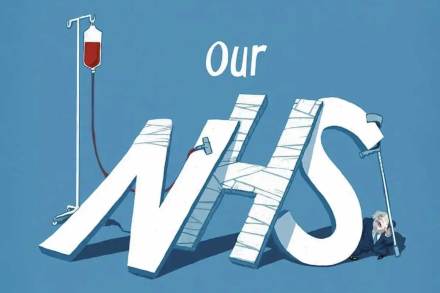
How to fix the NHS

That the NHS is in intensive care appears to be beyond doubt. The health service in England needs 12,000 doctors and 50,000 nurses and midwives, and waiting lists are expected to rise to 9.2 million by March 2024. The question now is what to do. It’s a question that has been asked before, and the answers have been poor. One more heave at reform, a task force here, a task force there, another few billion all over the place and all will be well, so the defenders of the NHS claim. What they overlook, however, is that there have been more than a dozen major reform programmes over the past 30 years, yet our health outcomes remain dismal.

Sunak and Truss make final two – as it happened

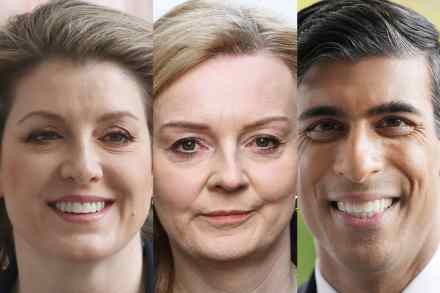
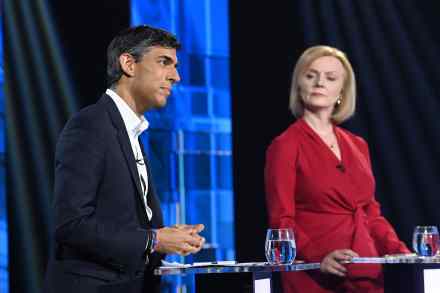
Britain's next Prime Minister will be either Rishi Sunak or Liz Truss. Refresh this page for the latest developments. 4.45 p.m. – Truss vs Sunak will be a philosophical war Kate Andrews writes... The Tory grassroots have got themselves a real economic debate this summer: Rishi Sunak’s ‘Thatcherite’ economic philosophy vs Liz Truss’s ‘Reaganite’ plans to boost growth. Both will have questions to answer. While Sunak’s line that ‘nothing comes for free’ is bound to resonate with Tory members, the tax burden has risen to a 72-year-high under his watch, as well as the introduction of a windfall tax on oil and gas companies that is very hard to explain within Conservative ideology.

Advice to my successor

Boris Johnson has vacated the office of Prime Minister for Liz Truss. Spectator readers may recall his handover notes from the last time he stepped down from one of the best jobs in the world. Read his final piece as The Spectator’s editor here (published 17 December 2005). It is an eternal and reassuring fact of human nature that when an editor announces that he is stepping down from a great publication, there is not the slightest interest in what he plans to do with his life, or even who he was. I have received many phone calls from friends and colleagues since announcing last Friday that this would be my last edition, and they only want to know one thing. ‘Who is taking over?’ I wish I knew myself.

The next PM must be ready for Putin

Westminster is understandably obsessed with the question of who makes the final two of the Tory leadership race, but today has also brought a reminder of the crises that the new Prime Minister will have to deal with from day one.  The European Commission is calling on all EU member states to cut gas use by 15 per cent to prepare for supply cuts from Russia through Nord Stream 1, which reopens tomorrow. With the pipeline only flowing at limited levels, and the heatwave leading to higher energy use than usual, Germany will not be able to lay in stores for the winter. This means that Vladimir Putin will constantly try and use energy as a weapon in the coming months, threatening to cut off supplies completely if the West does this or that in support of Ukraine.

The Conservative party has ceased to be serious

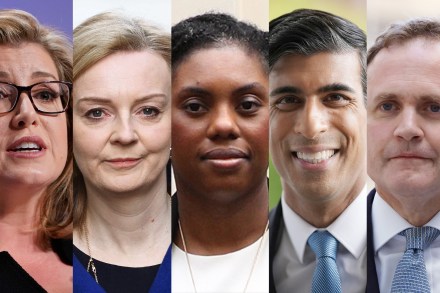
I’m not sure that the Conservative party wants to win elections. Tom Tugendhat was knocked out of the leadership contest on Monday, and Liz Truss is now the bookies’ favourite to be the next Prime Minister. Any party that thinks the latter beats the former cannot say it is serious. There are several reasons for Conservatives to ignore me on this topic. First, I’m not a Conservative. Second, Tugendhat and I are friends. Third, I take a view of party politics that seems to be utterly out of fashion these days. That view is that politics works better when parties try to win the other side’s votes. When Conservatives pursue Labour voters, the worst bits of right-wing conservatism are muted. When Labour woos Tory supporters, the worst bits of the left are sidelined.

The third Tory leadership ballot – as it happened

The results of the third round of MPs voting to be the next Tory leader are in.  8.55 p.m. Has the Penny dropped? James Forsyth writes... Penny Mordaunt had a mixed night this evening. Her lead over Liz Truss is still in double figures, but she actually polled one fewer vote than she had on Thursday. In her statement tonight she heaps praise on Tom Tugendhat, saying they ‘are both committed to a clean start for the party’ and lauding him as ‘one of the strongest assets on the Conservative green benches.’ It also contains an implicit dig at the Truss campaign, with a declaration that she is ‘running a truly clean campaign’. 8.45 p.m. Where do Tugendhat's votes go? Katy Balls writes...

The verdict: the second Tory leadership debate

‘If you’re still watching this debate, well done,’ said Mordaunt, bizarrely, in her closing statement. ‘I wish tonight had been less about us and more about you.’ She obviously scripted that comment before she had any idea how the evening was going to pan out and her own contributions were certainly forgettable. But the others made for an interesting night. Tom Tugendhat quite rightly said the whole evening's discussion – tax, defence etc. – was about the country. ‘We need to restore confidence in our government and in ourselves,’ he said. I'm not sure Britain needs its self-confidence restored: it’s the Tories who are having a collective breakdown.

Sunday shows round-up: Penny under the spotlight

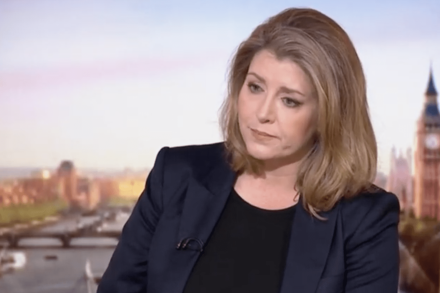
Penny Mordaunt – I’m being smeared over self-ID claims No Conservative party leadership race is ever without drama. With the first TV debate now under their belt, the five candidates are fending off scrutiny not just from the opposition and the media, but from each other. One of the biggest rifts from Friday’s debate was when Penny Mordaunt denied that she had ever been in favour of self-identification for transgender people while she was equalities minister. Her rivals, Kemi Badenoch and Liz Truss, suggested this was not true, and leaked documents reported in the Sunday Times today appear to back this up. Speaking to the BBC's Sophie Raworth, Mordaunt sought to defend her record: https://www.youtube.com/watch?

What is Penny Mordaunt up to?

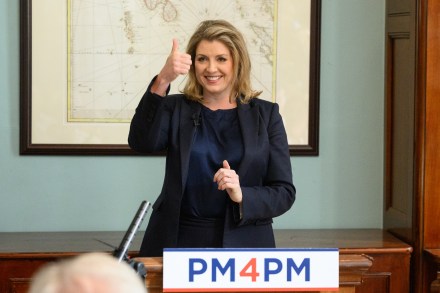
Does Penny Mordaunt know what she's getting herself into? One of her most striking promises is to give MPs something called 'social capital pots’: cash to spend in their constituencies. They are part of her attempt to soothe colleagues by describing them as ‘people who want to serve’ – and to weaken the power of the Treasury. 'I want to give you more agency to serve your community,' she said. While these pots sound unremarkable, Mordaunt would be significantly changing what an MP actually does This is a fascinating idea, and not just because it flatters MPs' egos. It's more than the 'pork barrel politics' some critics have alleged of the idea, because Penny Mordaunt would be significantly changing what an MP actually does.

Penny Mordaunt’s trans problem

The Tory leadership contest is yet to officially begin, but things are already turning nasty. As well as reports in the papers of dirty dossiers on candidates, Tory grandees have come out to call for a ceasefire in which Boris Johnson loyalists stop attacking Rishi Sunak. Now a row has broken out over Penny Mordaunt's candidacy. The former defence secretary announced this weekend that she will be running for leader – storming into second place on MP support. On announcing the news, Mordaunt took to social media to try to address one of the biggest criticisms facing her when it comes to the contest: that she is too 'woke'. The allegations regard trans rights after she said in 2018 that 'trans women are women and trans men are men'.

Putin’s mistake was to discard the velvet glove

To study international politics since the turn of the century has been, in large part, to study the changing nature of autocracy – and the West’s relationship to it. We kicked things off by trying to realise the Trotskyite dream of ushering in global democracy through the barrel of a gun. We wanted to bring an end to the world’s tyrants – or the ones of relevance to us at any rate. We got Iraq. But if we failed to end tyrants, we played our part in helping to mould them. As Sergei Guriev and Daniel Treisman observe in their intelligent, important book Spin Dictators, throughout this time something far more interesting and dangerous was happening.

Boris skewered – for one last time?

A brutal encounter at the Liaison Committee this afternoon. Boris was grilled for two hours by a gang of aggressive MPs, (many of them Tories), who were drooling and panting for him to quit. But it wasn’t until the final moments that the session caught fire. Darren Jones took the first chunk out of the PM.  ‘How’s your week going?’ asked the Labour MP mildly. ‘Terrific, like many other weeks.’ ‘Did Michael Gove come in and tell you to resign today?’ ‘I’m here to talk about what the government is doing.’ Boris brushed off a similar attack from the SNP’s Angus MacNeil. ‘The game’s up. Will you still be prime minister tomorrow?

Is the end nigh for Boris?

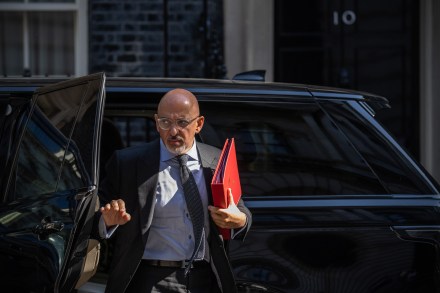
Boris Johnson is now facing a situation where if he doesn’t resign he will face more cabinet resignations. Johnson is currently in front of the liaison committee, but when he returns to his office he will have a delegation of cabinet ministers waiting to see him who will him he is done and that he must resign. When I asked one ‘Is it over?’, they simply replied 'yes'. If Johnson won’t go, he will face more cabinet resignations than he can fill. Leaving junior ministerial posts unfilled is bad, but it is simply not credible to not be filling cabinet posts. Remarkably one of the ministers who will tell Johnson to go is Nadhim Zahawi who was made Chancellor less than 24 hours to go.

Read: the new Chancellor’s interview with the BBC

This is an edited transcript of the interview with the new chancellor Nadhim Zahawi on the Today programme this morning. Nick Robinson: You faced a choice yesterday, and I'd like you to explain it to our listeners. Why was it in the country's interests as against yours, for you to stay in the cabinet and not to follow Rishi Sunak and Sajid Javid? Nadhim Zahawi: Because we are facing a global battle against inflation. Inflation is raging here in the United Kingdom, in Germany, in Canada and the United States. We have war on our continent that very few people anticipated. And I think many, many people listening to this programme today are struggling with their weekly shop and with their utility bills.

What next for Nadhim Zahawi?

One by one, cabinet ministers are confirming that they are not resigning this evening, leaving a very small group of ministers who have said nothing. One of the most conspicuous silences comes from Nadhim Zahawi, the Education Secretary. He has been mooted as a potential leadership contender, and has refused to rule out a bid. Tonight, he is not answering calls from colleagues. He is reading messages on WhatsApp but not replying to them. It has now been too long for him just to be a bit busy. Zahawi has one of those things that Westminster types are obsessed with: a backstory Currently we have two cabinet resignations and a number of more junior ministers and PPSs out too. It is reaching the point where silence is a tactic.

Boris ‘forgot’ about Pincher allegations, claims minister

The government's line yesterday on what Boris Johnson knew about Chris Pincher's behaviour kept changing. Today, it's quite hard to find anything that could reasonably be described as a 'line'. More of a messy scribble. After Simon McDonald's explosive intervention this morning, the 'line' had to change from Boris Johnson not being informed of any specific complaints, because now there was a report of an official complaint which McDonald alleges the Prime Minister was indeed briefed on. So what did it change to? As ever in these circumstances, Michael Ellis, the minister for defending the indefensible and holding lines even as they change, made his way into the chamber to answer an urgent question on the matter.

I’m proud of my son Danny Kruger, but I don’t agree with him on abortion

Most of the time I have an easy time of it on social media, with tweeters being nice about my colourful attire, liking my cooking hacks or flowers. But this week I had a dose of toxic hate. My son, the MP Danny Kruger, was unwise enough to join a debate in the Commons, saying he didn’t think women should have complete ‘bodily autonomy’ in the case of abortion as there’s another body – the baby’s – involved. I don’t agree with him, any more than I agree with his stance on assisted dying. He’s anti, I’m in favour. But that’s fine. I still love and admire him.

What will the anti-Boris rebels do now?

Looking at these Tory losses, it is hard not to conclude that the rebels would have got the 180 votes they needed to oust Boris Johnson if they had been organised enough to wait until after the by-elections before going for a vote of no confidence. But having had a vote two weeks ago, it is not credible to suggest changing the rules immediately to allow another one. However, judging from the conversations I have had with Tory MPs this morning, more of them would now like the option of having another vote sooner than a year from now. Some talk about the autumn, others about March. In a way, Oliver Dowden’s resignation is so devastating because no one thinks that it was tactical campaigning errors by Conservative Campaign Headquarters that led to these defeats.

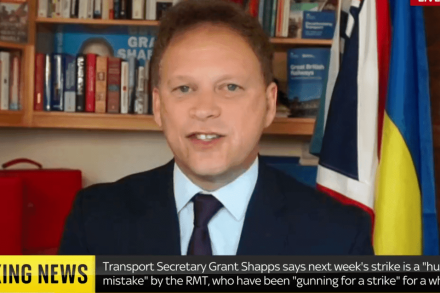
Sunday shows round-up: Grant Shapps slams railway strikers

The political focus this morning was centred around the three days’ worth of railway disruption due to begin on Tuesday. Transport Secretary Grant Shapps joined Sophy Ridge to make the case against strike action, taking aim at the leadership of the RMT union: https://twitter.com/RidgeOnSunday/status/1538425932326834177?ref_src=twsrc%5Etfw Union calls for government meeting are ‘a stunt’ Sophie Raworth also interviewed Shapps, and asked him about last week’s call from the RMT to get around the negotiating table with government: https://www.youtube.com/watch?v=fQgW0BFlOgw Mick Lynch – ‘We’re facing a crisis’ RMT leader Mick Lynch also joined Ridge to put forward the case for industrial action.