Picasso

Fails to dispel the biggest myth of all: Whitechapel Gallery’s A Century of the Artist’s Studio reviewed

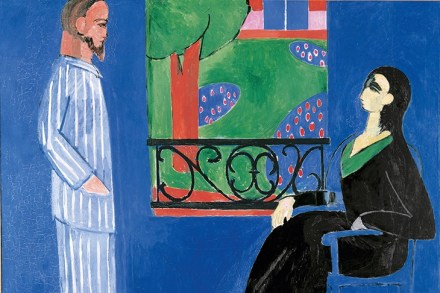
Picture the artist’s studio: if what comes to mind is the romantic image of a male painter at his easel in a grand interior with an admiring audience and a nude model at his elbow, you’re in the wrong century for the Whitechapel Gallery. Its new exhibition, A Century of the Artist’s Studio, runs from 1920 to 2020, and there’s precious little romance about it. To be honest, the studio was never that romantic; Gustave Courbet’s ‘The Artist’s Studio’ (1855), the main source of the stereotype, was itself a send-up. The Whitechapel’s show sets out to complete Courbet’s work, dismantling the myth cliché by cliché.

The life of René Magritte was even more surprising than his art

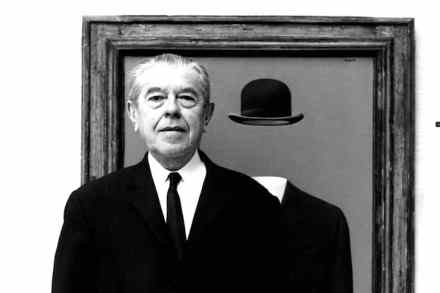
We live at a time in which we could (until recently) travel without difficulty and take for granted access to cultural treasures. It’s easy to forget that this wasn’t always the case, and minds were shaped by what possibilities were available. The Belgian painter René Magritte is a good example of huge talent pushed through a very narrow opening. His art has now become an exemplar of the striking image that commerce can feature. Advertising regularly uses his paradoxical visual combinations of faces replaced by apples, of skies in the shape of doves, of roses filling rooms and, supremely, the conundrum of the pipe demurely labelled ‘Ceci n’est pas une pipe’.

The first patrons of Modernism deserve much sympathy and respect

If Modernism is a jungle, how do you navigate a path through its thickets? Some explorers — Peter Gay and Christopher Butler among them — have been fool-hardy enough to attempt an overall map, identifying factors common to a half century of music, art and literature. But the borders remain disputed and light cast on one area only leaves another consigned to the shadows. Philip Hook, however, has been less ambitious, confining himself to one patch of special interest: the painting and sculpture of the decade preceding the first world war.

Is my phobia of upmarket restaurants misplaced?

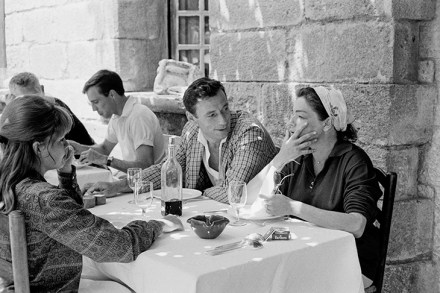
Scotching my bright idea of a stiff gin for Dutch courage in the bar across the road, Catriona bounded straight for the door of the Colombe d’Or. My restaurant phobia was fast upon me and I followed her into the bourgeois holy of holies more slowly than a nudist climbing through a barbed wire fence. We were half an hour early and directed to the bar. Here my plea for strong spirits was again denied and I had to make do with champagne. Speechless with ecstasy — this was her birthday treat — Catriona toddled off with her flute to cast her eye over the Miros, Matisses and Chagalls in the dining room. I sat alone on the windowsill in the bar where Picasso and Yves Montand and James Baldwin had once parked their famous arses and I mourned.

The joy of socially distanced gallery-going

Not long after the pubs, big galleries have all started to reopen, like flowers unfolding, one by one. The timing reminded me of an anecdote that Lucian Freud used to tell about a Soho painter friend he took into the National Gallery after it had shut (as some senior artists are entitled to do). They arrived after closing time in the drinking holes of Soho, and the painter friend was staggering and swaying so much that Lucian — who was not easily rattled — became alarmed that he was going to put one of his flailing arms through a Rembrandt. I wonder how those art-lovers of yesteryear would have coped with socially distanced visits. I think they may be an improvement, at least in some respects.

Sumptuous and saucy: Compton Verney’s Cranach show reviewed

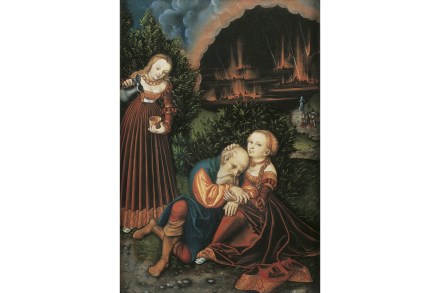
‘Naughty little nudes,’ my history of art teacher used to say of Cranach’s Eves and Venuses. Aren’t they just? Coquettish and compact. Kenneth Clark thought they had ‘chic’. Cranach’s nudes are rarely truly naked. They wear Ascot hats, golden chokers, filmy wisps of gossamer girdle. Take the goddess in the National Gallery’s ‘Cupid Complaining to Venus’ (c.1526–7). Don’t you long for her to take off her ostrich feather hat and tickle you with it? ‘Hallo, Jungs.’ See how she plays footsie with a branch of the tree. How she brushes the back of her hand against its trunk. Note the double necklace. Always accessorise.

From Middlemarch to Mickey Mouse: a short history of The Spectator’s books and arts pages

The old masters: how well they understood. John Betjeman’s architecture column ran for just over three years in the mid-1950s. Yet during that short run he experienced the moment that comes, sooner or later, to every regular writer in The Spectator’s arts pages. ‘It is maddening the way people corner one and make one discuss politics at the moment,’ he wrote on 23 November 1956, clearly as bored of the Suez crisis as the rest of us were, until recently, by Brexit: Because I write in this paper, people assume that I share its Editor’s views about Suez… But I don’t know what the views of this paper about Suez are, because I never read the political stuff in front.

To fill a major Tate show requires a huge talent. Dora Maar didn’t have that

Dora Maar first attracted the attention of Pablo Picasso while playing a rather dangerous game at the celebrated left-bank café Les Deux Magots. She ‘kept driving a small pointed penknife between her fingers into the wood of the table’. From time to time she missed, and a drop of blood appeared on her gloves. This alarming form of digital Russian roulette was the basis for an early work by the performance artist Marina Abramovic, who will be featured at a major show at the Royal Academy next autumn. There is nothing so arresting in the large exhibition devoted to Maar’s work at Tate Modern as the images of the artist herself, and not only those by Picasso. There are some individuals who have an impact on the arts through sheer force of personality.

Cutting edge

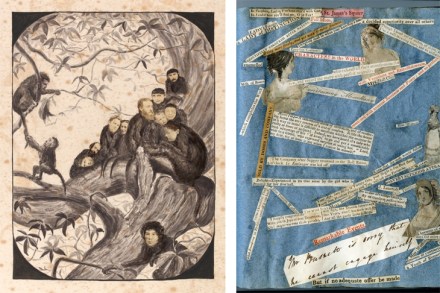
The art-history books will tell you that sometime around 1912, Picasso invented collage, or, actually, perhaps it was Braque. What they mean is that sometime around 1912 a man of sufficient standing took up a technique that had been quietly practised in largely domestic spheres by a largely female army of amateurs, and applied it in his own work. Cue the universal astonishment of observers who pretended they had never seen such a thing before. This narrative has been recycled ever since, assuring us that the collage techniques that shaped the language of dada, surrealism and all the other isms that made up modernism, as well as pop art and even today’s Photoshop-driven design, all emanated from that one original spark of paper-sticking cubist genius.

Master of white

Artists can be trained, but they are formed by their earliest impressions: a child of five may not be able to draw like a master but he can see better and more intensely. The light of Valencia was burnt into Joaquin Sorolla y Bastida’s mental retina and he could not get it out of his mind: ‘I live here like an orange tree surrounded by heaters,’ he told an interviewer in Madrid in 1913. Never a studio painter, he worked best under the lamp of his native sun and returned to Valencia from wherever he was living every summer to set up his easel on the beach.

Russian royalty

It is not as surprising at it sounds that two of the greatest collectors of modern art should have been merchants from 19th-century Moscow. If Russia managed to contrive a semblance of western civilisation in St Petersburg, it was by virtue of being directly under the steely Tsarist eye. Moscow on the other hand, half lost in the shadows of barbarism, was more wacky and roguish. It liked to think it was home to the true Russian spirit, which artistically meant gaudy folk art, icons, sad music and weird architecture. However the tiny rich class were desperate for the oxygen of enlightened humanist society which they found, like their St Petersburg compatriots, in Paris (it must always be remembered that Diaghilev’s Ballets Russes could never perform in Russia).

The good, the bad and the ugly | 21 June 2018

Some disasters could not occur in this age of instant communication. The first world war is a case in point: 9.7 million soldiers died, 19,240 British on 1 July, 1916, the first day of the Battle of the Somme, alone. If all that had been seen on social mediaand rolling news threads, public opinion would have shifted immediately. A hundred years ago, however, the sheer awfulness of what was happening took more time to sink in. Aftermath, an exhibition at Tate Britain, deals not so much with the art of the war itself as with the shocked and grieving era that followed the cataclysmic conflict: post-war art. The horrors of the fighting continued to haunt artists on all sides, but not with equal force in every combatant country.

Année érotique

By 1930, Pablo Picasso, nearing 50, was as rich as Croesus. He was the occupant of a flat and studio in rue La Boétie, in the ritzy 8th arrondissement, owner of a country mansion in the north-west, towards Normandy, and was chauffeured around in an adored Hispano-Suiza. He stored the thousands of French francs from the sale of his work in sacks deep inside a Banque de France vault, like a ‘country bumpkin who keeps his savings sewn into his mattress’, someone once said. Married since 1918 to one of Sergei Diaghilev’s ballerinas, Olga Khokhlova, Picasso was coming to dominate the art world in a manner no painter has before or since — including, increasingly and importantly, New York. But by mid-1931, he had worries.

The apple of his eye

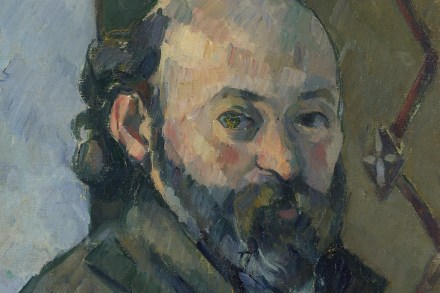
The critic and painter Adrian Stokes once remarked on how fortunate Cézanne had been to be bald, ‘considering the wonderful volume that he always achieved for the dome of his skull’. It’s a good joke, and all the better for being perfectly true — as is demonstrated by the superb sequence of self-portraits included in Cézanne Portraits at the National Portrait Gallery. These are the finest hairless craniums in the history of art. That, however, is only one of the attractions of the exhibition. This is the most impressive array of work, by one of the greatest of all painters, to be seen in London in more than 20 years. Cézanne once said, ‘I paint as I see, as I feel — and I have very strong sensations.

A blunt instrument of war

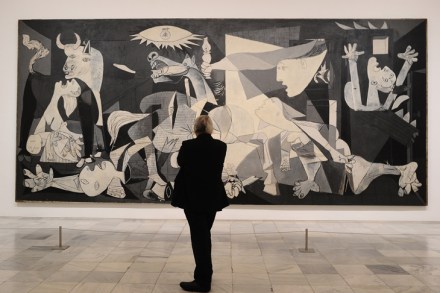
It takes a bold author to open his book about ‘Guernica’ with a quotation from the Spanish artist Antonio Saura lamenting ‘the number of bad books that have been written and will be written’ about it. Fortunately, James Attlee’s study of Picasso’s superstar work of art is not a bad book and he builds on a solid cultural and historic understanding of the painting to collate 80 years of evolving reaction to it. Attlee begins in May 1937, when, at the height of the Spanish Civil War, the Spanish Republic commissioned Picasso to create a painting for its pavilion at the World’s Fair in Paris. They hoped the famous artist would help secure sympathy, funds and, significantly, political intervention in the Republican cause.

Princess Uppity

Princess Margaret was everywhere on the bohemian scene of the 1960s and 1970s. She hung out with all the famous rock stars, actors and other arty types of the day. Marlon Brando was struck dumb; Picasso wanted to marry her. As Craig Brown puts it artfully: ‘Everyone seems to have met her at least once or twice, even those who did their best to avoid her.’ And so, having noticed her ubiquity in the indices of other books, the satirist has written a hugely entertaining sort-of-biography. Why would anyone do their best to avoid the princess? Well, she had a Prince Philip-ish way with the rude put down. (On being presented with a dish of Coronation Chicken: ‘This looks like sick.

Beyond Timbuktu

Every so often a monster comes along. Here’s one — but a monster of fact not fiction, over 700 pages recounting the French expedition from Dakar to Djibouti 1931–33. It doesn’t matter that this travel diary — part field study, part confessional, first published in 1934 — has arrived so late for an English readership. It comes with the additional resonance of a lost world. Michel Leiris was an exceptional man, a Parisian surrealist writer and protégé of Max Jacob. He was also close to Picasso, with whom he shared an interest in primitive art, shamanism and Mithraism; and he married a girl who was the illegitimate daughter of the wife of Daniel-Henry Kahnweiler, Picasso’s dealer.

American quartet

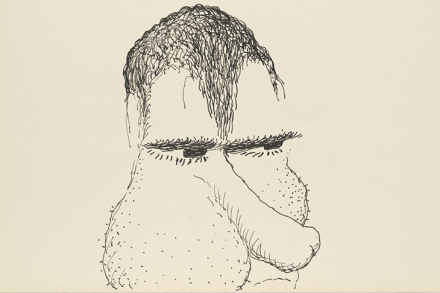
Politics and art can make for an awkward mix. Much more than with religious subjects it seems to matter whether the viewer shares the artist’s beliefs. But whatever you think of Richard M. Nixon, it would be hard not to enjoy Philip Guston’s satirical drawings of him and his cronies at Hauser & Wirth, Savile Row. These were the most exuberant, scatological, obsessive and imaginative such works since 1937 when Picasso produced an extraordinary strip-cartoon vilification and lampoon entitled ‘The Dream and Lie of Franco’. Indeed, the two series have a good deal in common. Picasso portrayed the Generalissimo as a sort of obscene, moustachioed set of bagpipes.

Animal magnetism

‘I frequently went to bullfights with Picasso,’ Sir John Richardson remarked, quite casually, as he showed me around the exhibition Picasso: Minotaurs and Matadors, which he was installing at the Gagosian Gallery, Grosvenor Hill. He mentioned this by way of explaining why a large and splendid linocut was inscribed to him by the artist: ‘à mon cher ami.’ They saw many fights together in the 1950s, either in Nîmes or Arles. Picasso took these occasions seriously. ‘If the fight was going well he was silent, concentrating totally. What he couldn’t stand was people talking. He would sigh and say, “Oh, I wish they’d shut up.” All around him people were shrieking if something went wrong, but he was absolutely cool as can be.

An infinite spirit

Can American publishers be dissuaded from foisting absurd, bombastic subtitles on their books as if readers are all Trumpers avid for tawdry, over-simplified stunts? Howard Bloch is a professor at Yale whose previous books have had medieval French literature, the Bayeux tapestry and medieval misogyny as their subject matter. He has taken an entertaining diversion in his career by writing a relaxed and accessible book about Mallarmé’s poem of 1897, ‘Un coup de dés jamais n’abolira le hasard’ (‘One toss of the dice will never abolish chance’) and its place in belle époque Paris. The professor’s erudition and light touch need no Barnum-style booming.