Picasso

Le French bashing has spread to France. Are things really that bad?

The French for French-bashing is le French bashing. This verbally costive nation is at it once again, torpidly borrowing an approximately English expression rather than coining its own. Such bashing is not an exclusively Anglo-Saxon practice. There is indigenous bashing. At least there is Éric Zemmour, whose salutary Le Suicide français was published a couple of months ago. Its very first sentence declares that France is the sick man of Europe — which prompted Manuel Valls, little Hollande’s prime minister this week and a man who is not growing into that poisoned office, to take the bait, exhibit a preposterously thin skin and denounce the book twice in a few days. This is not to suggest that M.

Are the British too polite to be any good at surrealism?

The Paris World’s Fair of 1937 was more than a testing ground for artistic innovation; it was a battleground for political ideologies. The Imperial eagle spread its wings over the German Pavilion; the Soviet hammer swung above the Russian Pavilion; and the Spanish Pavilion unveiled Picasso’s shocking monument to the civilian dead of the bombed city of Guernica, raising the clenched fist of the Spanish Republic in the capital of non-interventionist France. Not everyone was convinced by ‘Guernica’ as art. Anthony Blunt in The Spectator commended Picasso’s political gesture but dismissed the painting as ‘the expression of a private brainstorm’.

The Duke of Wellington also invades Christmas art books

Art books fall naturally into various categories, of which the most common is probably the monograph. Judith Zilczer’s A Way of Living: The Art of Willem de Kooning (Phaidon, £59.95, Spectator Bookshop, £53.95) examines its hero’s career from his extraordinarily accomplished — and resolutely conventional — teenage productions, by way of his glorious middle years, on to the final works, which were created when he was suffering from Alzheimer’s. Lavishly illustrated not only with works by the artist, but also with photographs of him and his friends, it does full justice to his towering — if not always entirely lovable — achievement.

Exactly how much fun was it being an impoverished artist in Paris?

What he really wanted, Picasso once remarked, was to live ‘like a pauper, but with plenty of money’. It sounds most appealing: the perfect recipe for a bohemian life, dreamed up by a supreme master in the art of having it both ways. To begin with at least, however, Picasso had to make do only with the half of his formula: living like a pauper with scarcely any cash at all. La vie de bohème, this enjoyable book makes clear, might have been romantic but was also hard. Sue Roe has written a portrait in words of an era, through which are threaded the stories of the various people who passed by — painters, models, collectors, dealers. But her book takes its main title from a place: Montmartre. It’s an address that still has allure.

Viktor Yanukovych’s palace is full of tasteless treasures – and London auction-house tags

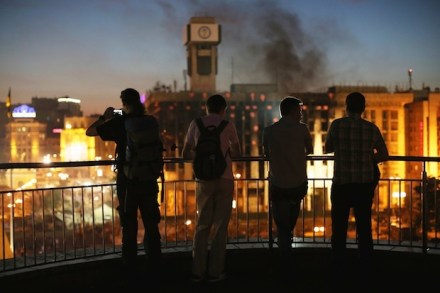
 Kiev On a cobbled street above the Maidan, an elderly man dressed in fatigues rubs his stubble in the morning sunshine. Would I like a lesson in throwing Molotov cocktails? He picks up a bottle with a long wire loop for a handle, and leads me to a burnt-out public lavatory. A match to the rags stuffed in the bottle’s mouth; an overarm swing, and the bottles smashes against the far wall, flames licking round broken stalls. Would I like to pose for a photo? A young American who has stopped to watch takes up the offer. Three months after protests toppled Ukraine’s president, Viktor Yanukovych, the Maidan has turned into a tourist attraction. The scene of the protests is still an impressive sight.

Morally, can we justify giving Luis Suárez a Player of the Year award?

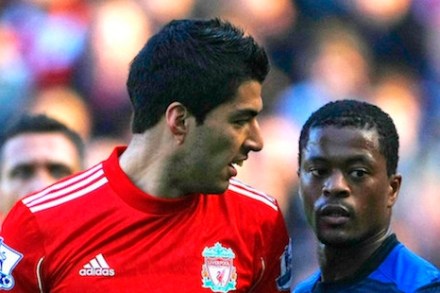
One of football’s many beauties is in encouraging us to forsake unfortunate strictures of accepted behaviour; as long as it’s at the game, we can sing, swear, cuddle strangers, and even care about stuff without fear of ridicule. And, perhaps best of all, we’re entitled to rejoice in the dastardly; it’s entirely justifiable to drool over the respective oeuvres of Roy Keane, Thierry Henry and Sergio Busquets, if they so tickle you. The game can also serve as a masking agent for off-pitch indiscretions, and remind people that personal matters are precisely that. Kenny Dalglish somehow wore links to the Clerkenwell crime syndicate, and though plenty of people dislike Wayne Rooney, it’s generally not on account of his nocturnal activities.

What Quique Dacosta knows that Picasso didn’t

Chefs have a problem. Think of much of the best food you have ever eaten. Caviar, English native oysters, sashimi, foie gras, truffles, jamon iberico, grouse, golden plover, properly hung Scotch beef; Stilton, the great soft cheeses: all have one point in common. They require minimal intervention from the kitchen. With the assistance of one female sous-chef, even I could roast a grouse. The chef would come into his own over pudding, and indeed with Welsh rarebit, but one can understand why this does not provide enough outlet for creativity. There are always the great French bourgeois dishes, which few of us eat often enough. Navarin of lamb, blanquette de veau, suprêmes de volaille, daube de boeuf: all splendid. But they are not a new challenge to a cook.

The Picasso muse who became an artist

With her long blonde hair tied in a ponytail, Sylvette David is familiar from many of Picasso’s paintings. She met the artist in the South of France as a teenager and became one of his models – his muse but never his mistress — during the spring of 1954 (Picasso’s relationship with Françoise Gilot had ended and he hadn’t yet met Jacqueline Roque). A collection of drawings, paintings, metal sculptures and ceramics documenting their relationship can now be seen in the Kunsthalle Bremen’s exhibition Sylvette, Sylvette, Sylvette: Picasso and the Model (until 22 June).

All the fun of the fair | 30 January 2014

The Works on Paper annual fair runs from 6 to 9 February at the Science Museum. Its name is a bit of a giveaway: all art must be on paper. There is a huge range of work on display: early, modern and contemporary watercolours, prints, posters and photographs — from the late-15th century to the present day, with prices ranging from £250 to £75,000. So whether you want to buy a Japanese woodblock print, a series of studies by Edward Burne-Jones or one by Stanley Spencer, a drawing by Picasso, Cézanne or Ben Nicholson, South Kensington is the place to go.

John Craxton was more gifted than the Fitzwilliam show suggests

It is often said of John Craxton (1922–2009) that he knew how to live well and considered this more important than art. Perhaps there is a certain truth in this, but if he really believed it, did he have any business in being an artist? And an artist he undoubtedly was, by temperament and sensibility, as well as by the rich endowment of natural talent. Of course, letting it be known that you think life more important than art is a very good cover for that most debilitating (and paradoxically productive) of besetting fears: self-doubt. Craxton had it in large measure, and it is probably this quality that accounted both for his originality and for the painter’s block he periodically suffered.

Hollywood and oligarchs descend on Art Basel

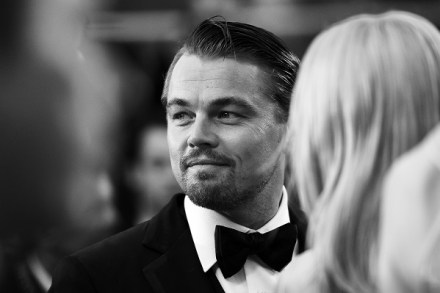
The art world has descended on the almost attractive city of Basel in Switzerland this week, for the annual art fair. And where the art world goes, glamorous collectors follow. Leonardo di Caprio appeared to be in the mood for some serious shopping when I glimpsed him, casting his eye over a Warhol or two. He may have looked at the Alexander Calder, or perhaps he saw the Edmund de Waal or the exquisite pair of Peter Doig etchings. And there’s this chap called Picasso; mark my words, dear readers, he’s going to be big. Di Caprio had competition from one Roman Abramovitch, who sloped by a few Edvard Munchs, as one does. Cate Blanchett was a radiant study in concentration as she perused the stalls of the finest galleries in the world.

Wandering eye

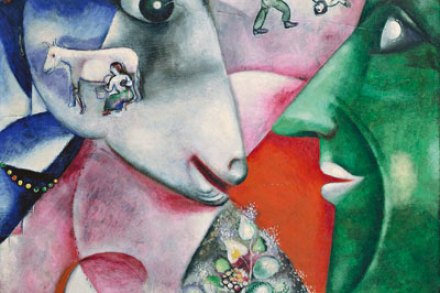
‘When Matisse dies,’ declared Picasso, ‘Chagall will be the only painter left who understands what colour really is.’ Wandering around this splendid show you can see exactly what he meant. Chagall never used colour for cheap effect, but to convey meaning and emotion. The effect of seeing so many of his works together is almost overwhelming — a symphony hung upon a wall. But these aren’t the romantic paintings of Chagall’s later years, the visions of young lovers floating over seas of flowers. These are the urgent artworks of his youth, made at a time of immense upheaval. By focusing on these early years, to the virtual exclusion of his later work, this fascinating retrospective casts Marc Chagall in an entirely different light.

Death watch

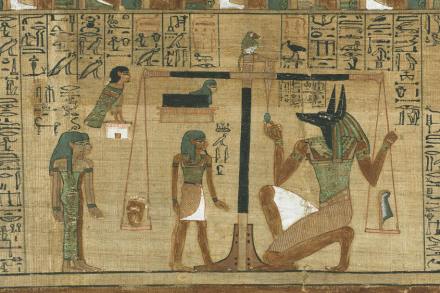
Although I stopped watching TV some years ago, films are a continuing solace and pleasure. Among the Christmas treats was a previously unseen Jack Nicholson movie, entitled The Bucket List. The plot revolves around two very different Americans, Nicholson and Morgan Freeman, both of whom are suffering from cancer and are given a mere matter of months to live. The Bucket List is their wish list of things to do before they die, some of the more exotic of which the wealthy Nicholson enables them to achieve. The excellent Freeman, a poorer man but the greater philosopher, reminds Nicholson of a more important consideration: the two questions asked of Ancient Egyptians at the gates of Paradise. Have you found joy in your life? And, has your life brought joy to others?

Picasso by Picasso

In an upstairs room in an unfrequented corner of Zurich’s Kunsthaus, there is a portrait of one of the unsung heroes of modern art. In an upstairs room in an unfrequented corner of Zurich’s Kunsthaus, there is a portrait of one of the unsung heroes of modern art. Wilhelm Wartmann was the first director of this splendid gallery, and in the autumn of 1932 he mounted the first major retrospective of the work of Pablo Picasso. This autumn, to celebrate its centenary, the Kunsthaus is mounting the same show. It’s a unique chance to see how the world saw Picasso at his peak — and how Picasso saw Picasso — for this groundbreaking exhibition was curated by the artist himself.