Picasso

‘A lost generation’: My Year in Paris with Gertrude Stein, by Deborah Levy, reviewed

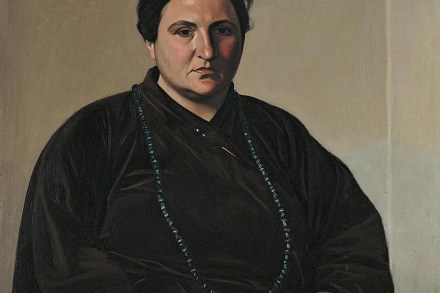
In a 2013 interview, Deborah Levy said: ‘Modernism is the soft typewriter of the womb that made me.’ But what made Modernism? My Year in Paris with Gertrude Stein is Levy’s attempt to answer the question. In this novel, an unnamed narrator from London moves to Paris to write an ‘essay’ on Stein, the American patron of the avant-garde. There she meets Eva, an enigmatic illustrator whose blue eyes make everyone go ‘Awww’, and Fanny, a fashionable finance consultant with a thriving sex life. As the three search for Eva’s missing cat (originally called It and renamed Bob by Fanny), the narrator chases after Stein’s many trails but struggles to bring her into focus.

Was Picasso a Catholic artist?

There’s a new exhibition on Picasso which is actually transgressive: Picasso and the Bible. That promises to stir things up among worshippers of the great man, who was known for being Republican, Communist and atheist.   The premise of the exhibition – which was opened this week with great fanfare at Burgos Cathedral in Spain – is that an artist can leave the Church, but the Church never really leaves him. The real theme of the exhibition isn’t Picasso and the Bible; it’s Picasso and Catholicism, a more explosive subject.

Picasso’s ravishing work for the ballet

Visitors to the Victoria and Albert Museum’s new storehouse in Stratford’s Olympic Park are being enthralled by an atmospherically lit chamber devoted to the display of one vast and magnificent work of art: Picasso’s 10 metre-high, 11 metre-wide drop-curtain for Le Train Bleu, a popular hit of Diaghilev’s Ballets Russes, first seen in 1924. The canvas, for many years rolled up in storage, isn’t strictly the work of Picasso himself: Diaghilev’s scene painter Prince Alexander Schervashidze had meticulously expanded it overnight from a small gouache on plywood known as ‘Two Women Running on the Beach’ (1922), but Picasso was so delighted when he saw the result that he decided to endorse it with his signature on the bottom-left-hand corner.

Give Eric Ravilious a rest

How do artists sustain a reputation? We’d like to think it’s on the basis of their work. In the case of visual artists, it would be nice to think they make it because their art is beautiful, original or absorbing. It shouldn’t be a matter of what the art is about, or Benjamin West’s epic historical tableaux would be better paintings than Jean Siméon Chardin’s still lives. It shouldn’t be about the artist’s personality or history, or we would rate Benjamin Haydon (tragic suicide) over John Constable (domestically inclined Tory). On the other hand, it doesn’t always work like that.

Instantly captivating: the mysterious harmonies of Erik Satie

The first time I heard a piece of music by Erik Satie it was on the B-side of a Gary Numan single. Played on a synth that sounds like a theremin sucking on a dummy, ‘Gymnopédie #1’ is so saccharine sweet it actually makes the music seem sorry for itself. And yet. It got me hooked on Satie’s catchy yet sombre ironies. Par for the course, says Ian Penman in this dazzling study. People who know nothing about music beyond the top tens of their teens can be so ‘instantly beguiled, captivated and transported’ by Satie that his ‘pop single length’ works are ‘now part of some collective audio memory’. Those who know nothing much about music can be instantly beguiled, captivated and transported by Satie For all that, there is no mention of Numan here.

Douglas Cooper – a complex character with a passion for Cubism

The collector, art historian and critic Douglas Cooper (1911-84) relished conflict. He was a formidable man, loud in speech and dress, with forceful views and a taste for ridicule. He could also be very funny. John Richardson, Picasso’s biographer, who knew Cooper better than most, said it was as though an angel and a demon child were perpetually fighting for control of his personality. Physically robust, Cooper survived being stabbed in the stomach when he was 50 after unwisely propositioning a French soldier. He is remembered today, if at all, for his legendary collection of Cubist art, focusing on the four greats of the movement: Picasso, Braque, Léger and Gris.

The mystifying cult status of Gertrude Stein

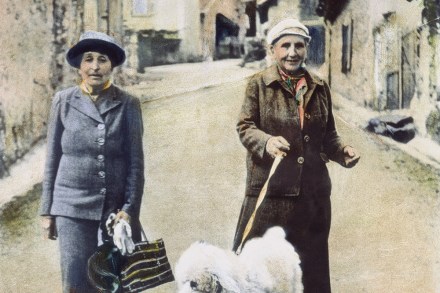
To most people, the salient qualities of Gertrude Stein are unreadability combined with monumental self-belief. This is the woman who once remarked that ‘the Jews have produced only three original geniuses – Christ, Spinoza and myself’. Of the reading aloud of her works, Harold Acton complained: ‘It was difficult not to fall into a trance.’ Even if you are as good a writer as Francesca Wade, it is still difficult to avoid the influence of what she herself calls Stein’s ‘haze of words’. So the first half of this impressively researched biography is cerebral rather than colourful.

Kingsley goes to the toilet

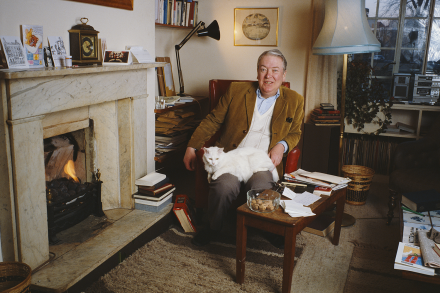
In 1978, I gave a poetry reading at Hull University. Philip Larkin was glumly, politely, in attendance. I was duly appreciative, knowing what it must have cost him. He was deaf as well as disaffected. Perhaps the deafness helped. The next day, we had a lunchtime drink at the University bar. We talked about Kingsley’s recently published Jake’s Thing, a fictionalised account of Kingsley’s sexual relations with Jane Howard. Larkin was puzzled: ‘It’s determinedly foul-mouthed, which I like, but there is a central implausibility. Jake can do it, but he doesn’t want to.’ An innuendo? A suggestion that Jake, and by implication Kingsley, couldn’t? He sipped something improbable like a Dubonnet. A year previously, Kingsley had taken me to lunch in Wheeler’s.

How Norman Mailer changed the face of biography

From our US edition

Many labels leap to mind in association with the prolific and controversial Norman Mailer, who died in 2007, but “biographer” is not typically one of them. He was not considered a serious practitioner of the genre in the same sense as Edmund Morris, Ron Chernow or his friend Doris Kearns Goodwin. And yet, as his own official biographer J. Michael Lennon asserts to me, “Mailer became a major biographer in the last half of his career.” Thirty years ago, two intriguing books by Mailer appeared just a few months apart: Oswald’s Tale: An American Mystery and Portrait of Picasso as a Young Man.

Mailer
tour

Guiding young minds through the National Gallery of Art

From our US edition

"Are there any more questions?” I asked loudly. I was struggling to make myself heard above about thirty seventh-graders, whom I was leading on a tour of the National Gallery of Art. There had already been many questions that morning, even before we began looking at objects in the museum’s permanent collection. We had just finished an analysis and discussion of techniques and symbolism in a seventeenth-century sculpture from Seville, so I took advantage of the momentary lull in the hand-raising and was walking toward the next work on our itinerary when I heard an unexpected sound. Thud. Turning, I saw that one of the students had fainted, practically at my feet. Teacher and chaperones rushed in, and after a few moments the student was fine.

Whipping up a masterpiece: painters and their materials

If you are someone who revels in the deliciousness of oil paintings, who looks at them and wants to eat them ‘as if they were ice cream or something’, in Damien Hirst’s phrase, then Martin Gayford’s latest book will be a banquet. In part, this is thanks to the illustrations – luscious close-ups of Van Gogh’s brushstrokes like buttercream icing, and a double-page spread of a golden Rothko large enough to tumble into. But mainly it’s due to his intention to understand the medium of painting from the inside out: from the artists’ viewpoint rather than the art historian’s. He is well placed to do this, having interviewed almost every well-known artist (many of them for this magazine) during his past 30 years as a critic.

The art inspired by the 1924 Paris Olympics was a very mixed bag

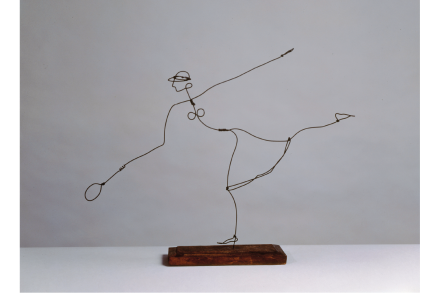
George Orwell took a dim view of competitive sport; he found the idea that ‘running, jumping and kicking a ball are tests of national virtue’ absurd. ‘Serious sport has nothing to do with fair play,’ he wrote in Tribune after scuffles broke out during the Russian Dynamo football team’s 1945 tour. ‘It is bound up with hatred, jealousy, boastfulness, disregard of all rules and sadistic pleasure in witnessing violence: in other words it is war without the shooting.’ Suzanne Lenglen’s loose-fitting knee-length tennis dresses inspired the new ‘style sportif’ of Coco Chanel Baron Pierre de Coubertin, visionary founder of the modern Olympics, took the opposite view: to him the three words ‘Faster, Higher, Stronger’ represented ‘a programme of moral beauty’.

‘There are an awful lot of my paintings I don’t like,’ admitted Francis Bacon

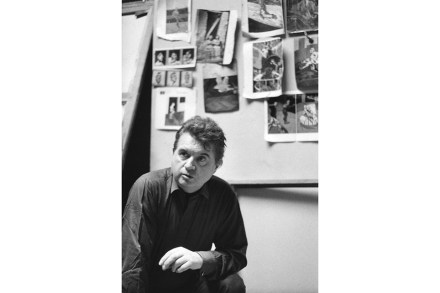
In 1959, Edvard Munch’s ‘The Scream’ was hanging above the bed where Francis Bacon nursed a fractured skull after falling downstairs drunk at his framer Alfred Hecht’s house on the King’s Road. It was there to be re-framed – a circumstantial detail Mark Stevens and Annalyn Swan report neutrally, en passant, in their 2021 biography Francis Bacon: Revelations. An inadvertent cry, nay a scream, for attention? Or a frame-up? It was a decade after Bacon painted his first screaming pope, a palimpsest obviously based on Velázquez but equally in hock to Munch. Francis Bacon: A Self-Portrait in Words is an annotated compilation by Michael Peppiatt of statements, letters, studio notes and selected interviews.

‘You cannot begin by calling me France’s most famous living artist!’: Sophie Calle interviewed

‘You cannot begin by calling me France’s most famous living artist!’ Thus Sophie Calle objected to the first line of the obituary I wrote for her, commissioned for the enormous exhibition, À toi de faire, ma mignonne (‘Over to you, sweetie’), that currently occupies the whole Musée National Picasso-Paris. But modesty aside, it is a fact that no other French artist alive today is so celebrated, loved, debated, denounced and, indeed, imitated, around the world as Calle. Having long mined her own life for her work, Calle now happily mines her death This year is the 50th anniversary of Picasso’s death and that his most important museum should officially mark this by inviting Calle to take over its institution, replacing all his work with her own, is a brilliant provocation.

The big picture: two books on artists and their lives

Michael Peppiatt (born 1941) explains in the introduction to his new book of essays that he has from the start of his career been attracted to the lives of artists, as much as, if not more than, their work. Accordingly, he should find a ready audience with the British, who much prefer the written word to the visual image, and who always seem to spend more time on information panels than exhibits in museums, when not in a side gallery watching documentaries about the artists’ lives. In this book Peppiatt assembles a selection of biographical studies of some of the artists whose work quickens his heart. None of it is new material, but it is usefully gathered in one volume, with a very readable introduction and notes to each section.

Make art free, not digital

From our US edition

If you won the lottery tomorrow and suddenly had the money to invest in art, what would you prefer: a work from Picasso’s Cubist period (Guitar on a Table, 1919), or an NFT made from AI-based images and shapes? On the one hand, Picasso’s Guitar on a Table isn’t his most famous or even most interesting work — by 1919, the radicalism of Cubism had begun to wane. But on the other, NFTs are a relatively unproven market with dubious artistic merit, and have been linked to art crime, money laundering, and even allegations of human trafficking. If Picasso couldn’t persuade you to ditch the digital art, what about a painting by Renoir, a sculpture by Rodin, or a triptych of paintings by Francis Bacon?

Should we judge a work by the character of its creator?

‘Most of my heroes are monsters, unfortunately,’ Joni Mitchell once said, ‘and they are men.’ The singer-songwriter was able to detach the maker from the made. Should we do the same? Is it ethical? Even possible? These are the questions Claire Dederer deftly considers in Monsters, which puzzles through the problem of what we ought to do about great art by bad men. Ideally, nothing. Early on in her quest, Dederer longs for someone to invent an online calculator: The user would enter the name of an artist, whereupon the calculator would assess the heinousness of the crime versus the greatness of the art and spit out a verdict: you could or could not consume the work of this artist. Alas, said calculator has yet to be programmed, so it’s down to her to do the maths.

Jim Ede and the glories of Kettle’s Yard

Jim Ede started early. At the age of 12 he used £8 of his hard-won savings to buy a Queen Anne desk. No bicycle, air pistol or football for him: this solid piece of old furniture was the thing, the first step in a long life of acquiring objects that lived, breathed and spoke to him. To call him a compulsive collector is to understate the passion that over the years saw the desk followed by an avalanche of stuff, from porcelain and glasses to pebbles and feathers, textiles and above all paintings, drawings and sculpture. Each acquisition admired, loved, cherished and shared for its uniqueness – what Gerard Manley Hopkins would have called its ‘instress’.

Drinking with Picasso

From our US edition

In February 1900, a critically acclaimed art exhibition went up at a Barcelona café called Els Quatre Gats. It was neither the first nor the last show mounted at the establishment, a popular drinking spot for avant-garde artists, writers and others. It was, however, the very first solo outing for one of the café’s regular patrons: a brash nineteen-year-old local art student named Pablo Ruiz Picasso. It has now been fifty years since Picasso died, on April 8, 1973, and even as that anniversary is being commemorated worldwide with new exhibitions and publications, he has never really faded from public consciousness. His art and even personal objects associated with him are avidly collected, and he continues to inspire filmmakers, musicians and other artists.

picasso

When Lee Miller met Picasso

During the liberation of Paris in August 1944, the photographer Lee Miller made her way to Picasso’s studio on rue des Grands-Augustins, where she was greeted with a wide-eyed grin. ‘This is wonderful – the first Allied soldier I’ve seen, and it’s you!’ the artist exclaimed, reaching up to place his hand affectionately around her neck. Miller had just escaped house arrest for breaching the terms of her press accreditation by entering a combat zone. The PR office of the US Army had dispatched her – one of just four American female photographers they granted an official commission – to Saint-Malo in the mistaken belief that the fighting there was over.