Painting

A Tate show with dreamy, elusive power

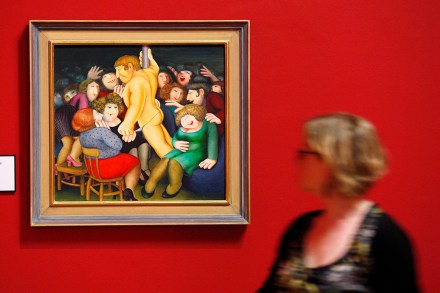
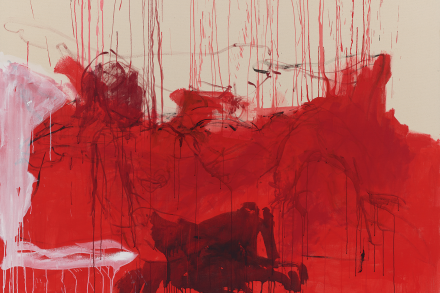
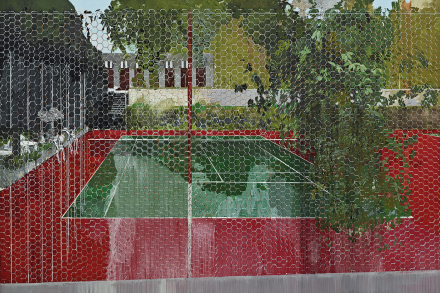
One of the miracles of art history is how painting, so often written off, keeps on coming back. Right now we are in the middle of just such a resurgence, and one sign of the current vitality of the medium is the emergence of painters such as Hurvin Anderson. Admittedly, Anderson – who was born in 1965 – has been emerging for a long time now. But, with the opening of a big retrospective at Tate Britain, his status as a major figure in modern British art is clear. Anderson is completely individual yet visibly connected to the tradition – indeed, to several traditions – and capable of creating huge,

The truth about artists’ optical aids

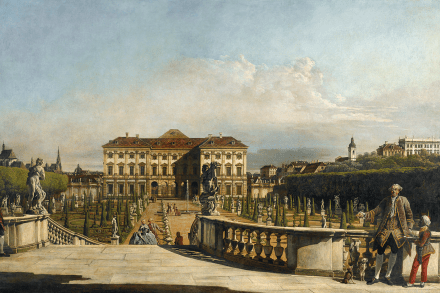
The first thing you see on entering this major new Viennese exhibition is not one of Canaletto and his nephew Bernardo Bellotto’s majestic paintings of London, Venice or Vienna, but a camera obscura. The magical art of both artists depended upon this simple but effective device, which exploits pin-hole projection – an optical phenomenon that had been known since antiquity.  The decision to open the show at the Kunsthistorisches Museum with a deceptively boring little wooden box amounts to a curatorial throwing down of the gauntlet. Because – although I find it hard to fathom – there are still art historians and critics out there who refuse to countenance the

Defiantly creative to the end: the transgressive Dorothea Tanning

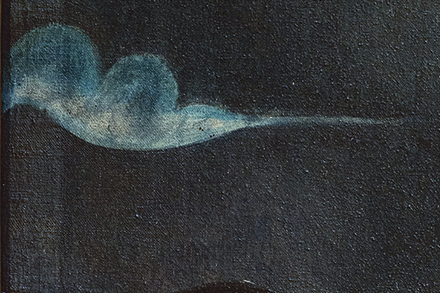
I received this book for review on the same day that Dorothea Tanning was making headlines in the auction world, breaking records with the sale at Christie’s of a tiny but key early work for more than £4 million. Her prices have risen an astonishing sevenfold in the past year, as collectors cotton on to her significance as a Surrealist; and while she may still be trailing on Leonora Carrington’s coat-tails, she looks to be steadily catching up.   Born in America to Swedish parents, Tanning was the very model of a fiercely independent artist, and her works are singular and disquieting like few others. She was largely self-taught as a

How sure are we that all the Michaelina Wautiers at the RA are by her?

Roll up, there’s a new old master in town. Or a new old mistress, if you prefer. Michaelina Wautier (1614-89) is revealed here as a painter who excelled within the genres of her time: flower painting, portraiture, emblematic tronies, and, if the scholars are right, classical epic, too. The new Royal Academy show cracks open the received idea of what a Flemish woman operating in the decades immediately after Rubens and Van Dyck could achieve. Her c.1650 self-portrait at the easel is a confident statement. She is enthroned under a mantel of lusciously painted black velvet, which looks restrictive, but emerging from it comes her agile, three-dimensional painting hand. Her

This Hockney show is disorientatingly enjoyable

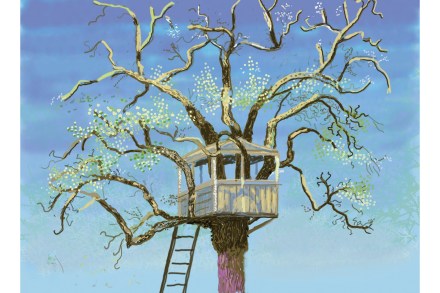
When so much contemporary art is riven with obscurity and angst, it is disorientating, at first, to encounter something as straightforwardly enjoyable as Hockney’s latest exhibition. Aged 88, the artist went out into his garden in Normandy with his iPad to make a visual diary of the year 2020. A hundred or so of the iPad sketches he made have been put together here, blended into a frieze, a walk-through panorama of the seasons rendered with Vivaldi-like virtuosity. As we move along the curve of this frieze, we see nature through Hockney’s bright yellow spectacles As we move along the curve of this 90-metre frieze, we see nature through Hockney’s

Ovid puts today’s radicals to shame

It’s a crisp afternoon, and in a darkened room in central Amsterdam a woman is being smothered in snakes. Projected on to three walls is a massive video close-up of her face. She is young and beautiful  and remarkably composed: just a nose twitch here, an eyelid flutter there, as a python wriggles across her mouth or languidly caresses her cheekbone with its tail. In the room behind me, another woman stares fiercely back. Her shoulders are bunched with muscle, arms stiff at her sides, like a nightclub brawler about to nut someone. But it’s the bull’s horns sprouting from her forehead, and the mane of matted fur marching down

The art of ageing

More than 30 contemporary artists have contributed to the Wellcome Collection’s latest exhibition, which asks what it’s like to age at a time of unparalleled longevity. But as so often happens at the Wellcome’s exhibitions, it’s the ephemera that draws the eye first.  ‘These 2 men are the same age,’ says a leaflet advertising Kellogg’s All-Bran breakfast cereal. ‘One has driving power – energy – the will to succeed. The other is listless – tired all the time – it is an effort for him to plod through each day’s work.’  The point being that ageing is, to a not inconsiderable degree, something we do to ourselves, and something we

Marvellous but repetitious: Gwen John – Strange Beauties reviewed

A pilgrimage to Cardiff Central, sorry, Caerdydd Canolog (according to the signage in the station, which also had my return train’s destination ‘Lundain Padd’ton’) to see the new Gwen John show. She is being lauded as Wales’s greatest artist, but she left Tenby at 18 in 1895, and never went back. After studying at the Slade she moved to Paris, fell in love with Rodin, and adopted the Catholic faith. She ended her days in Meudon in 1939, leaving a cache of work that her nephew Edwin John thankfully rescued before the Nazi invasion, and that the National Museum of Wales (now National Museum Cardiff) had the foresight to acquire

How fantastic to see Hogarth’s largest paintings in their original glory

The long overlooked staircase by Hogarth at St Bartholomew’s Hospital has been cleaned and restored in a £9.5 million scheme. It is now open to the public, the management says, for the first time since the 1730s, although when I lived nearby in the 2000s, I used to slip in to look at it sometimes. No one seemed to mind. Murals are of course the original site-specific artworks, and you have to enter a working hospital to see this one. Literally: turn right for the clap clinic, turn left for the Hogarth mural. Turn right for the clap clinic, turn left for the Hogarth mural You might pass a small

Constable changed the course of painting, not Turner

Flanders and Swann; Tom and Jerry. Some things come in pairs. Like Turner and Constable, even though our two most famous painters were more like chalk and cheese than cheese and pickle. They were close contemporaries: Turner was born in 1775, Constable a year later. Both painted landscapes. But that’s almost all they had in common. In every other way that matters, personal and artistic, they could hardly have been more different. Turner was a prodigy, a student at the Royal Academy Schools from the age of 14 and an associate (ARA) at 24. That same year, Constable had only just enrolled in the Schools, and was not elected ARA

The thrill of Stanley Spencer

‘Places in Cookham seem to me possessed by a sacred presence of which the inhabitants are unaware,’ wrote Stanley Spencer. Mystically devoted to the Berkshire village near the Thames where he grew up, Spencer was synonymous with Cookham as early as 1912, when he was at the Slade; ‘Cookham’ was his nickname. His greatest work is probably ‘The Resurrection, Cookham’ (1924-7), and he lived out his life there. He became known for pushing an old pram full of paints around town. The former Wesleyan Chapel, where he worshipped as a boy, is now the Stanley Spencer Gallery. So it was intriguing to come across this new show connecting him with

Why is divorce so seldom addressed in art?

Two years ago I was flown to Reykjavik to interview the Icelandic performance artist Ragnar Kjartansson. It was a weird old trip, booked in at 48 hours’ notice, but Ragnar was consistently charming and generous. Indeed, the only slightly touchy moment came when I asked him about his 2012 video installation The Visitors, a berserk undertaking split across nine screens, in which the artist and an entourage of musician friends spend 52 minutes chanting the baleful refrain from a song written by his then recent ex-wife. The artist tensed up as he considered the question. ‘Shit, I gotta go,’ he said. He probably did, but his reticence might also have

A Spectator poll: What is the greatest artwork of the century so far?

Slavoj Zizek        Hegel thought that, in the movement of history, the world spirit passes from one country to another, from the East to the West. Something similar happened at the beginning of the 21st century: the world spirit passed from cinema, the art of the 20th century, to the TV series. At the top of my list are three sci-fi dystopias: Charlie Brooker’s Black Mirror, which takes place in a world just a little ahead of ours where tendencies we clearly discern today have become reality; Patrick Somerville’s Station Eleven, a uniquely optimistic utopia depicting how performing art can save the human spirit after a global apocalypse; and Three-Body, a

The genius of William Nicholson

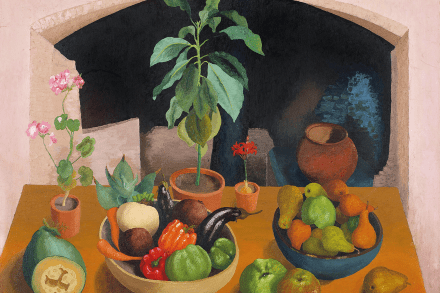
Even if you think you don’t know William Nicholson, it’s a fair bet that you’ve come across his work. If you’ve read those excellent children’s books, The Velveteen Rabbit or Clever Bill, you’ll have taken in his drawings – never wholly sentimental, even the rabbit – into your mental world. And if you’ve seen his woodcuts (they’re everywhere) – say, of Queen Victoria looking stout and dour – you’ll have noticed their economy, their clever use of space and their humour. This exhibition has the familiar elements of his work, but also the grander stuff: the still lifes, the landscapes, the portraits. Then there are the unexpected aspects – who

The Two Roberts drank, danced, fought – but how good was their art?

The Two Roberts, Robert MacBryde (1913-66) and Robert Colquhoun (1914-62), are figures of a lost British bohemia. Both born in Ayrshire, they met on their first day at the Glasgow School of Art, becoming lifelong partners and painters. Well-connected in louche literary London, their conversational barbs were recorded by Julian Maclaren-Ross, their jig-dancing antics noted by Joan Wyndham, their drunken fights observed by Anthony Cronin – so that one sometimes forgets what sort of art they made. This show, staged in a former municipal building in Lewes, is a reminder. The work is haunted, unbeautiful British neo-romanticism, second cousin to Piper and Sutherland. They established this angsty, angular modernist style

Lice combs, vaginal syringes and cesspits: at home in 17th century Holland

The room is dark, the lighting deliberately low. At its centre stands a solitary object: a yellow and green earthenware vessel decorated with biblical symbolism. It’s a fireguard – or ‘curfew’ – used to keep households safe as peat fire embers smouldered through the night. Around it is a mocked-up fireplace, conjuring up that liminal moment when everyone is still asleep and the day has yet to stir. Ths scene is set, the world outside silenced. This is how Amsterdam’s Rijksmuseum has chosen to answer one of its most frequently asked questions: what was daily life really like? Rather than mounting the usual parade of paintings and fine furniture, curators

The melancholy genius of Joseph Wright of Derby

If you lived in the 1760s and were affluent enough – and curious enough – science could be a family affair. The instrument maker Benjamin Martin actually marketed scientific equipment for amateurs, complete with an instruction manual listing simple, edifying experiments for home enjoyment. And so in 1768, in ‘An Experiment on a Bird in the Air Pump’, Joseph Wright (1734-97) painted a group of family and friends attempting Experiment 42 in Martin’s manual. You’re sure to have seen it: a darkened room with a white bird wilting in a glass bulb while the faces of the participants – a magus-like scientist, a fashionable couple, a frightened little girl burying

Are Vermeer’s paintings really coded religious messages?

The Delft painter Johannes Vermeer, now probably the most beloved artist of the Dutch Golden Age, had an unusual career. His reputation in his lifetime was small. For some reason he painted almost exclusively for the van Ruijvens, so only those who knew the family would have been able to view much of the work. One foreign observer who did see a painting owned by a baker (probably handed over in security for a large overdue account) was incredulous at what the owner claimed was the value of a small picture by an unknown artist. After Vermeer’s death, and the sale of the collection for very little on the death

The best artist alive? Probably

Taking place every October in Regent’s Park, the Frieze fair is probably the biggest event in London’s art calendar. It is also, as a spectacle, by far the least enjoyable. With works crammed into cubicle-sized booths, and punters battling a crossfire of air kisses and the palpable stress ricocheting around the flimsy partitions, I struggle to think of a worse context in which to look at art of any stripe. Still, it always used to be an occasion to take the pulse of the contemporary art world, to pick out the visual signatures of the reigning avant-garde tendency and clock what Jeremy Deller was doing with his facial hair at

The staggering beauty of Fra Angelico

In 1982, Pope John Paul II surprised a few people by beatifying Fra Angelico, the 15th-century Dominican friar from near Fiesole. It’s not clear why he put Beato Angelico on the road to sainthood, given that the artist didn’t perform any miracles. And yet, after spending a few hours immersed in his works, which are both profoundly sacred but also staggeringly beautiful, you begin to understand the decision. He was certainly a hit with popes. Pius XII was such a fan that, in 1955, when the first major Fra Angelico exhibition was held at the Vatican, to mark 500 years since his death, he gave a handwritten speech praising the