Mussolini

The British spy at the heart of Italy’s Churchill conspiracy theory

Dante’s Beach, Ravenna In an attempt to avoid the infernal heat and the rhythmic maracas-style racket of the cicadas in the trees, I have become nocturnal. I go to bed at 7 a.m. and get up at 4 p.m. This may seem wrong, a sign of moral failure or mental breakdown, but let me remind you that the wise men bearing gifts did the same. As Longfellow writes: ‘And they travelled by night and they slept by day,/ For their guide was a beautiful, wonderful star.’ It is that moment in the night before the cock-crow hour, and the silence is more or less total, apart from the stirrings of the sea a mile or so across the fields.

Why should it be shameful to study the Classics?

Mary Beard opens this book with a recollection of her first meaningful encounter with the ancient world. It was 1960, and she was five years old, visiting the British Museum with her mother. Peering into one of the glass cases, she spotted an unassuming, oddly triangular loaf of bread from ancient Egypt. Seeing her struggle to obtain a better view, a curator lifted the object out. ‘Never under-estimate how powerful the simple act of unlocking a museum case can be,’ Beard reflects 66 years on. She describes Talking Classics as ‘more a memoir than a thesis’, but it is also a thought-provoking meditation on wonder. It was thauma, she reflects, that Aristotle held responsible for sparking philosophical thought to begin with.

The Venice Ghetto was a landmark in the history of Jewish persecution

The word ‘ghetto’ is said to derive from the Venetian dialect term for ‘foundry’: ghèto. In the early 16th century, on the orders of the Doge, Jews were herded en masse from the centre of Venice to the Ghetto Nuovo, or New Foundry district, where metal workers had long cast cannon for the Venetian fleet. The Ghetto – the first of its kind on the Italian peninsula and anywhere in the world – became a model for segregated Jewish quarters throughout Europe. It was soon blighted by poverty, malnutrition and disease. The Ghetto Nuovo was a landmark in the history of Jewish persecution. In this fascinating history of the New Foundry and its inhabitants, Alexander Lee conjures the Adriatic seaport in all its strange glory.

The joy of French car boot sales

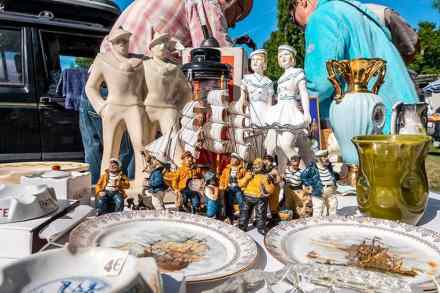
Every Saturday morning Michael rises at four and drives down to the Côte d’Azur to the Magic World car boot sale. He goes early to see the bric-à-brac unloaded in order to pounce on any interesting old bottles, which he collects. His collection of 18th-century champagne bottles is probably second to none. While hunting bottles, he might also impulsively buy something that tickles his fancy. His knowledge of old things is wide and deep and occasionally he unearths something that would make an Antiques Roadshow crowd gasp with avarice. Then he goes for a swim in the Mediterranean. He’s back at home by ten. Last month he came back with a set of late 19th-century French pharmacy scales. The glass and mahogany cabinet alone is a work of art.

My family is still divided on the meaning of ‘genocide’

Dante’s Beach, Ravenna We were en route to the junk shop in search of a pair of robust tongs for the fire in the kitchen, which is a vital source of heat in winter, and I was rowing with my family about the Jews. There were seven of us inside the Land Rover Defender: me at the wheel in notional control with my ‘Comandante’ Basque beret on my head to cover my bald patch. Next to me was my wife Carla, who has the best deck this side of Rimini, and five of our six children behind. The language being spoken was Italian as usual, but there were frequent shouted bursts of English from the back such as ‘Just shut the fuck up!’ or ‘Jesus fucking Christ!’, often involving several voices in unison like a chorus.

The diminutive dictator who ruled Spain with an iron fist

General Franco died on 20 November 1975, and with the 50th anniversary just passed, this biography – the first in years – of the man who ruled Spain with an iron fist for nearly four decades is timely, incisive and authoritative. Written by a former Madrid correspondent of the Economist, it’s also an up to date and highly accessible introduction to 20th-century Spanish history. Born in 1892 into a middle-class family, Francisco Franco shared a bedroom with his younger brother Ramon, who later won international fame as Europe’s ‘equivalent of Charles Lindbergh’. There were few signs, however, that eminence also awaited Francisco. A weedy child, who dutifully got by at school, he had a difficult relationship with his domineering Freemason father.

Art deco gave veneer and frivolity a bad name

The jazz style was the blowsy filling between the noxious crusts of two world wars. More than 30 years passed between its flourishing and its remonikered second coming as art deco, no longer gaudy ephemera, now a legitimate addition to the inventory of fashions. The coinage was initially ascribed to the antique dealer John Jesse. It is, more probably, Bevis Hillier’s. He was a scholar of the style, then organiser of its first retrospective, far ahead of the game, in Minneapolis-St Paul in 1971.

Michael Gove, Mary Wakefield, Mitchell Reiss, Max Jeffery and Nicholas Farrell

32 min listen

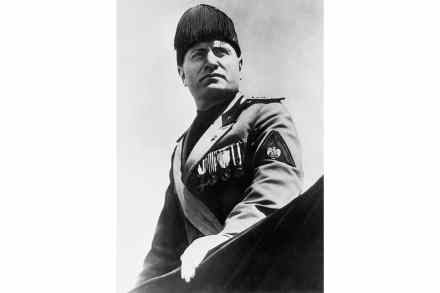
On this week’s Spectator Out Loud: Michael Gove offers up some advice to Keir Starmer (1:33); Mary Wakefield examines the rise of the ‘divorce party’ (7:28); Mitchell Reiss looks at the promise and peril of AI as he reviews Genesis: Artificial Intelligence, Hope and the Human Spirit, a collaboration between the former CEO of Google Eric Schmidt, the former chief research and strategy officer at Microsoft Craig Mundie, and the late US Secretary of State Henry Kissinger (13:52); Max Jeffery listens to The Armie HammerTime Podcast as the actor attempts to reverse his spectacular downfall (20:45); and, Nicholas Farrell reveals the time he got drunk with the ghost of Mussolini (25:24).  Produced and presented by Patrick Gibbons.

Pre-Mussolini, most Italians couldn’t understand each other

Towards the end of Dandelions, Thea Lenarduzzi’s imaginative and deeply affecting memoir, the author quotes her grandmother’s remark that there are tante Italie – many Italys. ‘Mine is different to hers, which is different to my mother’s, which is different to my father’s, and so on down the queue,’ she writes. These Italys – of fascismo, of Garibaldi, of emigrants living in Sheffield and Manchester, of 31 dialects – are not far-flung historical oddities confined to documentaries or textbooks but are, in Lenarduzzi’s account, the patchwork story of one family.

Do Russians support Putin’s war?

Everyone is calling the conflict in Ukraine Putin’s war and insisting that it has nothing to do with the Russians themselves. The nightmare would end – they tell us – if only Vladimir Putin were to disappear in a coup. They used to say the same thing not only about Adolf Hitler but also Benito Mussolini. Yet both the Fuhrer and the Duce would have been as powerless as the speakers at Hyde Park Corner if they had not enjoyed the willing consent of a critical mass of Germans and Italians.

The horrors of 1922 included atrocities, assassinations and the rise of Mussolini

Sixty years ago the Daily Express ran a regular feature entitled ‘Just Fancy That!’ Each short segment highlighted some strange coincidence or weird incident that would hook readers’ interests. Human oddities, unlucky mischances, freaks of nature and improbable statistics were dealt out every day. It made for easy reading, but sometimes gave pause for thought. Nick Rennison has adapted the ‘Just Fancy That!’ formula to make a handy book for the bedside table in the visitors’ bedroom. In crisp and evocative snatches, he gives monthly summaries of global events, domestic episodes, newspaper sensations, sporting triumphs and cultural acclaim during 1922.

Dark days in the Balkans: life under Enver Hoxha and beyond

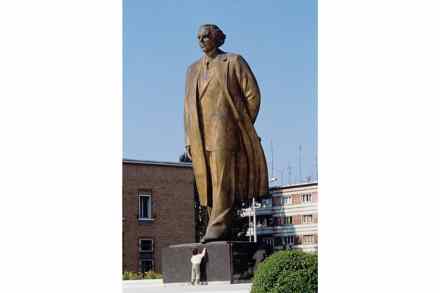
For many in the West, Albania remains as remote and shadowy as the fictional Syldavia of the Tintin comics. The country came into existence only in 1912, with the decline of the Ottoman Empire. Its first ruler, King Zog, was ousted by Mussolini when he invaded in 1939. Hitler used Albania as a springboard for the Nazi invasion of Greece. The national resistance against Italy and Germany was led by the Albanian partisan supremo Enver Hoxha (pronounced ‘Hodger’). After expelling the hated occupiers, in 1946 the artful Hoxha proclaimed himself head of a newborn socialist republic.

Churchill did admire Mussolini

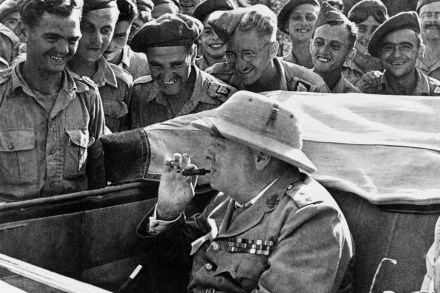
In his ruthless demolition of Geoffrey Wheatcroft's new Churchill biography in last week's Spectator, the historian Andrew Roberts pours scorn on the ‘insinuation that Churchill had fascist leanings in the 1920s’ as it is not supported by ‘any actual evidence (for there is none)’. Well, however justified his hatchet job of Wheatcroft's book is in general, Roberts is deeply mistaken about Churchill and fascism. Like so many in the 1920s and well into the 1930s, from all sides of the political divide, Churchill was a fervent admirer of the former revolutionary socialist Benito Mussolini and the fascist movement which he founded in 1919.

Italians believe the coronavirus outbreak shows their superiority

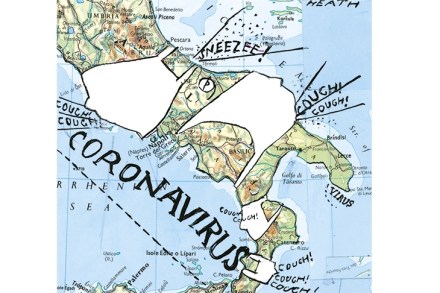
During times of contagion, you begin to understand why fascist salutes were once so popular. The foot-tap is replacing the handshake in parts of China. Here in Italy, which has far more cases of coronavirus than any countries except China, Iran and South Korea, a left-wing government is telling Italians not to shake hands. It reminds me of 1922, when Mussolini came to power after the first world war had killed 20 million and the Spanish flu epidemic of 1918 at least as many again. The Duce replaced the handshake with the Roman salute. The handshake, according to fascist ideology, had to go because it was unhygienic and bourgeois. The connection Mussolini made between the power of the hand to infect the human body and the power of the bourgeoisie to infect the body politic is fascinating.

Repo women

Aren’t you getting a little sick of the white cube? I am. I realised how sick last week after blundering around White Cube Bermondsey, where the walls are so pristine no label is allowed to sully them, struggling to work out what I was looking at. I was reduced to photographing the works in order and tracing my itinerary in ink on the ground plan — shoot first, ask questions later — and even then I had to keep getting the attendants to tell me where exactly on the plan I was. One of them admired my wiggly drawing. Well, it was a surrealist exhibition. Dreamers Awake sets out to repossess surrealism for women.

In defiance of Il Duce

The details of Mussolini’s fascism are perhaps not quite as familiar in this country as they might be. Even quite well-meaning people have a tendency to treat him as, in part, a joke. Just how horrible the period was needs to be explained with reference to individual lives. Caroline Moorehead’s book about the Rosselli family, who were central to the principled resistance, has a valuable and sobering subject. They were intellectual and idealistic Jews. The matriarch, Amelia, from an eminent Venetian family, had married a clever and dissolute man. They had three sons together before Amelia had enough of his philandering, and left him with the children. She settled in Florence, and made a place for herself in radical Italian society.

Nazis and the dark arts

When he came to power Hitler had a dowser scour the Reich Chancellery for cancerous ‘death rays’. Before flying to Scotland Rudolf Hess had his horoscope drawn up by a personal astrologer. Himmler backed research on the Holy Grail and medieval devil worship (‘Luciferism’) and sent an SS expedition by the explorer Dr Ernst Schafer to Tibet in 1938 to investigate the ancient Indo-German ‘Aryan’ origins of Buddhism. Himmler also founded the SS Witches Division, which collected evidence in eastern Europe in the second world war that Teutonic ‘wise women’ had been persecuted and burnt in a Jewish-Catholic Inquisition plot against volkisch German culture and blood.

On the make

Rudolfo Paolozzi was a great maker. In the summer, he worked almost without stopping in the family’s ice-cream shop, making gallon after gallon of vanilla custard. In the slack winter months, when the shop made its money on cigarettes and sweets, he built radios from odds and sods. It was on one of these homemade radios that he heard Mussolini’s declaration, on 10 June 1940, that Italy, the country he had left for Scotland 20 years before, had entered the war. That night a mob attacked the ice-cream shop at 10 Albert Street, off Leith Walk in Edinburgh. The family lived above the shop and later, Rudolfo’s son Eduardo, then aged 16, would remember how it had been before and what the men had done.

Umberto Eco really tries our patience

Colonna, the protagonist of Umberto Eco’s latest novel, is the first to admit he is a loser. A middle-aged literary nègre, he dreams of writing his own book, but can’t break the habit of alluding to others’ work: he even refers to himself as a ‘man without qualities’. One day in 1992, he is commissioned to ghostwrite a memoir about a newspaper being launched in Milan. Domani (‘Tomorrow’) will never be published: a tycoon who finances it plans to use it as a blackmail tool in his shady dealings. The proposed title of the memoir, Domani: Yesterday, sets the tone for this pacy book that doesn’t take itself too seriously.

Double thinking, double lives

This hefty volume is misleadingly titled. It is not an escapist sort of travel book, ushering the visitor around the homelands and houses of the Italian literati. It is a selection of the author’s previous literary articles, mostly book reviews for the New York Review of Books and the London Review of Books, and believe me it is hardly a sunshine ramble or a splash in the pool. On the contrary, it is an immensely learned, elegantly written rehearsal of the significance of 23 Italian writers, from Dante in the 13th century to Antonio Tabucchi in our own, and as such it amounts I think to an assessment of the Italian sensibility as a whole. Nobody is better qualified than Tim Parks to guide us through such an experience.