Middle east

Did Bibi miscalculate?

From our US edition

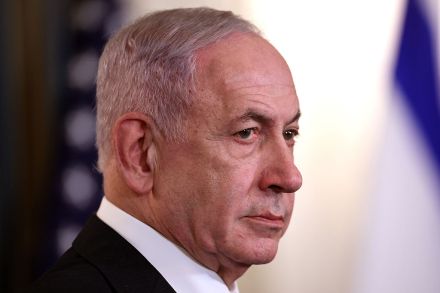
In her new memoirs, 107 Days, Kamala Harris recounts that in July 2024 she had an important meeting about Israel and the Gaza Strip. Harris, who was running for the presidency, hoped to show that she could pressure Israeli prime minister Benjamin Netanyahu into reaching a ceasefire with Hamas. “Netanyahu’s hooded gaze and disengaged demeanors,” she writes, “made it clear to me that he was running out the clock." His only goal was a temporary ceasefire and to undermine the Biden administration. “He wanted Trump in the seat opposite him,” Harris recalls. “Not Joe, not me. Netanyahu wanted the guy who would acquiesce to his every extreme proposal for the future of Gaza’s inhabitants and add his own plan for a land grab by his developer cronies.

Netanyahu

Trump pitches Gaza peace plan

From our US edition

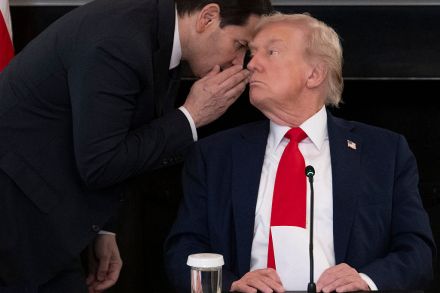
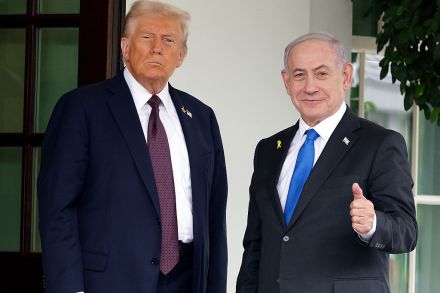
Donald Trump is perhaps one of the world’s most gifted salesman. But as he was speaking at the White House with Israeli Prime Minister Benjamin Netanyahu today, even he had trouble selling his 20-point peace plan to end the war in Gaza. This wasn’t for a lack of trying. “Today is an historic day for peace,” Trump told the assembled press corps. Calling today "a beautiful day, potentially one of the great days ever in civilization,” Trump went on to outline in broad strokes his diplomatic initiative, which aimed to thread the needle between Netanyahu’s vocal objections to a Palestinian state and the Arab world’s demand that any plan put forth provide the Palestinians in Gaza and the West Bank with an opportunity to take control of their own future.

Donald Trump

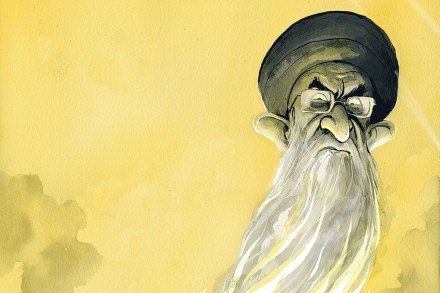
The mullahs mean their threats

From our US edition

I write at the very beginning of July. Where I live in Connecticut, people are unpacking flags and bunting in preparation for the July 4 festivities. Elsewhere, the trumpets sounding to accompany Donald Trump’s triumphant announcement of a ceasefire between Iran and Israel have subsided. It is clear that the President dearly wants peace. So does Israel. For its part, Iran wants the extermination of “the Zionist entity” and, beyond that, the eventual extinction of the “Great Satan,” America. How do I know? Iranian spokesmen keep telling the world just that. I wonder if Salman Rushdie has reached out to Trump now that he has joined the exclusive club of those upon whom the lunatics in charge of Iran have explicitly pronounced a fatwa – a death sentence.

Iran
Saudi Arabia

Will we stop Saudi Arabia developing a nuclear weapon?

From our US edition

Though clearly resolved to declare victory over Iran’s nuclear program and move on, Donald Trump has been beset this summer by assertions that the Iranian effort has not been “obliterated” after all and that the mullahs will be back at work in no time cranking out the requisite materials for a bomb. Therefore, according to some, Trump should bomb some more – or at least unleash Israel to do so. Whether or not Trump is pushed into further strikes, the argument over Iranian nuclear weapons capabilities will not go away.

Iran

Who replaces the ayatollahs if the Iranian regime falls?

From our US edition

The masked gunmen of Jaish al-Adl are probably not the kind of people Donald Trump had in mind when he talked about “regime change” in Iran. A terror group in Iran’s southeastern Baluchistan region, they have a bloodthirsty record of shootings and suicide bombings, all part of a jihad for a separate Baluchi homeland. They are, however, excited by Israel and America’s bombing campaign, which they see as a once-in-a-lifetime chance to achieve their goal. As they declared recently: “We extend the hand of brotherhood to all the people of Iran to join the ranks of the Resistance.” How long that brotherhood would last is another matter.

We should welcome regime change in Iran

On the first night of what Donald Trump has called the ‘12-day war’ between Israel and Iran, someone spray-painted a message in Farsi on a wall in Tehran: ‘Thank you, Israel. Hit the regime hard – and leave the rest to us.’ That graffiti encapsulated the feelings of many millions of Iranians. If you doubt this, you can read (in translation from Farsi) opposition accounts such as ManotoOfficial and IranIntlTV on Instagram or Telegram, which in the past two weeks have been posting countless messages and comments in support of Israel. These accounts are widely seen by people inside Iran, who use VPNs to get around the regime’s online censorship systems.

Israel’s attack on Iran has been planned for years

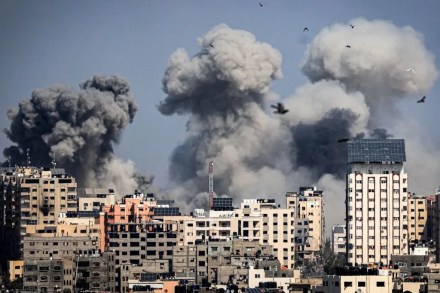
It was clear at the time that what happened on 7 October 2023 would change the Middle East. What was perhaps less obvious was the impact it would have on the rest of the world. In addition to the suffering in Gaza, the weeks and months that followed Hamas’s horrific attacks have seen the reconfiguration of Syria, the effective dismantling of Hezbollah, the decapitation of the leadership of Hamas and now, with Iran, a time when the decision-making in Tehran, Jerusalem and Washington will have a profound effect on the shape of the emerging global order. Historians like to think about turning points and moments in the past where the wheels of history turned. In one sense that is, of course, true about 7 October.

Come friendly bombs and fall on Iran

It is heartening to see the lefties out marching in defence of mullahs and their enlightened rule of Iran. The Stop the War Coalition has been organising protests the length and breadth of the country, demanding ‘Hands off Iran’. It is harder for the marchers to identify specifically with their cause than it is when they’re marching about Palestine: Iranians don’t wear keffiyehs. Perhaps they should take on their marches an intricately woven carpet or some uranium-235. Or maybe design some sort of badge that can be cheaply manufactured and somehow symbolises the country – I would suggest the image of a crane with a homosexual dangling at the end of it.

What to do about Iran?

From our US edition

China is surely America’s most dangerous threat over the medium term, but Iran is surely the most dangerous right now. The Islamic Republic would be even more dangerous if the Israelis had not decimated the Mullah’s deadly “ring of fire,” the proxy forces across the Middle East funded, armed, trained, and directed by Tehran. But removing these proxies (all except the Houthis in Yemen) does not remove Iran’s nuclear threat. That threat now faces the Trump administration and Netanyahu’s coalition in Israel, leaving only difficult choices. To understand the current problems, we need to grasp a series of fundamental issues surrounding Iran’s nuclear program. • What are Iran’s objectives?

Fordow

Iran is feeling emboldened

From our US edition

After the cautious optimism of the early rounds of US-Iran talks, and Donald Trump’s Gulf roadshow, the US government has claimed that Israel is preparing for a possible strike on Iranian nuclear facilities, a parallel piece of political theatre to the ongoing talks between US and Iranian negotiators.  This is nothing new. B-52 bombers and Israeli fighter jets have been rehearsing this for the past few months, and many years before that. This is some very public cold water being poured on the talks, just as they set to advance to the complicated bit. Aware that there is every chance the talks may not progress beyond these thorny rounds, both sides are preparing the ground for that failure.

Mullahs

Wes Anderson’s latest is as hollow as anything AI could come up with

AI is coming for everyone’s jobs, but especially mine. There is absolutely no good reason for The Spectator to keep sending me to watch films with my wobbly biological eyes, not when they could just feed the latest releases into a computer, set the parameters to ‘contemptuous’, and watch a perfectly serviceable review assemble itself, for free, before their eyes. They’re losing money on every column. They may as well be paying a scriptorium full of monks to illuminate each copy of the magazine on vellum. I’m doomed, surplus to requirements, and the 21st century will replace me with a few lines of code. But it could be worse. At least I’m not Wes Anderson.

How Donald Trump will be impeached

From our US edition

From the election in November to the presidential inauguration in January, media commentators took turns to pronounce the Trump “Resistance” dead. I know I did. The line was too tempting. As Trump stormed back into the White House, his power looked irresistible. His enemies seemed so broken and defeated. We all spoke too soon. “NeverTrumpism” is a reaction to Trumpism, as natural as magnetic repulsion and the urge to defy and destroy his presidency hasn’t vanished. In fact, look closely and you can see a “Resistance 2.0” gathering momentum in response to the second Trump administration.

impeached

The creeping Dubai-ification of London

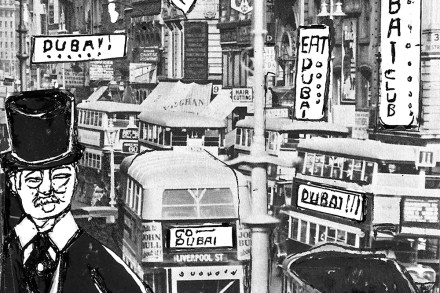
In December 2023, a TikTok influencer called Maria Vehera opened a packet of ‘Dubai chocolate’ in her car and filmed herself eating it. Since then, 124.6 million people have watched her swallowing this pistachio-based gloop. Oh Maria, what have you done? A butterfly flaps its wings – or an influencer eats some chocolate – and soon people are setting their alarms for 5 a.m. to queue outside Lidl for the ‘drop’ of LIDL’S OWN DUBAI CHOCOLATE. Guess what? M&S made one too (£8.50). Morrisons then had the bright idea of creating a pistachio cream Easter egg. Waitrose’s Dubai chocolate was so popular it had to ration it to two bars per person. Knock-off brands now feature at the counter of almost every news-agent in London.

Would Trump really bomb Iran?

A satellite picture shows six American B-2 Stealth bombers parked on the runway at Diego Garcia. The planes – each with a distinctive flying-wing shape, like a bat – are sinister, otherworldly, and seem like a portent. Surely that’s the idea. Donald Trump has warned the Iranian leadership there ‘will be bombing the likes of which they have never seen before’ if they don’t agree to limit their nuclear programme. The US is also sending a second aircraft carrier to the Middle East and anti-ballistic missile batteries to Israel. This is Trump’s ‘coercive diplomacy’, and so far, it’s working.

Why air strikes on the Houthis will fail

From our US edition

The United States has begun what may well prove to be a long — and likely doomed — campaign of airstrikes against Ansar Allah, also known as the Houthis, in Yemen. For a year and a half since October 2023, the Houthis have been highly successful in disrupting shipping in the Red Sea, launching missiles and drones at cargo ships, oil tankers, and passenger vessels — hitting some, sinking fewer, and inconveniencing millions. Every conflict the US has engaged in since 2001 has ended before America achieved its objectives. While few ships have been hit, even fewer have been sunk, and fewer still have resulted in casualties, the numbers speak for themselves.

Houthis

If you have two hours to spare, spend it anywhere but here: The Years reviewed

The Years is a monologue spoken by a handful of actresses, some young, some old enough to carry bus passes. They stand in black costumes on a white stage explaining to us the significance of memory, history and feelings. Then the story begins. The narrator is a precocious chatterbox born in France during the war who has no aim in life other than sensual gratification. She’s not a human being, just a cluster of nerves, like a taste bud, that registers nice or nasty, sweet or bitter. And that’s it. She has no morality. She doesn’t develop personally because her nature isn’t capable of emotional growth. Yet the audience is expected to admire everything she says about her experiences. Sex is her obsession. As a teen, she brings herself to orgasm on the corner of a table.

Does Trump deserve the Nobel Peace Prize?

Donald Trump told reporters this week that he deserved the Nobel Peace Prize for helping to free some of the Israeli hostages in Gaza. But, he went on, ‘they’ll never give it to me’. Trump’s chances of putting on white tie and tails in Oslo have receded to a distant speck with his plan to Make Gaza Great Again – by removing the Palestinians.  This proposal may have doomed the brittle ceasefire and jeopardised further hostage releases. It has made the prospect of a deal between Saudi Arabia and Israel vanishingly small. It might also end up destabilising Jordan and Egypt. But the agent of chaos in the Oval Office is doubling down and no one, least of all Trump, knows how this will end.

The Donald’s plans for the Middle East

The former US president Jimmy Carterdied, at the age of 100, just before news of an imminent deal to free the last of Israel’s hostages in Gaza. Carter’s presidency was crippled by his own hostage crisis, American diplomats held captive in Tehran. Freeing them became his administration’s highest priority, and he worked on it for every single one of the 444 days the crisis lasted, often to the exclusion of anything else. By contrast, the Israeli Prime Minister, Benjamin Netanyahu, resisted massive domestic pressure to do a deal for his hostages in order to pursue the war aim of destroying Hamas. You could call this statesmanship, or something else, but it is a kind of victory for Netanyahu.

A dreamy, if overly ambitious show: Silk Roads, at the British Museum, reviewed

Towards the end of the British Museum’s Silk Roads show, there is a selection of treasures found in England. Among them is a copper flagon made in Syria and buried in Essex in the late 500s. It is believed that the flagon belonged to an English mercenary who went to fight for the Byzantines against the Sassanians in the 570s. The flagon’s looping handle would have held it tight to a saddle, so perhaps it came to England attached to the warrior’s horse as he rode home from his adventures in the East. There are many spectacular objects in this exhibition. Very many If objects are to inspire more than awe in us, we also need a handle.

Trump’s new world order

From our US edition

Donald Trump’s ascension to his second presidency comes with a new cadre of followers and sidekicks, in the form of a cabinet built almost entirely from fresh faces. This is not a president interested in continuity, which he signaled early on, stating on social media that Nikki Haley and Mike Pompeo — his erstwhile United Nations ambassador and secretary of state — would have no place in his second administration. The first name wasn’t a surprise, given the obvious tension he had with the woman who was his last challenger in the primary. The second was because Pompeo had been a dutiful supporter of Trump while in office, wrote a book defending their shared record on foreign policy and rejected the opportunity to run himself.

Trump