Middle east

A shaky truce in Beirut

From our US edition

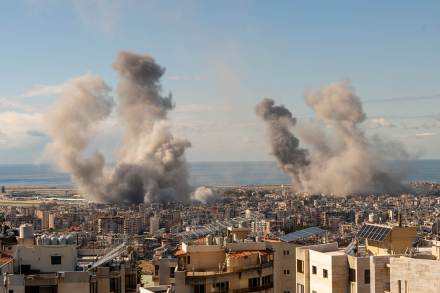
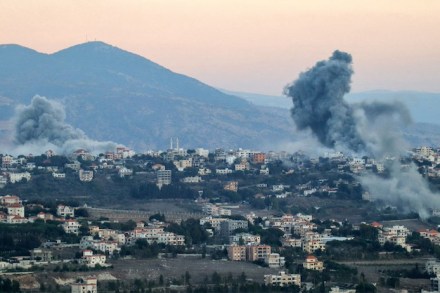
There was an Israeli drone buzzing over Beirut at 8 a.m. on November 27, four hours after a ceasefire was signed and the shooting stopped. It soon disappeared and a feeling of elation set in. It was the best day we had in months. The Christmas spirit was palpable in Gemmayzeh, a Christian neighborhood in central Beirut. Christmas decorations were going up and the bars were packed that night. Lebanese in the diaspora who’d canceled their holiday trips to Beirut rebooked that day. But the Lebanese also know how to manage their expectations — they always hedge good news with dread. The agreement lays out an initial sixty-day truce, during which Hezbollah is required to withdraw its forces north of the Litani river, and the Lebanese Army is to take its place.

beirut

Can you tell a good guy from a bad guy in the Middle East?

Please excuse the tone of jubilation, but I have been dancing around my kitchen for the past couple of days, in a state well beyond elation, at the removal from power of Bashar al-Assad’s murderous regime in Syria and its successors who, I am convinced, are a little like our own Liberal Democrats, except with powerful rifles. No matter how deranged the dictator, whoever is trying to oust him will be about ten times worse An expert from a Washington D.C. thinktank told the BBC that some of the chaps who had marched through from Homs to Damascus were ‘moderates’. This was the line taken up, so far as I am aware, by the corporation itself and indeed most other broadcasters – hence my delight.

What comes after Trump’s decisive victory?

From our US edition

The candidate who said Americans should be “unburdened by what has been” is now a has-been. The irony will be lost on her.  Also lost was the traditional graciousness — and normative necessity — of conceding defeat clearly and publicly as soon as the loss is certain. When Donald Trump failed to take that step in 2020, after exhausting his court challenges, he violated that norm and deepened our national divisions. He deepened that chasm on January 6 and later by continuing to challenge the rightful winner. Those challenges threaten the peaceful transfer of power and undermine the public consensus that the winner holds office legitimately.  Kamala Harris learned from Trump’s mistake and repeated it.

donald trump victory

Inside the ‘next Gaza’

From our US edition

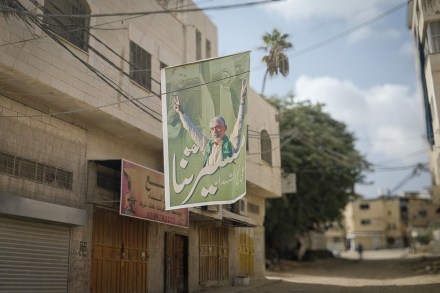
West Bank It’s hard to take someone seriously when they tell you: be extremely careful, that part of the West Bank is just like Gaza now. Hyperbole, surely, but duly noted. It was late August and I was heading to the Tulkarem and Nur Shams refugee camps, two adjacent Palestinian communities in the northern occupied West Bank which are now the site of almost daily fighting between the Israeli military and Palestinian armed groups. The nearby city of Jenin has seen even worse violence. On the approach to Nur Shams, the landscape suddenly turned from an impoverished yet benign Arab countryside into a full-blown urban war zone. Dust filled the air, Hamas propaganda was plastered all around, an Israeli drone circled above us.

Gaza
Biden

The endgame: Biden’s quest for a foreign policy legacy

From our US edition

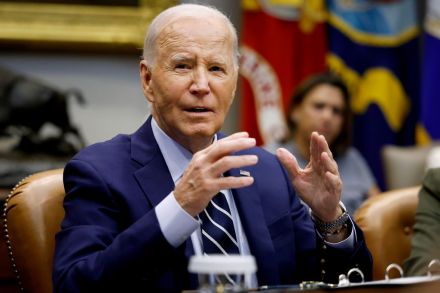
President Joe Biden only has a few more months before he steps out of the White House, hands over the keys to his successor and spends his remaining days soaking in the Delaware sun. But before he enjoys retirement, the lifelong public servant has a big piece of unfinished business: scoring a major foreign policy win that will secure his place in the history books. Unfortunately, dreaming about being a statesman is one thing; being one is quite another. The two conflicts that would give the president that coveted status — the wars in Gaza and Ukraine — aren’t presently amenable to diplomatic resolution. And while Biden and his advisors may be committed to doing the impossible, all the commitment in the world won’t do much if the combatants are intent on slugging it out.

Where does Lebanon go from here?

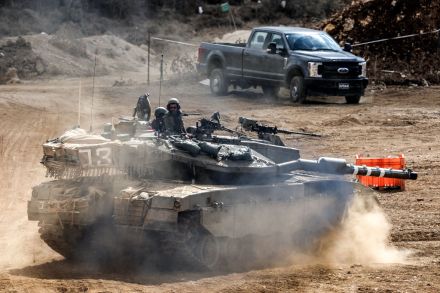
Israel’s overt ground intervention into Lebanon is now entering its third week.  So far, the Israel Defence Forces (IDF) have advanced just a few kilometers in and established control in a number of locations across the border.  The IDF itself has described its ground action on the border as consisting of ‘limited, localised and targeted raids.’  Standing at a border observation post a few days ago, my impression was that this description appears accurate, at least for now.  Looking across to the towns of Bint Jbeil, Maroun a Ras, Ain Ebel and Ait a Shaab, we heard the occasional sound of artillery cannons.  Twice, we saw interceptions of ordnance fired from the Lebanese side.

Where conflict in the Middle East goes from here

From our US edition

Anything written on the Middle East at this moment in history is almost instantly out of date. As Lenin said: “There are decades where nothing happens; and there are weeks where decades happen.” The Arab-Israeli war in 1967, the Iranian revolution in 1979, the invasion of Iraq in 2003...the region may once again be at one of those forks in the road that dictate the fate of nations for years to come. Journalists’ predictions age like milk out of the fridge. Nevertheless, here are some: Israel attacks Iran. This isn’t a hard one. The question is what form that attack will take. The prime minister, Benjamin Netanyahu, has wanted to bomb Iran’s nuclear facilities before, only to be stopped by the US.

Biden-Harris should help destroy Iran’s nuclear and missile infrastructure

From our US edition

Iran on Tuesday launched 180 ballistic missiles against Israel, a democracy the size of New Jersey. It was the largest escalation to date in a year-long, seven-front war waged by the world’s leading state sponsor of terrorism against Israel, the United States, and global maritime shipping. President Joe Biden and Vice President Kamala Harris must come to terms with the fact that this attack resulted from their own foreign policy — subsidized by billions of dollars in US sanctions relief, legitimized by strategic accommodations to Tehran, encouraged by pressure on Israel and invited by the non-stop signaling of American fear of escalation.

‘Blood! Blood! Blood!’: the Battle of Fallujah twenty years on

From our US edition

The National Museum of the Marine Corps has built a replica of a street in Fallujah, the Iraqi city that American forces half-destroyed in order to save it, in a battle twenty years ago next month. The exhibit promises visitors an “interactive experience that puts them in the boots of a Marine as he kicks down the door of a suspected insurgent stronghold.” If you have a games console, you can play Six Days in Fallujah, a video game where you take the role of a Marine who narrates the action of a firefight that really happened. Fallujah has become a symbol of gritty heroism and sacrifice — or for critics of the Iraq war, occupation and war crimes. Either way, the battle is deeply lodged in the popular imagination.

Fallujah

Iran and Hezbollah don’t want a war with Israel

Hezbollah’s response to the killing of senior official Fuad Shukr, when it finally came, was a more minor event than anticipated. For weeks, both the Lebanese Shia Islamist group and its Iranian patron have been threatening a terrible revenge for the recent assassinations in Beirut and Tehran. It is now clear, however, that neither Hezbollah or Iran wishes to risk a descent to all put war at the present time. Iran appears to have relegated its response to the killing of Hamas leader Ismail Haniyeh in Tehran to some point in the future. Hezbollah, meanwhile, sought to target two sites of high significance – the Mossad headquarters, and the HQ of the IDF’s signals intelligence unit, 8200. Both are located close to Herzliya, north of Tel Aviv, in central Israel.

Can anything stop a full-scale conflict in the Middle East?

The fact that the Middle East stands on the brink of a catastrophic war can be explained by a scene from The Gentlemen, Guy Ritchie’s preposterous but entertaining series on Netflix about aristocrats and sarf London drug-dealers. The dim eldest son of a duke is in trouble with a vicious gangster, who makes him dress up as a chicken and cluck and dance while the whole excruciating spectacle is filmed. Eventually the humiliation is too much for the aristo: he gets the family Purdey and blasts the gangster in the face – even though he knows that there will be terrible consequences.

A superbly written and insightful account of the contemporary American military

From our US edition

Four-star Marine General Kenneth “Frank” McKenzie headed US Central Command — CENTCOM, covering the Middle East — from spring 2019 until spring 2022. It was an eventful, and stressful, three years: taking out long-time Islamic State head Abu Bakr al-Baghdadi in 2019, then notorious Iranian Quds Force commander Qasem Soleimani in early 2020 and overseeing the disastrous final withdrawal from Afghanistan in 2021. Prior to CENTCOM, McKenzie had spent four years in two top-level Joint Chiefs staff posts, and before that he served multiple tours of duty on the ground in Afghanistan. As a younger officer he had been in the Pentagon on September 11, 2001, when American Airlines Flight 77 hit; he was commissioned in the Marine Corps right out of the Citadel in 1979.

McKenzie

The fight among the olive trees

From our US edition

Rmeich, Lebanon On October 8, 2023, the day after the Hamas massacre further south, Hezbollah started firing rockets into northern Israel, reviving the world’s most dangerous game of chicken. What exactly has been accomplished? Hezbollah’s Shia supporters may be comfortable with their leader Hassan Nasrallah and his Iranian sponsor, head of state Ali Khameini, risking open war. But no one consulted the local Christians, who would never agree to spill Lebanese blood as a supportive gesture to Hamas. “The south [of the country] belongs to Lebanon, and Hezbollah cannot go to war on behalf of the Lebanese,” says Marc Saad, a spokesman for the Lebanese Forces, a Christian political party and Hezbollah opponent.

Hezbollah

Inside the new Arab-Israeli alliance

As Jordanian fighter jets shot down Iranian drones heading for Israel on Saturday night, there were joyful cries of Allahu Akbar on the ground as some people lent out of their windows to cheer the drones they thought were getting through. King Abdullah II was depicted on social media wearing an Israeli military uniform complete with the Star of David and he must dearly wish that Israelis would shut up about their ‘new strategic alliance’ with old enemies like Jordan, Egypt and Saudi Arabia. Jordan’s foreign minister was forced into an unconvincing declaration that they would shoot down anyone’s drones, not just Iran’s. Yet, the important fact remains: this is the first time, as far as anyone can remember, that Jordan’s armed forces have fought to defend Israel.

Israel and the making of nations

From our US edition

A little more than five years ago the Israeli intellectual Yoram Hazony published The Virtue of Nationalism. Its final chapter was particularly poignant. After World War Two and the Holocaust, Hazony explained, two opposing views arose as to how such evils could be prevented from happening again. One side pointed toward the creation of the European Union and held that nationalism must be repudiated and condemned. The other endorsed the creation of Israel as a nation-state for the Jewish people, with a nationalism of its own. Israel is a test case for the survival of nationalism everywhere. That may sound like an exaggeration — surely nationalism has demonstrated ample staying power.

Israel
invasion

Why do neoliberals get let off the Iraq War hook?

From our US edition

Given the worldwide climate of political intolerance, I often try to deflect hostility by prefacing my comments with the old saw that “reasonable people can disagree.” As a strong believer in intellectual freedom and Socratic dialogue, I do in fact feel duty-bound to listen to the other side, or sides, of an argument. Yet there’s one subject about which I’m as close-minded as the wokest opponent of liberal debate — a topic about which I won’t brook any disagreement because there simply isn’t any reasonable form it can take: that is, George W. Bush’s and British prime minister Tony Blair’s disastrous decision to invade Iraq in 2003 and its deadly, still hugely malignant consequences in the Middle East.

Why the post-Cold War era is far from over

From our US edition

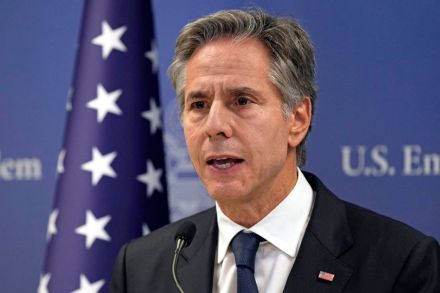
In various speeches this year, secretary of state Antony Blinken has declared that “the post-Cold War era is over.” The announcement passes all but unnoticed, eclipsed as it is by crises, such as war in Ukraine and the Middle East, that make Blinken’s point in a starker way. Not so long ago, it was taken for granted that the fall of the Berlin Wall in 1989 had inaugurated a new age. Now, if Blinken is correct, the lifespan of that age hardly exceeds the duration of Tom Brady’s career as a star quarterback. By 1989, the United States had ascended to the status of sole remaining superpower. No challenges to its global primacy — political, military, economic or cultural — were visible anywhere on the horizon.

post-Cold War era

When righteous anger goes wrong

From abroad I’ve returned to a country where, in language to which the word ‘shrill’ hardly does justice, fellow British commentators have been letting fly on both sides of the argument about Gaza and how Israel should or should not respond to Hamas’s unspeakable attacks on 7 October. There’s just one thing both sides – the British Muslim banner-wavers and those who bay for a war of attrition in Gaza – seem to agree upon: that whatever the answer might be, it is, in the most important sense of the word, simple. It is not simple. Things so rarely are. The simple bit is who – in the immediate – is right and who wrong, and few of us need reminding of the answer here. But it’s the hard bit that matters: can a remedy be found by the means proposed?

What did Hamas think was going to happen?

Much misfortune the woebegone couldn’t have seen coming: a raging fire in the house next door that spreads to yours. The invention of some kooky technology called ‘the internet’ that puts your travel agency out of business. Yet other calamities are foreseeable. If you suddenly stop filing tax returns without a good excuse – like, dying – it’s a virtual certainty that the all-seeing computer will come after you. So when compounding fees and interest leave you skint, our sympathies are apt to be scant. What did you think was going to happen?

How is Joe Biden handling the Israel-Palestine crisis?

27 min listen

This week Freddy speaks to Dennis Ross, former Middle East coordinator under President Clinton and current Professor of the Practice of Diplomacy at Georgetown University. They discuss Biden's visit to Israel this week, how his policy towards the Middle East borrows from Trump and Obama, and how we can discern between the public posturing and private desires of Middle Eastern states.