Middle east

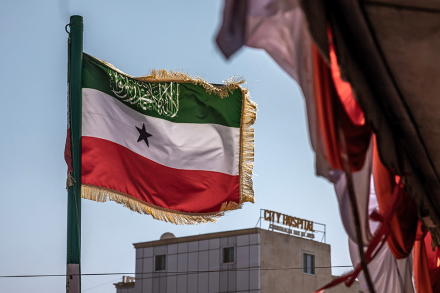
Britain must recognise Somaliland

Somalia has been a byword for failed statehood and violence for so long that the calm of Somaliland, its neighbour to the north-east, feels almost miraculous. In contrast to Mogadishu, the bustling streets of Hargeisa, Somaliland’s capital, aren’t patrolled by grim-faced soldiers. Government offices aren’t huddled behind blast walls and protected by foreign troops. You can wander into a restaurant and enjoy camel steaks (a national speciality) without worrying about al-Shabaab terrorists. It is a former British colony which, for 30 years after independence, was joined to what had been Italian Somaliland. It seceded after the collapse of the Somali state in the late 1980s but no foreign country formally

‘We’re into 1973 territory now’: How bad could the energy price crisis get?

The energy price surge caused by war in the Middle East has sent shockwaves through Westminster. It has pushed up inflation and the cost of borrowing, causing panic in the cabinet and the recognition that government intervention could be needed on a vast scale to support the cost of living. The Prime Minister told a private audience: ‘The assumption that the growth of the developed countries can proceed steadily on the basis of cheap energy has been shattered almost overnight.’ He further observed: ‘The problem is not simply one of inflation. It is the whole structure of the economy.’ In the Treasury there is something approaching a siege mentality. The

Portrait of the week: More migrants cross, government borrowing rises and Trump warns Iran

Home Iran fired two missiles at the British-American military base at Diego Garcia, 2,400 miles away, one being intercepted by a US warship and the other failing in flight. The attack was revealed after Britain announced that in ‘collective self-defence’ it was allowing America to use British bases to launch strikes on Iranian sites targeting the Strait of Hormuz. The Israel Defence Forces said that Iranian missiles could now reach London. Iran told Yvette Cooper, the Foreign Secretary, that it had the right to respond to British ‘participation in aggression’. In the seven days to 23 March, 984 migrants crossed the Channel in small boats; the French coastguard rescued another

Portrait of the week: HMS Dragon sets sail, Mandelson records released and Trump declares victory

Home John Healey, the Defence Secretary, visited Cyprus after criticism of Britain’s response to drone attacks on the RAF base there. The Cyprus High Commissioner said: ‘The people are disappointed, the people are scared, the people could expect more.’ The destroyer HMS Dragon sailed for Cyprus from Portsmouth on 10 March. Rachel Reeves, the Chancellor of the Exchequer, told the Commons that inflation was likely to rise; the Office for Budget Responsibility estimated an extra percentage point increase on prices by the end of the year. The Prince of Wales aircraft carrier would not head for the Middle East. President Trump of America said: ‘That’s OK, Prime Minister Starmer… We

I love Dubai. Get over it

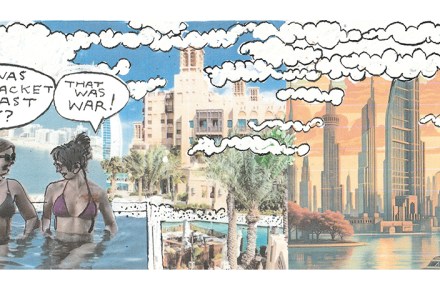
I am in Dubai where we are doing our best to keep calm and carry on. Granted, the sudden instruction to ‘seek immediate shelter’ in the early hours of Sunday morning was unnerving, but with the exception of excitable ‘influencers’, few people are cowering in their basements. On Saturday evening, I’d hotfooted it to the Palm Jumeirah. When my kids told me the Fairmont hotel had been hit, I didn’t believe them. The idea that the mad mullahs would start lashing out in this direction seemed completely absurd. Though the Emiratis take a far dimmer view of Islamic extremism than our own craven British government, they are careful not to

Why I’m a proud Zionist

The bomb shelter reserved for ‘volunteers’ at Kibbutz Dafna near the town of Kiryat Shmona in northern Israel was definitely substandard. It was damp and smelly, more like a lavatory than a fortified bunker, and not considered fit for the kibbutzniks: a pampered species compared to us. But when the Soviet-built ordnance started raining down on us, it did its job. We emerged, unharmed, the following morning, blinking into the dawn light. The terrorists had not succeeded in hitting the kibbutz with a single Katyusha rocket. No, I’m not embedded with the Israel Defence Forces on the Lebanese border, although the area surrounding Kiryat Shmona was under fire from Hezbollah

Is this Starmer’s finest hour?

A friend met Mary Wilson on the Isles of Scilly, where she and her husband, Harold, had a home. She confided in him that Harold, now in the grip of senile dementia, was slipping away from her; and she felt the lonelier because in the eyes of the world his achievements as prime minister were slipping away as well. My friend rehearsed with her the list: the Open University, etc. Then he added this: there is a kind of achievement in high office which by its very nature is unlikely to burn brightly in the world’s imagination after a leader has gone, but is no less luminous for being forgotten.

Iran’s cheerleaders are on borrowed time

Predictions ageing poorly is an occupational hazard for journalists and commentators. But few have gone as sour as those made by Roger Cooper in this magazine, in February 1979, days after the last Shah of Iran had fled. In a piece titled ‘Is Khomeini the leader for Iran?’, Cooper speculated that ‘the prospect… of an Iranian Islamic republic… must surely be more alluring to all but the most stubborn defenders of an ancient regime’. The Ayatollah, he suggested, offered Iranians ‘the chance to resume their true national and cultural identity’. No suggestion was made of imminent death squads, mass imprisonments or looming theocratic repression and economic hardship.  Cooper can be

Iran’s useful idiots: British complicity in Tehran’s terror

It is still unclear what will happen next in Iran. I fervently hope the current protests will cause the tyrants of Tehran to fall. It would be ideal if they were replaced by an order that allowed the population of 90 million to choose who governs them and build a country that reflects joy, hope and modernity rather than Ali Khamenei’s brutal Islamist fever dream. I also know how unlikely that is. Revolutions tend to produce disorder and repression, not order and freedom. After the failure of the Constitutional Revolution in 1911, there was a decade of chaos, fragmentation and insurgency in Iran until Reza Khan seized power and founded

Whisper it quietly, peace in the Middle East?

15 min listen

Donald Trump says Israel and Hamas have agreed to the first phase of his Gaza peace plan. During an extraordinary round table on the Antifa organisation last night, the US President was interrupted by Marco Rubio and given a hand-written message. He told those assembled at the White House: ‘I was just given a note by the Secretary of State saying that we’re very close to a deal in the Middle East, and they’ll need me pretty quickly.’ Details of the deal, including the finalised list of prisoners Hamas wants freed as part of an exchange, remain unclear. But the first part of the deal could be set in motion

Come friendly bombs and fall on Iran

It is heartening to see the lefties out marching in defence of mullahs and their enlightened rule of Iran. The Stop the War Coalition has been organising protests the length and breadth of the country, demanding ‘Hands off Iran’. It is harder for the marchers to identify specifically with their cause than it is when they’re marching about Palestine: Iranians don’t wear keffiyehs. Perhaps they should take on their marches an intricately woven carpet or some uranium-235. Or maybe design some sort of badge that can be cheaply manufactured and somehow symbolises the country – I would suggest the image of a crane with a homosexual dangling at the end

Israel’s attack on Iran has been planned for years

It was clear at the time that what happened on 7 October 2023 would change the Middle East. What was perhaps less obvious was the impact it would have on the rest of the world. In addition to the suffering in Gaza, the weeks and months that followed Hamas’s horrific attacks have seen the reconfiguration of Syria, the effective dismantling of Hezbollah, the decapitation of the leadership of Hamas and now, with Iran, a time when the decision-making in Tehran, Jerusalem and Washington will have a profound effect on the shape of the emerging global order. Historians like to think about turning points and moments in the past where the

We should welcome regime change in Iran

On the first night of what Donald Trump has called the ‘12-day war’ between Israel and Iran, someone spray-painted a message in Farsi on a wall in Tehran: ‘Thank you, Israel. Hit the regime hard – and leave the rest to us.’ That graffiti encapsulated the feelings of many millions of Iranians. If you doubt this, you can read (in translation from Farsi) opposition accounts such as ManotoOfficial and IranIntlTV on Instagram or Telegram, which in the past two weeks have been posting countless messages and comments in support of Israel. These accounts are widely seen by people inside Iran, who use VPNs to get around the regime’s online censorship

Wes Anderson’s latest is as hollow as anything AI could come up with

AI is coming for everyone’s jobs, but especially mine. There is absolutely no good reason for The Spectator to keep sending me to watch films with my wobbly biological eyes, not when they could just feed the latest releases into a computer, set the parameters to ‘contemptuous’, and watch a perfectly serviceable review assemble itself, for free, before their eyes. They’re losing money on every column. They may as well be paying a scriptorium full of monks to illuminate each copy of the magazine on vellum. I’m doomed, surplus to requirements, and the 21st century will replace me with a few lines of code. But it could be worse. At

The creeping Dubai-ification of London

In December 2023, a TikTok influencer called Maria Vehera opened a packet of ‘Dubai chocolate’ in her car and filmed herself eating it. Since then, 124.6 million people have watched her swallowing this pistachio-based gloop. Oh Maria, what have you done? A butterfly flaps its wings – or an influencer eats some chocolate – and soon people are setting their alarms for 5 a.m. to queue outside Lidl for the ‘drop’ of LIDL’S OWN DUBAI CHOCOLATE. Guess what? M&S made one too (£8.50). Morrisons then had the bright idea of creating a pistachio cream Easter egg. Waitrose’s Dubai chocolate was so popular it had to ration it to two bars

Would Trump really bomb Iran?

A satellite picture shows six American B-2 Stealth bombers parked on the runway at Diego Garcia. The planes – each with a distinctive flying-wing shape, like a bat – are sinister, otherworldly, and seem like a portent. Surely that’s the idea. Donald Trump has warned the Iranian leadership there ‘will be bombing the likes of which they have never seen before’ if they don’t agree to limit their nuclear programme. The US is also sending a second aircraft carrier to the Middle East and anti-ballistic missile batteries to Israel. This is Trump’s ‘coercive diplomacy’, and so far, it’s working. In his first presidency, Trump resisted the war hawks, such as

Does Trump deserve the Nobel Peace Prize?

Donald Trump told reporters this week that he deserved the Nobel Peace Prize for helping to free some of the Israeli hostages in Gaza. But, he went on, ‘they’ll never give it to me’. Trump’s chances of putting on white tie and tails in Oslo have receded to a distant speck with his plan to Make Gaza Great Again – by removing the Palestinians.  This proposal may have doomed the brittle ceasefire and jeopardised further hostage releases. It has made the prospect of a deal between Saudi Arabia and Israel vanishingly small. It might also end up destabilising Jordan and Egypt. But the agent of chaos in the Oval Office

If you have two hours to spare, spend it anywhere but here: The Years reviewed

The Years is a monologue spoken by a handful of actresses, some young, some old enough to carry bus passes. They stand in black costumes on a white stage explaining to us the significance of memory, history and feelings. Then the story begins. The narrator is a precocious chatterbox born in France during the war who has no aim in life other than sensual gratification. She’s not a human being, just a cluster of nerves, like a taste bud, that registers nice or nasty, sweet or bitter. And that’s it. She has no morality. She doesn’t develop personally because her nature isn’t capable of emotional growth. Yet the audience is

The Donald’s plans for the Middle East

The former US president Jimmy Carterdied, at the age of 100, just before news of an imminent deal to free the last of Israel’s hostages in Gaza. Carter’s presidency was crippled by his own hostage crisis, American diplomats held captive in Tehran. Freeing them became his administration’s highest priority, and he worked on it for every single one of the 444 days the crisis lasted, often to the exclusion of anything else. By contrast, the Israeli Prime Minister, Benjamin Netanyahu, resisted massive domestic pressure to do a deal for his hostages in order to pursue the war aim of destroying Hamas. You could call this statesmanship, or something else, but

A dreamy, if overly ambitious show: Silk Roads, at the British Museum, reviewed

Towards the end of the British Museum’s Silk Roads show, there is a selection of treasures found in England. Among them is a copper flagon made in Syria and buried in Essex in the late 500s. It is believed that the flagon belonged to an English mercenary who went to fight for the Byzantines against the Sassanians in the 570s. The flagon’s looping handle would have held it tight to a saddle, so perhaps it came to England attached to the warrior’s horse as he rode home from his adventures in the East. There are many spectacular objects in this exhibition. Very many If objects are to inspire more than