Margaret thatcher

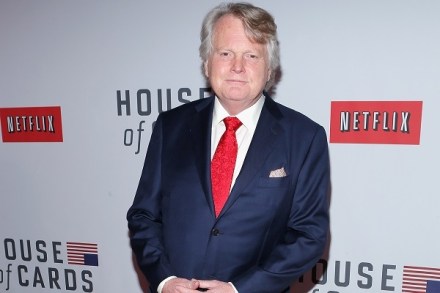
Michael Dobbs shuffles Cards in the House of Lords

Filming of season three of Netflix’s House of Cards will begin in four weeks’ time in Maryland, creator Michael Dobbs revealed at Norman Tebbit’s book launch last night. Lord Dobbs, who was an advisor to Thatcher, said that he had to ‘tone things down a little bit’ to make the plot ‘credible’, although he’s clearly proud of his work, telling Mr S: ‘Kevin [Spacey] is wicked. It’s like the West Wing for Werewolves’. When he’s not the toast of America’s TV, Dobbs sits on the Lords’ standards committee.

Evangelically wishy-washy

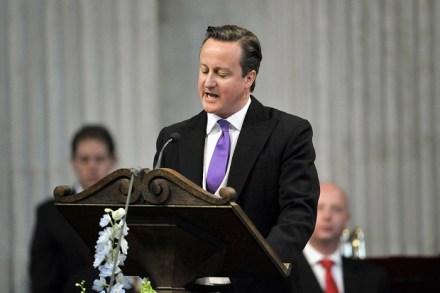
David Cameron has said Christians should be more evangelical “about a faith that compels us to get out there and make a difference to people's lives”. In an article for The Church Times he said he wanted to infuse politics with Christian values such as responsibility, hard work, charity, compassion, humility and love. In recent years politicians have often been shy about talking about religion, reluctant perhaps to invoke the authority of God to score a political point. William Ewart Gladstone had no such anxiety, saying in 1832: “Restrict the sphere of politics to earth, and it becomes a secondary science”.

Handbagged: if this is what luvvies think being ‘fair’ to Thatcher is, I’d like to see their idea of ‘unfair’

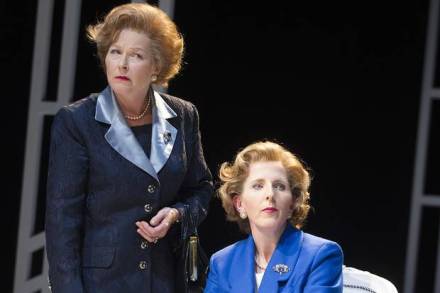
Why do the Left love the Queen? Sure, most of us agree she’s done an excellent job in a difficult role, only screwing up a few major life decisions: tricksy choice of husband, wintry education of her children, fastidious attitude to peanuts. But as one of the country’s richest women, a symbol of economic equality she ain’t.  So it’s a mark of just how willfully hostile theatreland is to Margaret Thatcher that in Moira Buffini’s new play about the two, Handbagged, it’s the Queen, not the grocer’s daughter, who emerges as the courageous voice of social justice. It’s a frustrating blindspot in an otherwise witty, watchable production, anchored by consummate performances from Marion Bailey and Fenella Woolgar.

Tony Benn – feminist

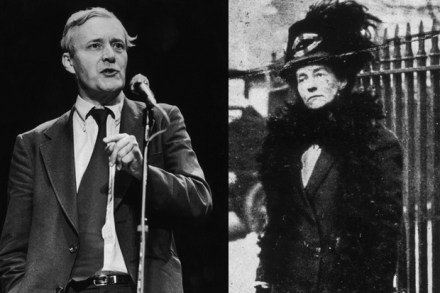
You may not have agreed with the late Tony Benn’s politics, but as Mary Wakefield points out in her interview with him, ‘his faith in humanity had deep roots’. And here’s an example of it. Back in 2001, Benn took it upon himself to erect a plaque in the broom cupboard where Emily Wilding Davison hid during the night of 2 April 1911, the night of the Census, so that she would be registered as a resident at the House of Commons. As a woman - with no right to elect who could stand in Parliament - it appealed to her sense of irony that she would be recorded as a resident. Speaking in the House of Commons in 2001, Benn said: 'I have put up several plaques—quite illegally, without permission; I screwed them up myself.

Death brings out everyone’s inner Mary Whitehouse

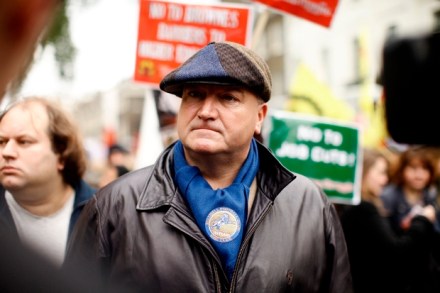
Shortly after Bob Crow’s death was announced on Tuesday, Nigel Farage sent the following tweet: ‘Sad at the death of Bob Crow. I liked him and he also realised working-class people were having their chances damaged by the EU.’ Cue a predictable storm of Twitter outrage. Farage was attacked for trying to make political capital out of Crow’s death. The following tweet, from the ex-FT journalist Ben Fenton, was typical: ‘Bit off-key for @Nigel_Farage to link a tribute to Bob Crow to his own anti-EU rhetoric, I think.’ Now, some of those criticising Farage had a political axe to grind. They were claiming Farage had broken an unwritten rule that they clearly don’t believe in themselves.

Behind the scenes at Spitting Image

If Margaret Thatcher is remembered by many more as a caricature than as her actual self, then blame Spitting Image. The show, which ran from 1984 to 1996, portrayed her variously as a cross-dresser, a fascist and a bully but, to her credit, she never complained. Or, if she did, there’s no record of it. Of course it wasn’t just politicians who were targeted; anyone in the public eye was also ripe for a takedown, from Kylie to the Queen. Deference — what’s that? To mark the programme’s 30th anniversary, BBC4 has created an Arena documentary that takes viewers behind the scenes of the Spitting Image process; introducing us to the people who made the programme come to life, and the hellish hours they worked keeping the show on the road.

Imagine the uproar if a Tory minister proposed a “do-it-yourself” NHS?

Consider these two stories. In the first the government approves new proposals to overhaul hospital outpatient care. For once there isn't even much of a pretence that this will improve healthcare. It's simply a question of saving money. Assuming the new proposals are implemented, many outpatients who had hitherto enjoyed (or endured) hospital appointments will be told to stay at home. Indeed they will be advised to "treat themselves". What contact they have with a consultant will be of the "virtual" kind. Perhaps a quick telephone call if they are lucky. More likely, they will be told to download an app to their phone which will tell them how to manage their condition or affliction. In other words, a DIY NHS. Or, if you prefer, some real privatisation.

PMQs sketch: Cameron kick-starts a Miliband recovery

Cunning work from Milband at PMQs. He played Syria like a fixed-odds betting machine and came away with a minor jackpot. Last week he had urged the prime minister to accept a few hundred of the neediest Syrian refugees. Cameron duly said OK. Today Miliband was quick to claim a victory for decency, for humanity, and for Miliband. ‘I welcome this significant change of heart,’ he said. Choice word, heart. He’s got it. And Cameron hasn’t. That’s the implication. Miliband tried the same tactic with the 50p tax rate. When Ed Balls unfurled this this new policy he got a mixed bag of reviews. Economists put their fingers in their ears and ran around wimpering. The popular response suggested it was a top ten hit.

When Arthur Scargill tried to buy his council flat, he bought Thatcherism

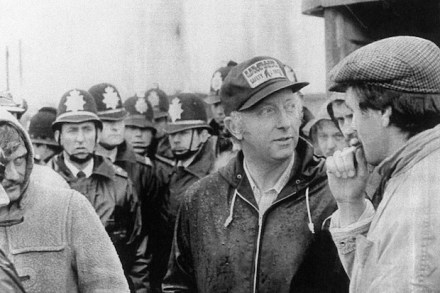
There’s a case for saying that the Thatcher government’s sale of council houses was the biggest redistribution of wealth this country has ever seen. I’m not so sure. I am pretty convinced it was a contributory factor in the vaulting property greed which has been with us ever since, and the propensity of people to view a home as nothing more than collateral, to be ever traded up. I would have expected the former leader of the NUM, Arthur Scargill, to have agreed with me about this – and then some. But, as a consequence of some digging by the BBC, we now know that Arthur tried to buy his Barbican flat under the right-to-buy scheme, back in 1993, so that he might likewise make a killing.

There are no shortcuts to reforming the EU

What does a Tory eurosceptic look like? Loud chalk-stripe, a flash of red braces and the faintest whiff of a lunch-time gander at the Members’ wine list. Right? Wrong. The economic trauma of the crash of 2008 is demanding that just as Conservative modernisation needs to be rebooted to suit the new Age of Austerity – with a focus on bold economic reformism to tackle welfare traps, worklessness and failing schools instead of the cultural gesturism of early modernisation – so too the crisis demands a rebooted euroscepticism.  The Tory Party in Parliament has been transformed by the arrival of the Cameron generation: more entrepreneurial, impatient, ambitious and global in our outlook.

The EU had 30 years to create a single market, and failed – we need change

It is perhaps the most striking failure of the EU that nearly 30 years since Margaret Thatcher signed the Single European Act with the vision of a single trading market by 1992, that in 2014 we do not yet have a genuine single market in the services sector. This profound failure has cost the EU billions in economic growth and disproportionately affects the UK, which has a huge service industry base. The EU official website, with a delicious piece of understatement, comments: ‘Despite its achievements so far, the single market is not yet complete. Important gaps remain in some areas. Pieces of legislation are missing. And administrative obstacles and lacking enforcement leave the full potential of the Single Market unexploited.’ The cost of this failure is stark.

Can Lord Heseltine save the England cricket team?

Apologies may be in order. A few weeks ago, I was advocating aid for Australia. As we had set the place up, we had a duty when this once-proud daughter house was sliding into decline. We used criminals to get the country going, which worked well. Hard, amoral characters, they built a nation in their own image. That was Australia for two centuries: hard, amoral - and good at cricket. Then everything seemed to be going wrong. Perhaps it was the southern sun's fault: melting down toughness and leaving a vacuum for decadence. It was time for the mother country to come to the rescue with fresh supplies of convicts (we have plenty). With their restorative blood-lines, the hardness might return and the Aussies should be capable of playing proper cricket again, in fifty years or so.

The gospel according to Robert Halfon

The campaigning backbench MP Robert Halfon was invited to say grace at the First Annual Margaret Thatcher Memorial Dinner at Churchill College, Cambridge on Saturday night. It's not often you get table thumping after a prayer: 'For what we are about to receive, may the Lord make us truly grateful for the free market that keeps the price of food down and competition forever and ever. Amen.' Amen to that.

Welcome to Maggie Land

Mr Steerpike was among the throng that gathered at the East India Club on Thursday night to hear about the development of the Margaret Thatcher Centre, the project to perpetuate the legacy of Britain’s greatest post-war leader. Donal Blaney, the Thatcher Centre’s CEO, and Conor Burns MP invited the Lady’s ‘most fervent supporters’ to pledge £1,000 each in a ‘true sign appreciation to Lady Thatcher’. Blaney also explained why he is ‘devoting his life’ to the project, telling the predominantly male but surprisingly young crowd: ‘Lady Thatcher delivered; now it’s our turn.’ The organisers have drawn inspiration from the USA.

Nigel Lawson’s diary: My secret showdown with the Royal Society over global warming

The long-discussed meeting between a group of climate scientists and Fellows of the Royal Society on the one side, and me and some colleagues from my think-tank, the Global Warming Policy Foundation on the other, has now at last taken place. It was held behind closed doors in a committee room at the House of Lords, the secrecy — no press present — at the insistence of the Royal Society Fellows, an insistence I find puzzling given the clear public interest in the issue of climate change in general and climate change policy in particular. The origins go back almost a year, to a lecture by the president of the Royal Society, the biologist Sir Paul Nurse. In it he chose to launch a gratuitous personal attack on me, making a number of palpably false allegations.

Boris Johnson: greed can be good

Boris Johnson prides himself on being one of the few politicians who gets away with saying the unsayable. He stuck to that theme tonight with his Margaret Thatcher lecture to the Centre for Policy Studies, in which he argued that greed isn't a bad thing. He said: 'But I also hope that there is no return to that spirit of Loadsamoney heartlessness – figuratively riffling banknotes under the noses of the homeless; and I hope that this time the Gordon Gekkos of London are conspicuous not just for their greed – valid motivator though greed may be for economic progress – as for what they give and do for the rest of the population, many of whom have experienced real falls in their incomes over the last five years.

The PM’s musical tin-ear

The news that Hull has been crowned the UK’s City of Culture for 2017 was discussed at PMQs. The PM extolled the virtues of the city, and made special mention of native eighties alt rockers The Housemartins. However, with a crashing sense of inevitability, the band’s founder, Paul Heaton, was unhappy with the endorsement: ‘Well, apparently David Cameron likes ‘London 0 Hull 4’. Which part of the attack on his policies and rich friends did he like best???’  The poor wee lamb ranted for a while about Thatcherism, and then concluded: ‘Cameron has ruined my day.’ My heart bleeds. Still, you would have thought that Cameron might have learned his music lesson by now.

How ‘Help to Buy’ helps the Tories

Few images are more seared in the Tory consciousness than that of Margaret Thatcher handing over the keys to people who had brought their council house under ‘right to buy’. The image seemed to sum up the aspirational appeal of Thatcherism. I suspect that there’ll be a slight homage to these images when Cameron meets some of those that the government’s ‘Help to Buy’ scheme is helping onto the housing ladder tomorrow. Number 10 wants to show that the full scheme, which has only been running for a month, is already being used by a large number of people. The economics behind ‘Help to Buy’ might make many on the right nervous; even some Cabinet ministers are worried about it stoking another housing bubble.

John Cole: ‘An institution cherished by the viewing public’

The BBC’s former political editor, John Cole, has died aged 85. As their political reporter during the Thatcher era, he covered many major stories concerning her, including the miners' strike and the Brighton bombing. We have dug up from the archive a review, by John Campbell, of Cole’s memoir, ‘As it seemed to me’, from April 1995.  John Cole's Ulster accent was a shock to metropolitan ears when he became the BBC's Political Editor in 1981. Scottish or Yorkshire voices were no problem, but there was unfamiliarity amounting almost to incongruity in hearing that particular accent discoursing on subjects wider than the tribal politics of Northern Ireland.

The Grangemouth scandal shows it’s time to keep an eye on the Reds. Again

The most extraordinary thing about the scandal of Unite at Grangemouth and in Falkirk is how long it took the outside world to notice. Partly, this is an effect of devolution: almost nothing Scottish is now considered news in London, even if it is of kingdom-wide importance. Partly, it results from the loss of media and political attention to trade union affairs. So successful was Mrs Thatcher in taming union political power that newspapers laid off the labour correspondents who, in the 1970s and early 1980s, had been the aristocrats of the news room. As for the Tories, they have forgotten the Cold War arts of keeping dossiers on subversion.