Margaret thatcher

A response to my critics on global warming

My Spectator cover story on the net benefits of climate change sparked a lot of interest. There was an explosion of fury from all the predictable places. Yet not one of my critics managed to disprove my central assertion, that climate change is probably causing net benefits now and is likely to continue doing so for some decades yet. I’ve written responses to some of the critical articles and reproduce them here. 1. Duncan Geere in the New Statesman. Four paragraphs in his piece in turn begin with 'He's right...' so I am glad that Geere confirms that I am right about all my main points. If you read my article you will find that each of Geere's assertions about the eventual harm of climate change are also in my piece.

The Lady lives on

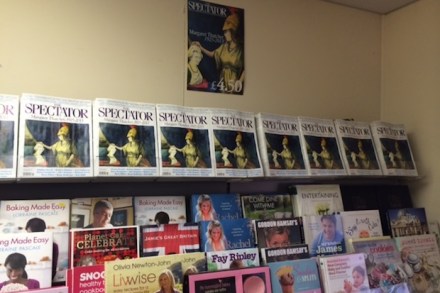
Margaret Thatcher's memory may be fading a little in England, but at least it still burns bright in Stanley. Here's a photo taken in a newsagent in the Falklands capital just this afternoon, where, six months after her death, copies of The Spectator's commemorative issue are still selling well. It does her — and us — proud.

Women think that David Cameron is out of touch for good reason

Well, the great breadmaking debate hots up. David Cameron neatly sidestepped the heffalump trap that Nick Ferrari put in his path in an interview on LBC when he asked him the price of a Value Loaf in Tesco or Sainsbury. As you and I know, dear reader, Mr Cameron would no more eat that stuff than his own fingernails, and I for one applaud his good sense. If you can afford not to, don’t. But his elegant solution to the problem of not knowing that loaf-shaped carbohydrate costs 47p (he thought bread costs ‘north of a pound’, which is true of the kind he eats, only double that) was to say that he makes his own bread, from flour milled in the Cotswolds, a process which takes all of 30 seconds in a breadmaker as a way of getting his children to eat granary loafs.

Thatcher’s legacy is alive and well. Don’t let Labour unravel it

Today the conference hall in Manchester paid our respects, once again, to Britain’s greatest peacetime leader, Margaret Thatcher. listen to ‘The Conseratives' tribute to Margaret Thatcher’ on Audioboo It is a source of never-ending pride for every Conservative MP that we represent a party which was led by the country’s first female Prime Minister. Baroness Thatcher did more to extend wealth and ownership across the country than any other politician. We are all better off because of what she did. But it’s not only in the conference hall in Manchester that Baroness Thatcher’s legacy is alive and well. Across the country we see the change in the transferring of wealth from the state to the people.

She lives on in our hearts and our wallets

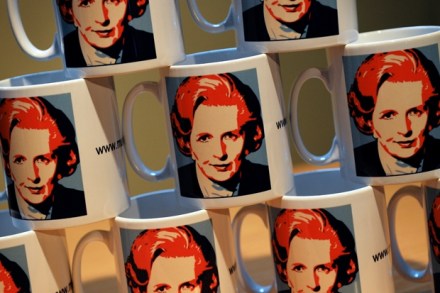
‘L'Angleterre est une nation de boutiquiers,’ said Napoleon, and now our greatest grocer’s daughter will be remembered with the highest honour this land can bestow: a shop. The Tories will open “Maggie’s Shop” at their conference and online. Think t-shirts and posters rather than milk and coal.

Jack Dromey: Labour let Thatcher become the champion of aspiration

When Margaret Thatcher passed away and the broadcasters, newspapers, and casual drinkers in pubs picked over what her legacy really was, one of the key policies mentioned - and praised - time and time again by those from all sides of the political spectrum was the Right to Buy. It was an iconic housing policy that helped people who would never have had a chance of making it onto the housing ladder realise the dream of owning their own property. It was an empowering policy (the detail, of course, is slightly more complicated: the way the policy was designed led to a reduction in the overall size of the social rented sector, but as an iconic gesture to a group of people who were not traditional shire Tories, it's hard to beat this one).

Yes, Royal Mail should be privatised.

In this morning's post: enticing offers from McDonald's, Domino's pizza, Sainsbury's a local clothes shop and a children's charity. Arriving later today: a couriered parcel from Amazon.  That's often the reality of the modern British postal service. The Royal Mail delivers things you don't want; private companies deliver the things you do. Which is one reason why all the arguments citing the fact that Margaret Thatcher - sorry, even Margaret Thatcher - thought privatising the Royal Mail a step too far are cute but utterly irrelevant. It's a different world now. One in which if things are to stay the same they must change. And so, on balance, the partial privatisation of Royal Mail is a better idea than not partially privatising it.

Margaret Thatcher: friend of the unions?

When Margaret Thatcher won the 1979 election, she was helped into Downing Street by what many of today’s politicians would regard as an unlikely group of Tory voters. The votes of trade unionists were crucial to Margaret Thatcher beating Jim Callaghan in 1979. And this didn’t happen by accident – Mrs Thatcher, the one-time President of the Dartford branch of Conservative Trade Unionists had made active efforts to appeal to those moderate trade unionists who felt let down by their leaders. After becoming leader in 1975, she set out to revive Conservative Trade Unionists. By the 1979 election, the organisation had 250 branches and was able to hold a pre-election rally at Wembley. Of course, this wasn’t the first time that Conservatives courted trade unionists.

GQ Man of the Year: Charles Moore vs Russell Brand

The Foreign Secretary was left not knowing where to look at tonight's GQ Man of the Year awards, when this parish's very own Charles Moore declared war on the media luvvies. Invited to present the award for Writer of the Year, Hague looked noticeably relieved to hand over the gong for Moore's epic biography of Baroness Thatcher. But the fireworks were yet to come. Taking to the stage to Elvis Costello's She, it was a poignant moment, only to be shattered by Moore himself who decided to take a chunk out of Russell Brand for his jokes earlier about the sponsor, Hugo Boss, who infamously designed uniforms for the Nazis. While Brand quipped that 'let's face it they looked fantastic', Moore disagreed somewhat.

Conrad Black’s farewell to the British press

The astonishing level of enthusiasm over the birth of the new prince goes far beyond the pleasure that people naturally feel for an attractive young couple who have had a healthy child. If there is any truth at all to these estimates in the North American media that trinkets and other bric-a-brac, and even increased numbers of tourists, will produce hundreds of millions of pounds for the British economy, the answer lies not just in normal goodwill and the effusions of the most strenuous monarchists. If my memory is accurate,  the last time there was so much public interest in a royal event, albeit of the exactly opposite nature, was at the death of the newborn prince’s paternal grandmother, Diana.

Justin Welby, a very political Archbishop

In this increasingly secular age, you would expect the Archbishop of Canterbury to be a figure of diminishing importance. But Justin Welby is fast becoming the most politically influential Archbishop since the war. Part of Welby’s influence stems from the fact that both the Conservatives and Labour think that he is, secretly, one of them. I remember within days of his appointment being approacedh by a Tory minister and then by one of those closest to Ed Miliband. They both wanted to explain how Welby was going to help move public debate in their direction. One never had this kind of conversation about Rowan Williams whose views were thought not to be of this world.

Lord Bell savages ‘pygmy’ Cameron

Lord Bell, AKA the King of Spin, made some noise at the annual Freedom Dinner (established by libertarians to mark the anniversary of the smoking ban) last night at Canary Wharf’s cavernous Boisdale. He had stern words for the anti-tobacco lobby: ‘There is not one shred of scientific evidence of the existence of passive smoking and it’s one of the more terrible lies told by a democratically elected government in the world.' Bell, though, was only getting going. He aimed his real fire at some recent prime ministers, saying: ‘We could do that Blair devil eyes campaign, because he is actually the devil.

The ‘conservative wing of the coalition’ toast Maggie and roast Dave

Margaret Thatcher’s death has reinvigorated her devout following in the Conservative Party. The current Prime Minister was wise to give the House of Lord’s terrace a wide berth last night. It was packed out for the summer party of Conservative Way Forward. This is the pressure group that was established to preserve ‘the lady’s legacy’. Young Dave was not the most popular person in the room. This became clear after the minute’s silence for the group’s deceased honorary president, when former defence minister Gerald Howarth took to the podium to greet ‘the conservative wing of the coalition’. He went on to slam the PM for ‘slashing defence spending while protecting international aid’.

If they want another woman to depict on bank notes, how about Margaret Thatcher?

Jane Austen is a ‘contingency character’, we have just learnt. In his last appearance as Governor of the Bank of England before the Treasury Select Committee of the House of Commons, Sir Mervyn King explained that the great novelist rather slightingly so described stands in reserve to feature on any of our bank notes if too many people succeed in counterfeiting the current occupants. She is also in the running for the ten-pound note when Charles Darwin relinquishes it. This is a hot issue, because the notes do not feature enough women, we are told — despite the fact that since 1952, 100 per cent of them have featured a woman (the Queen).

Prepare to be bored

Something very odd is going to happen in your newspapers and on your television screens, perhaps this week, perhaps not. Soon, anyway. It looks likely that poor old Nelson Mandela is on his last legs and will very soon expire. As soon as he does, just you watch. You will hear of nothing else for days. Your morning newspaper, if you still get one, will have a vast pull-out commemorating the man’s life and achievements (all of which you know about). There will be think pieces, stuff by his friends, stuff by his enemies, stuff by people he patted on the head while visiting Brixton.

Ken Clarke the pragmatist suspends his pugilism over EU

It’s said that Ken Clarke would cross a motorway to pick a fight with a political opponent. His aggression is one reason why he thrived (eventually) under Mrs Thatcher: ambulance drivers, teaching unions and local government were all given a bunch of fives when Clarke reached Cabinet in the late ‘80s. Chris Patten (in the course of saying that he would go into the jungle with Clarke) told the late Hugo Young that ‘the key to Clarke is that he is anti-establishment – any establishment’. Yet pugilism is but one side of Clarke. He is not, by temperament or conviction, an ideologue. What matters is what works. And it worked for him.

Grocery

Was Margaret Thatcher brought up in a grocery? I wouldn’t say so. The Americans would. I’d call her father’s shop in Grantham a grocer’s. He sold grocery. Yet I saw the Times refer to ‘her father’s grocery store’, which sounds doubly American. It’s not just Margaret Thatcher. The Daily Mail referred to Prince Harry befriending a woman ‘who worked in a grocery store near Eton’. The Americans have been calling a grocer’s a grocery for some time, and a baker’s a bakery. Frances Trollope, the novelist’s mother, noticed it in her Domestic Manners of the Americans (1832), and a decade later Dickens wrote of the Americans’ ‘Bakery’, ‘Grocery’, and ‘Bookbindery’.

Blue Label for the blue lady

Sir David Tang and friends packed out the Dorchester Hotel last night to taste Johnnie Walker Blue Label. I last tasted Blue Label in an airport departure lounge, where the expensive tipple is ubiquitous. Old Mr Steerpike has a bottle on the go, which he uses from time-to-time to top-up his favourite 50-year-old malt. The sight of a near-full bottle of that particular treat on the sideboard warms the heart on a cold night. Still, the evening was not without incident. Ben Elliot, co-founder of Quintessentially, revealed that he has been taken on to fundraise for the Thatcher legacy project. They want to build a permanent museum in her honour.

After leaving office, Margaret Thatcher believed Britain should leave the EU

On Tuesday night, at a Spectator readers’ evening, Andrew Neil interviewed me about my biography of Margaret Thatcher. He asked me if, after leaving office, Lady Thatcher had come to the view that Britain should leave the European Union. I said yes (I think it happened after the Maastricht Treaty in 1992), although advisers had persuaded her that she should not say this in public since it would have allowed her opponents to drive her to the fringes of public life. I had believed this was widely known, but according to Andrew, it is a story. My revelation, if such it was, came on the same day as Nigel Lawson’s piece in the Times (£) saying that he would now vote for Britain to leave the EU. How things have changed. Even the BBC treats Lawson’s view as respectable.

Maggie Maggie Maggie, wanted out out out

To Chelsea to hear Charles Moore lift the lid on his Thatcher biography. While the crowd at the Cadogan Hall loved the anecdotes and insight, it was Moore’s revelation that, in later life, it ‘became her view’ that Britain should leave the EU that pricked Steerpike’s ears. Moore has expanded on this for tomorrow’s magazine: ‘I think it happened after the Maastricht Treaty in 1992’. So why did we not know this before she died? He claims that ‘advisers had persuaded her that she should not say this in public since it would have allowed her opponents to drive her to the fringes of public life.’ Not these days, though. So what are EU haters in the Tory party to do?