Margaret thatcher

Political memorabilia

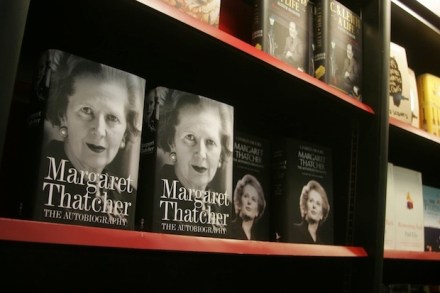
My first reaction on hearing of Margaret Thatcher’s death in 2013 was: ‘Great — now my autograph from her will go up in value.’ This wasn’t callous. It was a simple application of demand and supply. As a child of the 1980s I had learned my lesson well. The Lady wouldn’t have objected to me viewing her signature as a pension plan. Indeed, it’s what she would have wanted. How many Caribbean villas, then, should I be thinking of buying? Because this is no ordinary autograph. I asked Mrs T. (as she then still was) to write out ‘There is no such thing as society’ and sign it. She embellished the quote, adding ‘…there are only individuals, it is we who bear the responsibility’.

Dear Sirs and Madams

Those who write letters and send them by post are a dying breed. I was fortunate to have served as a newspaper columnist and received a great many. Often eloquent, sometimes humorous, their breadth and depth of experience was wonderful. With the exception of letters that were racist or completely mad, I tried to answer every one of them. If a reader took the trouble to write to me, it was the least I could do to send him or her a personal reply. There was the occasional correspondent from London, but most lived in the country or in provincial towns or cities. Most were Conservatives and many were lifelong readers of the Daily Telegraph.

Maestro maker

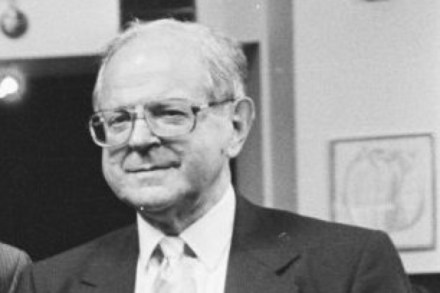
When Margaret Thatcher imagined perfect power, she thought of the orchestral conductor. ‘She envied me,’ said Herbert von Karajan, ‘that people always did what I requested.’ Power, however, is a mirage that fades as you get close. What Mrs Thatcher saw were the trappings, never the essence. Great conductors might get the glory, but someone else pulled the strings. Behind every power there is a greater force. Behind every conductor, there was Ronald Wilford. It is hard to think of Wilford, who died last week, aged 87, without a sneaking admiration. A self-schooled Machiavellian, a Mandelson of music, he invented a chimera of ‘the great conductor’ and, as president of Columbia Artists (CAMI), sold it at unimaginable profit.

The Spectator’s Notes | 18 June 2015

It is natural to assume that, if a majority votes No in the referendum on Britain’s EU membership, we shall then leave. It is not automatically so. After the vote, we would still be members. The government would then — morally at least — be mandated to negotiate Britain’s withdrawal. In theory, unlikely though it may currently seem, the EU could try to block this. Even assuming that it did not do so, the eventual terms of the withdrawal would not automatically be agreed by Parliament and would not necessarily correspond with the wishes of those who voted No. The context for our vote will be David Cameron’s presentation of a package secured with partners to persuade us to vote Yes. There is no negotiated package offered for those voting No.

If Cameron is deleting all No. 10 emails, who will write his history?

This is an extract from Charles Moore's Notes in this week's Spectator, out tomorrow. Subscribe from just £1. In a few weeks, I shall have finished the second volume of my threepart biography of Margaret Thatcher. I am now at the checking and revising stage — 3,000 endnotes to be made shipshape, 2,000 quotations to be cleared with interviewees, 300,000 words to be re-imagined as if read fresh. This involves the exchange of scores of emails every day. The question arises, ‘How did enterprises of this kind ever happen before computers?’ The answer, I think, is that the sources used were much narrower than they are today. Authors were extremely dependent on where archives physically were. Interviews were a rarity.

Barometer | 11 June 2015

Forty years on The forthcoming EU referendum has rekindled memories of the in-out Common Market referendum of 1975. But it seems a strange looking-glass world now. — Mrs Thatcher was a keen ‘yes’ campaigner, sporting a jumper with the flags of EC member states. Neil Kinnock campaigned for a British exit. The SNP and Plaid Cymru campaigned to leave the EC, the former calling it a ‘dangerous experiment in gross over-centralisation’. — The worry then was that England would vote to stay while Scotland and Wales would vote to leave. — But the most surprising supporters now seem the Daily Mail and the Daily Express, the latter declaring after the ‘yes’ vote had been confirmed that Britain was now ‘irrevocably’ European.

What can modern politics learn from Thatcher? Charles Moore will tell us

The first volume of Charles Moore’s biography of Margaret Thatcher is one of the finest political books of recent times. With the second volume due out in October, Charles, a columnist for both the Telegraph and this magazine, has agreed to also become a visiting scholar at the think tank Policy Exchange where he will work on what lessons contemporary politics can learn from Margaret Thatcher’s career. Policy Exchange has long been the favourite think tank of the Tory modernisers. With Charles and Steve Hilton’s arrival, it will be at the centre of the debate about where the Tory party should go next. For a flavour of the discussions to come, do watch Charles interview Hilton about his new book.

Let’s drink to a Tory majority

Most of my friends are still on a cloud of post-election euphoria. There is one exception: those involved with opinion-polling. They have all the conversational self-confidence of a director of the Royal Bank of Scotland, circa Christmas 2008. I have tried to cheer them up, because there are explanations for the polls’ systemic failure. Most of those involved in politics, including pollsters, are partisan and obsessive. They can remember how they voted in that Little Piddleton parish council by-election 20 years ago. Ordinary people — no, that sounds patronising — real people: that is not right either. Politicos, though odd, are real. But sensible people do not spend all their time thinking about politics. They are wondering what to have for supper, where to go on holiday.

The British public is about to make a big mistake

On the weekend of 25 April 2015 I started to believe that the party I supported might not win an impending general election. I’m used to that. But I started to believe, too, that my fellow citizens might be about to make a stupid and unfathomable mistake. I’m not used to that at all. It has come as an awful shock. For the first time in my life I have understood how it must have felt to be a convinced socialist in Britain these past 36 years since 1979: to live in and love a country whose people had got it completely wrong. ‘Well, diddums,’ I can hear left-wing friends reply: ‘Welcome to our world.’ In the general election of 1979, as a parliamentary candidate, I knew the voters would return me and believed they would return a Conservative government led by Margaret Thatcher.

The Greens’ regressive message has lost them student votes

‘If you’re not a socialist before you’re twenty-five, you have no heart; if you are a socialist after twenty-five, you have no head,' goes the old, oft-misattributed saying. But if you’re a Green party supporter on a university campus today, you’re more likely to have no friends. It was reported last week that the Green party's share of the student vote has almost halved in the past two months – falling from a peak of 28 per cent to a paltry 15. In January, the Greens’ vote was creeping up on Labour (the consistent student favourites) but it has now plummeted below even that of the so-called ‘Tory scum’ you hear so much about on tuition-fees demos.

Did Mrs Thatcher ‘do’ God? Denis thought so, and he should know, says Charles Moore

As I swink in the field of Thatcher studies, this book brings refreshment. It is a welcome and rare. Far too many writers attitudinise about Margaret Thatcher (for and against) rather than studying her. I doubt the author likes Thatcher much, but all the more credit to her that she makes a fair-minded effort to understand what she believed about God, and how she succeeded and failed in applying her beliefs. Not all who knew Mrs Thatcher agree that she was religious. In a way, they are right. She was not churchy or denominational, which is good. She was not sacramental (she once told me that her twins were baptised but ‘didn’t have the water’) or spiritual, which is not so good. But Denis thought she had a serious Christian faith, and I think he would know.

The art of political biography remains in intensive care if Giles Radice’s latest book is anything to go by, says Simon Heffer

With the odd exception — I think principally of Charles Moore’s life of Margaret Thatcher — the genre of political biography has known hard times lately. There are few faster routes to the remainder shop, other, of course, than the political memoir, most of which I presume are now written to create a tax loss for their publishers. This decline is not down to poor scholarship, but, I suspect, to the general distaste so many literate and inquiring people feel for politicians. Reading accounts of the New Labour years in particular is rather like touring an abattoir before the cleaners have been in. So those who want to write about politicians must find new ways to do so, and Lord Radice, a former long-serving Labour MP, has chosen to look at partnerships of politicians.

Wanted: Nigel Farage lookalike

As the election approaches, politicians will find their diaries packed with various events. It's an equally busy time for those born with the gift of looking like a politician. ‘I’m lucky that I look like Boris,’ says Drew, a Mayor of London 'lookalike' who is on the books at the Susan Scott agency. ‘I often get stopped and while it’s not always pleasant, it’s nowhere near what a David Cameron lookalike I know gets.’ Alas, Boris won’t have Drew’s vote. ‘I may make money out of Boris, but I have never voted for him and that’s not going to change.’ With election party season on the horizon, Mr S has gathered a selection of his favourite lookalikes to invite to your own soirées.

Another enemy within: Thatcher (and Wilson) vs the BBC

In a ‘Dear Bill’ letter in Private Eye, an imaginary Denis Thatcher wrote off the BBC as a nest of ‘pinkoes and traitors’. That drollery points to the corporation’s paradoxical place in British life: an essential part of the establishment (‘Auntie’) yet sometimes its most daring critic, willing to put impartiality above patriotism. Jean Seaton makes one wonder at this impressive balancing act in a book that continues Asa Briggs’s magisterial history of the BBC up to 1987. After the war many from newly liberated Europe thanked the BBC Overseas Service for keeping hope alive during the Occupation; this was reprised after the Berlin wall fell.

Want more diversity? Hire groups, not individuals

If I were to give you a budget to choose your perfect house, you would quickly have a clear idea of what to buy. And typically your perfect house will be a bit boring. That’s because, when you can only have one house, it cannot be too weak in any one dimension. It cannot be too small, too far from work, too noisy or too weird. So you’ll opt for a conventional house. On the other hand, if I were to double your budget and tell you to buy two houses, your whole pattern of decision-making would change. You would now be looking to buy two significantly different properties with complementary strengths — perhaps a small flat in a city and a house in the countryside. Your criteria for the two houses would be wildly different.

House of Cards creator reveals rift with BBC over ‘insensitive’ Margaret Thatcher plot

The third series of the American adaptation of House of Cards, which stars Kevin Spacey, will see the programme go in a different direction to the political trilogy on which it is based. Despite this, the House of Cards author Lord Dobbs is confident that he will be happier with the end product than he was with the BBC adaptation, which aired in the nineties. Speaking to the Radio Times, Dobbs says that he fell out with the production team during the final series over their treatment of the death of Baroness Thatcher. Dobbs was so appalled by the BBC's changes to his political thriller that he asked for his name to be removed from the end credits. 'It bore so little resemblance to my book; in fact I don't think my book had anything to do with it.

The elderly are society’s new baddies

The gulf in understanding between the old and the young has widened with the news that the young are beginning to turn teetotal. If there was one thing that the old thought they knew about the young, it was that they drank too much. British youth led the world in its enthusiasm for alcohol. Our cities swarmed with loutish binge drinkers. Yet now, all of a sudden, we learn that abstinence is becoming fashionable. The number of people under 25 who don’t touch a drop has increased by 40 per cent in eight years. More than a quarter of people in this age group now don’t drink anything at all. What is going on? The conditions for heavy drinking would seem to be perfect: there is economic hardship and a generally gloomy outlook on most fronts.

The Heckler: how funny really was Spitting Image?

Hold the front page! Spitting Image is back! Well, sort of. A new six-part series, from (some of) the team behind Fluck and Law’s puppetry satire show, will be broadcast on ITV this spring. Called Newzoids, it promises to provide a ‘biting look at the world of politics and celebrity’. Cue ecstatic reports in all the papers about how hilarious the original was, and how much we’ve all missed it. There’s only one problem with this analysis. Whisper it on Wardour Street, but Spitting Image wasn’t actually all that funny.

The Spectator on Thatcher’s election as party leader, 15 Feb 1975

It seems hard to believe now, but only The Spectator supported Margaret Thatcher in the first leadership ballot.  She had been Keith Joseph's campaign director, and when he faltered she took his place. The Economist, true to its endearing habit of being wrong in major calls in modern British history, said she was "precisely the sort of candidate who ought to be able to stand, and lose harmlessly" The Spectator has different tradition: of being isolated, but entirely correct. We were for Maggie all the way, and when she triumphed we devoted a front page leading article to her triumph under the cover line "Britain's Second Lady". The leader (below) was written by the Patrick Cosgrave, our then political editor, who loathed Ted Heath.

A bold idea that might just help the Tories win a majority

Iain Duncan Smith has come up with a bold idea that might just enable the Tories to break out of the inch by inch, trench warfare of current British politics. The Work and Pensions Secretary wants to see the right to buy extended to those living in Housing Association properties. At present, housing association tenants are offered very limited discounts and can only buy properties that their association has acquired since 1997. An even more radical version of this scheme would see all housing association tenants who have been in work for a year given their homes. When these properties were sold, the state would take a significant chunk in tax which would then be invested in building more social housing.