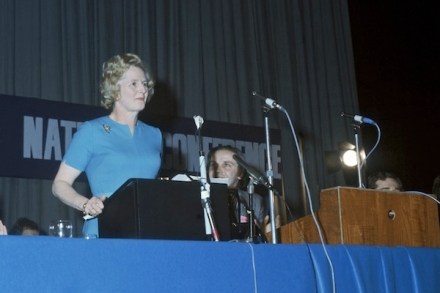
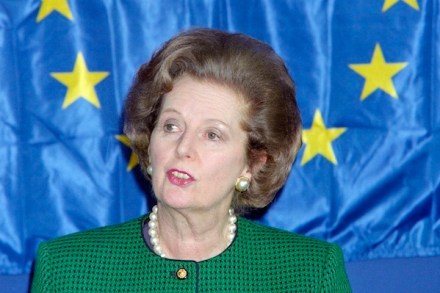
Margaret thatcher

The Spectator’s Notes | 2 May 2013

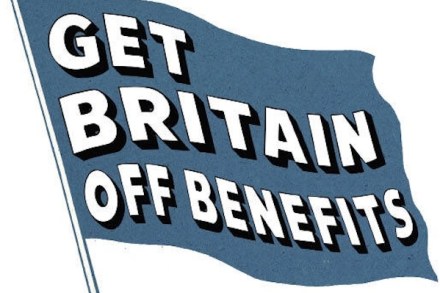
It is fascinating watching the great welfare debate as the universal credit starts its life. The ruling elites have very, very slowly caught up with public understanding. The simplest way to think about the question is this. At every level of society people tend to be acutely aware of what their approximate equals are paid, and usually unaware of what those richer or poorer receive. Therefore the people who best understand how welfare works are either its recipients or those who work on low wages and are scarcely better off for doing so. These people recognise that being on welfare is — in effect, though not morally — like having a job. There is a wage for it, plus various equivalents of overtime and fringe benefits, and the task is to get as much of these as you can.

When Michael Heseltine turned up at a Thatcher book signing

At the launch of my biography of Margaret Thatcher, I was flattered to see Michael and Anne Heseltine joining the signing queue. It was very sporting of him. When they reached me, Anne asked for my inscription, but Michael said he wished his copy to be blank so that he could quickly sell it. I think — unusually for him — that he misunderstands the way this strange market works. The most common question I am asked by audiences about Mrs Thatcher is something to do with Carol and Mark. Did she bring them up successfully? Was she a good mother? etc. The fact that this comes up so often is testimony to the point I make again and again: it was completely different — and very difficult — being the first woman prime minister.

Margaret Thatcher: The Authorized Biography, by Charles Moore, and Not for Turning, by Robin Harris – review

It is a measure of Lady Thatcher’s standing that her death has been followed not only by the mealy-mouthed compliments from political opponents which are normally forthcoming on such occasions but also by robust denunciations. Nobody would have sung ‘Ding, dong, the Wizard is dead!’ after the deaths of Jim Callaghan, John Major or Alec Douglas-Home. Even the more controversial Harold Wilson got a bland send-off in his obituaries. Ted Heath was asked by a journalist whether it was true that, when he heard of Margaret Thatcher’s eviction from the party leadership, he had exclaimed ‘Rejoice! Rejoice!’. No, he replied, after some deliberation. ‘What I said was “Rejoice! Rejoice! Rejoice!

Mind your language, Mr Rawnsley

The weekend press offered some rave reviews of Charles Moore’s Thatcher biography. Craig Brown, who is not given to hyperbole, compared Moore’s book to a work of art, while the Observer’s Andrew Rawnsley praised Moore’s ‘multi-dimensional portrait’ of the person we know as Mrs Thatcher. There were, however, some reservations. Rawnsley, brave man that he is, criticised Moore’s usage: ‘Moore is a patrician Old Etonian and a High Tory. So another of his challenges is to make the empathetic leap necessary to get inside the head of a grammar school girl who was born over a shop in Grantham. He makes a decent stab at it, but can't always resist lapsing into pedantic snobbery.

‘Please don’t mention Margaret Thatcher when you write to me’

‘Arthur Negus’ — Tony Bray — is the only one of Margaret Thatcher’s early loves still alive, though sadly he is now in poor health. Once I had tracked him down, I found him happy to speak about those distant days at the end of the war when he danced with the future prime minister. But he was extremely anxious — 60 years later — that his wife (who is now dead) should not know of my inquiries. ‘If you ring up, please say nothing of your purpose,’ he said, ‘and if you write, please don’t do so in a Daily Telegraph envelope.’ When he married his wife, a couple of years after the relationship had ended, a similar sense of honour induced him to destroy all Margaret’s letters to him.

Will Boston still fund the Real IRA?

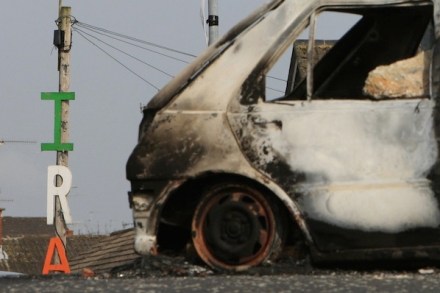
One of the first world statesmen to send a message of sympathy to Boston after last week’s outrage was Gerry Adams, president of Sinn Fein. ‘Just watching news of the explosion in Boston,’ he tweeted, ‘Sympathy with people of that fine city.’ Mr Adams has every reason to think fondly of Boston. Throughout the troubles, while he sat on the IRA war council, Boston was one of the major American centres which he (through Noraid) could rely on for support and funding. Bostonian money would have been used to help pay for the IRA attack on Margaret Thatcher’s democratically elected government in Brighton, the grotesque Birmingham pub bombings that left 21 dead, and of course the Lisburn van bombing of 15 June 1988.

Margaret Thatcher and the missing votes

There was a startling late entry for the first volume of my biography of Margaret Thatcher. On the day after she died, I received an email from Haden Blatch. Mr Blatch’s father, Bertie, was the chairman of the Finchley Conservative Association when it selected her in 1958. I had asked Haden for information before, but he had not got round to it. Now he revealed that his father had come home from the Finchley selection meeting and explained that Mrs Thatcher had not really won the vote. Her rival, Thomas Langton, had just pipped her. Blatch senior, however, was very keen on Mrs Thatcher, and thought that Langton, who ‘was born with a silver spoon in his mouth’, would easily get in somewhere else, whereas she, being a woman with young children, would not.

The Ize Have It

She divided us in life, she’s dividing us in death. Baroness Thatcher was so controversial that a single letter in a single word in the subtitle of a book that someone else has written about her and is being published after her funeral can get people’s backs up. Charles Moore’s biography is, according to its cover, ‘authorized’. Iain Dale isn’t happy (and I’m sure he’s not alone). ‘I am appalled,’ he writes on his blog, ‘that they have used the American spelling … It’s certainly not what she would have wanted and it grates. Penguin ought to remember its British roots.’ Good news, Iain – it turns out ‘-ize’ isn’t American after all.

A rare mood of unity descends on the Conservatives

The idea that ‘loyalty is the Conservative party’s secret weapon’ was always dubious. Benjamin Disraeli, for instance, made his name attacking a sitting Conservative prime minister. This, though, did not stop him becoming arguably the party’s most celebrated leader. But in recent years, the ‘loyalty’ adage has become a joke — one that has taunted leader after leader as they struggled to deal with an increasingly rebellious party. The party changed leaders four times in the eight years between 1997 and 2005. In these opposition ‘wilderness’ years, changing a leader was the closest to power that Conservative MPs came. Leadership plotting gave an odd sense of purpose to their presence at Westminster.

How Michael Heseltine won his first showdown with Margaret Thatcher in government

The extracts in the Telegraph of Charles Moore’s biography of Margaret Thatcher have confirmed that this will be one of the most important political books of recent times. One of the intriguing things about Thatcher’s premiership is how, for the early years of it, she had to deal with a Cabinet that was not convinced of her policy prescription. This meant that, contrary to the latter image, she could not simply proceed as she wished. (Though, it should be noted that events vindicated Thatcher’s judgment.) Charles Moore reveals in his book that in 1979 Michael Heseltine flatly refused the job of energy secretary. He reports that when Thatcher offered it to him, he replied ‘“No… I’ve been rehearsing environment for three years.

Thatcher didn’t really save Britain. She allowed Britain to save itself.

Thatchermania has died down now, and I’ve personally stayed out of it. The quality of commentary from people around at the time has been outstanding, not least  The Spectator’s own Charles Moore. The Thatcher drama is one where I can’t even claim to have been a spectator. I was not into politics when I was young, not listening to Budget speeches on the school bus like the young George Osborne. Strife didn’t hit us much in the Highlands. I once crossed a picket line with my mum when teachers at my school, Nairn Academy, went on strike. She was a special needs teacher there and didn’t talk much about it, except to say she didn’t believe pupils should be made to suffer in disputes between adults.

The View from 22 — Margaret Thatcher’s secret Kremlin files, remembering her funeral and the Boston bombings

Were Margaret Thatcher's relationships with foreign leaders as straightforward as they appeared to the public? In this week's Spectator cover feature, Pavel Stroilov provides a special insight into one particular relationship — Mikhail Gorbachev. Stroilov reveals the official Kremlin records of what Thatcher said to Gorbachev behind closed doors. On our View from 22 podcast, Thatcher biographer and advisor Robin Harris analyses her foreign policy legacy with Fraser Nelson, examining her relationship with world leaders, the personal and political differences that existed and the lessons the world today can take from her.

Margaret Thatcher’s funeral was the right funeral

Today was a moment in our island story. The longest serving Prime Minister of the 2oth century was laid to rest with due ceremony. Watching the coffin move down to St Paul’s and the service itself, I was struck by how right it was that it was a ceremonial funeral. A private affair would not have done justice to the legacy of our first, and only, female Prime Minister. It was noticeable that the much talked-about protests along the route failed to materialise. But it should be stressed that today’s service was not a political affair. The eulogy was not about her policies but her faith and her understanding of it. Margaret Thatcher now passes into history. I suspect that her name will live on in the way that Gladstone and Disraeli have.

Andrew Neil discusses Margaret Thatcher’s funeral

In tomorrow's View from 22 podcast, BBC presenter and Spectator chairman Andrew Neil discusses attending Margaret Thatcher's funeral, the significance of the event in British history as well as his personal encounters with the former Prime Minister. We're delighted to bring you the interview below. Subscribe to the View from 22 here to receive the whole episode first thing tomorrow morning, featuring Baroness Thatcher's biographer Robin Harris and Spectator editor Fraser Nelson on the lesser known side of her foreign policy.

Margaret Thatcher’s funeral: in words and pictures

[caption id="attachment_8501512" align="alignnone" width="600"] Margaret Thatcher's coffin is carried from the Palace of Westminster to a hearse for the first leg of its journey to St Paul's. Picture: Getty[/caption] [caption id="attachment_8501522" align="alignnone" width="600"] The hearse moves past crowds outside Parliament. Picture: Getty[/caption] [caption id="attachment_8501532" align="alignnone" width="600"] The hearse passes Downing Street. Picture: Getty[/caption] [caption id="attachment_8501542" align="alignnone" width="600"] Some members of the crowd turn their backs on the cortege as it passes. Picture: Getty[/caption] [caption id="attachment_8501562" align="alignnone" width="600"] Another member of the crowd holds a placard protesting the cost.

Lion-hearted crowds cheer the Iron Lady

When I arrived at St Paul's at 6 o'clock this morning, a line of people, around 40-strong, had already set up camp with union flags (and one Canadian flag, too) opposite the church courtyard. The police officer drawing to the end of his night shift told me they had been there all night. Later, as the hearse left the Palace of Westminster, the pavements opposite were packed. Yes, there were some people who turned their backs, and others who held placards decrying Thatcher's legacy. This video from the Guardian shows some of them chanting 'waste of money!' as the procession approached. As Thatcher's friend Conor Burns has been repeatedly saying for the past week and a half, the late Prime Minister would have seen that as a tribute in kind as well.

The Myths of Margaret Thatcher, Sermon on the Mound Edition

Like Iain Martin, I was not sure a full ceremonial funeral was quite appropriate for Margaret Thatcher. That is not to dismiss her achievements or her significance, merely to wonder if such pomp was wholly suitable for a figure who has proved as divisive in death as she was in life. And yet, the majesty of the service at St Paul's worked its magic. Combining grandeur with simplicity it said simply this: Margaret Hilda Thatcher mattered.  It is hard to think of other non-Royal Britons who will be afforded, far less merit, this kind of send-off. I thought the Bishop of London's address splendid. It deftly punctured some of the myths that surround the Thatcher legacy. She was, in truth, always more complicated than either her admirers or her enemies admitted.

Sir John Hoskyns: the Margaret Thatcher I knew

Sir John Hoskyns was head of Margaret Thatcher's Policy Unit from 1979 to 1982. In a Q&A with The Spectator, he describes what it was really like to work with her, and how David Cameron could learn from the late Prime Minister. In 1977, you wrote the Stepping Stones Report, which looked at the fundamental problems holding Britain back in the pre-Thatcher era. If you were to write a sequel, what would you focus on? There’s no snap answer – at least from a bystander. Stepping Stones, and our ‘Wiring Diagram’ were written for  a particular crisis for the British economy. I had been working on an analysis of the problem since since the mid-seventies with the nuclear physicist and one-time head of the MoD think-tank, Terry Price.