Manchester

The true origins of Manchesterism

‘If I hear anyone say Manchesterism again, I will…’ said my husband, leaving his thought unfinished, and slipping, rather easily, into the role of Lear in his impotence. I had no intention of explaining to him what Andy Burnham means by Manchesterism. No one knows – perhaps not even he. But the word has been around since 1883, when it was reputed to be a system that ‘enriched the few at the expense of the many’. That had been the charge against its inventors, Richard Cobden and John Bright, whom Disraeli accused in 1846 of being ‘Gentlemen of the Manchester School, who believe they may fight hostile tariffs with free imports’.

The real story of Manchesterism isn’t the one Andy Burnham is telling

‘Manchesterism,’ Andy Burnham declared in his Makerfield by-election campaign video, ‘is the end of neoliberalism.’ The path to power, he believes, lies in the Mancunian Way. Not the ring road that sits atop Manchester’s actual Downing Street, but his record as mayor of Britain’s ‘second city’ – and the idea that it proves his philosophy of unlocking growth and productivity for the whole country. Yet the Mancunian Way is littered with potholes. Manchesterism is not new. It did not begin with Burnham, nor with any Labour figure in Manchester. The name is borrowed – stolen, really – from the free-trade Manchester Liberalism of Richard Cobden and John Bright, who fought price-fixing, tariffs and protectionism in the 19th century.

Pity Andy Burnham

There is something infinitely melancholy in hearing what political ambition does to perfectly nice people. I awoke on Monday to hear Danny Kruger (an MP, formerly Conservative, now defected to Reform) defending his party’s candidate in the Makerfield by-election, one of whose past social media posts was simply too disgusting for me to repeat here. True, Mr Kruger was not defending the post itself, but the candidate’s right to a ‘private’ (protested Kruger) history of such social media comments. Well, maybe. But I seem to remember Kruger’s past speeches have been especially admired for their high moral tone – he is a strong Christian – and so his being forced to defend a candidate’s right to a history of filthy misogyny in a public forum will have hurt him.

Caroline Aherne’s comedic genius is much missed

Who do we have on television now, or even on social media, who can unmask pomposity and self-obsession quite like Caroline Aherne did in the guise of Mrs Merton? What sitcom since 2010 is as original – and as British – as The Royle Family, always near the top of any best British sitcom list? This July marks the tenth anniversary of the death of Aherne. Given the popularity of The Mrs Merton Show, The Royle Family, which ran for 15 years, and her characters on The Fast Show (not least Poula Fisch, the weather girl who can only announce one type of weather), it’s perhaps odd that this is the first ever biography. It quickly becomes evident why. Aherne is not the easiest subject: having been hounded by the press, she was not fond of giving interviews.

Manchester won’t raise a statue to Andy Burnham

Already heard enough of ‘Is Manchesterism a thing and did Andy Burnham invent it?’ I’m afraid you’ll hear a great deal more between now and the Makerfield by-election – and long afterwards if Burnham wins the seat and the subsequent Labour leadership contest. So here’s a reminder that he defined Manchesterism in an interview last year as ‘consensual, business-friendly socialism that seeks to retake public control of all essential services’ – though in nine years as Greater Manchester’s mayor he achieved that latter objective only to the extent of imposing integrated fares and timetables on privately run buses. My own definition of Manchesterism, in response to his, was ‘manoeuvring shamelessly for power on the strength of other people’s achievements’.

‘Here’s a novel concept – arrest bad people’: how Sir Stephen Watson turned around Greater Manchester Police

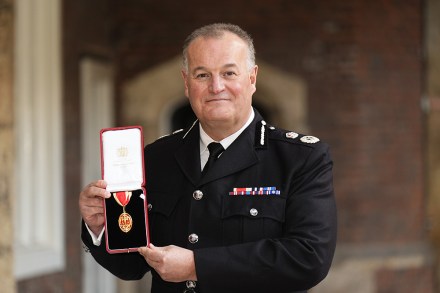
Sir Stephen Watson, Chief Constable of Greater Manchester Police (GMP), is Warrington-born, Rhodesia-raised. His father was an engineer in the Royal Navy and his work took the family to South Africa, South West Africa and then, when Sir Stephen was still a schoolboy, the breadbasket. The Watson family stayed in Rhodesia until Robert Mugabe became prime minister in 1980 and threw them out. ‘I saw the collapse of policing,’ Sir Stephen says. ‘I saw the collapse of the rule of law. I saw the collapse of health systems, of education systems, of legal systems.’ He also saw what Britain could lose. ‘I think there is a complacency in the UK. We take things for granted. I like to quote Kipling on this: “What should they know of England who only England know?

Robert De Niro has a serious case of Trump envy

The past few weeks has seen the pleasing spectacle of beautiful female film stars (Sydney Sweeney, Keira Knightley – even the previous Trump Derangement Syndrome sufferer Jennifer Lawrence, who once said that an orange victory would be ‘the end of the world’) refusing to toe the accepted Hollywood line on politics, be it by not kowtowing to trans activists or not accepting that everything is racist. Lawrence actually said: ‘Election after election, celebrities do not make a difference whatsoever on who people vote for’ – or as I wrote here in the spring: ‘How dim would a political party need to be to understand that not only do celeb endorsements not work, but have an actual repelling effect?

Don’t surrender to soulless self-checkouts

A friend runs a small factory employing 60 skilled workers. He exports industrial components worldwide, competing with Europe for quality and China for price: a model enterprise for the productive economy we wish we had more of. Earlier this year, his top concerns were the hike in employers’ national insurance (costing the equivalent of several new apprentices) and the advent of Donald Trump’s tariffs. Since then, he’s been hit by a cyber-attack – and his story, a miniature of Jaguar Land Rover’s, is a parable for business everywhere. Like most companies today, this one is paperless: IT-dependent in everything from product design to accounting and HR. It also happens to hold ample cash, which hackers could have spotted from Companies House filings.

John Connolly, Gavin Mortimer, Dorian Lynskey, Steve Morris and Lloyd Evans

26 min listen

On this week’s Spectator Out Loud: John Connolly argues that Labour should look to Andy Burnham for inspiration (1:51); Gavin Mortimer asks if Britain is ready for France’s most controversial novel – Jean Raspail’s The Camp of the Saints (4:55); Dorian Lynskey looks at the race to build the first nuclear weapons, as he reviews Frank Close’s Destroyer of Worlds (11:23); Steve Morris provides his notes on postcards (16:44); and, Lloyd Evans reflects on British and Irish history as he travels around Dublin (20:44).  Produced and presented by Patrick Gibbons.

With Mary-Ellen McTague

25 min listen

Mary-Ellen McTague is a chef based in Manchester. She is the culinary driving force behind Aunbury, 4244, the Creameries and her newest venture, Pip at the Treehouse Hotel. Mary-Ellen is also the co-founder of Eat Well MCR, which has delivered almost 100,000 meals across Greater Manchester since 2020 to those sidelined by poverty. On the podcast, she tells Liv and Lara why, as a child, she would only eat orange cheese, why Lancashire hotpot is so nostalgic, her Eureka moment when she decided to become a chef – and where you should eat in Manchester.

The plain-speaking bloke from Warrington who painted only for himself

We don’t all get to achieve what we could have achieved in life. And yes, I know, so what? Tough luck. Cry me a river, build me a bridge and get over it. But, like it or not, some people really do have the odds stacked more heavily against them than others and yet somehow carry on regardless. In The Secret Painter, the scriptwriter Joe Tucker (Parents, Big Bad World) tells the true story of his Uncle Eric, born in 1932 – an ordinary man who never gave up. Let’s be honest, The Secret Painter could have been absolutely terrible.

Will Alta Fixsler be allowed to die at home?

If your severely disabled two-year-old daughter is dying, should you be allowed to take her home for her final hours? It sounds like the answer should be a simple ‘yes’. But in the law surrounding parents, children and healthcare, nothing is that simple. Alta Fixsler’s parents have been repeatedly thwarted in their efforts – as they see it – to do their best for their daughter. First, Manchester University NHS Foundation Trust sought to withdraw life-saving treatment for Alta. A judge subsequently agreed that it was in Alta's 'best interests for the treatment that is currently sustaining her precious life...to be withdrawn'. This was in spite of her parents seeking to take her to Israel for treatment.

Why were the emergency services so slow responding to the Manchester bombing?

Claire Booth was put in the impossible position of having to decide whether to care for her sister or her daughter after the Manchester Arena attack. She understandably chose to look after her 12-year-old daughter, Hollie, but the decision still haunts her. More than anything, she wishes that emergency help had arrived quickly, in whatever form, and that the three of them had been taken to hospital for proper care. Kelly Brewster, her bubbly, music-loving sister did not survive the bombing. The speed of the emergency response may not have made a difference to Kelly but it may be that two others among the 22 victims could have been saved – eight-year-old Saffie-Rose Roussos and 28-year-old John Atkinson.

The Marcus Rashford mural – an anatomy of a moral panic

Late on Sunday night, less than an hour after England lost on penalties to Italy in the European championship final, a mural of the United striker Marcus Rashford was defaced in his hometown of Withington in south Manchester.  Shortly afterwards the defaced part of the mural was hidden by black bin-liners and an online campaign was launched by the artist to repair the mural. Mr S believes the first report from the Manchester Evening News described the vandalism as ‘indecipherable lettering, daubed in blue paint on Sunday night, [which] can barely be seen over the powerful black and white image.’ On Monday morning, Greater Manchester Police released a statement which said they had responded to ‘reports’ of racially aggravated damage to the mural.

The man at the heart of punk: the late Pete Shelley recalls his Buzzcocks years

Manchester, in the words of the artist Linder Sterling, is a ‘tiny little world’. Nearly three million people live in its sprawl, but its centre is compact. Like-minded Mancunians have always found one another easily. Cultural life is febrile, which partly explains how, in the pre-digital late-20th century, England’s third city produced such startling bands: Joy Division, the Fall, New Order, the Smiths, the Happy Mondays and Tony Wilson’s era-defining Factory record label — and Buzzcocks, less celebrated, but without whom Manchester’s creative energy would have failed to detonate. Pete Shelley was Buzzcocks’s charismatic co-founder and chief songwriter, whose sharp lyrics and bratty vocals shaped much of British punk.

The shamelessness of Andy Burnham

Of all the people who should carry the can for Jeremy Corbyn becoming leader of the Labour party, Andy Burnham doesn’t get his fair share of the stick. It was, after all, Burnham’s fear of being the most left-wing candidate in the 2015 leadership contest that led to Corbyn being 'loaned' enough MPs' votes to get Dear Jeremy on the ballot. Despite this fact, Burnham felt no shame in saying in an interview this weekend that, ‘I still think life would have been different if I had won in 2015’, as if he hadn’t been his own worst enemy in denying that victory from taking place.

Portrait of the week: A Manchester stand-off, a Presidential showdown and a Brexit culture clash

Home After ten days spent trying to persuade Andy Burnham, the Mayor of Greater Manchester, to accede to the city entering Tier 3 (which entails the closing of pubs and betting shops), Boris Johnson, the Prime Minister, announced that it would happen anyway, from 23 October. ‘I am deeply sorry,’ he said. Manchester had wanted £65 million in support first. Liverpool complained that it was not allowed to keep gyms open when Lancashire was. The nine million people of London languished in Tier 2, forbidden to meet anyone at home or in a pub, except if they pretended it was a business meeting. Scotland hatched plans for its own tiers.

Angry Burnham takes on No. 10

Keir Starmer has made life difficult for Boris Johnson this week with his demand for a circuit-breaker lockdown. But the Labour leader’s colleague Andy Burnham is currently presenting a far greater threat to the Prime Minister. On Thursday, the Mayor of Greater Manchester gave a furious speech in which he accused the government of being 'willing to sacrifice jobs here to save them elsewhere' while treating his area like 'canaries in the coalmine for an experimental regional lockdown strategy'. The government, he argued, was treating the North with 'contempt' by telling regional leaders there wasn't enough money to protect jobs during the new restrictions while spending large sums on consultants for the test and trace programme.

How strict will the new Covid restrictions be?

I have a few points to make about the new three tier system to be announced today for restricting our lives and businesses, to suppress Covid-19. 1) Last Wednesday, the government was so worried about the spread of coronavirus in the north of England that it was planning to impose new restrictions on places like Liverpool, Manchester and Newcastle before announcing the three-tier framework. Because of opposition from city mayors and local authorities, that is now not going to happen. The three-tier framework will come first. 2) However, it is probable that there will be new restrictions announced today for Liverpool, if agreement with the Mayor Steve Rotheram is reached in time – which seems highly likely.

My dazzling chum: Mayflies, by Andrew O’Hagan, reviewed

Presumably because a small part of it takes place in Salford, the epigraph to Andrew O’Hagan’s latest novel consists of four lines from Ewan MacColl’s ‘Dirty Old Town’. More fitting, though, might have been six words from the Undertones’ ‘Teenage Kicks’: ‘Teenage dreams, so hard to beat.’ The first half of the book follows a group of lads from Ayrshire as they excitedly prepare for, excitedly travel to and excitedly attend a post-punk music festival in Manchester in 1986. The narrator is the bookish 18-year-old Jimmy Collins, whose life bears a close resemblance to O’Hagan’s at the same age and time.