London

Hell is the Ulez hotline

‘Only boring people get bored’ is what we were all told as children. What we were not warned about was that boring things can also make you boring. Boringness is infectious. Or so I have come to believe. Due to the backlash against the extension of Ulez, the Mayor has come up with a fresh brilliant idea Thanks to my own low tolerance for boring things, I didn’t race to find out about the Ulez scheme. These soul-destroying acronyms often arrive at the peripheries of my vision, where I hope they will remain. Yet they make their remorseless push forward. So this week, with boring inevitability, I had to call the Ulez hotline to see if I was going to have to pay this extra car surcharge, to save the planet, from the end of this month.

Mick Jagger at eighty: the beginnings of a Rolling Stone

From our US edition

Among the other jewels in the crown of Sir Mick Jagger’s songwriting career is a number he and his longtime creative partner Keith Richards knocked off in December 1963 to promote the Kellogg’s company products. Don’t laugh — it’s an infectious little tune in its way, even if the key lyrical message — “Wake up in the morning/ There’s a pop that really says/ Rice Krispies for you and you and you!”) falls some way short of the same duo’s “(I Can’t Get No) Satisfaction,” which followed barely twelve months later. But then Jagger, who turns eighty on July 26, was always a quick study. Last year’s four-part EPIX documentary series My Life as a Rolling Stone may be numbingly banal (“They set the bar for what a rock ’n’ roll band should sound like, look like..

mick jagger

The rise of the open-fire restaurant

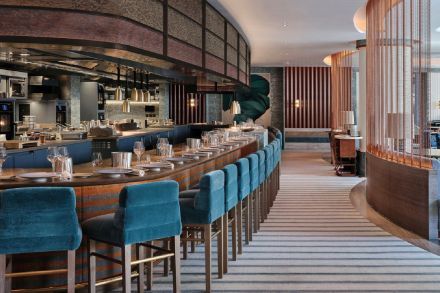
Burn the formal white tablecloths and fling open the kitchen doors. The latest craze in restaurant culture is open-fire cooking – where chefs sweat it out over roaring flames in full view of their customers. And the simple, raw nature of this method of food preparation seems to have set diners’ imaginations alight.  ‘Cooking outside over flames is primal and in our DNA as human beings,’ says Andrew Clarke, co-founder of Acme Fire Cult – one such restaurant in Dalston, north London. ‘The smell of woodsmoke and animal fats hitting the hot coals stirs up something deep inside.’ For Tomos Parry, chef and co-owner of Brat – another open-fire restaurant – the flavour that can be achieved from this style of cooking adds an extra dimension to most dishes.

When is a martini not a martini?

Considering its status as the canon’s most iconic cocktail, it’s remarkable that the martini doesn’t have a single agreed upon recipe. Like many great drinks it comes with more of a template than exact specifications, which basically dares us to riff on the formula. Historically, this has meant altering the garnish – swapping the olive for a cocktail onion, perhaps – or adding a dash of bitters. Today, though, a whole generation of bartenders is using the martini to channel their creativity, introducing bespoke ingredients and flavour combinations to this old favourite. But just how many times can you remix the martini and still retain its essential martini-ness? Gamely, I investigate.

Has the regeneration of Elephant and Castle been a success?

It has been ten years since work began in earnest on the regeneration of one of the few surviving sections of old-school central London. While the rest of Zone 1 seemingly saw wall-to-wall gentrification, Elephant and Castle remained an outpost of stubborn, scruffy ordinariness, an oasis of discount stores, greasy spoons and traditional boozers. Over the past decade, billions of pounds have been lavished on sprucing up the Elephant. But while the old place certainly looks quite different – a cluster of new towers, thousands of new homes, a gaping hole where the 1960s shopping centre once stood – this is a regeneration that has had its fair share of troubles.

The invasion of the wheelie bins

Once I thought nothing could make residential Britain look uglier than pebble-dashing, PVC windows and satellite dishes. I was wrong. As if the country had not been brutally homogenised enough by the fact that every high street has the same shops, now every residential road is reduced to being an identical backdrop for a very persistent invader: the wheelie bin. Lined up like Daleks, they are breeding in my North London neighbourhood, blocking front gardens and pavements. Outside houses split into flats, where each has its own set, there are actual crowds of these 4.5ft graceless plastic buckets, which come in multiple colours for different sorts of rubbish. When wheelie bins first started infiltrating our streets just over a decade ago, we valiantly tried to fight back.

How to see world-class opera for £11

I’ve always been happy to splash out on attending all sorts of events – £80 on tickets for run-of-the-mill Premiership football matches; £120 for the ghastly experience of watching rugby in Twickenham’s concrete jungle; £60 to attend a concert by ancient rockers who’ve seen better days. As an English teacher, I’m also an avid theatre-goer – despite the fact that the last time I went to the theatre, to see a woke version of Henry V full of gratuitous swearing and cheap jibes at Brexit, it cost £55 for a restricted view.   But I’d always avoided opera, put off by its somewhat elitist image. And I’m not the only one – a survey for Classic FM revealed that many of us have never considered going, dismissing it as ‘too posh’ or too expensive.

Is Scottish reeling the route to romance?

‘Remember to flirt outrageously.’ This essential piece of advice is imparted courtesy of Country and Town House magazine for its readers curious about Scottish reeling. The reel, a social folk dance, dates back to 16th-century Scotland and has remained popular for all this time, notwithstanding a brief hiatus in the 17th century when the Scots Covenanters assumed the stance (rightfully, some might say) that such amusement leads to mischief leads to sin. Less curious about the dancing than the flirtation, I joined some friends for the final, sweaty session of the season at London Reels.

At home with Jacob Rees-Mogg

From our US edition

Before I arrived at Gournay Court, Jacob Rees-Mogg’s seventeenth-century home in Somerset, I’d missed the main event. Beforehand, I’d asked the Conservative Member of Parliament to lean in to whatever our photographer asked — and somehow, before I turned up an hour late, she managed to get him in a nearby field feeding sheep from the palm of his hand. He didn’t seem to mind. In fact, there were only a few times he said no to our increasingly deranged demands. Once was after we asked him to get up on the humongous dining room table, spread his legs and act natural. “Well, I couldn’t possibly do that,” he replied. When you drive up to Gournay Court, you encounter what I can only describe as the quintessential British upper class. Think afternoon tea at the Savoy.

Rees-mogg
Jenny Boyd

Jenny Boyd goes beyond the muse

From our US edition

The beautiful muse to great male artists is a tricky figure, omnipresent in history but a bad fit for our fussy time. From Edie Sedgwick to Zelda Fitzgerald, and even some male ones, such as Neal Cassady, they’ve always been part of artistic scenes. In the scene of great Sixties rock, one of the most important was Jenny Boyd. She may not be as well-known as Yoko Ono, or her sister Pattie, who was married to George Harrison. But she may have been as influential. She was in the backstages, the bedrooms and the jam sessions with some of the most iconic musicians of all time. Shortly after traveling around India with the Beatles, she married (then divorced and remarried) Mick Fleetwood. Later, Donovan would write a love-sick song about her, "Jennifer Jupiter." So would Mick Jagger.

In praise of Londoners

Southampton, Long Island ‘Why, oh why, do the wrong people travel?’ sang Noël Coward back in the early 1960s. Lucky Sir Noël, he never met the present bunch. Just as the Bolsheviks deemed the aristocracy and the intelligentsia to be enemies of the people back in 1917, good manners and conservative dress are viewed today – at least in the Bagel – as false and affected. But I’m getting away from the subject at hand. I just bought Masquerade, a doorstopper biography of Sir Noël, but I remember the song from way back, before the one time I met him. It was 21 June 1969, in Vevey, Switzerland, and Charlie Chaplin’s daughter Josephine was getting married to a Greek friend of mine, Nicky Sistovaris.

The architecture of the Elizabeth Line

There was much to celebrate last year on the architecture front – the end of the pandemic brought the opening of long-delayed projects ranging from the Academy Museum of Motion Pictures in Hollywood to the Taipei Performing Arts Centre in Taiwan. But there was one construction project that stood head and shoulders above the rest in size and ambition, and that was the transport link formerly known as Crossrail.  The Taipei Centre may have been seven years late and the Academy Museum (now home to Judy Garland’s red slippers and R2D2, among other artefacts) more than a couple of decades in gestation, but that is nothing compared with London’s Elizabeth Line, which was first proposed in the 1940s.

Do London’s oldest restaurants still cut the mustard?

When George William Wilton opened his shellfish-mongers close to Haymarket in 1742, he could never have imagined that his business would still be thriving 280 years later. The place has outlived ten monarchs and is as old as Handel's Messiah. Before visiting, I imagined a typically Hogarthian scene with portly gentlemen in dandruff-flecked suits feasting on potted shrimp and vintage port. Perhaps they had dropped by for a 'spot of luncheon' before toddling off to their various clubs at nearby St James's.  Up until relatively recently you might well have witnessed just such a quintessentially English scene; sadly, the agreeable old buffers who would once have frequented places such as Wiltons no longer exist in quite the same way.

Could Derbyshire survive on its own?

Since at least the beginning of this century there has been a mood abroad – cultural as well as political – to trash the place that contributes most to British culture and the British economy. Without London and its population, we in the rest of the United Kingdom would be unable to continue living in the manner to which we have become accustomed and which we seem to consider our birthright. But suggest as much in the English provinces, the West Country, East Anglia, the Home Counties, Scotland, Wales or Northern Ireland, and people look at you as though you were mad – or, worse, secretly in the pay of the spivs and swindlers of Canary Wharf and the City of London. Have we Derbytanians the least idea of the wealth transferral from the metropolis upon which we depend?

London’s car drivers are being bullied

Any historic London footage inevitably features cars busily rounding Hyde Park Corner and shooting off up Park Lane, against the background of sky-scraping hotels and thriving offices. Have you seen the same bit of London now? It’s a giant car park, brought to a standstill by an administration with seemingly little idea how to promote a thriving capital. The city’s best-known thoroughfare has been reduced from three lanes to just one open for traffic northbound, one for bicycles (used sparingly in rush hour) and one for buses, usually empty. That’s just one lane for normal traffic, used by Londoners simply trying to get from A to B via one of the main routes across the capital. Any world capital needs to offer choice in the way its population gets around.

Caught between conflicting desires – for liberty and belonging

A friend recently moved back to the UK after living in China for ten years. Being English, he was always going to be an outsider in China, but what surprises him now is how foreign he feels in England too. He asked me whether this feeling ever ended. I told him that I suspect people like us will never fully belong anywhere again. The novelist and filmmaker Xiaolu Guo articulates this sense of alienation exquisitely, knowing exactly what it’s like: ‘Part of me is always in exile.’ She left China in her late twenties when she was already a published author. In Radical, she tries to come to terms with being an outsider, using language as metaphor (she says she’s pursuing ‘an etymology of myself’).

London hotels with a literary twist

There’s something rather wonderful about the idea of settling down for the night in the spot where one of your favourite writers once slept, played or dreamed up a plot. There are a range of hotels across London with a vast array of bookish associations: some have played host to writers both famous and infamous, while others have been commemorated in novels, poems and short stories. Their present-day owners are all too happy to show off their literary heritage, should you ask nicely. Here are six with the most interesting tales to tell. Hazlitt’s [Alamy] There are few London hotels with so existential a literary connection as Hazlitt’s on Frith Street in Soho.

A themed restaurant done right: The Alice, Oxford, reviewed

The Alice lives in a ground-floor room of the Randolph Hotel in Oxford, which venerates the fantastical and the savage, as Oxford does. The savage lives in the Randolph’s dedicated crime museum with cocktails: the (Inspector) Morse Bar. The Alice is named for two women: Alice Liddell, the daughter of the ecclesiastical dean of Christchurch College – the grandest and most unfinished Oxford college – who posed for photographs for Lewis Carroll, became Alice of Wonderland and later invented a ladyship (an act as English as anything that ever happened here).

The secrets of London by postcode: WC (West Central)

Our journey around London’s postcode areas has reached its final destination: WC. One of Evelyn Waugh’s female friends always insisted on referring to it in full as ‘West Central’, because she said ‘WC’ had ‘indelicate associations’. We’ll learn what happened at Spike Milligan’s memorial service, why Agatha Christie married an archaeologist and where you can find the official definition of an inch… York Place, just south of the Strand, used to be called Of Alley (the modern street sign still commemorates the fact). The name came about because when George Villiers, the Duke of Buckingham, sold the land to developers in 1672, he insisted that every element of his name be reflected in newly created streets.

The secrets of London by postcode: E (East)

How Walford in EastEnders got its name, why Isaac Newton visited bars in disguise and what happened when the IRA parked on a double yellow line. Our tour of London’s postcode areas has reached its penultimate stop – who fancies an E? In the run-up to the 1997 general election, John Major visited the Mirror Group offices in Canary Wharf. One of the rooms he entered, high up in 1 Canada Square, was that of Kelvin MacKenzie, erstwhile editor of the Sun but by then boss of L!ve TV. Looking out of the window, the Prime Minister commented: ‘Incredible view you’ve got from here, Kelvin.’ ‘Yes,’ replied MacKenzie. ‘On a clear day, you can almost see a Tory voter.