London

Jenny Boyd goes beyond the muse

From our US edition

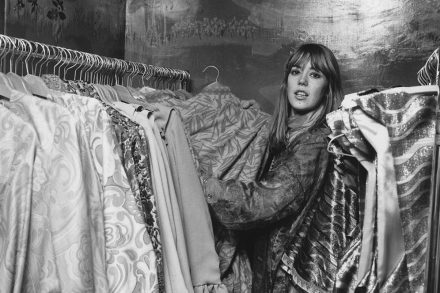
The beautiful muse to great male artists is a tricky figure, omnipresent in history but a bad fit for our fussy time. From Edie Sedgwick to Zelda Fitzgerald, and even some male ones, such as Neal Cassady, they’ve always been part of artistic scenes. In the scene of great Sixties rock, one of the most important was Jenny Boyd. She may not be as well-known as Yoko Ono, or her sister Pattie, who was married to George Harrison. But she may have been as influential. She was in the backstages, the bedrooms and the jam sessions with some of the most iconic musicians of all time. Shortly after traveling around India with the Beatles, she married (then divorced and remarried) Mick Fleetwood. Later, Donovan would write a love-sick song about her, "Jennifer Jupiter." So would Mick Jagger.

Jenny Boyd

In praise of Londoners

Southampton, Long Island ‘Why, oh why, do the wrong people travel?’ sang Noël Coward back in the early 1960s. Lucky Sir Noël, he never met the present bunch. Just as the Bolsheviks deemed the aristocracy and the intelligentsia to be enemies of the people back in 1917, good manners and conservative dress are viewed today – at least in the Bagel – as false and affected. But I’m getting away from the subject at hand. I just bought Masquerade, a doorstopper biography of Sir Noël, but I remember the song from way back, before the one time I met him. It was 21 June 1969, in Vevey, Switzerland, and Charlie Chaplin’s daughter Josephine was getting married to a Greek friend of mine, Nicky Sistovaris.

The architecture of the Elizabeth Line

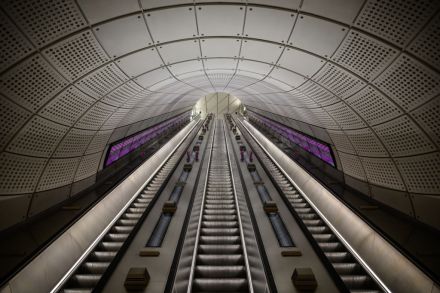
There was much to celebrate last year on the architecture front – the end of the pandemic brought the opening of long-delayed projects ranging from the Academy Museum of Motion Pictures in Hollywood to the Taipei Performing Arts Centre in Taiwan. But there was one construction project that stood head and shoulders above the rest in size and ambition, and that was the transport link formerly known as Crossrail.  The Taipei Centre may have been seven years late and the Academy Museum (now home to Judy Garland’s red slippers and R2D2, among other artefacts) more than a couple of decades in gestation, but that is nothing compared with London’s Elizabeth Line, which was first proposed in the 1940s.

Do London’s oldest restaurants still cut the mustard?

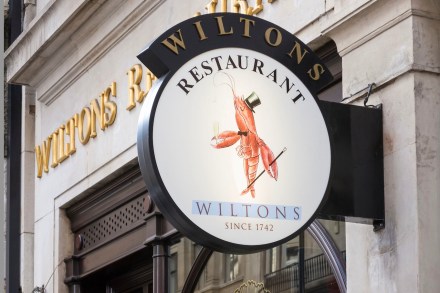
When George William Wilton opened his shellfish-mongers close to Haymarket in 1742, he could never have imagined that his business would still be thriving 280 years later. The place has outlived ten monarchs and is as old as Handel's Messiah. Before visiting, I imagined a typically Hogarthian scene with portly gentlemen in dandruff-flecked suits feasting on potted shrimp and vintage port. Perhaps they had dropped by for a 'spot of luncheon' before toddling off to their various clubs at nearby St James's.  Up until relatively recently you might well have witnessed just such a quintessentially English scene; sadly, the agreeable old buffers who would once have frequented places such as Wiltons no longer exist in quite the same way.

Could Derbyshire survive on its own?

Since at least the beginning of this century there has been a mood abroad – cultural as well as political – to trash the place that contributes most to British culture and the British economy. Without London and its population, we in the rest of the United Kingdom would be unable to continue living in the manner to which we have become accustomed and which we seem to consider our birthright. But suggest as much in the English provinces, the West Country, East Anglia, the Home Counties, Scotland, Wales or Northern Ireland, and people look at you as though you were mad – or, worse, secretly in the pay of the spivs and swindlers of Canary Wharf and the City of London. Have we Derbytanians the least idea of the wealth transferral from the metropolis upon which we depend?

London’s car drivers are being bullied

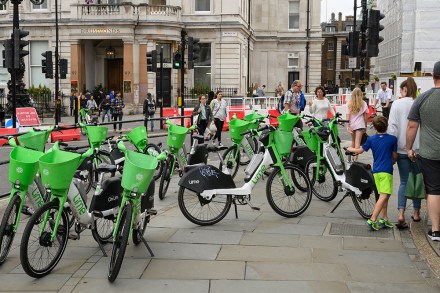
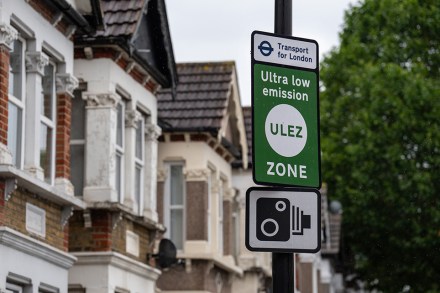
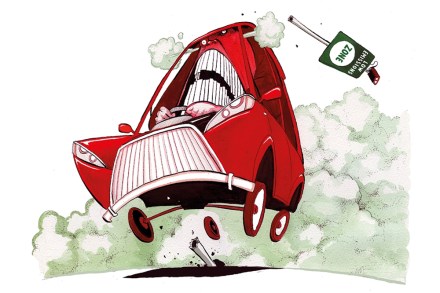
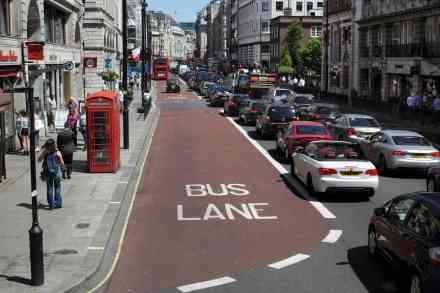
Any historic London footage inevitably features cars busily rounding Hyde Park Corner and shooting off up Park Lane, against the background of sky-scraping hotels and thriving offices. Have you seen the same bit of London now? It’s a giant car park, brought to a standstill by an administration with seemingly little idea how to promote a thriving capital. The city’s best-known thoroughfare has been reduced from three lanes to just one open for traffic northbound, one for bicycles (used sparingly in rush hour) and one for buses, usually empty. That’s just one lane for normal traffic, used by Londoners simply trying to get from A to B via one of the main routes across the capital. Any world capital needs to offer choice in the way its population gets around.

Caught between conflicting desires – for liberty and belonging

A friend recently moved back to the UK after living in China for ten years. Being English, he was always going to be an outsider in China, but what surprises him now is how foreign he feels in England too. He asked me whether this feeling ever ended. I told him that I suspect people like us will never fully belong anywhere again. The novelist and filmmaker Xiaolu Guo articulates this sense of alienation exquisitely, knowing exactly what it’s like: ‘Part of me is always in exile.’ She left China in her late twenties when she was already a published author. In Radical, she tries to come to terms with being an outsider, using language as metaphor (she says she’s pursuing ‘an etymology of myself’).

London hotels with a literary twist

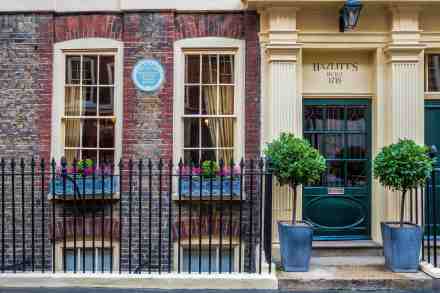
There’s something rather wonderful about the idea of settling down for the night in the spot where one of your favourite writers once slept, played or dreamed up a plot. There are a range of hotels across London with a vast array of bookish associations: some have played host to writers both famous and infamous, while others have been commemorated in novels, poems and short stories. Their present-day owners are all too happy to show off their literary heritage, should you ask nicely. Here are six with the most interesting tales to tell. Hazlitt’s [Alamy] There are few London hotels with so existential a literary connection as Hazlitt’s on Frith Street in Soho.

A themed restaurant done right: The Alice, Oxford, reviewed

The Alice lives in a ground-floor room of the Randolph Hotel in Oxford, which venerates the fantastical and the savage, as Oxford does. The savage lives in the Randolph’s dedicated crime museum with cocktails: the (Inspector) Morse Bar. The Alice is named for two women: Alice Liddell, the daughter of the ecclesiastical dean of Christchurch College – the grandest and most unfinished Oxford college – who posed for photographs for Lewis Carroll, became Alice of Wonderland and later invented a ladyship (an act as English as anything that ever happened here).

The secrets of London by postcode: WC (West Central)

Our journey around London’s postcode areas has reached its final destination: WC. One of Evelyn Waugh’s female friends always insisted on referring to it in full as ‘West Central’, because she said ‘WC’ had ‘indelicate associations’. We’ll learn what happened at Spike Milligan’s memorial service, why Agatha Christie married an archaeologist and where you can find the official definition of an inch… York Place, just south of the Strand, used to be called Of Alley (the modern street sign still commemorates the fact). The name came about because when George Villiers, the Duke of Buckingham, sold the land to developers in 1672, he insisted that every element of his name be reflected in newly created streets.

The secrets of London by postcode: E (East)

How Walford in EastEnders got its name, why Isaac Newton visited bars in disguise and what happened when the IRA parked on a double yellow line. Our tour of London’s postcode areas has reached its penultimate stop – who fancies an E? In the run-up to the 1997 general election, John Major visited the Mirror Group offices in Canary Wharf. One of the rooms he entered, high up in 1 Canada Square, was that of Kelvin MacKenzie, erstwhile editor of the Sun but by then boss of L!ve TV. Looking out of the window, the Prime Minister commented: ‘Incredible view you’ve got from here, Kelvin.’ ‘Yes,’ replied MacKenzie. ‘On a clear day, you can almost see a Tory voter.

Home is where the art is: inside J.M.W Turner’s last house

Joseph Mallord William Turner continues to occupy a singular place in British cultural consciousness. The English Romantic artist, watercolourist and printmaker – often referred to as ‘the painter of light’ – elevated landscape painting to high art and, when he died in 1851, left a legacy of 550 oil paintings, 2,000 watercolours and 30,000 works on paper. When one of these surfaces at auction, it sells for tens of millions of pounds. However, most of his works – with the power of nature, the sea and the industrial revolution as central themes – were bequeathed to the nation.

Gentlemen’s clubs for all!

Is it a stage of life thing? Recently I’ve got a hankering to join a gentlemen’s club. It might be the creeping realisation that having put it off for so long – drifting in and out of London’s clubs over the years as a guest thinking ‘This is rather nice…’ – as I near 50, it’s a case of now or never. So here’s a question – have you been to a club recently? Have you settled into the tightly stuffed, wing-backed armchair at the Athenaeum, White’s, Buck’s, Boodle’s or the Carlton? Have you dined at the Garrick surrounded by the some of the finest things to drip off the paintbrushes of Zoffany, Millais, Hogarth and numerous others?

Where to find the best Guinness in London

London has always been dogged by the canard that the Guinness here can’t compete with what’s served across the Irish Sea. It is certainly difficult – perhaps impossible – to replicate the quality of the pints in Mulligan’s on Dublin’s Poolbeg Street, or at the Gravediggers by Glasnevin Cemetery. However, there are pubs here that do it admirably – if you know where to look. Whether you’re a lifelong aficionado, or you’re merely observant on St Patrick’s Day, these are some of your best bets for a great London Guinness: The Auld Shillelagh, Stoke Newington A stone-cold classic of a pub, the Auld Shillelagh’s deceptively small frontage on Church Street leads to a longitudinal bar that serves some of London’s finest pints.

The wacky world of immersive dining

The human desire to turn life's mundanities into something altogether more agreeable never ceases to amaze and amuse. Take our homes, for instance. Once we were content to live in caves as long as they kept us dry and were reasonably warm. Then we decided it would be more appealing to build our own caves but with the added benefit of shag-pile carpets, front doors and locks to keep the jungle at bay. This ability to cocoon ourselves from an outside world that had once housed us became something of a status symbol and so we built bigger, more elaborate caves loaded with ostentatious accoutrements such as silk wall linings and sweeping marble staircases leading to bedrooms nobody used.

The secrets of London by postcode: N (North)

How Rod Stewart kept his hair in place, why the BBC gave its presenters electric shocks and what Paul Gascoigne shot with an air rifle: this month’s London postcode area is N – buckle up for another trivia-packed tour… The first run that cabbies have to learn for the Knowledge is Manor House Tube station to Gibson Square. Their task, as with any journey, is to take the most direct route possible – this is called being ‘on the cotton’, because the route will follow the straight line mapped by an imaginary piece of thread stretched between the two points on the map. The Great Northern Hotel at King’s Cross gets its unusual shape from the River Fleet.

Gorgeous Georgians: the timeless appeal of Regency properties

In the early years of the 19th century, the extravagant, spoiled and hard-partying Prince Regent had a surprisingly good idea. Encouraged by pals like Beau Brummell, and with the financial backing of the property developer James Burton, the future King George IV hired the architect John Nash to design a new London neighbourhood. His vision was for a series of magnificent streets, many in terraces styled like modern sugar-coated palaces, on Crown-owned land just north of central London. These ‘Regency’ homes would encircle a brand new park which, modestly, the future King would name after himself.

Tom Crewe’s The New Life is sophisticated, intelligent and gripping

From our US edition

Tom Crewe’s highly accomplished debut novel, The New Life, concerns the suppression of sexual feelings, and how utopian visions can falter when they come up against cold hard reality. It begins with John Addington (closely, though not entirely, based on the nineteenth-century man of letters John Addington Symonds), fantasizing about a homosexual encounter in a London underground train. The carriage is crammed: a man is pressing his buttocks into John’s crotch; John’s excitement cannot be concealed; soon they are in the throes of passion, despite the crowds around them. It’s a claustrophobic, tense, almost nightmarish scene, executed with minute attention to detail.

new life

Sadiq Khan’s free school meals plan is fatally flawed

Sadiq Khan said told Radio 4 listeners this morning that, while he was grateful for the free school meals he received as a child at his primary school in Tooting, he felt stigmatised by having to queue up and eat separately from children whose parents were paying for their meals. If that is what his school was really doing then it is a pretty horrible way to treat children – and create class divisions where they don’t need to exist. Sorting out payments for school lunches can, of course be handled away from children’s noses, so none of them know who is eating for free. But does Khan’s childhood embarrassment really justify what he wants to do now: offer free school meals to every primary school pupil in London?

Where to eat in London in 2023

The most recent additions to London's restaurant scene have plenty to offer – from Palestinian culinary history on a plate and a slice of the American East Coast to a tasting menu with a twist and ramen worth writing home about. Here's Spectator Life's guide to the best new openings to try now – and three more to look out for later in the year. Four to book now Akub, Notting Hill It's funny how comfort food doesn’t need to be familiar to be instantly recognisable. You may not have grown up eating Palestinian chicken musakhan, but when you taste Chef Fadi Kattan’s version there’s sense of home that’s unmistakable. The chicken is stripped from the bone, seasoned liberally with citrussy sumac and pressed into a dome of shatteringly thin bread.