London

The new status symbol of the super rich: headlice

To help out friends, I sometimes collect a boy from his primary school near Sloane Square. This part of London boasts the most expensive homes in Britain and the local families are served by a crop of ultra-pricey schools. The best known, Hill House, was founded in the 1940s by an eccentric army officer, ‘the Colonel’, who replaced the traditional blazers, caps and ties with a uniform of soft shoes, breeches and cravats inspired by George Mallory’s climbing kit. The Colonel’s wife chose the colours – red, brown and saffron – and the pupils became a local landmark as they marched along the King’s Road to play games at the Duke of York’s parade ground. Their red breeches suggested a nickname, ‘the Rusty Blobs’. King Charles was a Rusty Blob.

The heady, hedonistic summer in which I became a life-long foreigner

Rome I have spent almost all my adult life as a foreigner. When I graduated from Oxford I faced a stark choice: work for a living or leave the country. As I did not wish ever to have to get up in the morning, toil in an office or travel on public transport, the path was clear. I moved to Budapest with the intention of opening a bar. I feature in three novels as, respectively, a poseur, a snob and a persistent but inept seducer It was the summer of 1993, and the newly free nations of central Europe had become an irresistible magnet for self-styled bohemians from across the western world. Budapest was cheap. It was fun. My Hungarian friends were furiously hedonistic, manic-depressive, wildly ambitious and creative.

Grumpiness is a way of life

I used to be a terrible grump who would rant and rage against the 1,001 irritations of modern British life. And then one day I decided life was too short to be permanently enraged by everything and everyone.  ‘These kind people simply want to share their music with me! How thoughtful!’ For grumpy me, the sound of other people’s music in public spaces was agony. I’d seethe at the outrageous selfishness of such people. My quiet walks through the park would be shattered by the BOOM-BOOM-BOOM blast of music from a passing cyclist. And I’d shout: ‘Thanks for sharing your terrible taste in music!’   The new, cool me reacted differently. ‘These kind people simply want to share their music with me! How thoughtful!

How the Georgians invented nightlife

Modern nightlife was invented in London around 1700. So argued the historian Wolfgang Schivelbusch, who traced this revolution in city life to its origins in court culture. Medieval and Renaissance courts held their festivities while it was still light outside, but by the late 17th century, aristocrats preferred to party after dark. The trend was rapidly commercialised: a new kind of conspicuous consumer descended on pleasure gardens like Vauxhall and Ranelagh, to eat, drink, stroll and listen to music by the many-coloured light of thousands of oil lamps.

Paul Wood, James Heale and Robin Ashenden

23 min listen

This week Paul Wood delves into the complex background of the Middle East and asks if Iran might have been behind the Hamas attacks on Israel, and what might come next (01:11), James Heale ponders the great Tory tax debate by asking what is the point of the Tories if they don’t lower taxes (13:04) and Robin Ashenden on how he plans to introduce his half Russian daughter to the delights of red buses, Beefeaters and a proper full English (18:36).

‘Weaponising Jewish people is wrong’: Sadiq Khan on anti-Semitism, Ulez and the upcoming electoral battle

For most of this year it was widely accepted that the Tories had given up on London. Sadiq Khan seemed unbeatable and the party’s hunt for a mayoral candidate to run against him became a farce as various ‘big names’ refused to run. Then Daniel Korski, the frontrunner for the candidacy, had to drop out over a #MeToo row and it fell to Susan Hall to lead the charge. And yet, despite the political drama, the Tories are within touching distance of victory at City Hall – just a couple of points behind Labour in the polls. London looks winnable. ‘Nobody likes to be unpopular, but you’ve got to have your moral compass’ When I meet Khan for an interview in front of an audience at Labour party conference, he tells me he’s taking nothing for granted.

London e-bike blight

The past few weeks have been spent in the enclosed rehearsal spaces of the Ambassadors Theatre in London’s West End, preparing and finally opening in Private Lives. Shut off from the world as I am, we could have become a colony of North Korea for all I know. And yet some things do penetrate – who could fail to be horrified and appalled by the twin disasters in North Africa recently? These two devastating events have resulted in the deaths of an ever-rising number of tens of thousands of people. And yet they already seem to have dropped off our news coverage. Has the enormity of the 2004 Indian Ocean tsunami made the western world immune to such disasters? How can the latest news from the Strictly studio occupy more space in news outlets than Morocco or Libya? Madness.

Ulez expansion has gone ahead in defiance of evidence

London’s Ulez scheme has been expanded. A new network of cameras filming the traffic movements of millions of Londoners is now switched on. Old cars and vans, often used by sole traders, will be charged £12.50 a day if they pull out of their driveways. Keir Starmer had asked the London Mayor Sadiq Khan to ‘reflect’ on the policy after Labour lost the Uxbridge and South Ruislip by-election. Khan duly did, and concluded that he would stick to plan A. With 4,000 Londoners dying of air pollution every year, he said he had no option. But if that figure is correct, why has air pollution been mentioned in only one death certificate in four years? Nationally, nitrogen dioxide (NO2) levels have fallen 75 per cent over the past three decades, thanks to cleaner car engines.

Hell is the Ulez hotline

‘Only boring people get bored’ is what we were all told as children. What we were not warned about was that boring things can also make you boring. Boringness is infectious. Or so I have come to believe. Due to the backlash against the extension of Ulez, the Mayor has come up with a fresh brilliant idea Thanks to my own low tolerance for boring things, I didn’t race to find out about the Ulez scheme. These soul-destroying acronyms often arrive at the peripheries of my vision, where I hope they will remain. Yet they make their remorseless push forward. So this week, with boring inevitability, I had to call the Ulez hotline to see if I was going to have to pay this extra car surcharge, to save the planet, from the end of this month.

The rise of the open-fire restaurant

Burn the formal white tablecloths and fling open the kitchen doors. The latest craze in restaurant culture is open-fire cooking – where chefs sweat it out over roaring flames in full view of their customers. And the simple, raw nature of this method of food preparation seems to have set diners’ imaginations alight.  ‘Cooking outside over flames is primal and in our DNA as human beings,’ says Andrew Clarke, co-founder of Acme Fire Cult – one such restaurant in Dalston, north London. ‘The smell of woodsmoke and animal fats hitting the hot coals stirs up something deep inside.’ For Tomos Parry, chef and co-owner of Brat – another open-fire restaurant – the flavour that can be achieved from this style of cooking adds an extra dimension to most dishes.

When is a martini not a martini?

Considering its status as the canon’s most iconic cocktail, it’s remarkable that the martini doesn’t have a single agreed upon recipe. Like many great drinks it comes with more of a template than exact specifications, which basically dares us to riff on the formula. Historically, this has meant altering the garnish – swapping the olive for a cocktail onion, perhaps – or adding a dash of bitters. Today, though, a whole generation of bartenders is using the martini to channel their creativity, introducing bespoke ingredients and flavour combinations to this old favourite. But just how many times can you remix the martini and still retain its essential martini-ness? Gamely, I investigate.

Has the regeneration of Elephant and Castle been a success?

It has been ten years since work began in earnest on the regeneration of one of the few surviving sections of old-school central London. While the rest of Zone 1 seemingly saw wall-to-wall gentrification, Elephant and Castle remained an outpost of stubborn, scruffy ordinariness, an oasis of discount stores, greasy spoons and traditional boozers. Over the past decade, billions of pounds have been lavished on sprucing up the Elephant. But while the old place certainly looks quite different – a cluster of new towers, thousands of new homes, a gaping hole where the 1960s shopping centre once stood – this is a regeneration that has had its fair share of troubles.

The invasion of the wheelie bins

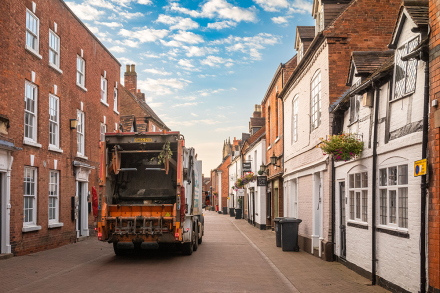
Once I thought nothing could make residential Britain look uglier than pebble-dashing, PVC windows and satellite dishes. I was wrong. As if the country had not been brutally homogenised enough by the fact that every high street has the same shops, now every residential road is reduced to being an identical backdrop for a very persistent invader: the wheelie bin. Lined up like Daleks, they are breeding in my North London neighbourhood, blocking front gardens and pavements. Outside houses split into flats, where each has its own set, there are actual crowds of these 4.5ft graceless plastic buckets, which come in multiple colours for different sorts of rubbish. When wheelie bins first started infiltrating our streets just over a decade ago, we valiantly tried to fight back.

How to see world-class opera for £11

I’ve always been happy to splash out on attending all sorts of events – £80 on tickets for run-of-the-mill Premiership football matches; £120 for the ghastly experience of watching rugby in Twickenham’s concrete jungle; £60 to attend a concert by ancient rockers who’ve seen better days. As an English teacher, I’m also an avid theatre-goer – despite the fact that the last time I went to the theatre, to see a woke version of Henry V full of gratuitous swearing and cheap jibes at Brexit, it cost £55 for a restricted view.   But I’d always avoided opera, put off by its somewhat elitist image. And I’m not the only one – a survey for Classic FM revealed that many of us have never considered going, dismissing it as ‘too posh’ or too expensive.

Is Scottish reeling the route to romance?

‘Remember to flirt outrageously.’ This essential piece of advice is imparted courtesy of Country and Town House magazine for its readers curious about Scottish reeling. The reel, a social folk dance, dates back to 16th-century Scotland and has remained popular for all this time, notwithstanding a brief hiatus in the 17th century when the Scots Covenanters assumed the stance (rightfully, some might say) that such amusement leads to mischief leads to sin. Less curious about the dancing than the flirtation, I joined some friends for the final, sweaty session of the season at London Reels.

In praise of Londoners

Southampton, Long Island ‘Why, oh why, do the wrong people travel?’ sang Noël Coward back in the early 1960s. Lucky Sir Noël, he never met the present bunch. Just as the Bolsheviks deemed the aristocracy and the intelligentsia to be enemies of the people back in 1917, good manners and conservative dress are viewed today – at least in the Bagel – as false and affected. But I’m getting away from the subject at hand. I just bought Masquerade, a doorstopper biography of Sir Noël, but I remember the song from way back, before the one time I met him. It was 21 June 1969, in Vevey, Switzerland, and Charlie Chaplin’s daughter Josephine was getting married to a Greek friend of mine, Nicky Sistovaris.

The architecture of the Elizabeth Line

There was much to celebrate last year on the architecture front – the end of the pandemic brought the opening of long-delayed projects ranging from the Academy Museum of Motion Pictures in Hollywood to the Taipei Performing Arts Centre in Taiwan. But there was one construction project that stood head and shoulders above the rest in size and ambition, and that was the transport link formerly known as Crossrail.  The Taipei Centre may have been seven years late and the Academy Museum (now home to Judy Garland’s red slippers and R2D2, among other artefacts) more than a couple of decades in gestation, but that is nothing compared with London’s Elizabeth Line, which was first proposed in the 1940s.

Do London’s oldest restaurants still cut the mustard?

When George William Wilton opened his shellfish-mongers close to Haymarket in 1742, he could never have imagined that his business would still be thriving 280 years later. The place has outlived ten monarchs and is as old as Handel's Messiah. Before visiting, I imagined a typically Hogarthian scene with portly gentlemen in dandruff-flecked suits feasting on potted shrimp and vintage port. Perhaps they had dropped by for a 'spot of luncheon' before toddling off to their various clubs at nearby St James's.  Up until relatively recently you might well have witnessed just such a quintessentially English scene; sadly, the agreeable old buffers who would once have frequented places such as Wiltons no longer exist in quite the same way.

Could Derbyshire survive on its own?

Since at least the beginning of this century there has been a mood abroad – cultural as well as political – to trash the place that contributes most to British culture and the British economy. Without London and its population, we in the rest of the United Kingdom would be unable to continue living in the manner to which we have become accustomed and which we seem to consider our birthright. But suggest as much in the English provinces, the West Country, East Anglia, the Home Counties, Scotland, Wales or Northern Ireland, and people look at you as though you were mad – or, worse, secretly in the pay of the spivs and swindlers of Canary Wharf and the City of London. Have we Derbytanians the least idea of the wealth transferral from the metropolis upon which we depend?

London’s car drivers are being bullied

Any historic London footage inevitably features cars busily rounding Hyde Park Corner and shooting off up Park Lane, against the background of sky-scraping hotels and thriving offices. Have you seen the same bit of London now? It’s a giant car park, brought to a standstill by an administration with seemingly little idea how to promote a thriving capital. The city’s best-known thoroughfare has been reduced from three lanes to just one open for traffic northbound, one for bicycles (used sparingly in rush hour) and one for buses, usually empty. That’s just one lane for normal traffic, used by Londoners simply trying to get from A to B via one of the main routes across the capital. Any world capital needs to offer choice in the way its population gets around.